
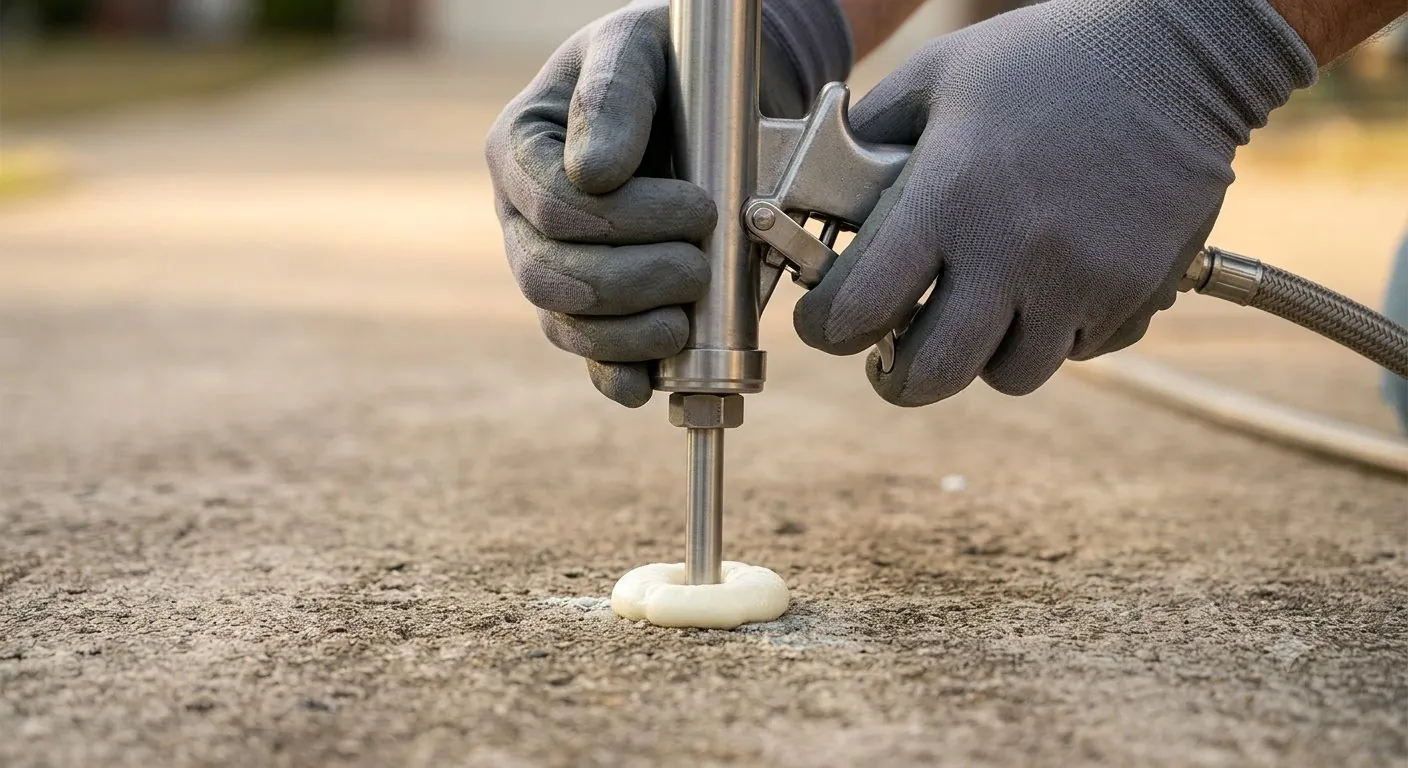
 Illustrative
Concrete Leveling Foam in Kansas City: How Polyjacking Lifts Your Sunken Slab
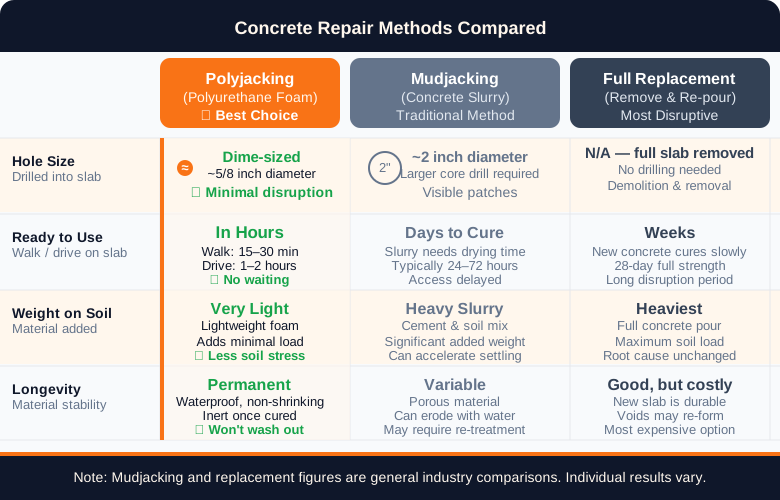
Polyjacking injects high-density polyurethane foam through dime-sized holes in a sunken slab. The foam expands to fill voids, compress loose soil, and lift the concrete back to level. It cures fast, so the surface is usable within hours, and it is lighter and more water-resistant than traditional mudjacking slurry.
What Polyjacking Actually Does
Polyjacking is the most precise description of what we do at PolyJacks: we inject two-part polyurethane foam through dime-sized holes drilled into a sunken slab, and the foam expands to fill whatever void has formed in the soil underneath, lifting the concrete back to level as it goes. You’ll hear the same work called concrete jacking, slab jacking, or cement leveling: different names, one process. Kansas City homeowners also search for this work as concrete lifting or concrete raising, and some call it foam jacking. The lift is controlled. We watch the slab millimeter by millimeter and stop each hole the moment the section reaches grade. Unlike pouring new concrete, which starts from scratch and takes days to cure, polyjacking works on the slab that's already there; unlike mudjacking, which pumps heavy slurry under pressure, polyjacking uses a foam that weighs almost nothing. Both of those distinctions matter in Kansas City, where the soil underneath your concrete has specific properties that make material weight and waterproofing genuinely important, not just marketing talking points.
In practice that work is local and narrow. PolyJacks levels concrete across the Kansas City metro and does nothing else: driveways, sidewalks, patios, garage floors, pool decks, porches and commercial slabs, worked out of Spring Hill, Kansas on both sides of the state line. The service area runs roughly 35 suburbs across Johnson, Wyandotte, Jackson, Clay and Platte counties, about 50 miles out from Olathe, which covers polyjacking in Overland Park, Olathe, Shawnee, Lenexa, Independence, Lee's Summit and Kansas City, MO. The full list is on our service areas page. Every one of those towns sits on the same clay described below, which is why this metro gets one method rather than a catalogue of them.
Three Checks That Tell You There's a Void Under the Slab
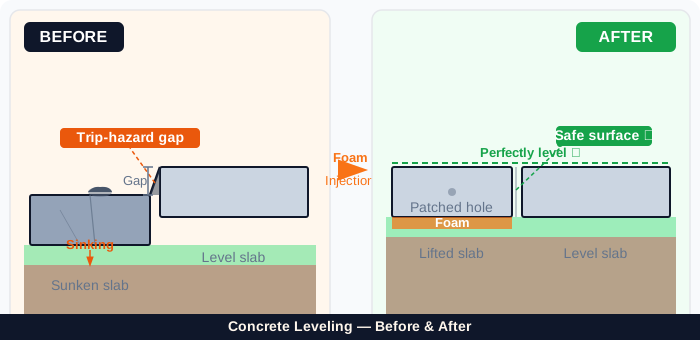
Three checks tell you whether a slab has lost contact with the soil underneath it.
It rocks, or it sounds hollow. A slab resting partly on void space rocks when you step on the low edge, and knocking on it returns a hollow sound instead of a dense, dull one - air where soil should be carrying the load. See what hollow-sounding concrete means.
Rainwater runs the wrong way. A well-drained slab sheds water away from the house. When it settles unevenly the grade reverses, and rain runs back toward the foundation and stands there.
There is a lip at a panel joint. A vertical offset between two adjacent sections means one has moved relative to the other.
None of these guarantee a void is present, but each one is a symptom of lost soil contact under the concrete, which is exactly what foam injection fills. Signs of uneven concrete covers the rest of what to look for.
The Wymore-Ladoga Clay Beneath Most KC Slabs
The underlying cause of sunken concrete throughout the Kansas City metro is the soil itself: specifically the Wymore-Ladoga clay complex that underlies most of the region. According to USDA NRCS data, this clay series commonly runs 35 to 55 percent clay content, with a hydrologic soil group D rating and a "very high" shrink-swell classification. What that means practically: the same ground your driveway or patio sits on expands roughly 10 to 15 percent in volume when it absorbs water, then contracts back as it dries out. Over years of Kansas City's heavy spring rains followed by dry late summers and falls, with roughly 40 inches of annual rainfall arriving unevenly, the clay goes through that expansion and contraction cycle repeatedly. That swelling and shrinking opens voids beneath slabs, and the concrete drops into them. Polyjacking fills those voids with a material that doesn't participate in that cycle. Foam doesn't absorb water, doesn't swell or shrink, and doesn't erode. Once it's in place, the support it provides stays stable regardless of what the clay around it is doing.
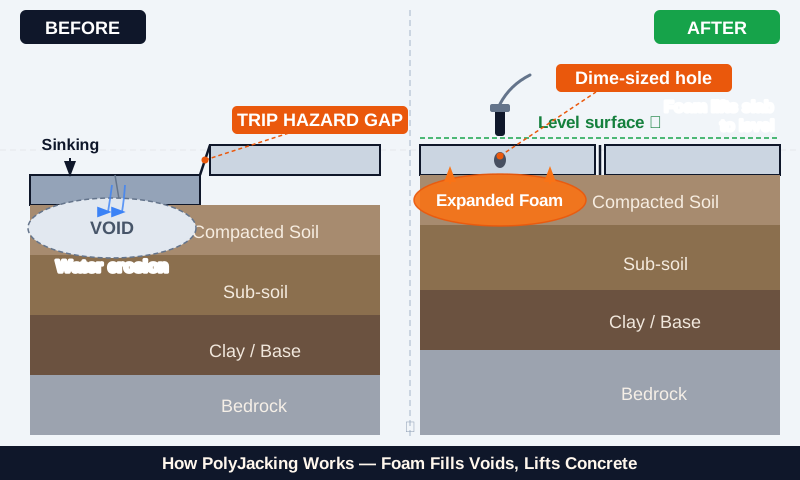
Soil classification data from USDA NRCS Soil Survey, Jackson/Johnson/Wyandotte County sheets. Freeze-thaw data from NOAA climate normals for the Kansas City metro.
For a full breakdown of why your concrete is sinking, see our guide on why concrete sinks in Kansas City.
Roughly 80 Freeze-Thaw Days Every Kansas City Winter
Wymore-Ladoga clay's shrink-swell behavior is only half the soil story. A typical Kansas City winter brings roughly 80 freeze-thaw days: days when the ground surface freezes, then thaws, then refreezes. Every time water in the soil pore space freezes, it expands about nine percent in volume. That's enough to wedge apart soil particles, shift gravel layers, and move the fine clay fraction downward as ice pushes it around. When spring arrives, the voids left behind those ice lenses are empty space, and any concrete slab above them has nothing holding it up. This is the mechanism behind most of the trip-hazard walkway joints and driveway lips we see when we come out for estimates in Olathe, Shawnee, Overland Park, and Lee's Summit. Polyjacking fills those cavities so the concrete has direct, solid contact underneath again. Improving drainage: gutters, downspouts extended at least five feet from the house, correct yard grading: addresses the deeper cause; we flag those issues on every estimate, because without drainage fixes, any lift is fighting the same cycle.
You can check your specific area's settlement risk on our KC Concrete Settlement Risk Index.
Inside the Two-Part Polyurethane Foam
The material injected during polyjacking isn't a single compound. It's two liquid components that mix at the nozzle tip and react as they're pushed through the injection hole. The foam expands 30 to 40 times its liquid volume within seconds of mixing, which means a small amount of material fills a large void quickly without requiring the high injection pressure that mudjacking slurry demands. The cured result is a closed-cell foam: fully waterproof, not porous, and rigid enough to bear structural loads. Its density is a fraction of the weight of mudjacking slurry, which matters because the soil in the void area under an already-settled slab is by definition soft or compressible; adding hundreds of pounds of heavy slurry can simply restart the settling cycle. High-density polyurethane foam adds almost no additional load to the soil while providing stable, waterproof support beneath the slab for the long term.
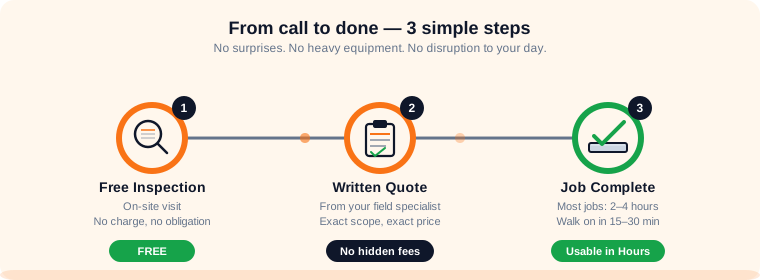
Hardware-store foam kits use the same two-part idea at a much smaller scale; whether DIY concrete leveling products work covers where they fall short.
For how that stable support holds up over the years, see how long concrete leveling lasts.
Is the Foam Safe Around Kids, Pets and Landscaping?
Once it cures, which takes minutes, the foam is chemically inert. It is not off-gassing, leaching or breaking down under the slab; it is a solid, closed-cell material doing a mechanical job of filling space and bearing the load.
During the injection it stays contained under the slab. Nothing is sprayed in the open air, and any minor odor during the reaction is brief and dissipates once curing is complete. Because the cured foam is waterproof and closed-cell, it does not dissolve, leach or wash out into the surrounding soil or groundwater. And because it goes in underground through dime-sized holes aimed at the void, it does not spread across the yard or contact plantings - it is a targeted fix, not a surface treatment.
The practical safety point matters as much as the chemistry: most areas are walkable in about 15 to 30 minutes and ready for vehicles in roughly 1 to 2 hours. There is no multi-day window where the work area is a hazard, and no barricades standing in the yard for days while something sets. Full detail in is polyurethane foam safe for my yard.
What Is Concrete Leveling Foam? (And Its Other Names)
People search for this material under a handful of names, and they all point at the same thing. The everyday terms. Concrete leveling foam, concrete raising foam, and plain foam for leveling concrete. All describe the two-part, high-density polyurethane we inject beneath a settled slab. Some homeowners call it expansion foam for concrete, because expanding is exactly what it does. It grows 30 to 40 times its liquid volume in seconds to fill the void and lift the slab. You'll also see the shorthand poly concrete, short for polyurethane concrete leveling. Whatever you call it, the job is the same: a lightweight, waterproof foam does the work the heavy slurry in old-style mudjacking used to do, without reloading the soft soil that let your concrete sink in the first place.
How a Polyjacking Job Goes, Start to Finish
Before any drilling starts, we walk the slab and probe it to locate the low spots and determine how many injection points we need. Typically four to twelve holes for a standard residential job, depending on slab size and how far it has settled. The holes are dime-sized, drilled in a pattern designed to address the void evenly rather than just pump foam into one spot. Once a hole is open, we connect the foam delivery hose and inject in short bursts, watching the concrete as the foam expands underneath. When a section reaches level, we move on. The incremental approach matters. We're lifting hundreds or thousands of pounds of concrete, and moving it too fast or unevenly can crack a slab that would otherwise lift cleanly. After all the injection points have been worked, the holes are patched with color-matched cementitious material. From first drill to final patch, most residential jobs take two to four hours. The foam finishes curing in place, and you can walk on the surface in about 15 to 30 minutes. Driveways can handle normal vehicle traffic in one to two hours, with the exception of heavy vehicles. Those should stay off the freshly lifted slab for 48 hours.
- Walk-on and slab probe — we walk the slab, mark the low spots, and determine how many injection points are needed and where.
- Drilling — dime-sized holes in a pattern designed to address the void evenly.
- Foam injection — short bursts, watching the concrete millimeter by millimeter until each section reaches grade.
- Patching and cleanup — color-matched cementitious patches, hose and equipment removed.
- Walk-on in about 15 to 30 minutes; normal vehicle traffic in one to two hours.
Each step is covered in more detail in our step-by-step guide to polyurethane slab raising, and how long polyjacking takes breaks the job day into stages, including what can make it run longer.
Real Kansas City Jobs: What the Lift Cost
We don't publish price lists because foam volume (the main cost driver) depends entirely on the size of the void under each particular slab, which we can only measure on-site. But we can share what recent Kansas City jobs actually ran. A driveway in Olathe with significant settlement at the street joint came in at a fraction of the full replacement quote the homeowner had received. A sunken sidewalk on 143rd Street in Overland Park, creating a trip-hazard lip at the property line, cost a small fraction of its replacement quote. A Shawnee garage floor that had dropped at the overhead door threshold ran far below the replacement bid on the same floor. A Leawood pool deck settling around the coping came in at a fraction of the demolition estimate. These are real jobs. The savings. Typically 50 to 70 percent compared to full concrete replacement: reflect the fact that the slab itself is structurally sound; the only thing that failed was the soil beneath it.
The main cost drivers are the size and depth of the void beneath the slab, the total area that needs lifting, and the number of injection points required, which on a typical residential job runs four to twelve. Each of those variables changes the volume of foam mixed and the time the crew spends on-site, which is why we measure the void on-site before quoting rather than working from a per-square-foot rate. For a fuller breakdown of what moves the number up or down before you schedule an estimate, see what polyjacking costs in Kansas City.
If a driveway replacement quote is what has you weighing options, what to consider before you replace your driveway lays out the comparison.
When Polyjacking Is Not the Right Fix
We'll tell you straight during a free estimate if this applies to your situation: polyjacking repairs voids in the soil and lifts the slab above them. It does not fix foundation walls, correct a slab cracked structurally through its full thickness, improve yard drainage, or stop tree roots that are actively lifting a concrete section from below. If the concrete is cracked badly enough that lifting it would widen those cracks further, or if the settling is being driven by an active drainage problem that is still washing soil away, polyjacking provides a temporary fix at best. We refer those cases to the appropriate specialists rather than lift a slab we don't believe will hold. What we can confidently address: settled slabs where the concrete itself is intact and the void beneath it is the cause of the drop. That describes the large majority of sunken driveways, patios, walkways, and garage floors we see across the Kansas City metro.
One Specialty, One Owner, On Every Job
We can say that plainly because of how the company is built. The owner is also the lead technician, and he is on every job. He spent more than a decade in the trades around Kansas City before building PolyJacks in 2024 around this one repair.
PolyJacks is independently owned and operated out of Spring Hill, Kansas. No franchise network, no call center routing you to whoever is nearest, no subcontracted crews. Call the number and you talk to the owner; book an estimate and he shows up; when the slab gets lifted he is on the truck - one point of contact from first call to final lift.
The scope stays narrow on purpose: concrete leveling and polyjacking, nothing else. We do not offer foundation repair, drainage correction, crack sealing or concrete replacement, which is why we can tell you straight when a job falls outside it. More about PolyJacks.
Get a Free Polyjacking Estimate
No charge, no obligation. Call (913) 713-7794 or fill out the contact form and we'll come look at the slab, measure the settlement, identify what's happening underneath, and give you an honest answer about whether polyjacking is the right fix and what it would cost. If it isn't the right fix, we'll say so and tell you what is. You can also use our Diagnose tool to describe what you're seeing before we visit. It walks you through a few questions about your slab and gives you a preliminary read on what's likely going on, so you know what to expect when we arrive. PolyJacks is based in Spring Hill, KS. We serve the full Kansas City metro on both sides of the state line.
What the work actually looks like
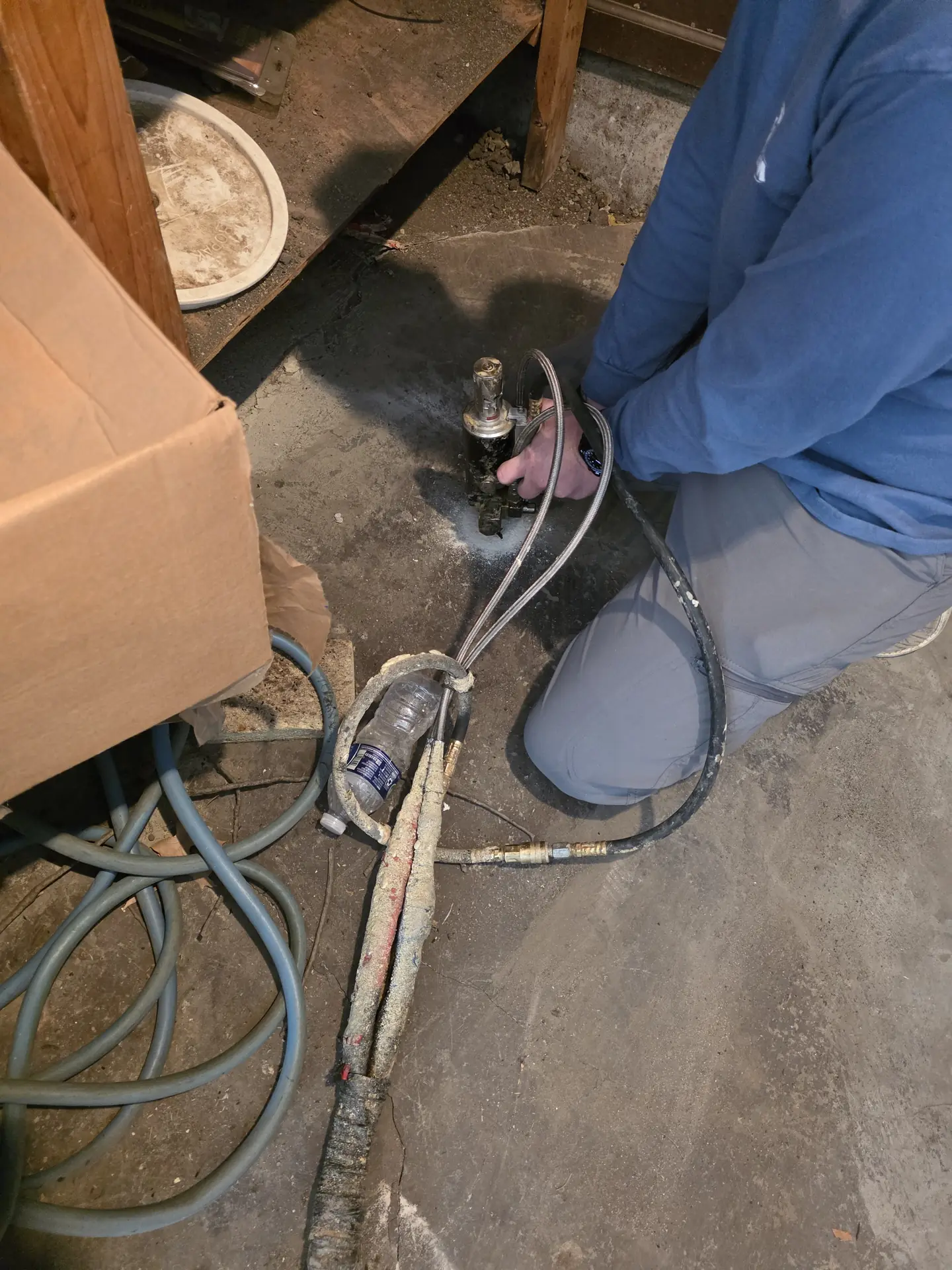
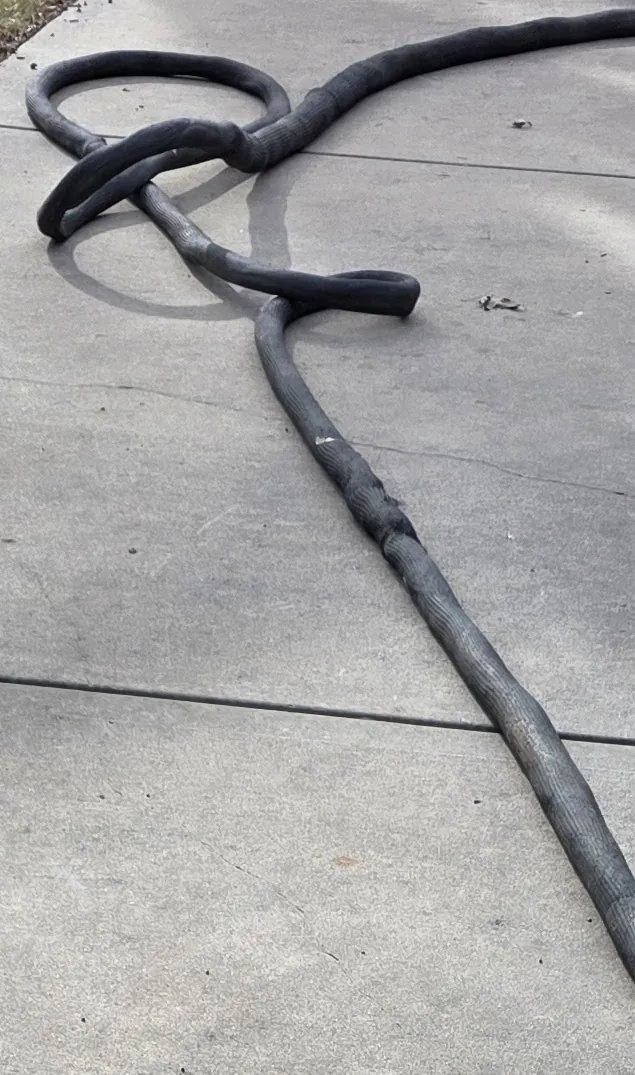
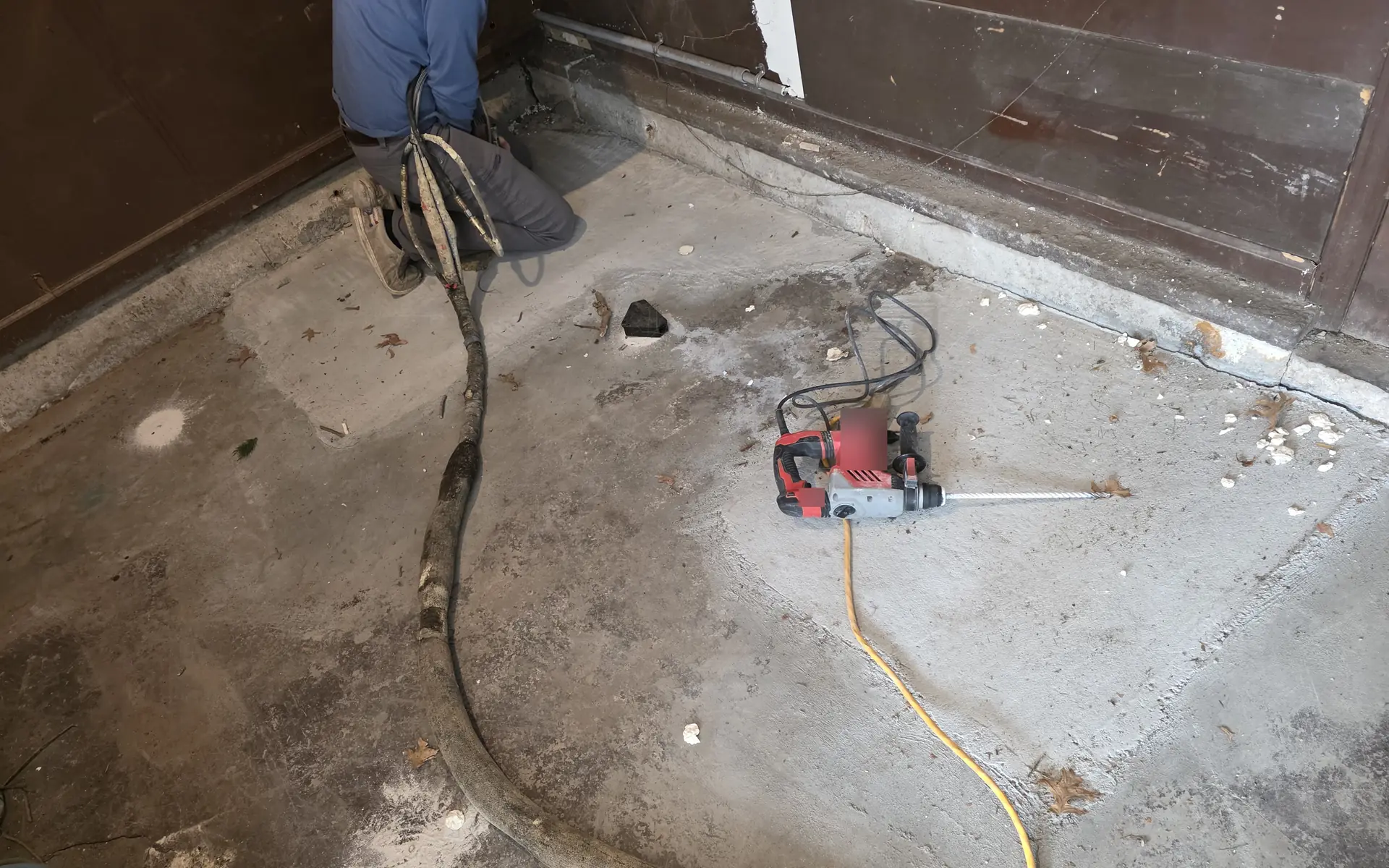
How polyjacking works in 90 seconds
Our team walks you through the three-step process: dime-sized holes, high-density polyurethane foam that fills every void and compresses the soil beneath your slab, and use within hours with no heavy trucks. Call (913) 713-7794 or book a free estimate below.
Frequently asked
What exactly gets injected under the slab during polyjacking?
A two-part polyurethane foam. Two liquid components that mix at the nozzle tip and react immediately, expanding 30 to 40 times their liquid volume into a closed-cell, waterproof solid.
Why does foam work better than mudjacking slurry in Kansas City soil?
Kansas City sits on Wymore-Ladoga clay that is already unstable when wet. Adding heavy mudjacking slurry puts more load on the same soft ground. High-density foam weighs almost nothing and is waterproof, so it doesn't contribute to the soil loading that caused the settling in the first place, and it won't erode when the clay swells again.
How many holes does a polyjacking job require?
Typically four to twelve dime-sized holes for a residential job, depending on slab size and how far it has settled. We determine the number and pattern on-site before drilling.
Will the slab crack during the lift?
We inject in short bursts and watch the concrete throughout, moving incrementally to avoid over-pressuring any one area. Pre-existing cracks in structurally sound slabs don't typically worsen. Slabs that are already cracked through their full thickness are evaluated carefully before we recommend lifting.
Does polyjacking carry a warranty?
Yes — PolyJacks provides a 5-year limited warranty on workmanship and materials. If the slab settles more than 1/2 inch within 5 years due to our work, we re-lift it at no charge. It is written to the owner who paid for the work, at that address, for the full five years, and it ends if the property is sold. Full terms are on our warranty page.
Is polyjacking permanent?
The foam itself is permanent. It doesn't degrade, compress, or wash out. Whether the lift holds long-term depends on the underlying cause being addressed. We flag active drainage issues and grading problems on every estimate, because fixing those is what keeps a lifted slab from resettling.
How much does polyjacking cost in Kansas City?
Recent KC jobs, from single sunken sidewalk sections to a settled pool deck, typically ran 50 to 70 percent less than replacement. Final cost depends on void size, which we can only measure on-site. Every estimate is free.
Can you polyjack in the winter?
Yes - we work through the Kansas City winter. Polyurethane foam cures through its own chemical reaction, not by drying out or waiting on warm air the way a new pour does. The two-part material is warmed in the equipment and generates its own heat as it reacts. We typically work year-round as long as the ground itself isn't frozen solid. Heavy snow or ice over the work area can push a visit back a day so we can see and reach the drilling points - a scheduling issue, not a limit of the material. Winter concrete leveling in KC.
Can I buy a polyjacking foam kit and lift the slab myself?
You can buy the material; the hard part is not mixing it. Foam expands 30 to 40 times its liquid volume in seconds, and that ratio is what turns a small misjudgment into a big one. Push too much into one spot and you over-lift, cracking or tilting the slab you were trying to save; push too little and the void stays open and the slab keeps rocking. A settled slab rarely has one clean gap under it either. It is usually several pockets reaching further than the crack on top suggests, which is why a real job typically uses four to twelve holes, each one telling the crew what is happening a few feet over. Consumer kits mix small batches by hand, with no way to verify how far the foam travelled or whether the whole void filled. For one isolated low spot a careful DIYer can get a usable result; for a full driveway panel the odds of a partial, uneven lift climb fast, and a slab broken by an over-lift usually needs replacement, because foam cannot put broken concrete back together. Why DIY polyjacking kits fail walks through it in detail.
How long does a polyjacking job take from arrival to cleanup?
One visit, and the crew does not come back for a second stage. Most residential jobs run two to four hours end to end, and the part worth planning around is what happens after: foot traffic in about 15 to 30 minutes, normal vehicles in one to two hours, heavy vehicles held off for 48 hours. There is no multi-day window where the driveway is out of service. What helps on the day is access, so cars moved off the slab and any gate unlocked before we arrive keeps things moving. Payment is due in full on completion by cash, credit card or certified check, and no deposit is required to book, so nothing is owed until the slab is level.
Get your free concrete leveling estimate
No obligation, and if foam isn't the right fix, we'll tell you straight.
Pick a time that works for you
Book right here on this page. Prefer to talk? Call (913) 713-7794.