
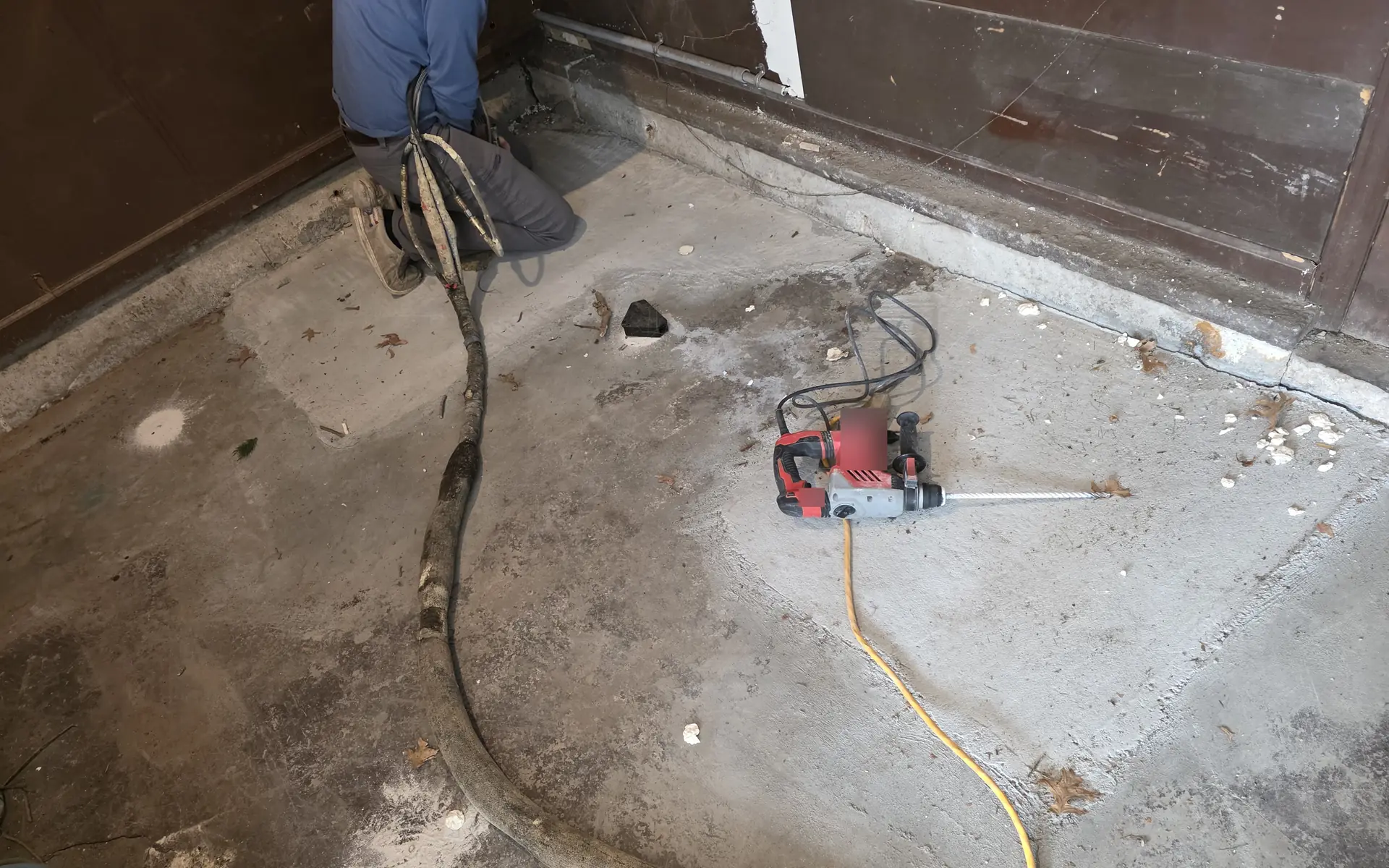
Concrete Jacking in Kansas City
Concrete jacking lifts a sunken slab back to level instead of replacing it. In Kansas City, PolyJacks injects high-density polyurethane foam through dime-sized holes; the foam fills the voids underneath and raises driveways, walks and patios, usually usable within hours. It costs far less than tearing out and repouring the concrete.
What Is Concrete Jacking?
Concrete jacking is the process of lifting a sunken concrete slab back to level by pumping material into the empty space underneath it instead of demolishing the slab and pouring a new one. You'll also hear it called slab jacking, slabjacking, concrete lifting, or concrete raising; they all describe the same basic idea. A slab sinks because the soil beneath it settled or washed away and left a void. Concrete jacking fills that void from below and floats the slab back up to where it started.
It's an umbrella term, not a single technique. There are two main families of concrete jacking, and they differ by what gets pumped underneath: expanding polyurethane foam (the modern method, called polyjacking) and a wet cement-and-soil slurry (the older method, called mudjacking). PolyJacks does the foam version across the Kansas City metro. The rest of this page walks through how concrete jacking works, when it beats replacement, and how to tell which method your slab needs.
Concrete Jacking vs. Tearing the Slab Out
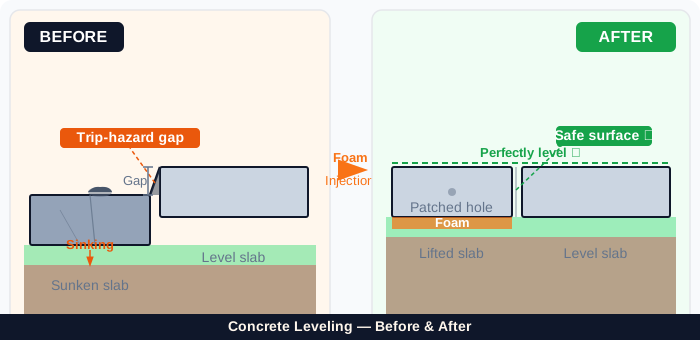
The reason concrete jacking exists is simple: a slab that has sunk is usually still a perfectly good piece of concrete. It didn't crumble. The ground under it moved. Replacing it means renting a breaker, hauling out the rubble, forming, pouring, and then waiting the better part of a month for the new concrete to fully cure before it carries a full load. Concrete jacking skips all of that. We work through a handful of dime-sized holes, lift the existing slab in place, patch the holes, and you're using the surface within hours.
That difference in disruption is the whole point. There's no torn-up yard, no week of caution tape, no ripping out landscaping to get equipment in. As long as the slab is structurally sound and hasn't shattered into loose pieces, lifting it is faster, cleaner, and easier on the property than replacement, which is why concrete jacking has become the default fix for settled residential and commercial slabs.
If you are still weighing a tear-out, our answer to whether sunken concrete can be fixed without replacing it walks through which slabs qualify.
The Two Methods: Foam Jacking vs. Mudjacking
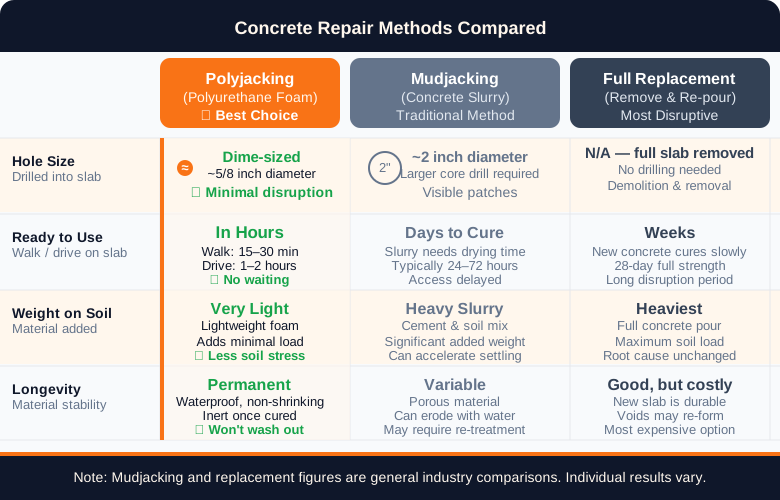
Foam concrete jacking (polyjacking) injects a two-part polyurethane that expands 30 to 40 times its liquid volume the moment it's mixed. It fills the void, compresses loose soil, and lifts the slab, then cures into a closed-cell, waterproof material within minutes. Because it's light, it doesn't add much weight to the already-weak soil that let the slab sink in the first place. See our full breakdown of how polyjacking works.
Mudjacking, the traditional method, pumps a heavy slurry of cement, sand, and soil through larger holes to push the slab up. It works, and it's been used for decades, but the slurry is heavy, the holes are bigger, it isn't waterproof, and it can settle again over time. We lay out the trade-offs in detail on our polyjacking vs. mudjacking and mudjacking in Kansas City pages. PolyJacks chose foam because Kansas City's shifting clay soil punishes anything heavy you set on top of it.
Choosing foam also means controlling how much it expands under the slab, and why store-bought foam kits usually fail explains what goes wrong when that isn't done.
How a Concrete Lifting Job Runs, Start to Finish
A concrete lifting job runs in one visit, in the same order every time.
- We read the slab before we drill. We walk the surface and probe it to locate the low spots and work out where the slab has lost its support underneath. That sets how many injection points the job needs and where they go.
- We drill dime-sized holes. A residential slab typically takes four to twelve, placed to address the void evenly rather than concentrated in one spot.
- We inject in short bursts. The foam goes in a hole at a time, in small amounts, while we watch the concrete and check the height at that point as it comes up.
- We bring it up slowly on purpose. A slab weighs hundreds to thousands of pounds; pushed too fast or unevenly, concrete that would have lifted cleanly can crack instead.
- We patch every hole. Each one is capped with color-matched cementitious material once the section is at grade.
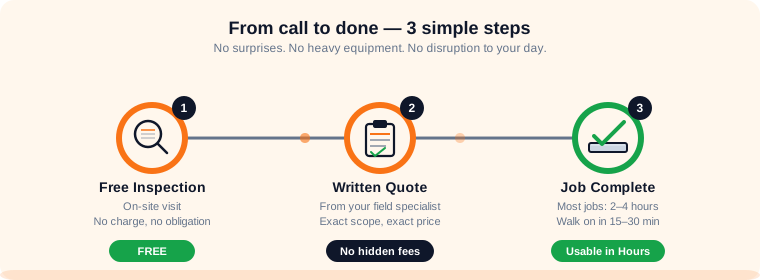
Total time on site is two to four hours for most residential slabs. Foot traffic can go back on after 15 to 30 minutes and a passenger vehicle after an hour or two, while anything heavy — trucks, trailers, equipment — waits 48 hours for the foam to reach full cure.
Why Kansas City Slabs Sink and Need Jacking
Concrete jacking is common in the Kansas City metro for one main reason: the soil. Much of the region sits on clay that swells when it gets wet and shrinks when it dries out, so the ground under your driveway, patio, or sidewalk is constantly expanding and contracting with the seasons. Add dozens of freeze-thaw cycles every winter and roughly 40 inches of rain a year arriving in uneven bursts, and voids open up under slabs that were poured on grade with no deep footings.
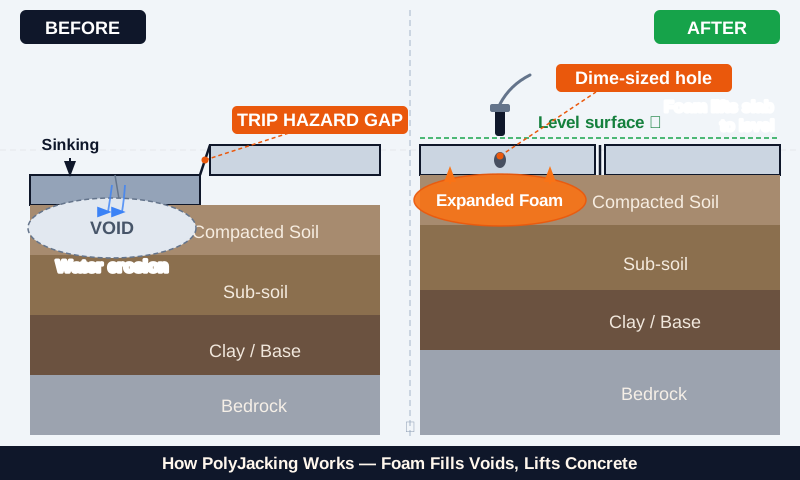
Poor drainage speeds it up. A downspout dumping water at the edge of a slab, or fill dirt that was never properly compacted when the house was built, will hollow out the soil faster. Once the void is there, the slab has nothing to rest on and it drops — a process we break down in our guide to void filling under concrete. For a deeper look at the causes, see why concrete sinks in Kansas City.
If you want to see how your specific neighborhood's soil and drainage history stack up, check our KC Settlement Risk Index.
Beyond your neighborhood's history, you can check your own slab for a void before it drops; see what hollow-sounding concrete means.
What Concrete Jacking Can Lift
If it's a slab-on-grade surface that settled while staying in one piece, concrete jacking can usually raise it. The most common jobs we take across the metro:
- Driveways that dropped at the street or the garage apron
- Sidewalks and walkways with a trip-hazard lip between panels (if you've received a city sidewalk repair notice, see what to do next)
- Patios that pool water or pitch back toward the house
- Garage floors that dip near the overhead door
- Pool decks that sank around the coping
- Porches, stoops, and concrete steps that pulled away from the house
- Commercial floors, loading areas, and ADA trip hazards
What concrete jacking can't fix is concrete that has broken into separate, unstable pieces, or a slab still sinking because of an active plumbing leak or a root pushing up from below. In those cases we'll say so during the estimate rather than pump foam under a slab that won't hold.
Not every slab needs lifting. Void filling and full concrete leveling use the same foam and the same injection method; the difference is timing and goal. Void filling under concrete stabilizes a hollow spot before it has caused visible sinking, while leveling raises a slab that has already settled, filling the void and lifting the concrete in the same step. Which one your slab needs is what the free estimate determines.
Two of those jobs have causes worth understanding first: why a garage floor goes uneven and why a pool deck sinks.
Concrete Jacking Near Me: Serving the Kansas City Metro
When you search for concrete jacking near me from anywhere in the Kansas City metro, PolyJacks covers it. We're based in Spring Hill and work both sides of the state line — Johnson, Wyandotte, Jackson, Clay, and Platte counties, roughly 35 suburbs within about 50 miles. Overland Park, Olathe, Lee's Summit, Shawnee, Lenexa, Blue Springs, and the rest of the metro are all regular stops when you need slabjacking in Kansas City.
Most concrete jacking jobs are done in two to four hours. You can walk on the lifted slab in 15 to 30 minutes and drive on it in one to two hours. No waiting a month like a replacement. We just ask that heavy vehicles stay off for 48 hours while the foam reaches full cure. Every job starts with a free on-site estimate.
Is Concrete Jacking Right for Your Slab?
The honest answer is: usually, but not always, and the only way to know for sure is to look at the slab. If your concrete is intact but has sunk, cracked at the seams from settling, or sits lower than it used to, it's very likely a good candidate for foam jacking. If it's shattered, or if something like a leak or a tree root is still actively moving it, lifting won't be the right call until that's addressed, and we'll tell you straight.
The estimate is free, there's no obligation, and if foam isn't the right fix we'll point you in a better direction. Call or text (913) 713-7794, or book a free estimate and we'll come take a look. Curious what a job runs? Our concrete leveling cost page explains how pricing works without the runaround.
It is worth knowing who gives you that answer. PolyJacks is not a franchise and not a call center routing the job to whoever is nearest. The owner and lead technician takes the call, walks the slab at the estimate, and is on the truck when the crew lifts it. He spent more than a decade in the Kansas City trades before building the company around this one repair in 2024.
The scope is deliberately narrow, and that is what makes a straight answer possible: lifting and leveling sunken concrete with high-density polyurethane foam is the entire list. We do not offer foundation repair, drainage correction, crack sealing or concrete replacement. Naming what we do not do is what lets us tell you plainly when your slab needs one of them instead, and point you to someone who does that work well. More on how the company is set up on the about page.
Before you call any company, our guide on how to choose a concrete leveling company walks through the questions to ask.
Not sure if your slab is a candidate? Run our 60-second concrete diagnosis before you call.
How polyjacking works in 90 seconds
Our team walks you through the three-step process: dime-sized holes, high-density polyurethane foam that fills every void and compresses the soil beneath your slab, and use within hours with no heavy trucks. Call (913) 713-7794 or book a free estimate below.
Frequently asked
Is concrete jacking the same as mudjacking?
Not exactly. Concrete jacking is the umbrella term for lifting a sunken slab by injecting material underneath it. Mudjacking is one method of doing that: pumping a heavy cement slurry. Polyjacking, which uses lightweight expanding foam, is the other. PolyJacks does the foam version. Both raise the slab; foam is lighter, waterproof, and uses smaller holes.
How much does concrete jacking cost in Kansas City?
It depends on the size of the slab and how much foam the void takes to fill, so we quote it only after a free on-site look. No guessing sight unseen. What we can tell you is that concrete jacking costs a fraction of tearing out and replacing the same slab, and the estimate is always free. See our cost page for how we price a job.
Is there concrete jacking near me in the Kansas City area?
Yes. PolyJacks provides concrete jacking throughout the KC metro on both sides of the state line, from our base in Spring Hill. Most jobs finish in a few hours and the slab is usable within hours. Call (913) 713-7794 or book a free estimate to get on the schedule.
How long does concrete jacking last?
Foam concrete jacking is designed to be permanent under normal conditions. The cured polyurethane is waterproof, inert, and doesn't break down or wash out the way soil does. The main thing that can undo any lift is unmanaged water, so keeping gutters clear and grading water away from the slab is what protects it long term.
What warranty comes with a concrete jacking job?
Every lift carries a 5-year limited warranty on workmanship and materials. If a slab we lifted settles more than 1/2 inch within 5 years because of our work, we come back and re-lift it at no charge. It is written to the owner who paid for the work, at that address, for the full five years, and it ends if the property is sold. A short list of things sits outside it, all of them conditions we don't control; the full warranty terms and exclusions are published in plain language.
Is the foam safe around kids, pets and landscaping?
Once it cures, which takes minutes, the foam is inert: it isn't off-gassing, leaching or breaking down under the slab. During injection it stays contained beneath the concrete rather than sprayed in the open, and it's targeted underground, so it doesn't spread across the yard or contact plantings. Because it's waterproof it doesn't dissolve or wash out into surrounding soil. Areas are walkable again in about 15 to 30 minutes. Is polyurethane foam safe for my yard has the full answer.
Will the patched holes show on my patio or pool deck?
The holes are about the size of a dime, and a typical job needs four to twelve of them depending on the slab's size and how many low spots we're filling. We patch every one with a color-matched concrete cap before we leave. Up close you can find them if you go looking; from a few feet back most people can't tell where we worked, and the patches keep blending in as they weather. Nothing else about the surface changes, since we don't tear anything out or resurface it.
Is slab jacking the same as concrete jacking?
Yes. Slab jacking, slabjacking, concrete lifting and concrete raising are interchangeable names for the same umbrella idea: pumping material into the void under a settled slab so the concrete floats back to level instead of being demolished and repoured. The word that actually carries information is the one describing the material. Mudjacking means a cement-and-soil slurry is going under your slab; polyjacking and foam jacking mean expanding polyurethane. Because the umbrella terms get used for both, a written quote that says only slab jacking has not yet told you which of the two you are buying, and the material is what determines the hole size left in your concrete, how much weight gets added to soil that already failed to hold the slab, and how the lift holds up in Kansas City clay. PolyJacks does the foam version. For hole size, weight and water resistance compared row by row, see the two materials side by side.
Will the slab sink again after concrete jacking?
The void we filled will not come back. Cured polyurethane does not shrink, break down or wash out, so the space it occupies stays occupied. If a lifted slab moves again, it is because the soil around or beneath the foam moved, and that is almost always water. Four habits handle nearly all of it: point downspouts away from the slab rather than at it, keep gutters clear so water is not overflowing at the slab edge, grade the surrounding soil so runoff leaves instead of pooling, and call a plumber first if you suspect a line leak near the area, because foam cannot out-lift water that is actively washing soil away. Five drainage mistakes that sink KC driveways covers each one. If you do notice new settlement, call early rather than waiting: a slab we lifted that drops more than 1/2 inch within 5 years because of our work is re-lifted at no charge under the 5-year limited warranty.
Is my slab settling or heaving, and does that change the fix?
It changes it quite a bit, and the two get mixed up easily because both leave you with uneven concrete. Compare the slab to the sections around it. Sitting lower than its neighbors, with a gap opening at a joint or where it meets a wall and water pooling in the low spot, is settling: the slab has lost the support underneath it, and that is exactly what concrete jacking corrects. Sitting higher than its neighbors, often worse after a wet spring, is heaving, which means something below is pushing up rather than something having washed away. Heaving is more case-by-case. Sometimes the answer is stabilizing the soil, sometimes the water feeding the clay has to be dealt with first, and a slab that has already cracked badly from the pressure is a replacement conversation rather than a lift. Do not try to pry or weigh a heaved slab back down; forcing it is how it cracks. Settling versus heaving lays out both side by side, and the free estimate settles which one you have.
Get your free concrete leveling estimate
No obligation, and if foam isn't the right fix, we'll tell you straight.
Pick a time that works for you
Book right here on this page. Prefer to talk? Call (913) 713-7794.