
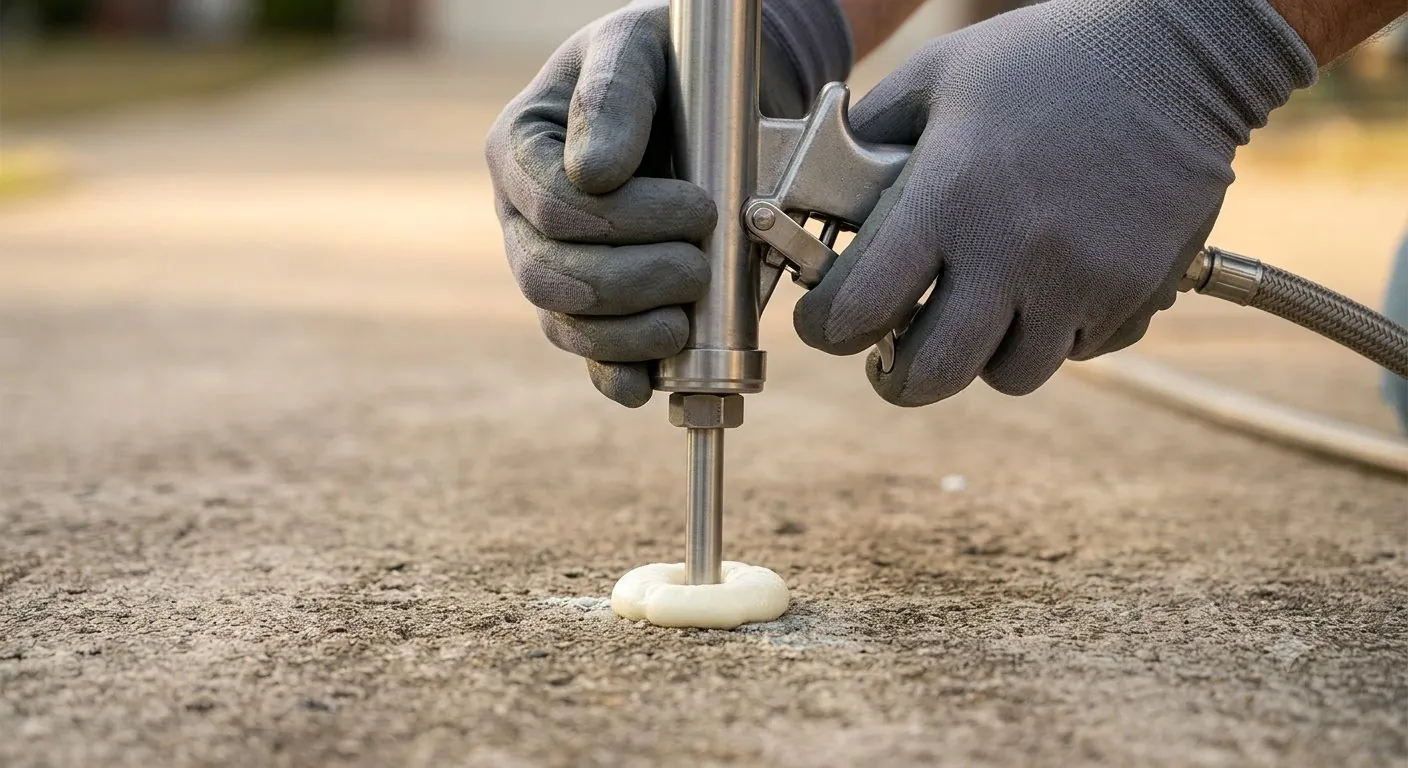
 Illustrative
The Hidden Reasons Store-Bought Foam Kits Don't Hold
DIY polyjacking kits usually fail because lifting a slab is not about squirting foam into a hole — it is about reading how the slab settled and controlling the lift. Hardware-store kits use weaker foam, give no way to see the void, and make it easy to over- or under-lift. A trained crew maps the voids and monitors height in real time.
The DIY Kit Looks Simple. The Slab Underneath Doesn't Care.
A concrete lifting kit from the hardware store or online looks like a weekend fix. Drill a hole, mix two chemicals, watch the foam expand, patch the hole. On the box, it looks about as complicated as caulking a bathtub.
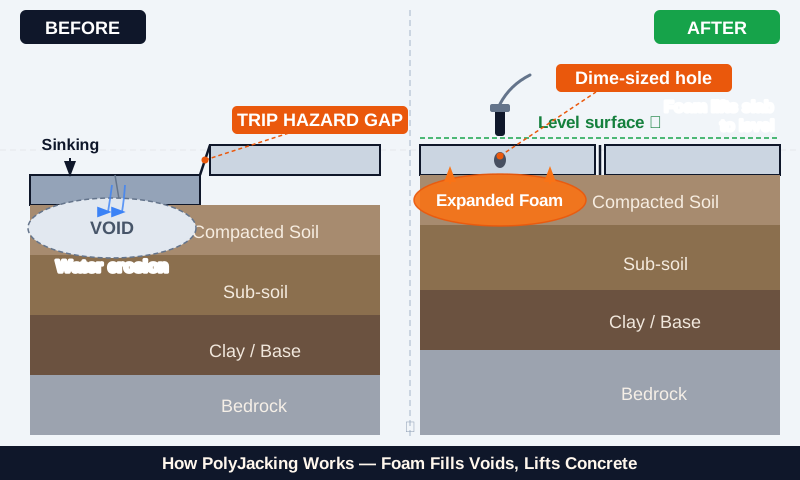
Underneath your driveway, patio, or garage floor, though, is a slab sitting on soil that's already moved once. That's why it sank in the first place. Here in the Kansas City metro, that soil is usually expansive clay that swells and shrinks with the seasons, on top of repeated freeze-thaw cycles every winter. The kit doesn't know any of that. You do the reading, or you don't.
The clay expands in wet seasons and contracts in dry or frozen seasons. A void filled in July can re-open by November as the soil contracts. A kit user has no way to re-check or re-fill after the first winter cycle, leaving the slab vulnerable to the next shift.
The problem isn't the idea of foam. It's controlling it once it's working under several tons of concrete.
A kit's fixed-density foam can't compensate for ground that is still shifting.
Over-Lift and Under-Lift: Why "Eyeballing It" Backfires
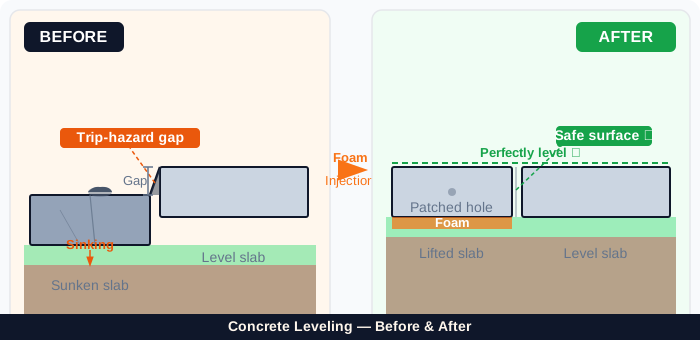
Polyurethane foam expands fast, roughly 30 to 40 times its liquid volume once it hits the ground. That ratio is what makes it powerful enough to lift a slab through a hole the size of a dime. It's also what turns a small miscalculation into a big one.
Push too much foam into one spot and you can over-lift: cracking the slab you were trying to save, or tilting it the wrong direction entirely. Push too little, and the void stays open, the slab keeps rocking under weight, and the crack comes right back within a season.
A trained crew isn't guessing. They're watching the slab move in real time and adjusting hole to hole, because a driveway or patio rarely sinks evenly. One corner is almost always worse than the rest.
If a DIY over-lift cracks the slab, the job changes from a straightforward lift to a more complex repair. A slab broken into multiple pieces usually needs replacement, because foam can't put broken concrete back together. Whether a cracked slab is still a lift job or has crossed into replacement territory is what the free inspection determines. For the full list of situations where foam isn't the right tool, see the section on when polyjacking isn't the right fix.
Here's what a failed DIY lift looks like from the outside. The slab sits higher on one side than the adjacent panel or the joint line, because the foam pushed it past level in one direction. A new hairline crack radiates out from the injection hole that wasn't there before the kit went in. And a week later, the patched hole is soft underfoot, or a bead of foam is visible at the surface where the mix expanded past what the hole could contain. If you see any of those, stop adding foam. The slab is in a worse state than before the kit went in, and a free inspection will tell you whether it's recoverable.
Wrong Foam, Wrong Result
Not all foam is the same job, and the material matters as much as the technique.
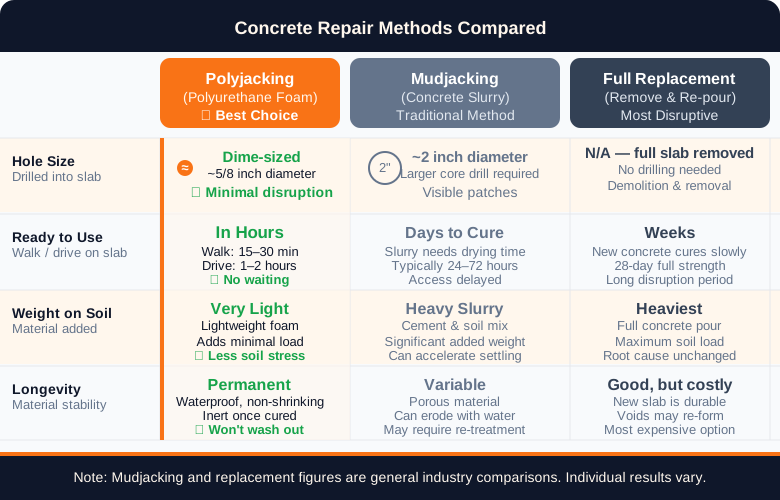
Professional-grade foam is waterproof and non-shrinking, engineered to a density that's light enough to lift without overloading soft soil, yet dense enough to hold. Compare that to mudjacking slurry, which is far heavier and just adds weight back onto the same soil that caused the sinking. Store-bought kits vary, and getting the density wrong either wastes the lift or puts unsupportable weight right back where the problem started.
Get it wrong under a garage floor or pool deck and you haven't fixed the sink. You've set up the next one. (For the broader rundown of every hardware-store 'leveling' product - self-leveling compound, resurfacer, and foam kits - see do DIY concrete leveling products work; this guide focuses on why the foam kits in particular fail.)
You Can't Patch a Void You Can't See
A settled slab almost never has one clean gap underneath it. It's usually several pockets of different sizes, and they can reach further under the slab than the crack on top suggests.
That's why a real job typically uses 4 to 12 holes, not one. Each hole tells the crew something about what's happening a few feet over. Drill in the wrong spot, or stop after one hole because the crack "looks filled," and there's a good chance a void gets left behind: working its way back to the surface.
This is diagnostic work as much as it's a repair. It starts before the first hole ever goes in.
What a Trained Crew Does Differently
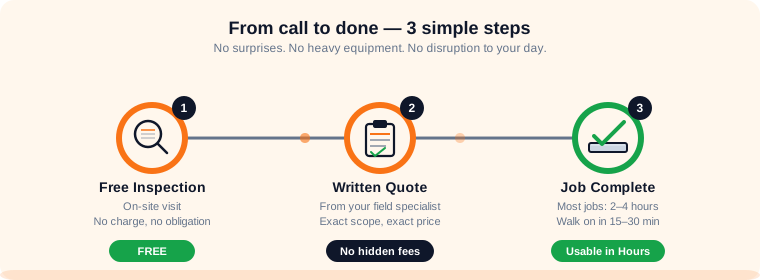
A free inspection comes first: reading how the slab settled, where the soil moved, and how many holes and how much foam the job actually calls for. That's the plan before anyone drills.
From there, most jobs run 2 to 4 hours. The dime-sized holes get patched, and you're walking the surface again in 15 to 30 minutes and driving on it in 1 to 2 hours. Heavy vehicles hold off for 48 hours.
PolyJacks backs the work with a 5-year limited warranty, written to the owner who paid for the work at that address and ending if the house is sold. If the area settles more than 1/2 inch in those five years because of our work, we come back and re-lift it. That's only a promise you can make when the first lift was done right.
For more on how long a professional lift holds up, see how long concrete leveling lasts.
When Polyjacking Isn't the Right Fix: DIY or Pro
Honest answer first: foam doesn't fix everything, and no kit or crew should tell you otherwise.
A slab that's cracked into pieces, not just sunk, usually needs replacement. Foam can't put broken concrete back together. An active water leak needs a plumber before anyone touches foam, or you're lifting a slab that's still being undermined underneath. Heave from tree roots needs the roots dealt with, not just the concrete on top.
If that's what's going on at your place, we'll tell you straight during the inspection. We don't do foundation repair ourselves, and if that's what you actually need, we'll point you toward it instead of trying to make foam do a job it can't.
If you are not sure whether the problem is a sinking slab or a rising one, this guide to concrete settling vs. heaving explains the difference.
Skip the Guesswork: Start With a Free Inspection
A DIY kit can't tell you what's really happening under your slab. A trained eye can, and it costs nothing to find out.
PolyJacks is a locally owned crew based in Spring Hill, serving the Kansas City metro since 2024. We're licensed and insured, and our estimates are free. We price by the foam volume your job actually needs, which typically runs far less than tearing out and replacing the slab.
Book a Free Estimate at (913) 713-7794 and get a straight answer on what your driveway, patio, or garage floor actually needs.
How polyjacking works in 90 seconds
Our team walks you through the three-step process: dime-sized holes, high-density polyurethane foam that fills every void and compresses the soil beneath your slab, and use within hours with no heavy trucks. Call (913) 713-7794 or book a free estimate below.
Frequently asked
Can I really rent a polyjacking kit and do it myself?
You can buy the material, but the hard part isn't mixing it. It's reading the slab correctly, drilling in the right spots, and controlling the lift as the foam expands 30 to 40 times its volume in seconds. A wrong call can crack the slab further or leave a void unfilled. A free inspection tells you what's actually under there before anyone drills a hole.
What's the real difference between kit foam and what a pro uses?
Professional foam is waterproof, non-shrinking, and engineered to a specific density matched to the slab and soil. Get the density wrong and you either don't get enough lift or put weight back on ground that's already soft, which is what caused the sinking to begin with.
How do I know if I have a void, or just a surface crack?
A crack on top doesn't always show how far a void reaches underneath. That's exactly what a free inspection is for: reading the slab and the soil beneath it, not just patching what's visible.
What if polyjacking isn't right for my situation?
We'll tell you. Slabs that are broken into pieces usually need replacement, active leaks need a plumber first, and root heave needs the roots addressed. We don't do foundation repair, but we'll point you to someone who does if that's what's actually going on.
Have a sinking slab?
Book a free on-site inspection. Honest advice, usable within hours.
Pick a time that works for you
Book right here on this page. Prefer to talk? Call (913) 713-7794.