
 Illustrative
Concrete Leveling in Kansas City, MO
PolyJacks lifts sunken driveways, sidewalks, and patios in Kansas City, MO with polyurethane foam instead of a full tear-out: free on-site estimate, usable within hours.
Kansas City, Missouri is the only city in our service area that spans four separate counties (Jackson, Clay, Platte and Cass) across 319 square miles that stretch from the historic river landing near Westport and the Country Club Plaza all the way north to ground annexed decades later for Kansas City International Airport.
Why Concrete Sinks Differently Across Four Counties
Kansas City, Missouri is the only city we serve that isn't contained inside a single county. The city limits run through Jackson, Clay, Platte and Cass counties, covering roughly 319 square miles. That matters for concrete leveling because "Kansas City soil" isn't one thing here the way it is in a smaller suburb. A driveway in an older Jackson County neighborhood, a sidewalk on Clay County ground annexed decades ago, and a patio on newer Cass County fill can each be settling for a different reason, even though the fix: filling the void under the slab with expanding foam: is usually the same.
Kansas City proper is bowl-shaped, ringed to the north and south by glacier-carved limestone and bedrock bluffs left behind where the Dakota and Minnesota ice lobes met during the Pleistocene epoch. As those glaciers melted, the Kansas and Missouri Rivers cut wide valleys through the terrain. Practically speaking, that means a slab sitting on shallow bedrock near one of those bluffs behaves differently underground than one sitting on deeper river-valley soil a few miles away, and it's part of why a blanket explanation for sinking concrete rarely holds up across a city this spread out.
A River Landing That Outgrew Its Banks
The city started small: the town of Kansas, Missouri was incorporated June 1, 1850 at Westport Landing, a rocky ledge on a bend of the Missouri River chosen because it was a good place for steamboats to unload goods headed further west. The Hannibal Bridge, the first railroad bridge across the Missouri River, opened in 1869 and set off the growth that led to the 1889 name change to Kansas City. Westport itself, the older settlement south of downtown, wasn't annexed into the city until December 2, 1897. Concrete near that original river-landing core has had over a century to settle; concrete on the far edges of the modern city, in areas annexed generations later, hasn't.
Bowl, Bluffs and Buried Foundations
Where your home sits in the bowl changes what is under the slab. On the ground near Westport and the Plaza, bedrock is shallow and some neighborhoods are a century old. Down in the Missouri and Kansas River valley the soil runs deeper and the water table sits high, and across the Northland the ground has only been inside city limits since the 1960s and 70s.
So before we drill a single dime-sized hole, the free estimate starts with where your slab sits in the bowl and what is actually under it, not a guess based on a job across town.
Reviewed by the PolyJacks field team, Spring Hill, KS.
Not sure if your slab is sinking or just uneven? Use our free online diagnostic tool to check before you call.
The Airport Annexation and What It Says About This City's Growth
In 1966, Kansas City voters approved a major bond issue to build a new airport well north in Platte County. The small town of Platte City initially annexed the airport site during construction; after a series of court fights, Kansas City annexed the land itself, and Kansas City International Airport opened November 11, 1972. That's a large stretch of ground, disconnected from the historic core, added to the city specifically for one project. A pattern that repeats in miniature across the Northland and other later-annexed parts of town, where the concrete is decades younger than what you'll find near Westport or the Plaza.
What We Level in Kansas City
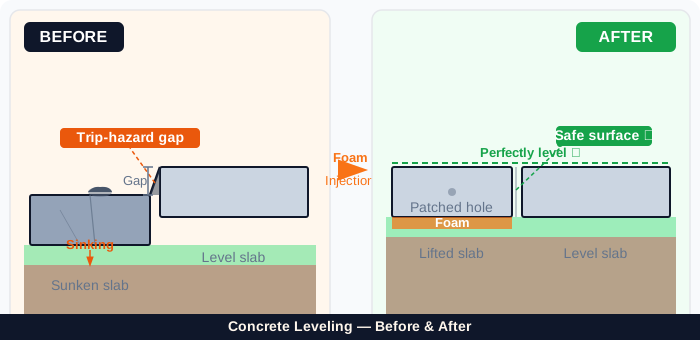
From driveways to pool decks — and void filling under slabs that are still level but hollow — we lift the existing slab with foam rather than tearing it out.
Settled stoops and entries are covered in our guide to concrete steps and porch leveling.
Polyjacking vs. Mudjacking for Kansas City Homeowners
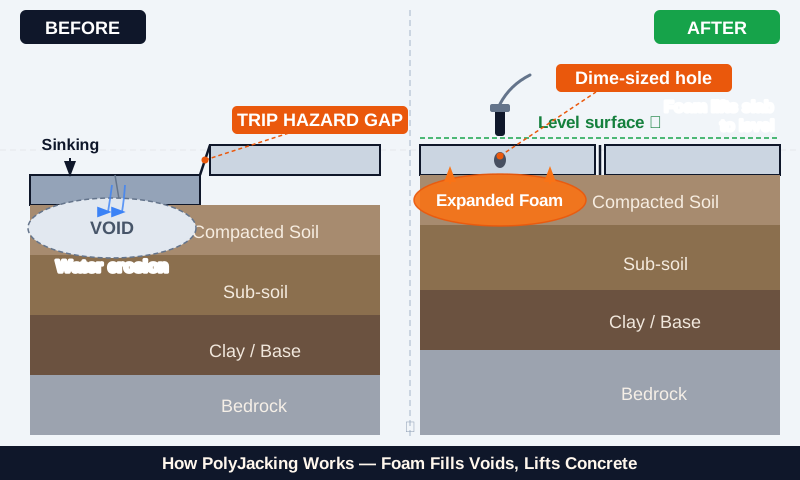
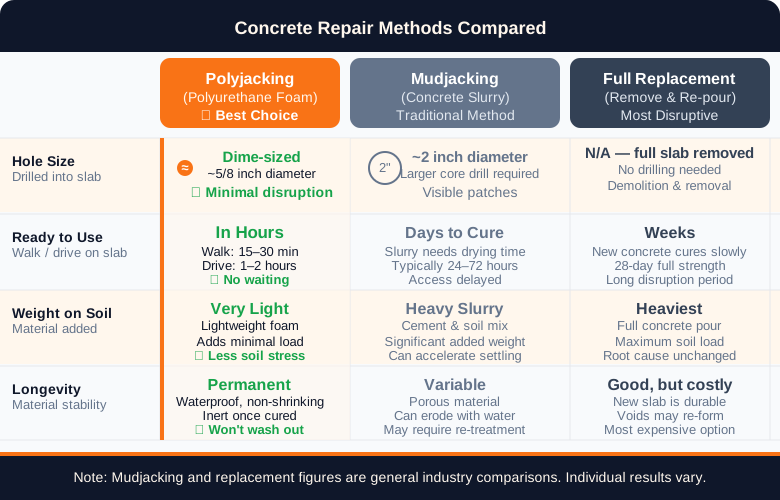
Mudjacking lifts a slab by pumping a heavy cement-and-soil slurry through holes an inch or two wide. It works, but the added weight is a liability on the river-valley and clay-heavy ground common across Kansas City. Polyjacking uses expanding polyurethane foam injected through dime-sized holes instead: it's a fraction of the weight, cures in minutes, and is waterproof, so it won't wash out where the water table sits high near the rivers. For most KC driveways and patios, that lighter, water-resistant approach is the more durable choice. Want the full how-it-works background? See our Concrete Leveling 101 guide.
You may also hear the foam method called foam jacking; it is the same injection of expanding polyurethane foam through dime-sized holes. For a side-by-side look, read our polyjacking vs mudjacking comparison.
Serving Kansas City, MO and the Metro
PolyJacks is locally owned and based in Spring Hill, Kansas. Kansas City, Missouri — from the Plaza and River Market down to the Northland — is a regular part of our metro route, along with Kansas City, Kansas, Riverside and North Kansas City. We give the same free, honest estimate whether the job is a sidewalk near a century-old bluff-top neighborhood or a driveway on ground that's only been inside city limits since the 1970s. A contractor based in Spring Hill might sound far from downtown KC, but the metro is our everyday territory on both sides of the state line.
Why concrete settles in Kansas City: the local risk data
In Kansas City, about 43.0% of Jackson County's soil rates high-shrink-swell (USDA). Kansas City, Missouri grew outward from Westport Landing (incorporated 1850) after the 1869 Hannibal Bridge, so its central neighborhoods carry some of the metro's oldest concrete.
Kansas City averages about 80 freeze-thaw days a winter — 79.6 over the last 31 winters at KCI (NOAA station records, 1995–2026).
Sources: USDA SSURGO · NOAA / ACIS (KCI) · local record. See the full KC Concrete Settlement Risk Index.
Our concrete leveling services
Driveway Leveling
Raise a sunken driveway (or a slab that's dropped at the garage) back to level in a few hours, no tear-out.
Lift a settled drivewaySidewalk Leveling
Kill trip hazards and even out uneven walks and paths: safer footing, less liability.
Sidewalk levelingPatio Leveling
Re-level a patio that's settled, split at the seams, or pools water after every rain.
Raise a sinking patioGarage Floor Leveling
Lift a settled garage floor slab back to even, without jackhammering it out.
Level an uneven garage floorPool Deck Lifting
Raise a sunken pool deck back to level without draining the pool. Foam won't wash out.
Lift a settled pool deckPorch & Step Leveling
Bring settled porches, stoops, and concrete steps back to safe, even height.
Porch and step levelingCommercial Leveling
Warehouse floors, ADA trip hazards, parking and loading areas — leveled with minimal downtime.
Level a commercial slabConcrete leveling near Kansas City
PolyJacks is your local concrete leveling contractor in Kansas City — we serve Kansas City and the surrounding communities:
Neighborhoods across Kansas City:
Real job documentation
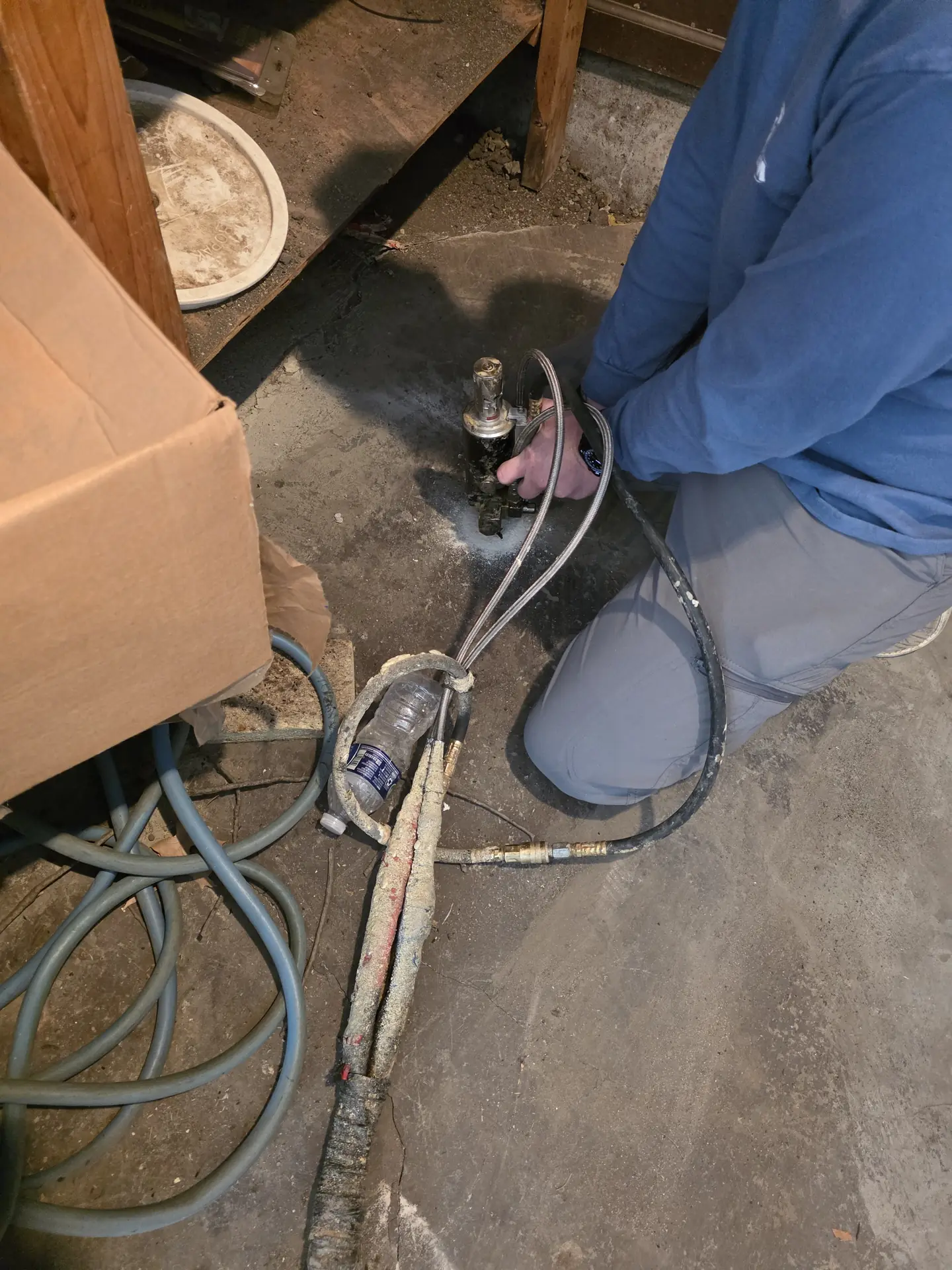
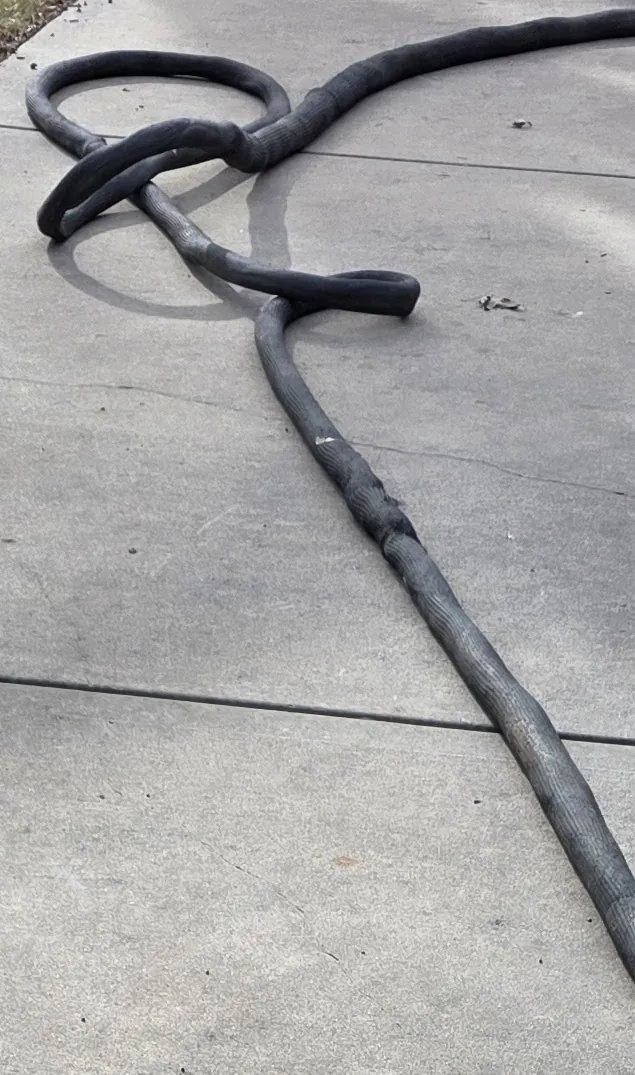
How polyjacking works in 90 seconds
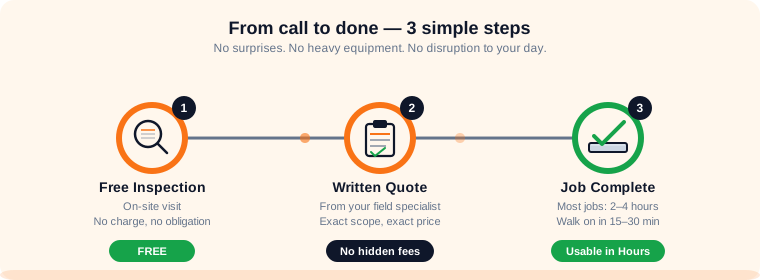
Our team walks you through the three-step process: dime-sized holes, high-density polyurethane foam that fills every void and compresses the soil beneath your slab, and use within hours with no heavy trucks. Call (913) 713-7794 or book a free estimate below.
Frequently asked
Why does concrete settle so differently across Kansas City, MO?
The city spans four counties and a mix of bedrock bluffs, river-valley soil and later-annexed ground, so there's no single cause. We look at your actual slab and soil during the free estimate rather than assuming.
What does concrete leveling cost in Kansas City, MO?
It depends on the size of the slab and how much void needs filling, so we don't post a flat price. Every estimate is free and on-site: call (913) 713-7794.
Is foam leveling permanent?
The foam is waterproof and won't break down underground, and it fills the void that caused the settling. If a drainage issue near the slab isn't fixed, a new void can form over time. We'll point that out if we see it during the estimate.
How soon can I use my driveway or patio again?
Usually you can walk on it in 15 to 30 minutes and drive on it within 1 to 2 hours.
Will the leveled concrete match the rest of my driveway or patio?
Yes. We lift your existing slab rather than pour new concrete, so the color and texture stay the same, with just a small dime-sized patch where we injected the foam.
Do you serve the whole Kansas City metro, including the Northland?
Yes, both sides of the state line, including the Northland, Kansas City, KS, Riverside, North Kansas City and the surrounding suburbs.
Looking for concrete leveling near me in Kansas City?
PolyJacks serves Kansas City and the surrounding MO communities. A typical lift is done in 2–4 hours and the slab is usable within hours: walkable in 15–30 minutes, drivable in 1–2 hours. Estimates are free. Book yours online.
Free concrete leveling estimate in Kansas City
No obligation. Honest advice, usable within hours. If foam isn't the right fix, we'll tell you straight.
Pick a time that works for you
Book right here on this page. Prefer to talk? Call (913) 713-7794.