
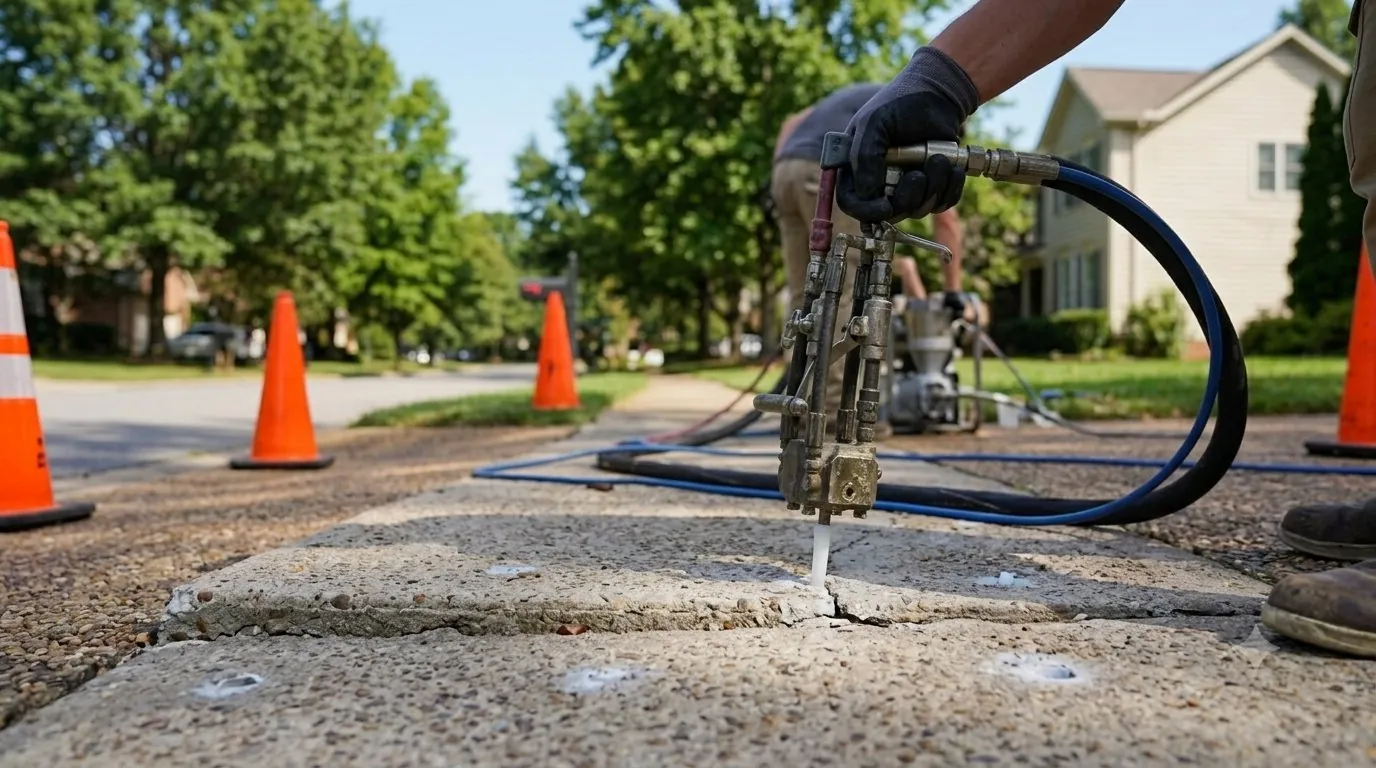
 Illustrative
Got a Sidewalk Repair Notice From Your City? A Kansas City Homeowner's Guide
A city sidewalk-repair notice means an inspector flagged your walk, usually for a trip lip or uneven panel, and set a deadline to fix it. If the slab is sound and just settled, foam leveling can lift it flush and clear the notice, often without replacing the panel. Check your notice's deadline.
First: Read the Notice, Then Take a Breath
A repair notice from your city about a sidewalk looks alarming, but it is a solvable problem with a clear path forward. The notice names a specific defect. Usually a raised, sunken, or tilted panel that has become a trip hazard, and it sets a compliance deadline. That deadline is real, so the worst move is to slide the letter under a stack of mail and forget it.
Here is the part most homeowners don't realize on the first read: in many cases the panel does not have to be torn out and repoured. If the concrete itself is still sound and has simply settled out of level, lifting it back to grade removes the exact hazard the city flagged. This guide covers what the notice is really asking for, who is typically responsible, the level-versus-replace decision, and how to respond before your deadline.
What Your Notice Is Actually Asking For
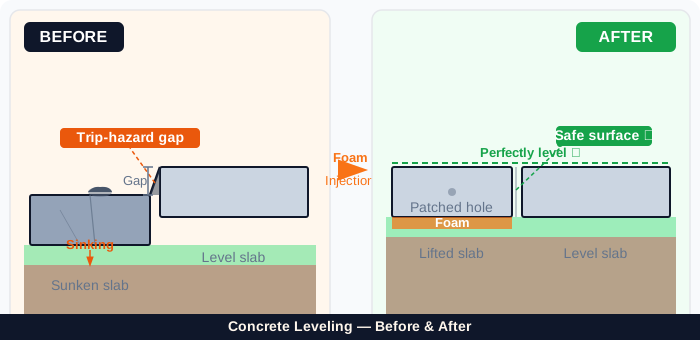
A sidewalk notice is about one thing: removing a hazard on a walkway. The city has identified a panel that sits too high, too low, or tilted enough that a pedestrian could catch a toe or a wheel on it. What the notice usually does not dictate is how you fix it, only that the walking surface ends up safe and even by the deadline. That distinction matters, because it opens the door to the faster, less invasive fix when the concrete is still good.
Who pays for the work depends on your city and which program applies. A repair you arrange on your own is yours to schedule and complete. Read your notice closely for who it names as responsible, and call your city's public works department if that part isn't clear.
Level It or Replace It? The Question That Clears the Notice
This is the decision that drives your cost, your timeline, and how disruptive the fix is.
- If the slab is structurally sound but has sunk or heaved out of level, it can usually be raised back to grade with waterproof polyurethane foam through a few dime-sized holes. The trip hazard disappears without tearing anything out. See whether sunken concrete can be fixed without replacing it and our honest leveling-versus-replacement breakdown.
- If the panel is cracked all the way through, broken into pieces, or badly spalled, lifting it won't make it safe. It needs replacement. On a free walk-through we will tell you which one you're actually looking at.
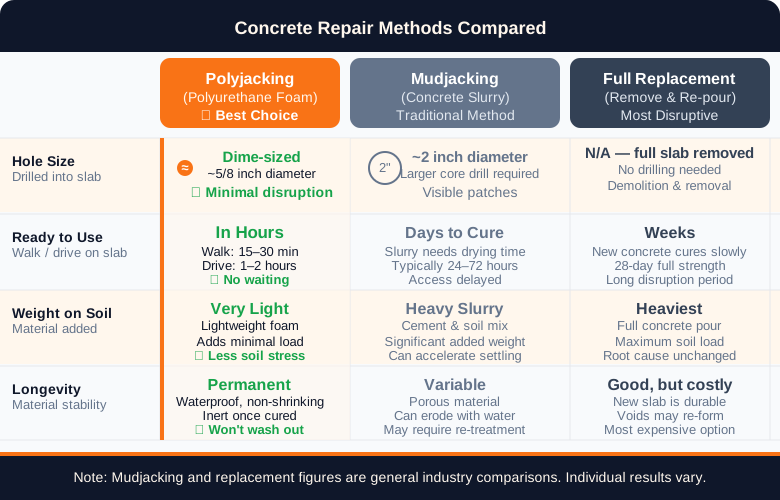
Because the notice is about the hazard, not the method, clearing it by leveling the sidewalk is often the quicker, lower-cost route whenever the concrete is intact. Even a small vertical lip is enough to catch a toe or a stroller wheel; our ADA trip-hazard guide breaks down the exact height that counts as a hazard.
For a settled but intact panel, this kind of sinking concrete repair keeps the existing slab in place instead of sending it to a tear-out. If you are weighing lightweight foam against the older slurry method, our polyjacking vs mudjacking comparison lays out the differences side by side.
The Permit Detail Most Homeowners Miss
How you fix the sidewalk can change what approvals you need. Tearing out and repouring a sidewalk in the public right-of-way can require a permit. In Olathe, for example, replacing a driveway or sidewalk in the public right-of-way requires a right-of-way permit, while foam-leveling an existing slab does not trigger that permit requirement.
Rules vary from city to city, so confirm with your own public works office before you schedule. But the pattern holds across the metro: lifting an intact slab back to level is frequently the path with the fewest hoops, and the walkway is usable again in 15 to 30 minutes rather than days of forms, tear-out, and curing.
Why the Sidewalk Sank in the First Place
Kansas City sits on expansive clay that swells when it's wet and shrinks when it's dry, and most winters bring repeated freeze-thaw cycles. Together they open voids under slabs and let panels settle a little more each year, which is why a walkway that was fine a few seasons ago can earn a notice now. For the full picture, see why sidewalks go uneven in KC and how Kansas City clay soil wrecks concrete.
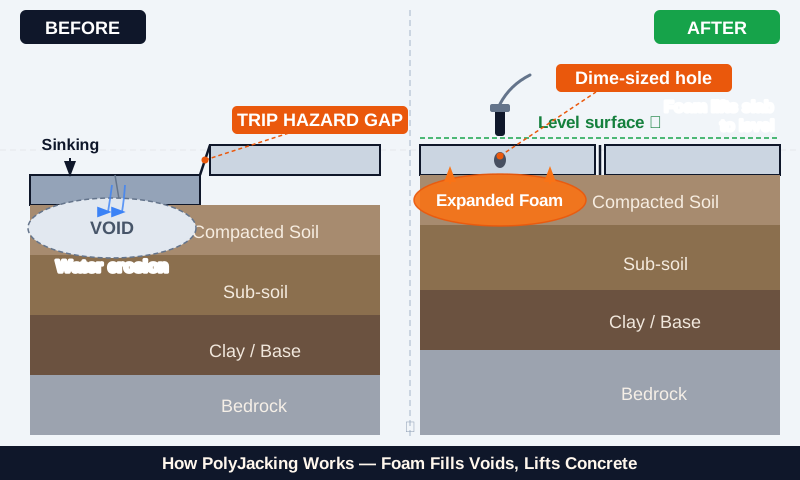
The practical takeaway: the soil that caused the settling is still under there, so a repair that adds as little weight as possible (lightweight foam rather than heavy mud) is less likely to sink again and hand you a second notice down the road.
If you are wondering whether a lifted panel will stay put, see how long concrete leveling lasts.
How to Respond Before Your Deadline
- Read the deadline and the named defect on the notice, and note who it holds responsible.
- Photograph the panel and keep the notice on file. A dated record of the problem and the repair protects you later.
- Get a free on-site assessment so you know whether the slab levels or needs replacement before you commit to either.
- Schedule the fix well before the deadline; leveling an intact slab is usually a one-visit job, walkable in 15 to 30 minutes.
- Confirm with your city that the completed repair satisfies the notice, and keep your paperwork.
Step 5 deserves a little more detail than it first appears to need. The notice itself may spell out how the city verifies the fix. Some say an inspector will drive by the address; others ask you to submit before-and-after photos to a specific email or online portal; some simply close the ticket once you call to say the work is done. If the notice does not say, call the public works number listed on it and ask specifically who confirms the repair and what they need from you, such as a photo, a work order number, or a site visit. Get that answer in writing if you can, and keep it with your other paperwork. The foam is in and the slab is level, but the notice stays open until the city records that closure, so that final confirmation is the part that actually ends the obligation.
Not sure whether yours will level or needs replacing? Our free concrete diagnostic gives you a fast read, or book a free on-site estimate and we'll tell you straight: honest advice, no obligation. Call (913) 713-7794 anytime. Managing sidewalks for a neighborhood or a rental portfolio instead of a single home? See our guide for HOAs and property managers.
How polyjacking works in 90 seconds
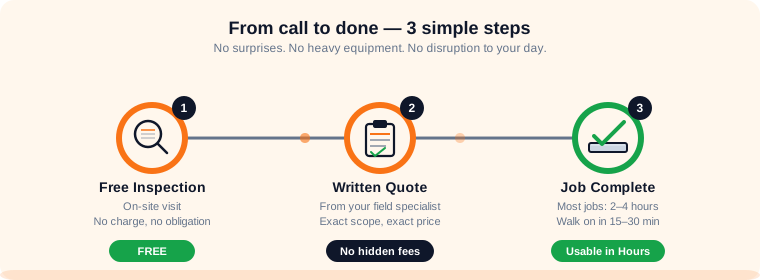
Our team walks you through the three-step process: dime-sized holes, high-density polyurethane foam that fills every void and compresses the soil beneath your slab, and use within hours with no heavy trucks. Call (913) 713-7794 or book a free estimate below.
Frequently asked
Does leveling a sunken sidewalk satisfy a city repair notice?
When the notice is about a trip hazard from a settled but otherwise intact panel, lifting that panel back to level removes the exact hazard the city flagged. We are not your code authority, though, so the last step is always to confirm with your city that the completed repair meets the notice. If a panel is cracked through or broken into pieces, it needs replacement instead, and we will tell you that straight on the walk-through.
How long do I have to fix a sidewalk after the city sends a notice?
Your compliance deadline is stated on the notice itself and varies from city to city, so read it and treat it as firm. Don't wait until the last week: leveling an intact slab can usually be scheduled quickly and the walkway is safe to use again in 15 to 30 minutes, while a full tear-out and repour takes longer to arrange and cure.
Do I need a permit to fix my own sidewalk?
It depends on the fix and the city. Replacing a sidewalk in the public right-of-way can require a right-of-way permit — Olathe, for example, requires one for driveway or sidewalk replacement in the right-of-way, while foam-leveling an existing slab typically does not trigger that permit. Confirm with your own public works office before you schedule.
Who pays for the repair, me or the city?
That depends on your city and which program applies. A repair you arrange on your own is yours. Your notice should say who it holds responsible. If that part is unclear, call your city's public works department.
Have a sinking slab?
Book a free on-site inspection. Honest advice, usable within hours.
Pick a time that works for you
Book right here on this page. Prefer to talk? Call (913) 713-7794.