
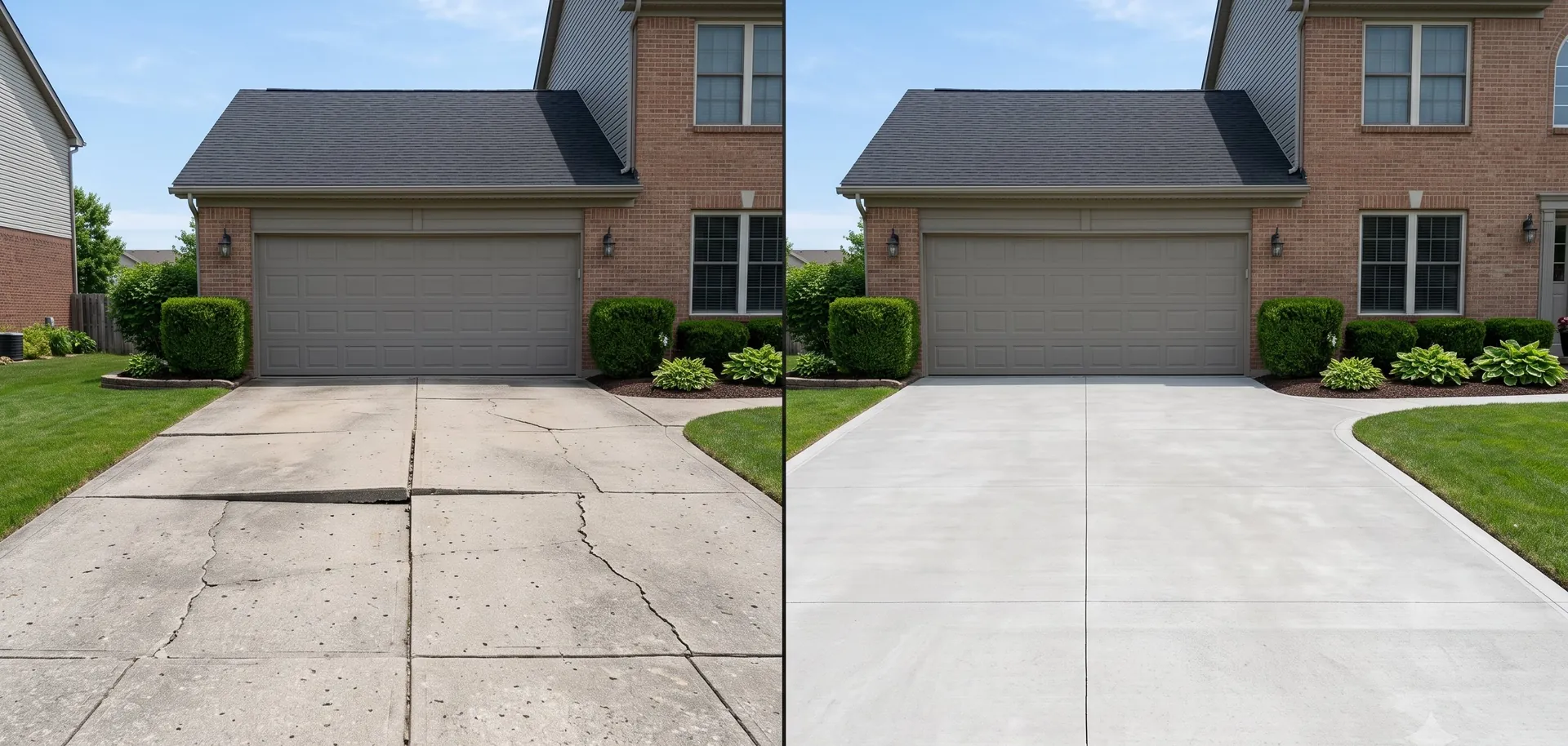
 Illustrative
Concrete Slab Leveling in Kansas City: Which Slabs We Fix and When It Makes Sense
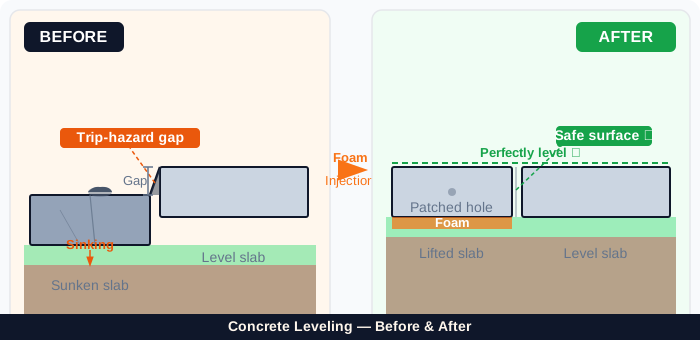
Concrete leveling raises sunken slabs by injecting polyurethane foam underneath through small holes, filling the voids that let them drop. PolyJacks levels driveways, sidewalks, patios and garage floors across Kansas City, typically usable within hours. When a slab is badly cracked or crumbling, we say so and recommend replacement instead.
Leveling, Replacement, or Wait? Which Repair Path Fits Your Slab
Sunken concrete leaves homeowners with three options: lift the existing slab, replace it entirely, or leave it alone. Concrete slab leveling (lifting the existing slab with foam) is the right path when the slab is structurally intact and the cause is the soil beneath it. A void, compacted fill that has settled, or years of clay movement opening a gap. In that situation you do not need new concrete poured; you need the ground underneath restored, and polyurethane foam does that in hours.
The decision tilts toward replacement when a slab is cracked through its full depth: injecting foam would widen those fractures rather than close them. An active plumbing leak beneath the slab calls for a plumber before any leveling makes sense; sealing the void while the leak continues is a temporary fix at best. Tree roots actively heaving concrete upward: pushing from below rather than withdrawing moisture and creating voids: also require root work before a lift. We identify which category your slab falls into during a free on-site inspection. If replacement is the honest answer, we say so.
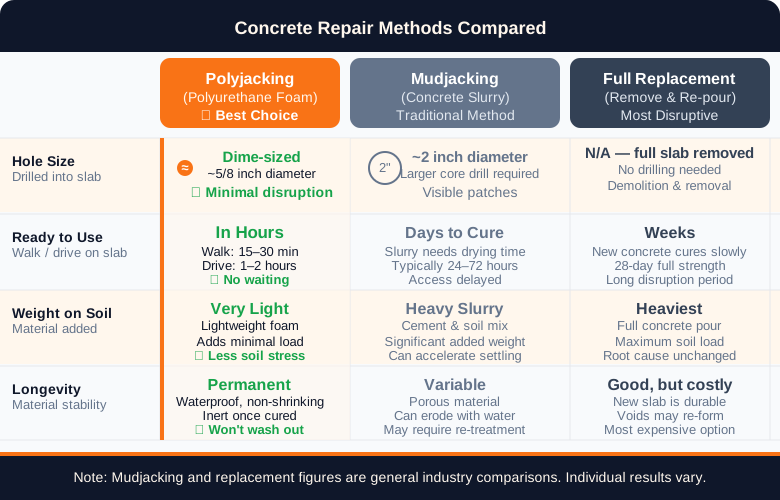
There is one more path you may be quoted for the same slab: mudjacking, the older version of this repair, which pumps a heavy slurry of soil, cement and water underneath through holes much wider than ours. PolyJacks does not use it. We inject a lightweight waterproof polyurethane foam through dime-sized holes instead, so the slab is back in use the same day. The differences are laid out in polyjacking vs. mudjacking.
Before any of those three paths applies, there is one question worth settling first: is the problem the slab, or the house it sits beside? The dividing line is what the concrete is holding up. Anything poured on the ground and standing on its own is a candidate for foam leveling. Anything carrying the structure is a foundation job, which is a different trade entirely. The two failures look alike from above, which is exactly why they get confused.
Four signals point at the foundation rather than the slab:
- Doors and windows across the house that suddenly stick or will not latch, especially alongside new cracks above the door frames.
- Stair-step cracking that climbs through the mortar joints of a brick or block wall.
- An interior floor that slopes noticeably, bounces, or feels soft underfoot.
- A crack running through the foundation wall itself, or damage right at the seam where your concrete meets the structure.
PolyJacks does not offer foundation repair, drainage correction, crack sealing or concrete replacement, so we have no reason to talk you into a lift on a slab that needs structural work. If what you are seeing leans structural, we say so and point you to a foundation specialist. The full six-check walkthrough is at foundation problem or just the slab, and the scope we hold ourselves to is spelled out on the about page.
If the quotes you are reading call the work concrete jacking or slabjacking rather than leveling, they are describing the same repair path. Our concrete jacking page covers what those terms take in, which slabs a lift can raise, and how a job runs from start to finish.
Five Warning Signs Your Concrete Is Ready to Be Leveled
These are the visible indicators we see at nearly every estimate in the Kansas City area:
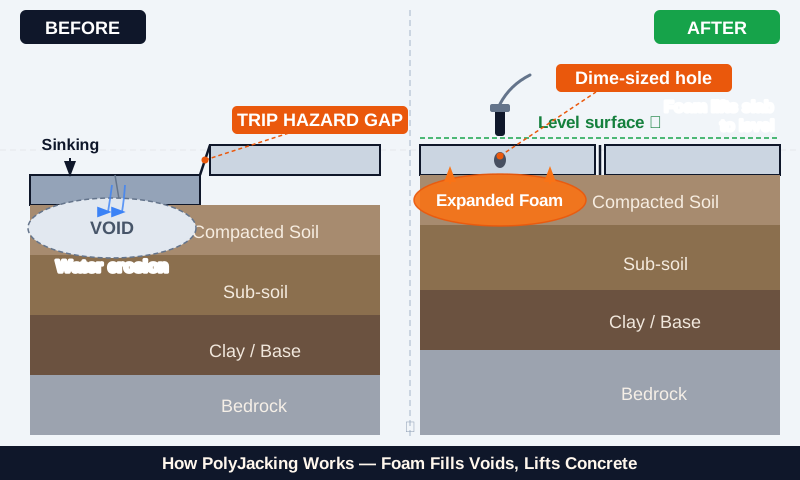
A visible gap between the slab edge and the house — any separation between a driveway apron, garage slab, or walkway and the adjacent foundation or step indicates the slab has dropped. Gaps wider than a half-inch usually mean the underlying void is large enough that leveling is clearly warranted.
Water that runs toward the house after rain. A well-drained driveway or patio slopes away from the foundation. When a slab settles unevenly, the grade reverses and rainwater flows inward toward the house instead. That pooling accelerates further soil washout and can direct moisture toward the basement or crawl space.
A rocking or hollow-sounding panel: slabs resting partly on void space will rock when stepped on at the low edge, and a hollow sound when knocked is a common sign of air space beneath. Both indicate the concrete has lost soil contact across a significant area.
A trip-hazard lip at a panel joint: any vertical offset between adjacent sidewalk, driveway, or patio sections creates a tripping risk. Many municipalities have codes requiring homeowners to repair trip-hazard offsets above a threshold, typically around a half-inch, especially near public walkways.
Sunken sections collecting standing water: depressions that hold puddles after rain are direct evidence of settlement. Left unaddressed, the ponding accelerates soil erosion beneath the slab and the low point drops further each season.
If you are still weighing lifting against tearing out, signs you need concrete leveling, not replacement helps you sort which of these signs point to a repair.
What Happens If You Wait
The clay cycle does not pause. Each wet season swells the subgrade and each dry stretch pulls it back, widening the void under the slab a little further with every cycle. A panel levelable today at a half-inch offset can progress over several seasons to full-depth cracking, at which point foam injection would widen the fractures rather than close them and replacement becomes the only path. Trip-hazard offsets that already exceed the municipal threshold carry liability exposure for the property owner, and that exposure grows with each additional rain event that deepens the low point. For the soil mechanics behind this progression, see why Kansas City concrete sinks.
Commercial property owners and property managers should also know how ADA compliance applies to trip hazards on walkways and entrances.
Every Concrete Surface PolyJacks Levels in Kansas City
Foam leveling works under any settled slab where the concrete is intact and soil movement caused the drop. PolyJacks handles all of these in the Kansas City metro:
Driveways. The most frequent call we receive. Settlement at the street joint and the garage apron are the two most common failure spots. See driveway leveling Kansas City.
Sidewalks and walkways: trip-hazard lips between panels create liability exposure for property owners. See sidewalk leveling and trip hazard repair.
Patios: sections that pond water after rain typically indicate the slab has settled toward the house. See patio leveling Kansas City.
Garage floors: settlement near the overhead door threshold or along the slab perimeter. See garage floor leveling Kansas City.
Pool decks. Foam works around coping, near equipment pads, and at expansion joints where panels have shifted. See pool deck leveling Kansas City.
Porches and front stoops: steps and landings that have pulled away from the house. See porch and step leveling Kansas City.
Void fill. Foam injected beneath a slab that has not dropped yet but has lost soil contact. Filling the cavity proactively prevents a future settling event. See void fill Kansas City.
Commercial surfaces: parking areas, warehouse slabs, loading dock approaches, and commercial walkways. See commercial concrete leveling Kansas City.
Two related guides go deeper: why concrete porches and steps sink covers how their footings change settlement, and when a commercial slab is due for a call covers warehouse floors, docks, and parking lots.
What Concrete Leveling Costs vs. Full Replacement
Replacement requires breaking out the existing slab, hauling it off, forming and pouring new concrete, and closing the area for several days while it cures. Foam leveling skips demolition and disposal entirely. It works on the slab already in place, and the area is in use the same afternoon.
That difference in scope is where the price gap comes from. Across PolyJacks jobs in the Kansas City area, lifting an intact slab has run 50 to 70 percent below the replacement bids homeowners received for the same piece of concrete. A small sidewalk panel that replacement contractors quote in the thousands can typically be leveled for under two thousand dollars. A settled garage floor or pool deck that draws a five-figure demo-and-repour bid is often a half-day foam job.
The exact number for your slab depends on the foam volume required, which we can only measure on-site. Call (913) 713-7794 or book a free estimate online to get real numbers for your situation.
If you want to see how that number gets built before you call, how we build a concrete leveling quote walks through the four variables that set it, four real Kansas City jobs alongside the replacement quotes those homeowners already had in hand, and a free scope estimator you can run in about a minute.
Warranty, Customer Duties and What Voids Coverage
Every PolyJacks job is covered by a 5-year limited warranty on workmanship and materials. If the leveled slab settles more than 1/2 inch within 5 years due to our work, we schedule a return visit and re-lift it at no charge. It is written to the owner who paid for the work, at that address, for the full five years, and it ends if the property is sold.
To keep the warranty in effect, customers have a few responsibilities after the job. Gutters should be clean and functional; downspouts should be extended at least five feet away from the slab edge. The yard grade around the leveled area should direct water away from the foundation rather than toward it. Joints and open cracks should be kept sealed, sprinklers kept off the slab edge, any leak repaired promptly, and any drainage or grading correction the crew recommends in writing completed within 60 days. Normal passenger vehicles can return within two hours of completion; no heavy or loaded trucks for the first 48 hours.
Coverage does not extend to: drainage or gutter problems that existed before or developed after the job, grading or backfill issues that were not present at inspection, tree root activity, acts of God, hairline or cosmetic cracks in the slab surface, or property modifications the customer makes that redirect drainage toward the repaired area. Full terms are at warranty and policies.
Why Kansas City Soil Causes This Problem Across Every Zip Code
The expanding clay beneath most of the metro swells with every wet season and contracts during every dry stretch, gradually opening voids under slabs over years. Winter adds freeze-thaw stress that works additional gaps into the subgrade. Drainage pointed at the foundation accelerates the washout. This cycle plays out in every suburb and county on both sides of the state line. The geology is the same whether your address is in Overland Park, Lee's Summit, Olathe, or Independence.
For the full breakdown of how KC soil and climate conditions drive settlement, see our detailed page on polyjacking and KC soil science.
Covering 35+ Kansas City Metro Communities
PolyJacks runs out of Spring Hill, Kansas, about 50-mile residential radius, 100-mile commercial radius from there.
Johnson County KS: Overland Park, Olathe, Shawnee, Lenexa, Leawood, Prairie Village, Gardner, De Soto, Spring Hill, Merriam, Mission, Roeland Park, Fairway, Westwood.
Wyandotte County KS and outlying Kansas: Kansas City KS, Bonner Springs, Edwardsville, Basehor, Lansing, Leavenworth, Lawrence, Eudora, Ottawa, Paola.
Missouri side — Jackson, Clay & Platte Counties: Lee's Summit, Independence, Blue Springs, Raytown, Liberty, Gladstone, Grandview, Grain Valley, Oak Grove, Parkville, Platte City, Riverside, North Kansas City, Kansas City MO.
If your address is near the coverage edge or your city is not listed, call (913) 713-7794. We serve the radius, not just the named cities.
Schedule a Free Estimate
Call (913) 713-7794 or use the contact form to book a no-cost on-site inspection. We walk the concrete, probe for void depth, check the drainage situation, and give you a straight answer: is leveling the right fix, what caused the settlement, and what the job would cost. No charge, no obligation to proceed, no upsell pressure. If foam is not the right fix for your slab, we will tell you straight. You can also describe what you are seeing first with the Diagnose tool on this site.
What the work actually looks like
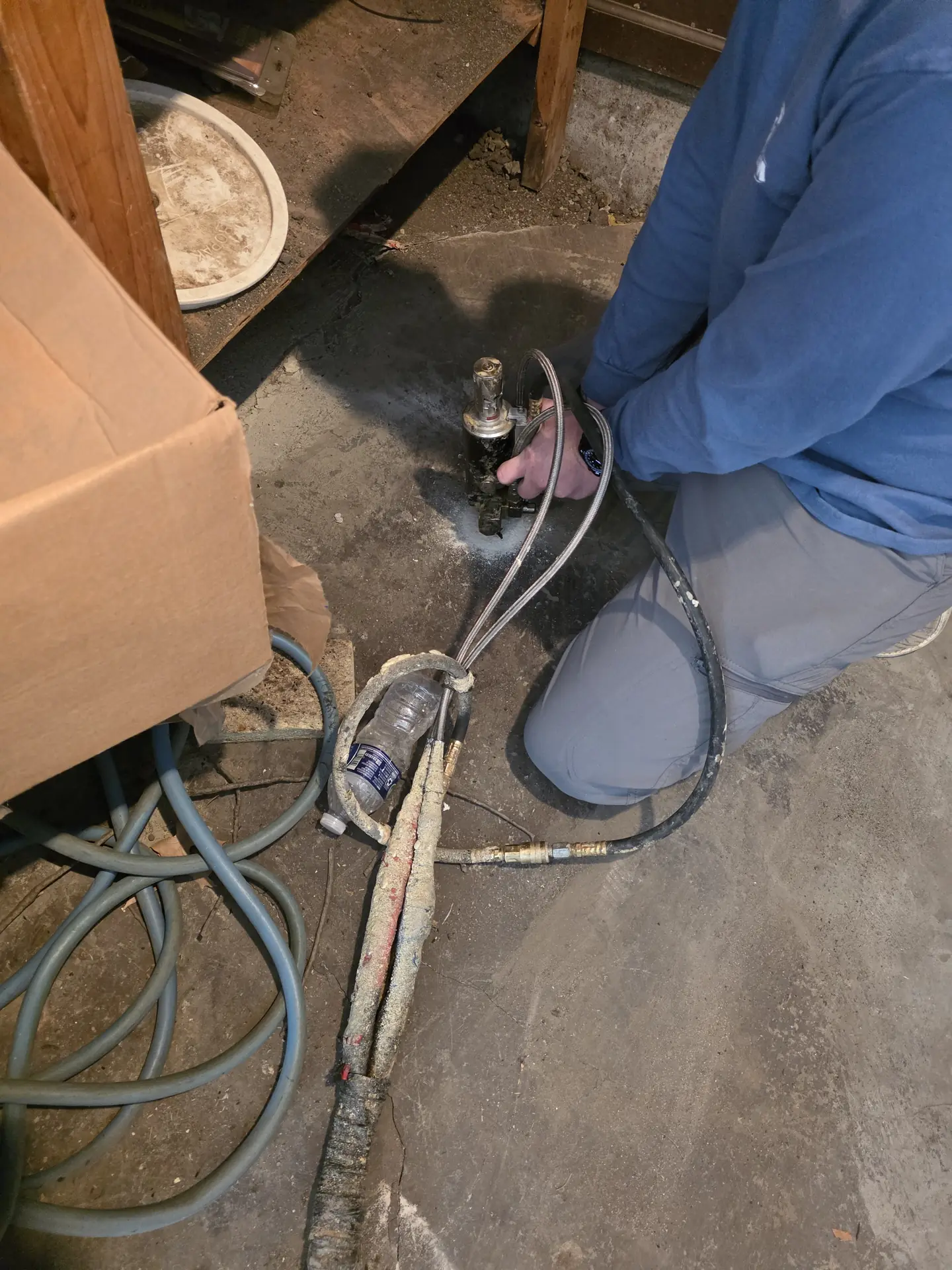
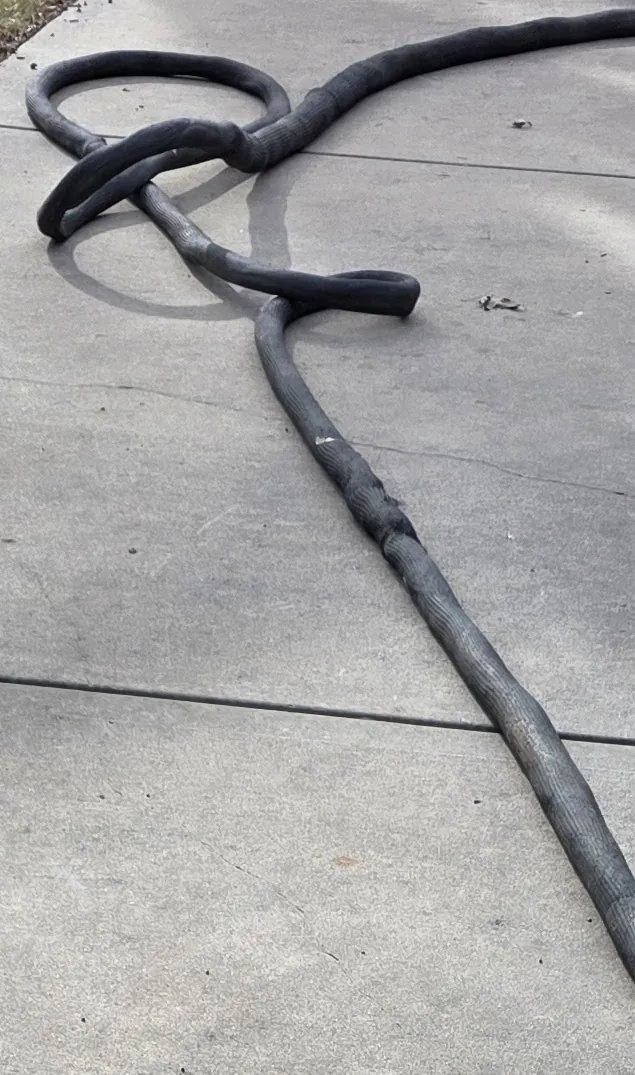
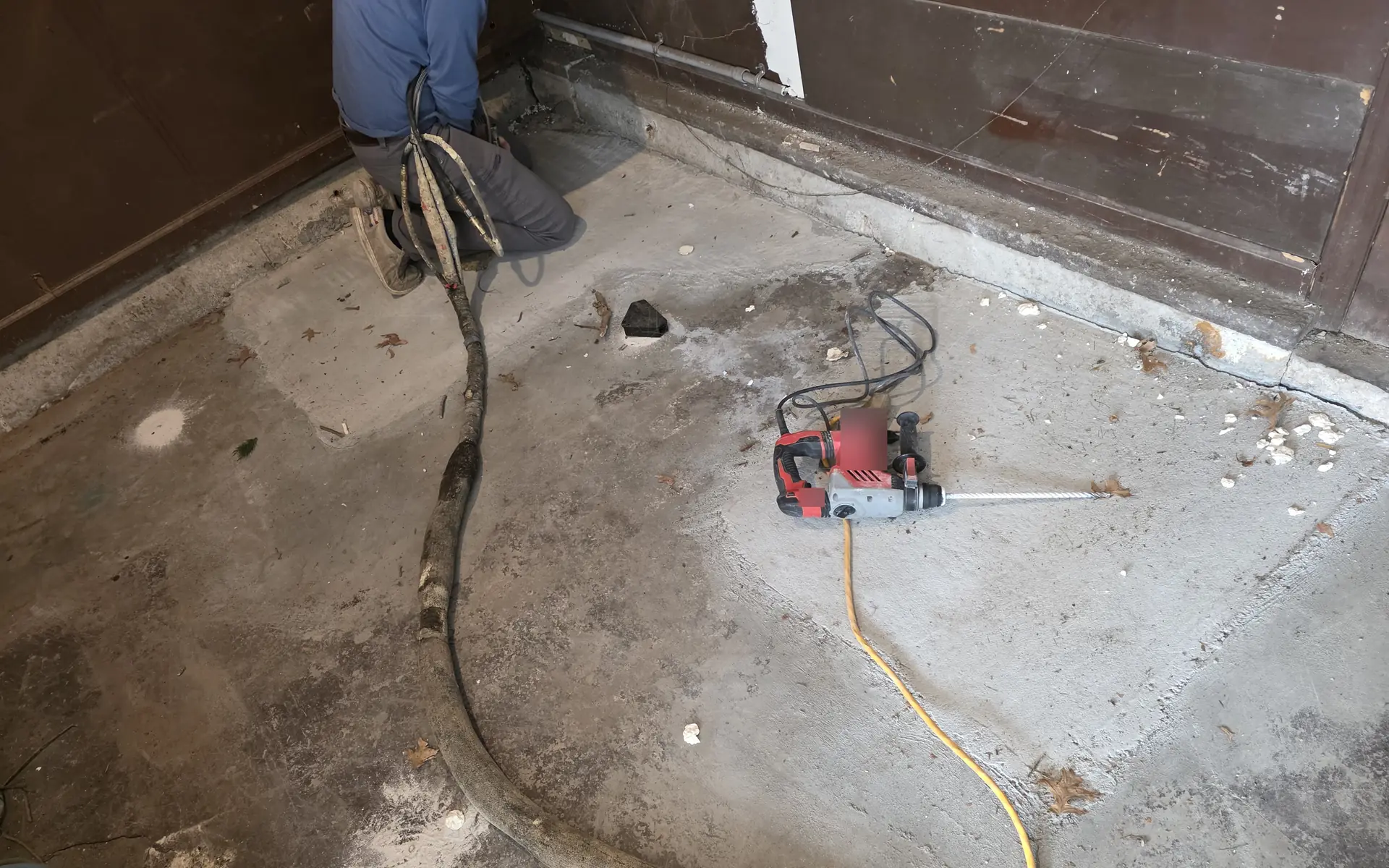
How polyjacking works in 90 seconds
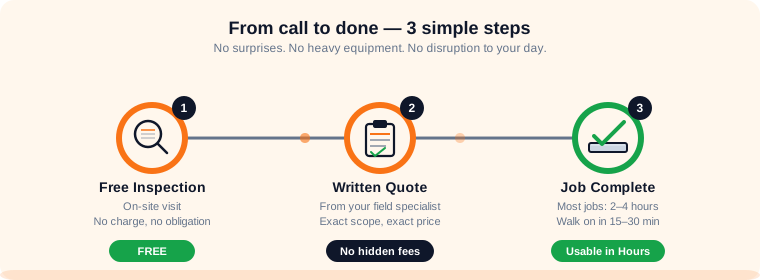
Our team walks you through the three-step process: dime-sized holes, high-density polyurethane foam that fills every void and compresses the soil beneath your slab, and use within hours with no heavy trucks. Call (913) 713-7794 or book a free estimate below.
Frequently asked
What is the difference between concrete leveling and concrete replacement?
Leveling lifts the existing slab by filling the void beneath it with expanding foam. The concrete stays in place, the job takes hours, and the surface is usable within hours. Replacement tears out the old slab, hauls it off, pours new concrete, and closes the area for several days while it cures. Leveling costs 50 to 70 percent less and is the right choice when the slab is structurally intact and the soil beneath it moved.
Which concrete surfaces can PolyJacks level in Kansas City?
Driveways, sidewalks and walkways, patios, garage floors, pool decks, porches and front stoops, and commercial surfaces including parking lots and warehouse slabs. If the concrete is structurally sound and the settling was caused by soil movement or void formation, foam leveling is typically the right fix.
When is concrete leveling NOT the right solution?
Three main situations: the slab is cracked through its full thickness (lifting would widen those fractures); an active plumbing leak is still washing soil out from underneath (the leak must be fixed first); or tree roots are actively heaving the concrete upward. We identify which situation applies at the free on-site estimate.
How soon can I use the concrete after leveling?
Most surfaces can be walked on within 15 to 30 minutes of the crew finishing. Driveways typically handle normal passenger traffic within one to two hours. Keep heavy or loaded trucks off the leveled area for 48 hours while the foam reaches full hardness.
Does concrete leveling carry a warranty?
Yes. Every PolyJacks job carries a 5-year limited warranty on workmanship and materials. If the slab settles more than 1/2 inch within 5 years due to our work, we re-lift it at no charge. It is written to the owner who paid for the work, at that address, for the full five years, and it ends if the property is sold. Full exclusions and customer duties are on the warranty page.
Do you serve both Kansas and Missouri sides of the Kansas City metro?
Yes. We cover Johnson and Wyandotte counties on the Kansas side, and Jackson, Clay, and Platte counties on the Missouri side: same crew, same warranty, no extra charge for the state-line crossing.
How long does a concrete leveling job take?
Most residential jobs run two to four hours from arrival to finished cleanup. The injection holes: dime-sized, four to twelve per typical residential job: are patched before the crew leaves.
Does homeowners insurance cover a sinking driveway or sidewalk?
Most homeowners policies do not. Standard coverage is built to pay for sudden, accidental damage, and insurers classify gradual settling and earth movement as exclusions. The exception worth checking is sinking that traces directly to a sudden peril your policy does cover, such as a water line breaking under the slab. Policy wording varies, so the only way to know is to pull your declarations page and ask your agent. We lay out the reasoning in why insurance rarely pays for a sinking driveway.
Is the polyurethane foam safe around kids, pets and landscaping?
Yes. The foam cures within minutes of injection, and once cured it is chemically inert: a solid, closed-cell material that does not off-gas, leach, or break down under the slab. It goes in underground through dime-sized holes aimed at the void, so nothing is sprayed in the open air and it does not spread across the yard or contact plantings. Any faint odor during the reaction is brief and gone once curing finishes. Because the cured foam is waterproof and closed-cell, it does not dissolve or wash out into the surrounding soil or groundwater. Full detail is in is polyurethane foam safe for my yard.
Will my concrete sink again after it's leveled?
The section we lift stays supported, because the foam itself does not compress, rot, dissolve, or wash out the way loose fill and mudjacking slurry can. Once cured it is inert and does not lose lifting strength over time. What is never static is the ground. A neighboring panel sitting over softer fill, or an untreated area that a downspout keeps soaking, can settle on its own later. That is a new cause rather than the original repair failing, and the same slab can be injected again if it ever happens. It is also why the customer duties listed above, keeping gutters clear and pointing downspouts away from the slab edge, do as much to prevent a repeat as the foam does. More on what permanent honestly means is at is concrete leveling permanent.
Should I level the concrete before I list the house?
Usually yes, for the slabs a buyer actually walks across: the driveway, the front walk, and the entry step. Home inspectors are trained to note settling, cracking, and trip hazards, and a raised lip between panels lands in the report as its own line item rather than a general condition remark, which turns it into a discrete thing for a buyer to negotiate on. Appraisers work the same territory in reverse, folding visible exterior condition into an overall rating instead of an itemized deduction. Level it beforehand and neither one has that to write down. Because foam raises an individual panel without touching the ones around it, and the surface is back in use the same afternoon, the work fits a listing schedule instead of pushing it back. A settled back patio out of the main sightline can usually wait. See concrete leveling before selling your house and does uneven concrete affect home value.
Are concrete lifting, concrete raising and foam jacking the same as concrete leveling?
Yes. Those are different names for the same repair: injecting polyurethane foam under a settled slab through dime-sized holes, filling the void and raising the concrete back to level while the slab stays in place. What matters when comparing quotes is the material and the hole size, not the label. PolyJacks uses lightweight waterproof foam, and the slab is back in use within hours. How the process runs from start to finish is covered on our polyjacking in Kansas City page.
Get your free concrete leveling estimate
No obligation, and if foam isn't the right fix, we'll tell you straight.
Pick a time that works for you
Book right here on this page. Prefer to talk? Call (913) 713-7794.