
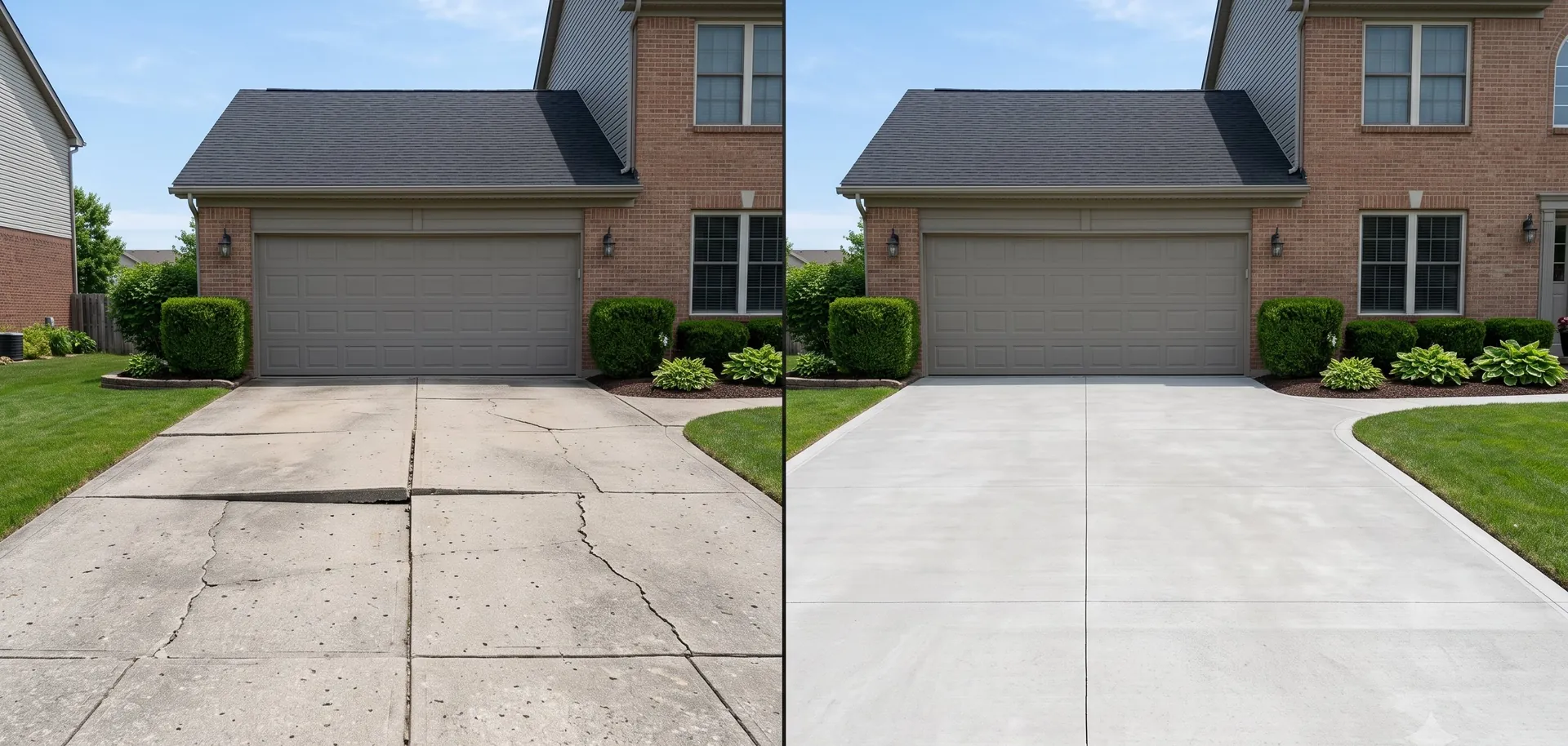
 Illustrative
Why Is My Concrete Sinking in Kansas City?
Concrete sinks in Kansas City because the soil underneath it moves and the rigid slab follows it down. Three local forces drive that movement: expansive clay that swells when wet and shrinks when dry, freeze-thaw cycles that open a fresh void under the slab each winter, and poor drainage that washes soil out from beneath the concrete. Once a void forms, the slab has nothing to rest on and a corner, edge, or whole section drops. PolyJacks fills those voids and lifts the slab back to level with waterproof polyurethane foam, with free on-site estimates across the Kansas City metro.
Why Is My Concrete Sinking? The Short Answer
If you're asking why is my concrete sinking, the honest answer is almost always the same: the soil underneath moved, and the slab followed it down. Concrete is rigid (it doesn't stretch or flex) so when the ground beneath it settles, shifts, or washes away, the slab either cracks or drops into the empty space that's left behind.
Across the Kansas City metro, three things drive that soil movement more than anything else: expansive clay that swells and shrinks with the seasons, freeze-thaw cycles that open small voids over time, and poor drainage that slowly carries soil away from under a slab's edges. Sometimes it's one cause. Often it's a combination working against the same driveway or patio for years before it's visible.
Not sure what's happening under your slab? Our free diagnose tool walks through common symptoms (cracks, gaps, tripping edges) and points you toward the likely cause before you ever pick up the phone.
Kansas City's Clay Soil Is the #1 Cause
Kansas City sits on expansive clay soil, and that's the single biggest reason concrete sinks here. Clay soaks up water and swells after a wet spring, then dries out and shrinks in a hot summer or dry fall. That swell-shrink cycle repeats year after year, and every cycle leaves a little more empty space under a slab that isn't moving with it.
Concrete just sits on top, waiting for the ground to catch up. Eventually a corner drops, an edge tips, or a whole section settles a couple inches lower than the rest. It's not a flaw in the concrete. It's the ground underneath doing what clay does across this whole region, from the Kansas side of the metro to the Missouri side.
This is the same root cause behind most of the concrete leveling calls we get in Kansas City, regardless of whether it's a driveway, a sidewalk, or a patio. The fix has to address the void the clay left behind, not just the surface crack.
If you want to see how your specific neighborhood ranks for settlement risk, our KC Settlement Risk Index breaks down clay content, freeze-thaw exposure, and drainage history by area.
Freeze-Thaw and Wet-Dry Swings Open Voids Underneath
Kansas City winters add a second layer to the clay problem. Water in the soil freezes and expands, then thaws and contracts, over and over through a typical winter. Each freeze-thaw cycle nudges soil particles apart and creates tiny voids that weren't there before. String enough of those cycles together over several winters and those tiny voids add up to real, unsupported space under a slab.
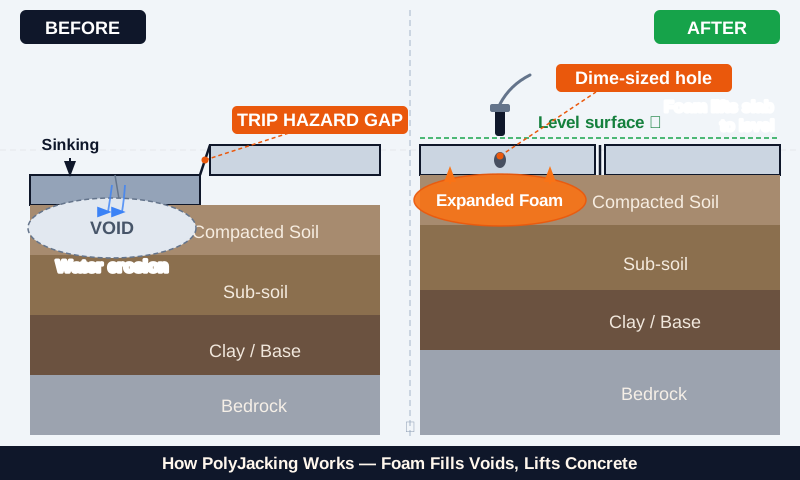
Combine that with the wet-dry swings clay already goes through the rest of the year, and a slab can end up sitting over a network of small gaps instead of solid, compacted soil. The concrete on top doesn't sink all at once. It settles gradually, which is why sinking often shows up as a slow tilt or a hairline crack that gets a little wider each season rather than a sudden drop.
By the time it's noticeable, the void underneath has usually been forming for a while.
Poor Drainage and Downspouts Wash the Soil Away
Water that isn't directed away from a foundation or slab edge is one of the most common (and most fixable) causes of sinking concrete we see across the metro. A downspout that dumps right next to a patio, a grade that slopes the wrong way, or a gutter that's clogged and overflowing all send water straight into the soil under the slab.
Over time, that water doesn't just soften the soil. It erodes it, carrying fine particles away and leaving a void behind. A slab that was perfectly supported when it was poured can end up floating over empty space a few years later, purely because water kept finding the same path underneath it.
This is one cause homeowners can often spot themselves: check where your downspouts empty out, and look at whether the ground slopes away from the house. If it doesn't, that's very likely contributing to the settling you're seeing.

Downspouts are only one of the ways water gets under a slab. Sprinkler heads soaking the slab edge, grading that slopes back toward the house, clogged gutters and a missing splash block all do the same work more quietly, and the five drainage mistakes that quietly sink a driveway covers each one with the fix that stops it.
Poor Compaction When the Slab Was Poured
Not every cause traces back to weather. Sometimes the soil under a slab simply wasn't compacted well before the concrete was poured in the first place. Loose fill settles under its own weight over months or years, even without extra water or freeze-thaw cycles pushing it along.
This shows up most often with additions. A patio poured next to an older house, a sidewalk section replaced after utility work, or a garage floor poured over disturbed soil. The new concrete looks fine on day one because the loose soil underneath hasn't finished settling yet. Give it a year or two, and the same section starts to sink while the surrounding, undisturbed slab stays put.
It's not something a homeowner could have caught at the time, and it's not a sign anything was done wrong on purpose: loose fill settles, that's just physics. The fix is the same either way: fill the resulting void and bring the slab back level.
Which Slab Is Sinking? Driveways, Sidewalks, Patios & More
Sinking concrete shows up differently depending on what kind of slab it is, but the underlying cause (soil movement) is usually the same.
- Driveways often sink unevenly at the joints, creating a lip that catches car doors or shopping carts. See driveway leveling.
- Sidewalks and walkways develop trip hazards where one panel sits higher than the next. See sidewalk leveling & trip hazard repair.
- Garage floors can dip near the slab's edge or the overhead door track. See garage floor leveling.
- Patios, pool decks, and porch steps settle away from the house, opening a gap where water then collects and makes things worse.
If there's a void under a slab but no visible sinking yet, that's still worth addressing: see void filling. Whatever type of concrete you're dealing with, the questions are the same: how big is the void, and how much has the slab actually dropped?
The likely cause often depends on what was under the slab when it was poured. If the concrete sits on undisturbed clay, the seasonal swell-shrink cycle is usually the primary driver. If it was poured over disturbed soil or loose fill, as is common with additions or work done after utility excavation, poor compaction is a more likely culprit. If you know roughly when your slab was poured and whether the ground underneath was ever disturbed, that narrows down which of the causes above is most likely for your situation.
If the slab in question is a patio, why a patio sinks in Kansas City goes deeper on what happens when it settles away from the house, and why a pool deck sinks covers the same problem around a pool.
How We Fix Sinking Concrete: Foam Injection, Not Mudjacking
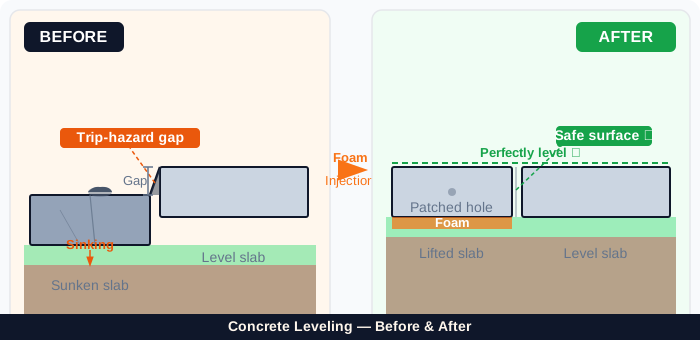
Once we know why concrete is sinking, the fix is polyjacking: injecting expanding polyurethane foam under the slab to fill the void and lift it back toward level. We drill a few dime-sized holes, inject foam that expands to fill the empty space, and the slab rises as the foam does its work. It cures in minutes, and the concrete is typically ready to walk on in 15 to 30 minutes and drive on in 1 to 2 hours.
The foam itself is lightweight, so it won't overload soil that's already struggling to support the slab, and it's waterproof, so it won't wash out the way the loose material under a slab already has. That matters in Kansas City, where the drainage and clay issues that caused the sinking in the first place don't go away on their own.
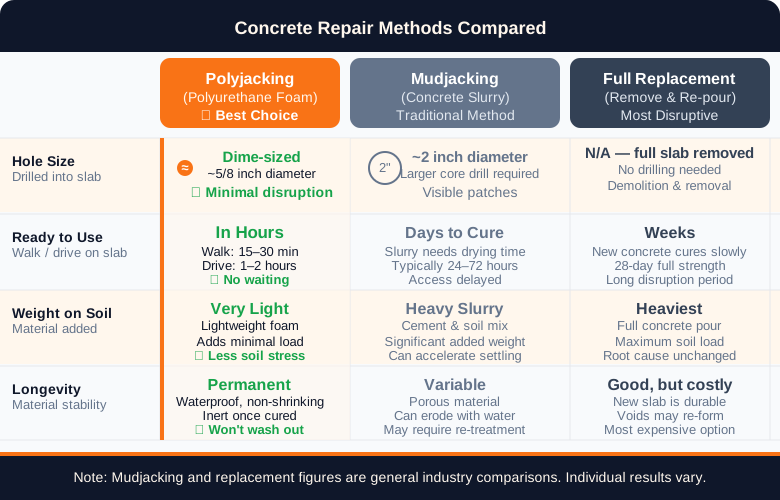
This is different from mudjacking, which pumps a heavy cement-based slurry through much larger holes. See our full breakdown of polyjacking vs. mudjacking if you want to compare the two side by side before deciding.
Signs You Shouldn't Wait
Not every settled slab is an emergency, and we'll tell you straight if yours can wait. But a few signs mean it's worth getting a look sooner rather than later.
A sidewalk or walkway panel that's raised enough to catch a toe or a wheel is a real trip hazard, not just a cosmetic issue. A gap that's opened between a patio or porch and the house gives water a direct path underneath, which tends to accelerate the same settling that caused the gap. And any crack that's visibly widening season over season is a sign the void underneath is still growing, not stable.
None of these mean you need to act today. They do mean the underlying cause is still active, and the longer it goes unaddressed, the more concrete ends up affected. If you're unsure whether what you're seeing is urgent, the free diagnose tool is a fast way to get a read on it before scheduling anything.
Get a Free Estimate on Your Sinking Concrete in Kansas City
If you've made it this far, you probably already know your concrete is sinking: what you need now is someone to look at it in person and tell you honestly what's going on underneath. That's what a free on-site estimate is for. We'll look at the slab, talk through what's likely causing it, and if foam injection isn't the right fix for your situation, we'll tell you that too.
We're a locally owned crew based in Spring Hill, KS, and we serve the whole Kansas City metro on both sides of the state line, including areas like Overland Park and communities throughout the region. Call (913) 713-7794 or request your free estimate online, and we'll get a real answer to "why is my concrete sinking" in front of you. No obligation, no pressure.
Related guides
How polyjacking works in 90 seconds
Our team walks you through the three-step process: dime-sized holes, high-density polyurethane foam that fills every void and compresses the soil beneath your slab, and use within hours with no heavy trucks. Call (913) 713-7794 or book a free estimate below.
Frequently asked
Why is my concrete sinking in the first place?
Almost always because the soil underneath moved. In Kansas City, that's usually expansive clay swelling and shrinking with the seasons, freeze-thaw cycles opening small voids over winter, or poor drainage washing soil away from under the slab. The concrete itself is just following the ground down.
Is sinking concrete dangerous, or just cosmetic?
It depends on where it is. A sunken driveway joint is mostly cosmetic; a raised sidewalk panel or a tripping edge on a step is a real safety concern. We'll always tell you straight whether what you're seeing needs attention now or can reasonably wait.
How much does it cost to fix sinking concrete?
We don't publish prices online because every slab and every void is different. The way to get a real number is a free on-site estimate: call (913) 713-7794 or use our contact form and we'll come take a look.
Can foam injection lift concrete that's already cracked?
Often, yes. Polyurethane foam is injected through small dime-sized holes to fill the void and raise the slab back toward level, cracks included. Whether it's the right approach for your specific slab is exactly what a free estimate is for. We'll tell you honestly if foam isn't the right fix.
How is this different from mudjacking?
Mudjacking pumps a heavy cement-based slurry through larger holes. Polyjacking uses lightweight, waterproof polyurethane foam injected through much smaller, dime-sized holes, so it won't overload weak soil and won't wash out over time. See our full polyjacking vs. mudjacking comparison.
How long until I can use the concrete again?
The foam cures in minutes. Most slabs are safe to walk on within about 15 to 30 minutes and safe to drive on within about 1 to 2 hours, though we'll confirm timing for your specific job on-site.
Does PolyJacks come out to my part of Kansas City?
We're a locally owned company based in Spring Hill, KS, and we serve the whole Kansas City metro on both sides of the state line. If you're unsure whether your address is in range, call (913) 713-7794 and we'll let you know.
Get your free concrete leveling estimate
No obligation, and if foam isn't the right fix, we'll tell you straight.
Pick a time that works for you
Book right here on this page. Prefer to talk? Call (913) 713-7794.