
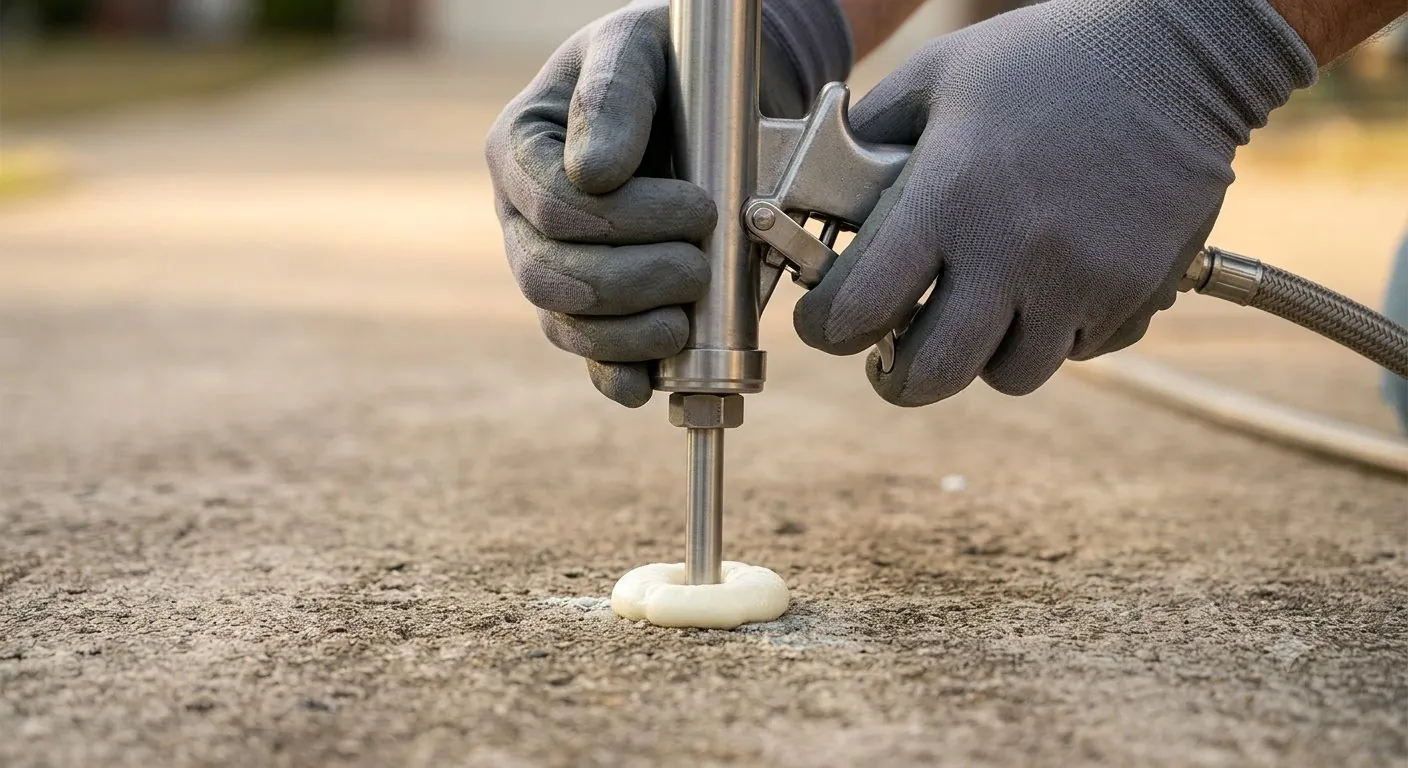
 Illustrative
Before You Replace Your Driveway: the 15-Minute Check That Saves the Slab
Before paying to replace a sunken driveway, do a quick check: if the slab is structurally sound and only settled, not crumbling or heavily cracked, foam leveling can usually lift it back to level for far less than tearing out and repouring. A free on-site estimate confirms which the slab needs.
The 15-Minute Answer
Before you pay to tear out a driveway, spend fifteen minutes checking one thing: is the concrete broken, or has a sound slab simply sunk? If the slab is intact and just dropped, foam leveling can lift it back to grade — usually for 50–70% less than replacement — instead of demolishing and re-pouring it.
Most homeowners jump straight to replacement because it's the option they know. But a settled slab and a failed slab are two different problems, and only one of them actually needs new concrete. The three quick steps below tell you which one is sitting in your driveway.
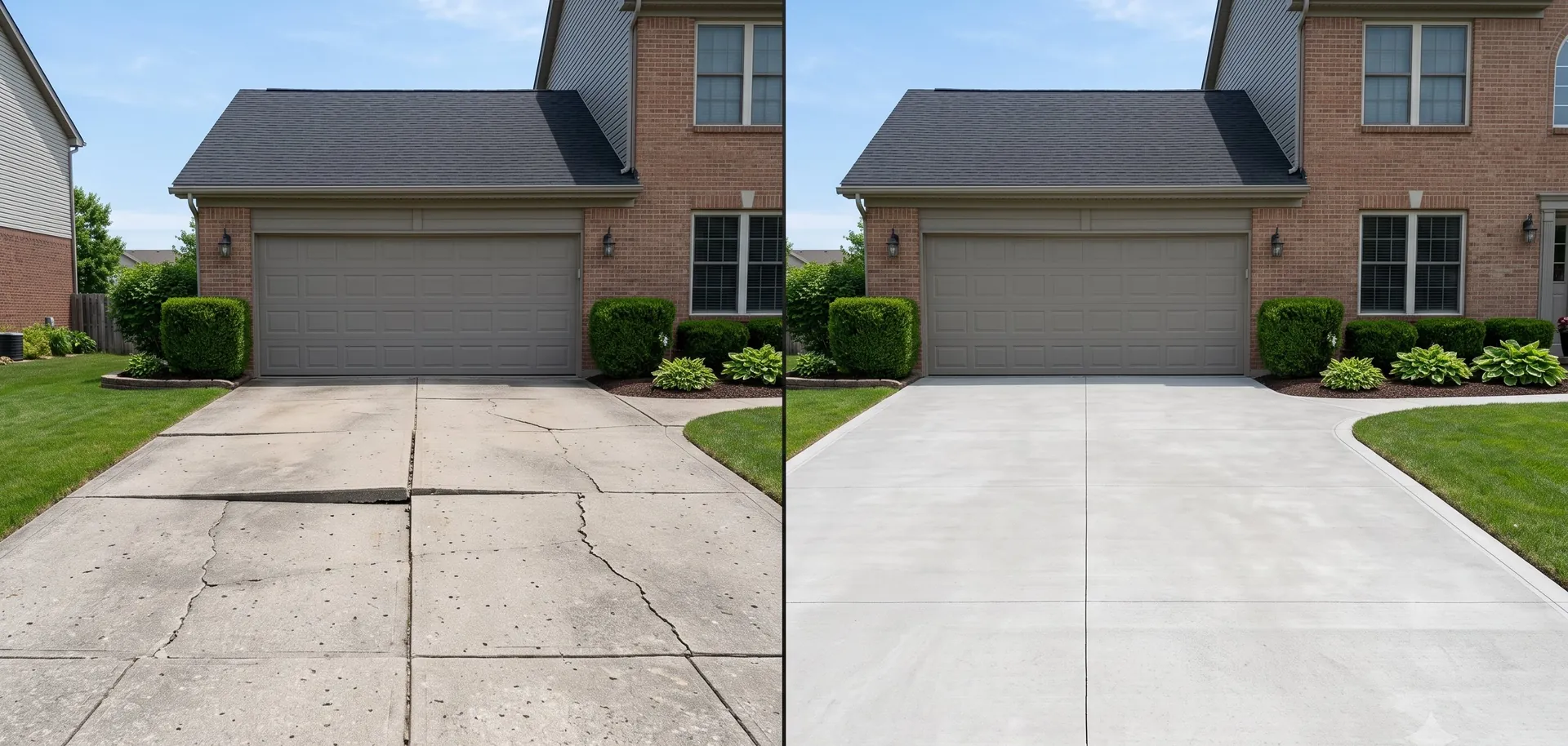
Before and after, illustrated
Step 1 — Is the concrete cracked, or just dropped?
This is the single biggest deciding factor. A slab that's sunk but still in one solid piece is a strong candidate for lifting. A driveway that's shattered into loose chunks, badly crumbling, or spalled down to the gravel has failed as a surface — that concrete needs replacing, and foam can't put it back together.
Walk the driveway and look at the panels as whole pieces. A section that dropped an inch or two but stayed intact is settlement. A section that's broken into three or four loose slabs that rock independently has lost its structure, and lifting it just raises broken concrete.
If you are still unsure which side of the line your slab falls on, this list of signs you need concrete leveling, not replacement goes through the same distinction in more detail.
Step 2 — Tap it: solid or hollow?
Walk the low spots and tap or stomp on them. A sharp, solid sound means the slab still rests on soil. A hollow, drum-like sound means a void has opened underneath — the soil shrank or washed away and the concrete is now bridging empty space. That hollow slab is exactly what foam is built to fill and raise.
You can also drag a garden hose or a rigid stick across the surface and listen. The difference between solid and hollow is usually obvious once you're listening for it, and the hollow spots map out precisely where the voids — and the fix — are.
Step 3 — Look at the edges and joints
Check where the slab meets your garage, a walkway, or the next panel. A clean lip — one section dropped below the other with the concrete still square — is textbook settlement that foam corrects. Crumbled, rounded, or missing edges mean the concrete is deteriorating, which pushes the decision toward replacement of that section.
Edges tell you the health of the concrete itself. Sharp, square edges that simply sit at different heights are a lifting job. Edges that are flaking apart, spalling, or worn to rubble are a sign the slab is breaking down, not just sinking.
What the three steps can't tell you
The three steps above tell you whether the concrete is a lifting candidate or a replacement candidate. They cannot tell you three things that determine whether a lift will hold: whether surface water is being directed under the slab by a failed drain, a clogged downspout, or a grade that slopes toward the driveway; whether the sub-base material under the concrete has been washed out or compacted unevenly; and whether the native soil beneath that sub-base is still at adequate compaction or has loosened enough to shift under load.
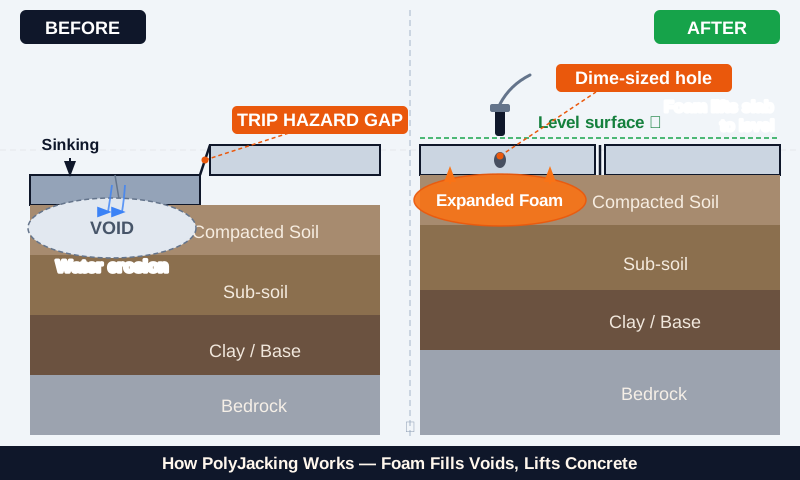
These are the things that cause a slab to settle again after a successful lift, and they are not visible from the surface. A void you can hear by tapping is a symptom. The drainage path or soil movement that created it is the cause, and in Kansas City's expansive clay that cause can reassert itself before the next wet cycle if it has not been addressed.
This is where the free, no-pressure inspection earns its keep. It confirms the slab is structurally sound enough to hold a lift and tells you which side of the line your driveway is on. If the answer is replace, you will hear it straight. If the answer is lift, you will know the concrete is intact and the void is the problem, not the surface.
Leveling vs. replacing: how they actually compare
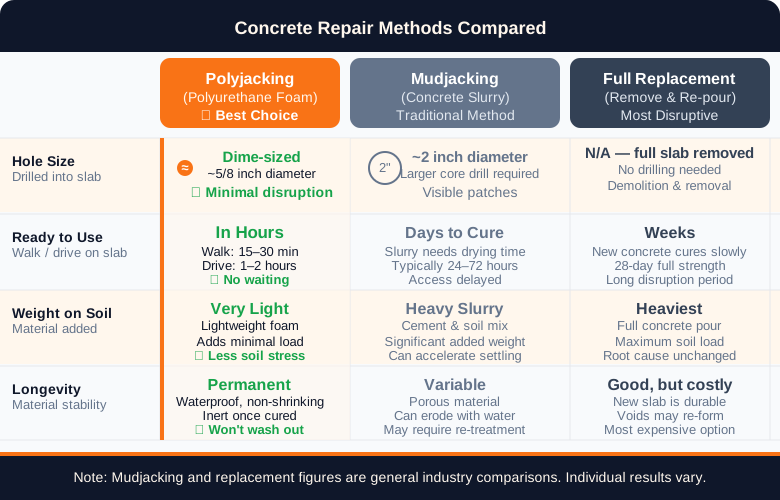
For an intact but sunken slab, leveling wins on almost every practical measure. It's faster — a couple of hours versus about a week of demolition, forming, and pouring. It's usable within hours instead of after a 28-day cure. And it typically costs 50–70% less, because you're not paying to haul away and re-pour concrete.
Driveways are where this call comes up most, but the math is the same on any slab — our concrete leveling vs. replacement guide walks through how to decide on a patio, sidewalk, garage floor, or pool deck.
Here is that same comparison laid out point by point, for a slab that has settled but is still sound:
For a closer look at the numbers behind that savings, see how much concrete leveling costs in Kansas City.
| Factor | Foam leveling | Full replacement |
|---|---|---|
| Time on site | About 2 to 4 hours | Roughly a week (demo, form, pour) |
| Back in use | Walk 15–30 min, drive 1–2 hours | ~1 week to walk, 28 days to fully cure |
| Upfront cost | Typically 50–70% less | Full tear-out-and-re-pour price |
| Disruption | Dime-sized holes, 4 to 12 of them | Jackhammer, haul out, rebuild |
| What it fixes | Raises a sound slab, fills the void | Needed when concrete is broken/crumbling |
| Warranty | 5-year limited warranty | Varies by contractor |
Why replacement is often the more expensive habit, not the better fix
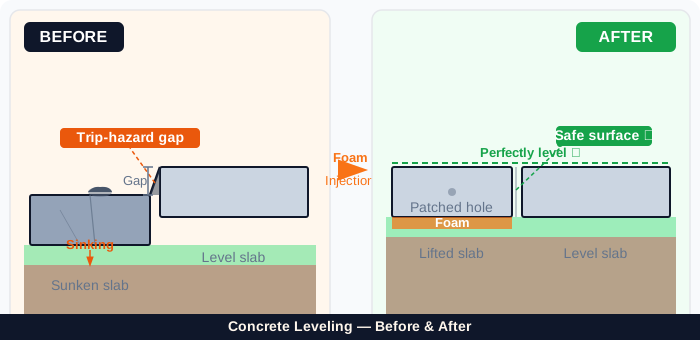
Replacing a settled slab treats the symptom, not the cause. If the soil beneath moved once, fresh concrete poured on that same soil can settle again. Leveling fills the void and puts the existing slab back to grade, and because there's no demolition or new material, it typically runs at a fraction of what full replacement costs.
There's a reason replacement feels like the default: it's the fix most people have seen. But new concrete doesn't come with new soil. Unless the ground underneath is addressed, a fresh pour can start the same slow drop all over again — which is why lifting the slab you already have is often the smarter money.
When replacement really is the right call
We'll say it plainly: sometimes replacement is the honest answer. If the concrete is broken through, crumbling, spalled past the surface, or so thin it's failing structurally, lifting it just raises bad concrete. In those cases foam isn't the fix, and a good leveling company will tell you to replace that slab rather than sell you a lift.
This is where an honest inspection earns its keep. We'd rather tell you a slab is past saving than take your money to raise concrete that's going to keep failing. If replacement is genuinely the right move, you'll hear it from us straight — and you'll know it wasn't the only option we looked at.
If your slab is past saving, we'll tell you straight and help you scope the replacement.
The Kansas City catch: new concrete sits on the same soil
Here's what Kansas City homeowners should weigh: our expansive clay soil swells when wet and shrinks when dry, and it moves under new concrete just like it moved under the old. Replacing a slab doesn't change the ground below it. Leveling addresses the void directly, which is why lifting so often outlasts a straight re-pour here.
The metro sits on soil that commonly runs 35 to 55 percent clay (USDA-NRCS) in many neighborhoods, and it cycles through wet springs and dry late summers plus repeated winter freeze-thaw. That constant movement is what sinks concrete in the first place. Any lasting fix — lift or replacement — has to reckon with the soil, and foam leveling does it without a demolition bill. Not sure which your driveway needs? A free, no-pressure inspection settles it.
How polyjacking works in 90 seconds
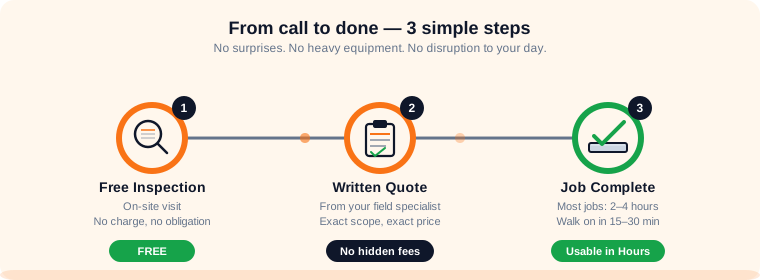
Our team walks you through the three-step process: dime-sized holes, high-density polyurethane foam that fills every void and compresses the soil beneath your slab, and use within hours with no heavy trucks. Call (913) 713-7794 or book a free estimate below.
Frequently asked
Is leveling always cheaper than replacing a driveway?
For an intact slab that's simply settled, yes — leveling typically runs 50–70% less than a full tear-out and re-pour, because there's no demolition, hauling, or new concrete to pay for. The one time replacement makes sense is when the concrete itself has failed and can't be raised.
How long does a leveled driveway last?
Every job carries a 5-year limited warranty — if the slab settles more than 1/2 inch within 5 years because of our work, we re-lift it. The foam is waterproof and non-shrinking, so it holds up in Kansas City's expansive clay and freeze-thaw winters far better than a heavy mud slurry.
Can you level a driveway that already has a few cracks?
Often, yes. A slab with tight, hairline cracks that's still in solid pieces can usually be lifted. It's the driveways broken into loose chunks or crumbling apart that need replacement instead. A free inspection tells you which side of that line your driveway is actually on.
How fast can I use the driveway after leveling?
Most jobs take 2 to 4 hours. The foam cures in 15 to 30 minutes, so you can walk on it almost right away and drive on it within 1 to 2 hours — just keep heavy vehicles off for 48 hours. Compare that to about a week before you can use new concrete.
Have a sinking slab?
Book a free on-site inspection. Honest advice, usable within hours.
Pick a time that works for you
Book right here on this page. Prefer to talk? Call (913) 713-7794.