
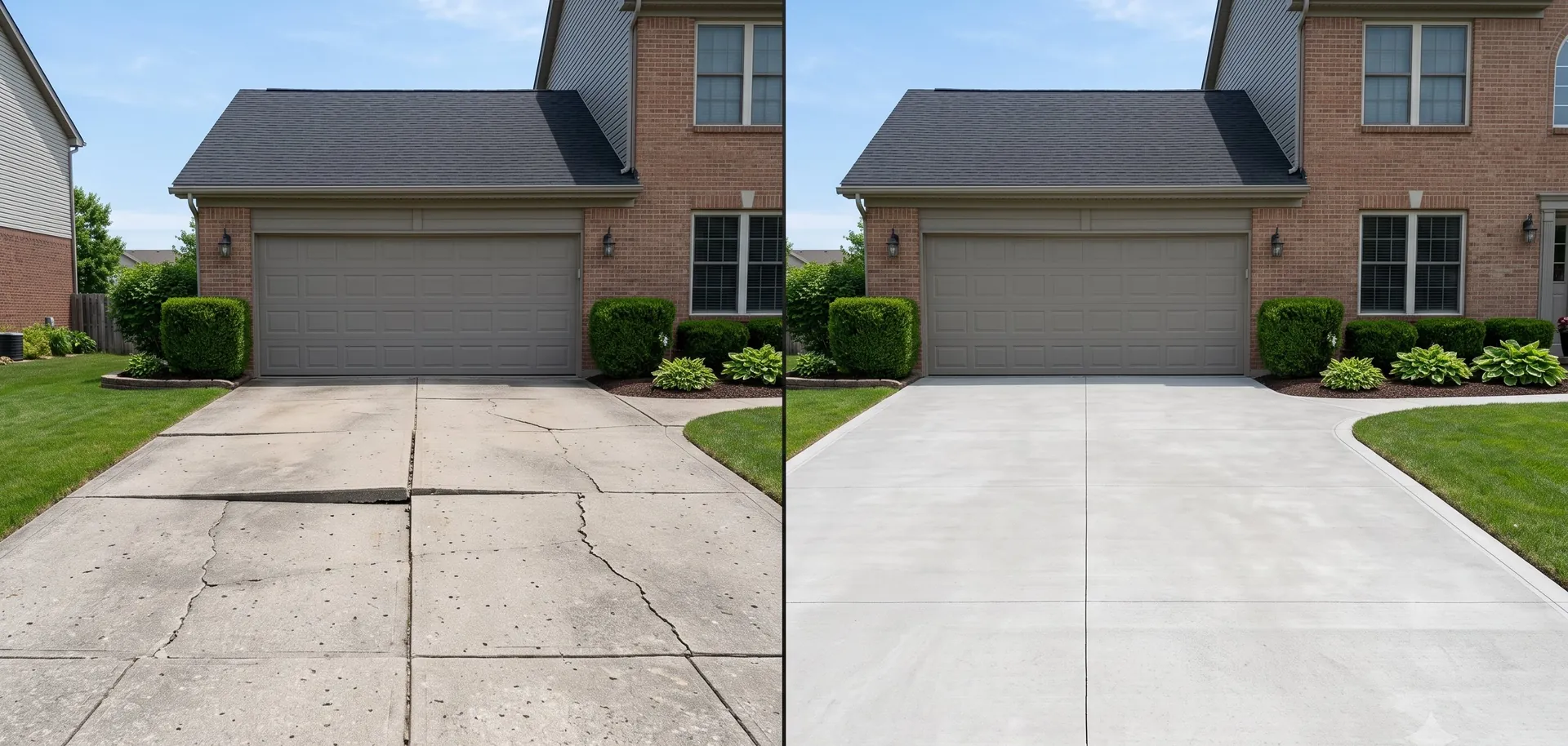
 Illustrative
Concrete Leveling Cost in Kansas City
What sets the number, and the real KC jobs behind it.
Size up your concrete leveling job
Pick your slab, its size, and how far it’s dropped, and we’ll point you to the right service, the typical timeline, and what actually sets the scope. No email, no phone number.
Concrete leveling cost in Kansas City is driven by the size of the void under your slab, not the square footage on top—so two driveways that look identical from the curb can need very different amounts of foam. That's why PolyJacks quotes in person instead of publishing a price table, and every on-site estimate is free. Foam polyjacking typically runs a fraction of what tearing out and re-pouring the same slab would cost. Start with the free scope estimator on this page for a ballpark, then book a free on-site estimate for a firm number.
Why We Quote In Person: Free: Instead of Publishing a Price Table
Like most concrete leveling companies in the Kansas City market, we don't publish a price table, because the void under your slab, not the square footage on top, is what drives the number. Two driveways that look identical from the curb can need very different amounts of foam underneath.
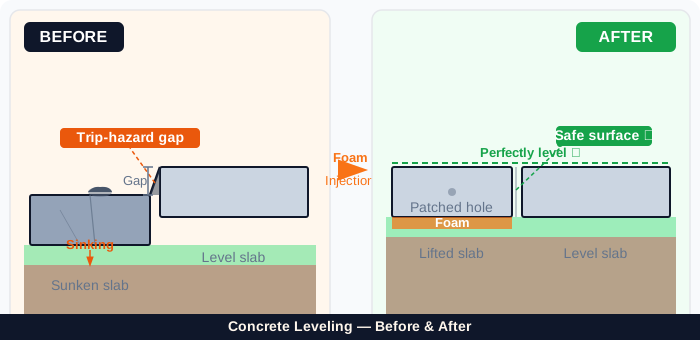
What we do instead costs you nothing and takes minutes. Start with the free scope estimator at the top of this page: slab type, area, and severity, sized up in about a minute. Then book your free on-site estimate: we measure the actual void and hand you an exact, firm number before anything is drilled. No obligation, and the quote you approve is the price you pay.
Jobs with deeper voids, limited equipment access, or multiple slabs in different areas take more foam and more injection points. A single section with shallow settlement is the smallest, fastest kind of visit. Either way, we give you the exact number after we see the slab, never a guess over the phone.
Four Real Kansas City Jobs: Polyjacking Cost vs. What Replacement Would Have Cost
These are actual jobs from the KC metro, alongside the replacement quotes homeowners already had in hand before calling us.
Olathe — driveway: settled at the street joint; polyjacked for a fraction of the replacement quote the homeowner had been handed.
143rd Street, Overland Park — sidewalk: a trip-hazard offset; leveled in a single visit for a small fraction of the replacement quote.
Shawnee — garage floor: dropped at the overhead-door threshold; lifted in a single visit for far less than the tear-out-and-repour bid.
Leawood — pool deck: settled away from the coping; leveled for a fraction of the demolition estimate.
Across these four jobs, polyjacking ran 50–70% less than the replacement bid. None of them involved concrete that was shattered or cracked apart. Just concrete that had settled and needed foam under it to get back to level.
The Four Variables That Set Your Exact Quote
Square footage is one input, not the whole story. These four variables determine your actual number:
- Void size and depth. The single biggest cost driver. A slab that dropped half an inch over a small pocket costs far less to lift than one sitting over a large washed-out gap, even if both slabs are the same size on top.
- Slab area: bigger slabs need more injection points, which means more foam. But size multiplies the effect of void depth, not replaces it.
- Hole count. Most jobs take 4 to 12 dime-sized injection holes. Complex or deep voids need more holes to get foam exactly where the slab needs support.
- Equipment access. A driveway we can pull straight up to costs less to work than a patio behind a fence or a pool deck with tight clearance on three sides.
We walk all four with you during your free inspection before quoting anything in writing.
How the Price Is Calculated: Foam Volume, Not Square Footage
Polyjacking is priced by the volume of foam your job requires. Here’s why that matters:
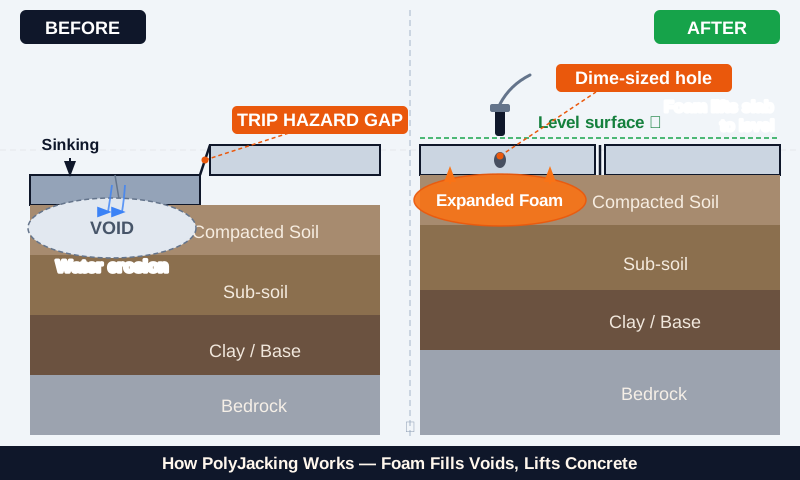
Our foam expands 30 to 40 times its liquid volume once injected under the slab. A little material goes a long way, but the amount has to be right: too little and the slab doesn’t lift fully; too much wastes product and your money.
So we measure the void first. Your free inspection tells us the settlement depth, the approximate void volume, and how many injection points we need to reach it. From that, we calculate the exact foam volume your job requires and give you a written quote before any drilling starts.
No per-square-foot markup. No line items for things that didn’t happen. No price change when the crew arrives. The quote from the inspection is the invoice at the end.
Why KC Clay Can Make Waiting More Expensive
Kansas City sits on Wymore-Ladoga clay. A soil series whose subsoil commonly runs 35 to 55 percent clay (USDA-NRCS) that swings 10–15% in volume between wet and dry seasons. Every rain-and-dry cycle shifts the soil under your slab. Every one of KC’s roughly 80 annual freeze-thaw days (NOAA KCI station records) widens cracks and washes fine particles further out from under the concrete.
The practical result: a void that is quick and cheap to fill today can cost noticeably more to fill next spring if the clay keeps pulling away under it. Polyjacking fixes a void at its current size. It doesn’t stop the soil physics that created it. Lifting the slab while the void is small means less foam, less cost, and a smaller gap for water to funnel through and grow the problem.
We see this on KC jobs regularly: homeowners who called as soon as they noticed the settlement pay less. Homeowners who waited through a full KC winter often find the void has grown.
How Fast You Get the Slab Back
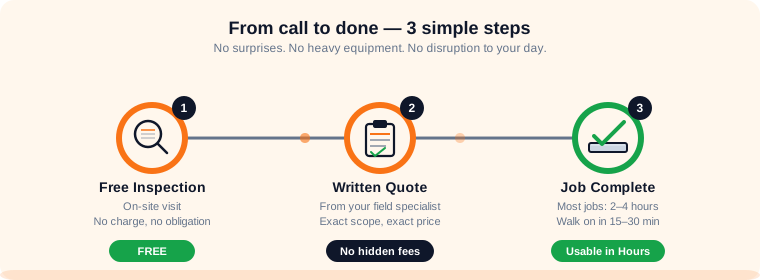
The lift itself is one visit. Inspection, drilling, injecting the foam, patching the holes and cleanup happen in the same trip, and most residential jobs run two to four hours from arrival to finished cleanup.
The foam sets up firm enough to walk on in 15 to 30 minutes and to take normal passenger vehicles in 1 to 2 hours. The one restriction is heavy or loaded vehicles (trucks, RVs, trailers, dumpsters), which stay off the slab for 48 hours while the foam reaches full cure.
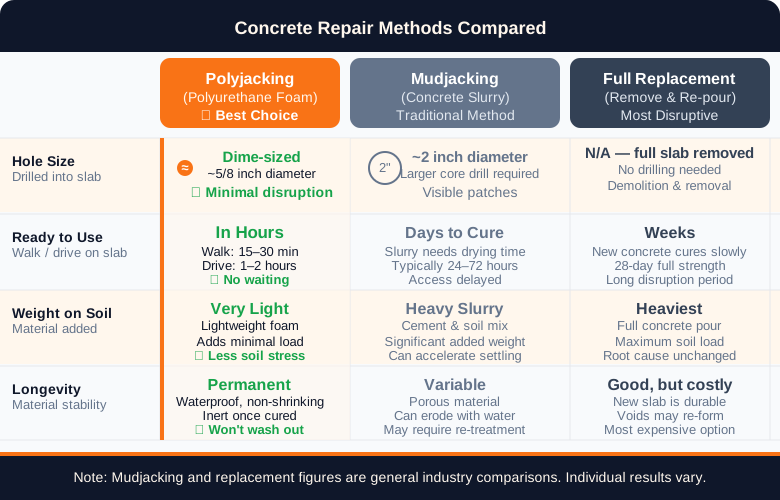
That belongs in a cost comparison, because the time a slab is out of service is part of what a repair costs you even though it never appears on a quote. Mudjacking slurry needs 24 to 72 hours before the slab can be used. Full replacement takes the slab out of commission about a week before you can drive on it, and a full 28 days to reach full strength.
Comparing a Foam Quote to a Mudjacking Quote
The FAQ below answers the bid that comes in higher than ours. A bid that comes in lower is usually a different question, because it is a different method, not a different contractor, and what matters is what the number buys.
Four things separate them. Material: closed-cell polyurethane foam is waterproof and inert once cured, so it does not absorb water, shrink or wash out; a cement-and-soil slurry is porous, takes on water, and moves through its own moisture cycle inside the void as KC's clay swings wet to dry. Hole size: foam goes in through dime-sized entry points and slurry needs much wider openings, which means more patch material left in the surface. Weight: foam lifts by expanding, not by its own mass, so it adds a fraction of the load to soil that already failed to hold the slab. Downtime: the section above gives the return-to-service windows for both.
Polyjacking vs. mudjacking puts the two side by side.
One thing that trips people up with two bids side by side: the same work goes by several different names. Slab jacking, slabjacking, concrete lifting, concrete raising and concrete jacking all describe lifting a settled slab by pumping material into the void beneath it. The name on the bid does not tell you which material is going under your concrete, so ask that directly before you compare a single figure.
Then make both bidders answer the same short list: what is actually causing the settlement, which method they are recommending and why that one, how many holes and how big, how long until you can walk and drive on the slab again, and whether the void gets filled or the slab simply gets raised. A lower number on a narrower scope is not the cheaper job. Questions to ask a concrete leveling contractor walks through the full list before you sign anything.
What’s in Every PolyJacks Estimate and What’s Never Hidden
Every estimate we give includes:
- Free on-site inspection. A technician looks at the slab, explains what’s causing the settlement, and tells you whether foam is the right fix
- A written quote based on the void we measured, not a rate-sheet number
- All labor, foam material, and equipment for the job as scoped
- The 5-year limited warranty on workmanship and materials: re-lift free if your slab settles more than 1/2 inch within 5 years due to our work, as long as water is kept away from the slab
- Patching. Every injection hole gets a color-matched concrete cap before we leave
- Cleanup of the work area. There is no excavated dirt, broken concrete or slurry runoff to haul off, because nothing is dug out or torn up in the first place
What’s not in the quote: anything we didn’t scope. If we find something unexpected once we’re under the slab, we stop and talk to you before doing more work. We don’t run up the bill without your sign-off. To be straight about how it looks afterward: the patched circles are dime-sized and they are still there if you go looking for them, but from a few feet back most people can’t tell where we worked, and they blend in further after a winter or two of weathering.
The warranty covers our workmanship, not ongoing soil movement. If the clay under your slab shifts after the 5-year window, that is a new settlement, not a defect in the lift, and we will re-inspect and quote it the same way we quoted the first job.
When Polyjacking Is Not the Right Fix and We’ll Tell You
Foam is strong and long-lasting, but there are jobs it won’t hold:
- Shattered or broken slabs. If concrete is cracked apart rather than just sunken, lifting the pieces won’t reconstitute a slab. Replacement is the right answer.
- Active plumbing leaks. If a broken water or sewer line is washing out the soil, that leak must be fixed first. Foam fills the void today; it doesn’t stop a leak from creating a new one.
- Heavy root intrusion. If tree roots are the real force pushing or lifting the concrete, root work comes first.
If any of that is what’s going on with your slab, we’ll say so plainly and point you toward what actually needs to happen. The inspection is free either way: whether the answer is polyjacking or something else.
Related guides
How polyjacking works in 90 seconds
Our team walks you through the three-step process: dime-sized holes, high-density polyurethane foam that fills every void and compresses the soil beneath your slab, and use within hours with no heavy trucks. Call (913) 713-7794 or book a free estimate below.
Frequently asked
What does a typical driveway leveling cost in Kansas City?
It depends on how deep the settlement is and how large the void has grown underneath. Not just the slab’s size. A driveway with a shallow void can cost the same as a smaller patio with a deep void, which is why we don’t quote from square footage. The only way to get a number that’s actually yours is to look at the slab in person, which the free inspection is for, and the number you get is firm, typically 50–70% below what full replacement would run.
Can you give me a rough price range before coming out?
We don’t publish a price list. The void under the slab, which we can’t see over the phone, is what sets the number, so a range quoted blind would be a guess. What you can do right now: run the free scope estimator at the top of this page to size up the job, then book the free on-site inspection. It gives you the specific firm number, not a range, before anything is drilled.
Does concrete leveling cost more in winter in Kansas City?
No: our pricing doesn’t change by season. Foam works year-round in KC as long as the ground isn’t frozen solid. That’s a real advantage over mudjacking slurry, which needs above-freezing ground temperatures to cure properly. If you’re noticing a settlement problem in January, calling now costs the same as calling in May, and the void won’t be smaller after another freeze-thaw cycle.
Why does polyjacking cost so much less than the replacement bid I received?
Different scope entirely. A replacement bid covers demolition, hauling, disposal fees, forms, a full new pour, and the cure time: during which your driveway or patio is out of commission for a week or more. Polyjacking skips all of that. You pay for only the foam volume needed to lift and support the slab you already have, injected through holes about the size of a dime. Most KC homeowners we talk to have replacement quotes 3 to 6 times higher than what our inspection quote comes back at.
What is the smallest job you take on?
We take any settled concrete job in the KC metro, no minimum square footage. The smallest jobs we do are single sidewalk sections. A single section creating a trip hazard or an ADA compliance issue is enough reason to fix it.
Will the price change once the crew arrives?
No. The quote from your inspection is the invoice at completion. We measure the slab, estimate the void, and calculate the foam volume before any drilling starts. If we find something unexpected once we’re under the slab that would change the scope, we stop and talk to you first. We don’t run up the bill without your approval.
How long does the lift last, and how long is the warranty?
Two different questions. The lift itself is permanent: cured foam doesn't shrink, break down or wash out. The 5-year limited warranty is the narrower promise, covering the part we control — if a slab we lifted settles more than 1/2 inch within 5 years because of our work, we re-lift it free, and that coverage is written to the owner who paid for the work at that address, and it ends if the house is sold. Outside it sits what we don't control: drainage or gutter neglect, tree root growth, loads beyond normal residential use, acts of God, and cosmetic hairline cracks that don't affect how level the slab sits. Full warranty terms.
Do you quote commercial and multi-slab jobs the same way?
Yes. It's the same free on-site walkthrough, whether that's one settled panel or a whole parking lot: we walk the property with you, identify every settled or voided section, and produce a firm quote for the full scope before anything is drilled — exactly the scope you need, not a whole-lot package. What changes is scheduling. We work in zones and build the calendar around dock windows, delivery schedules and tenant foot-traffic patterns, so the rest of the facility keeps running. Leveled sections reopen to foot traffic in 15 to 30 minutes and to forklift traffic in 1 to 2 hours. See commercial concrete leveling.
How and when do I pay, and is a deposit required?
Payment is due in full when the job is finished, not before. We accept cash, credit card or certified check, and no deposit is required to book: nothing is put down to hold a spot on the calendar, and the estimate itself is free. The quote you approved at the inspection is what gets invoiced at completion, so there is no reconciliation step afterward. If you need to cancel or move the appointment, twenty-four hours' notice is all we ask; a same-day cancellation once the crew is already en route may carry a trip charge. The rest of what to expect before the visit is on the contact page.
Is there a better or worse time of year to schedule the work?
Not for the foam itself. It cures through a chemical reaction rather than air-drying, so it sets up the same in a July heat wave as in a January cold snap, and the finished lift looks and performs identically either way. The only day-of consideration is active rain at the work area, which is a scheduling convenience rather than a limit on the material. What does shift through the year is the calendar. Calls spike as soon as the ground thaws and homeowners see how far a slab dropped over the winter, so spring and early summer are the busiest stretch; late fall and winter are quieter, which usually means a shorter wait between your free estimate and the lift itself. Meanwhile the void under the slab keeps growing through every freeze-thaw cycle you wait out, which is the one part of the timing that works against you.
Get your free concrete leveling estimate
No obligation, and if foam isn't the right fix, we'll tell you straight.
Book your free estimate
Pick a time that works for you. Free on-site inspection, no obligation. Prefer to talk? Call (913) 713-7794.