
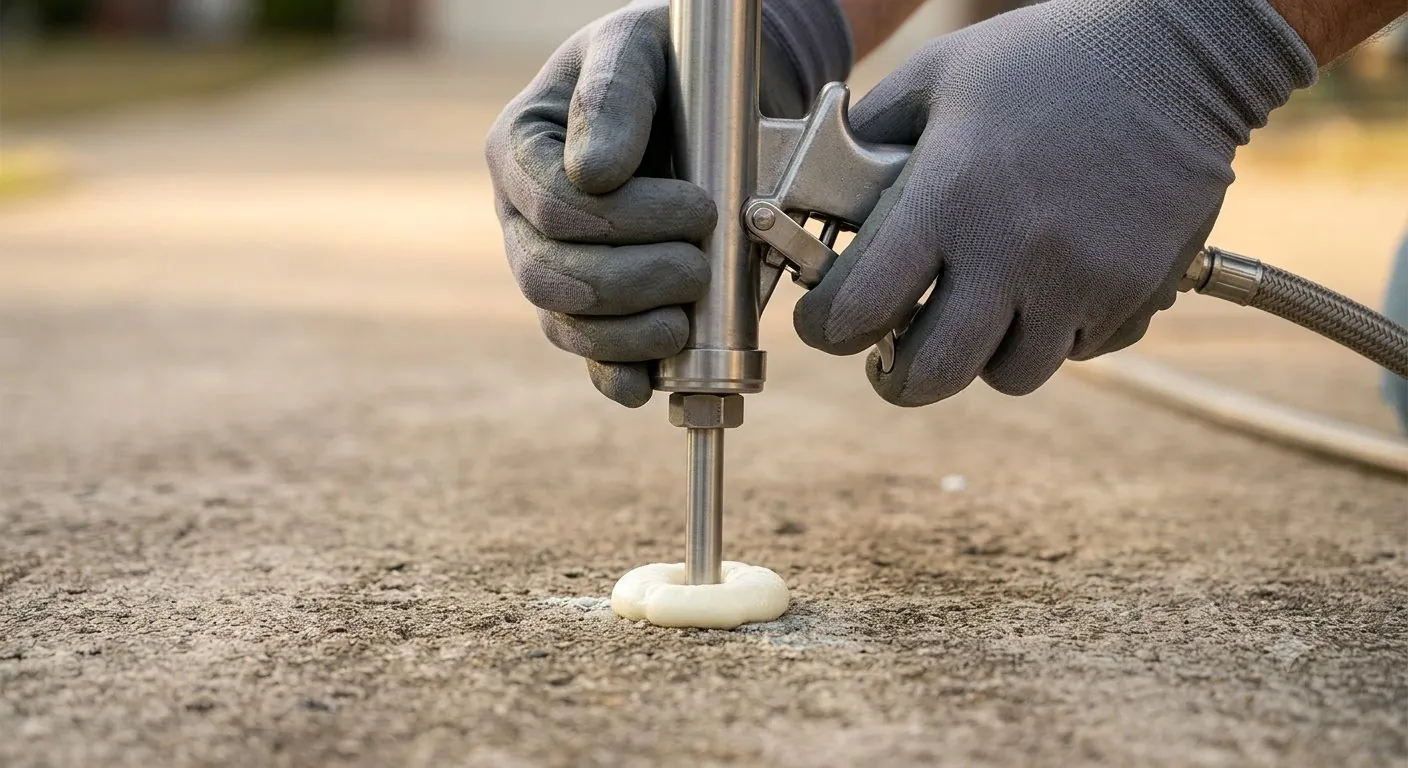
 Illustrative
Is Polyurethane Concrete Foam Safe for Your Yard and Family?
Yes — the polyurethane foam PolyJacks injects stays sealed beneath the slab and is chemically inert once cured, not loose in your yard. It is waterproof, so it won’t break down in soil moisture, and it is safe to be around during and after the job. You can typically use the area within hours of the lift.
What's Actually Going Into the Ground
Yes - once it cures, polyurethane concrete-leveling foam is inert and safe for your yard, pets, kids, and landscaping. It's a two-part waterproof plastic that finishes reacting within minutes and stays sealed under the slab. Here's exactly what goes into the ground and why it stays put.
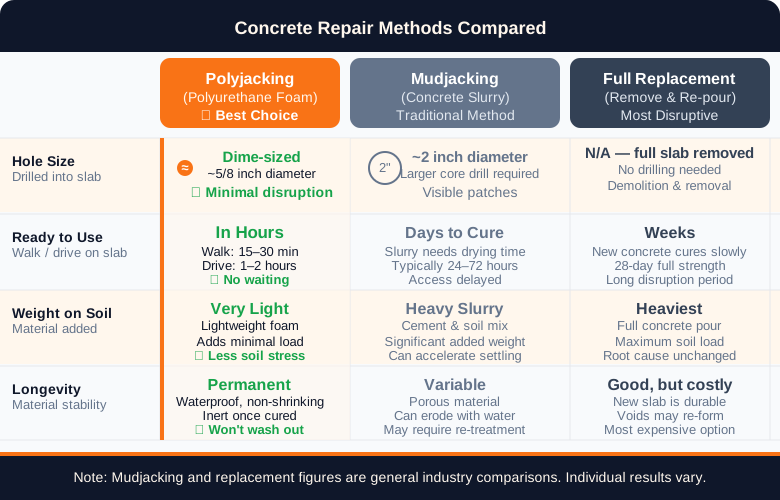
When we talk about concrete leveling with foam, we mean a two-part waterproof polyurethane that stays liquid for only a few seconds. We drill a few dime-sized holes through the slab and inject the foam underneath. It reacts, expands, and fills the voids that let your driveway, patio, or walkway sink in the first place. That's it - no chemicals dumped loose in your yard, no slurry pumped into the soil. The foam goes exactly where it's injected, expanding to lift the slab back toward level. If you want the full rundown on how the process works from start to finish, our polyjacking page walks through it step by step.

What It's Like Once It Cures
Polyurethane concrete foam is chemically inert once it finishes curing, which happens in minutes, not days. At that point it's a solid, closed-cell material - it isn't off-gassing under your slab. It doesn't feed mold, it doesn't rot, and it doesn't compress under a parked vehicle the way loose fill can over time. That's a big part of why it holds up in Kansas City's freeze-thaw winters and our swing between soggy spring soil and bone-dry August clay - the material itself isn't reacting to moisture or temperature the way the ground around it is. We're not going to tell you it's magic; it's simply a stable, inert material doing a mechanical job of filling space and lifting weight.
Why 'Waterproof' Actually Matters Here
A lot of Kansas City settling starts with water - poor drainage, downspouts dumping next to the foundation, or expansive clay that swells when wet and shrinks when dry, washing soil out from under a slab. If you're curious why that happens on your property specifically, why is my concrete sinking covers the local causes in more detail. Because the foam is waterproof, it won't absorb groundwater, swell, or wash out the way loose soil or old mudjacking slurry can. It holds its shape and its lift underground, rain or shine. That waterproof property is also why it works well for void fill under slabs - it seals the empty pocket instead of just occupying it temporarily.
If you want to know how that holds up over the years, see how long concrete leveling lasts.
Is It Safe to Be Around During and After the Job
During the injection itself, the foam is contained under the slab - it's not sprayed in the open air around your kids or pets. Any minor odor during the reaction is brief and dissipates quickly once curing is complete. Because the material cures in minutes, there isn't a long window where anything is sitting exposed or off-gassing near your patio or driveway. Compare that to mudjacking, which pumps a heavy mud-cement slurry through much larger holes and can take longer to set up - our polyjacking vs. mudjacking page breaks down that comparison if you want it side by side. We'd rather be straight with you about what's involved than oversell it as risk-free hype.
Lightweight Means Less Stress on Weak Soil
One thing that gets overlooked: the foam is intentionally lightweight. That matters because if the soil under your slab is already weak or saturated - common in KC clay after a wet spring - piling more weight on top of it with a heavy fill material can just cause the same settling problem again down the road. A lightweight foam doesn't add that burden. It fills the void and supports the slab without asking already-compromised soil to hold up something heavy. This is one of the practical reasons foam has become the more common choice for driveway, patio, and garage floor leveling jobs across the metro, rather than older heavy-fill methods.
The specific mix of clay, drainage, and slab condition under your property can shift from one block to the next across the metro, so a generic "KC clay" answer doesn't tell you what's happening under your specific driveway. That's part of why the on-site look matters - we confirm whether the soil under your slab is already weak or saturated, or whether it can hold the lift once the foam is in place.
How Soon You Can Actually Use the Area
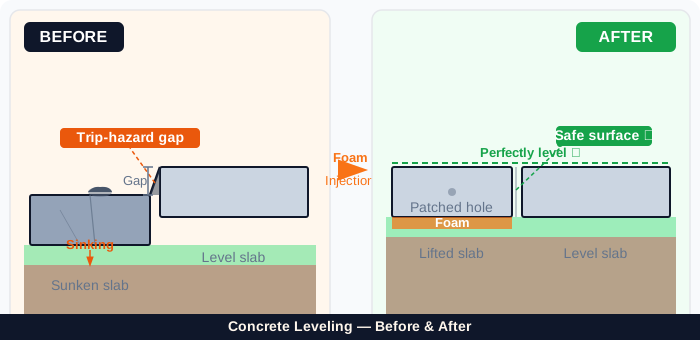
Because the foam cures in minutes, most surfaces are ready to walk on in about 15 to 30 minutes and ready to drive on in roughly 1 to 2 hours. That's a real, practical safety point too - there's no multi-day window where the area is a hazard, no barricades needed for days, no worrying about kids or pets wandering across a soft or wet surface. The holes themselves are small, dime-sized, and get patched, so you're not left with an unsafe gap or trip point in your yard or driveway while things set. If you're comparing timelines to other repair methods, that quick return-to-use is one of the more tangible differences in day-to-day safety and convenience.
When Foam Isn't the Right Call
We're not going to pretend foam fixes everything. If a slab has cracked badly, if the underlying issue is a structural or drainage problem that needs its own fix first, or if the settling is severe enough that leveling isn't realistic, we'll tell you straight rather than push a repair that won't hold. Our services page covers the range of what we do - and don't - handle. If you're not sure what's going on with your own concrete, our diagnose tool is a quick way to get a read on likely causes before you even call. Either way, an honest answer is worth more to us than a sale that doesn't last.
Not sure whether a crack is cosmetic or a sign of something bigger? Our guide on when cracks in concrete are worth worrying about can help you sort that out.
Getting a Straight Answer for Your Property
The safest way to know how foam will behave on your specific driveway, patio, or walkway is to have someone look at it in person - soil, drainage, and slab condition all vary lot to lot across the Kansas City metro. PolyJacks is locally owned, based in Spring Hill, KS, and we offer a free on-site estimate with no pressure attached. Call (913) 713-7794 or reach out through our contact page, and we'll walk your property, explain what we're seeing, and tell you plainly whether foam is the right fix - or if it isn't. We'd rather earn your business with an honest answer than a rushed one.
You can book your free on-site estimate or call (913) 713-7794 if you'd rather talk it through first.
How polyjacking works in 90 seconds
Our team walks you through the three-step process: dime-sized holes, high-density polyurethane foam that fills every void and compresses the soil beneath your slab, and use within hours with no heavy trucks. Call (913) 713-7794 or book a free estimate below.
Frequently asked
Does the foam smell or off-gas after it cures?
No. Polyurethane concrete foam is chemically inert once cured, which takes minutes. Any brief odor during the injection reaction dissipates quickly and doesn't linger.
Is it safe for pets and kids to be near the area right after the job?
Yes. The foam is injected under the slab through small dime-sized holes and cures within minutes. Most areas are walkable in about 15 to 30 minutes, so there's no long exposure window.
Will the foam affect my grass or landscaping near the slab?
The injection is contained underground through small drilled holes, so it doesn't spread across your yard or contact plantings. It's a targeted fix aimed at the void under the concrete, not a surface treatment.
Does the foam contaminate soil or groundwater?
Once cured, the foam is a solid, closed-cell, waterproof material that stays sealed beneath the slab rather than washing out into surrounding soil. That's part of why it holds up through Kansas City's wet-dry seasonal swings.
How is foam different from mudjacking when it comes to yard impact?
Foam uses much smaller holes and a lightweight material, versus mudjacking's larger holes and heavy slurry. See our polyjacking vs. mudjacking comparison for the full picture.
Have a sinking slab?
Book a free on-site inspection. Honest advice, usable within hours.
Pick a time that works for you
Book right here on this page. Prefer to talk? Call (913) 713-7794.