
 Illustrative
When Concrete Leveling Pays Off, and When It Doesn't
Concrete leveling is worth it when the slab is structurally sound and only settled: you keep the existing concrete and pay far less than replacement, with no tear-out. It is not worth it when concrete is badly cracked or crumbling, where replacement is the better spend. An honest on-site estimate tells you which.
Start With What 'Worth It' Actually Means
'Worth it' means different things depending on what's actually wrong with your concrete. If a slab has sunk or tilted but the concrete itself is still solid (no major cracking, no crumbling edges) then lifting it back into place with polyurethane foam is almost always worth it. You're fixing the actual problem (an uneven, unsupported slab) without tearing anything out. If the concrete is falling apart on its own, leveling won't fix that; it'll just put broken concrete back at the right height. Our concrete leveling page covers the basics of the process, and our cost guide explains why leveling is almost always the smaller expense compared to a full tear-out. The short version: worth it depends on the slab's actual condition, not just how uneven it looks.
When Concrete Leveling Is Clearly Worth It
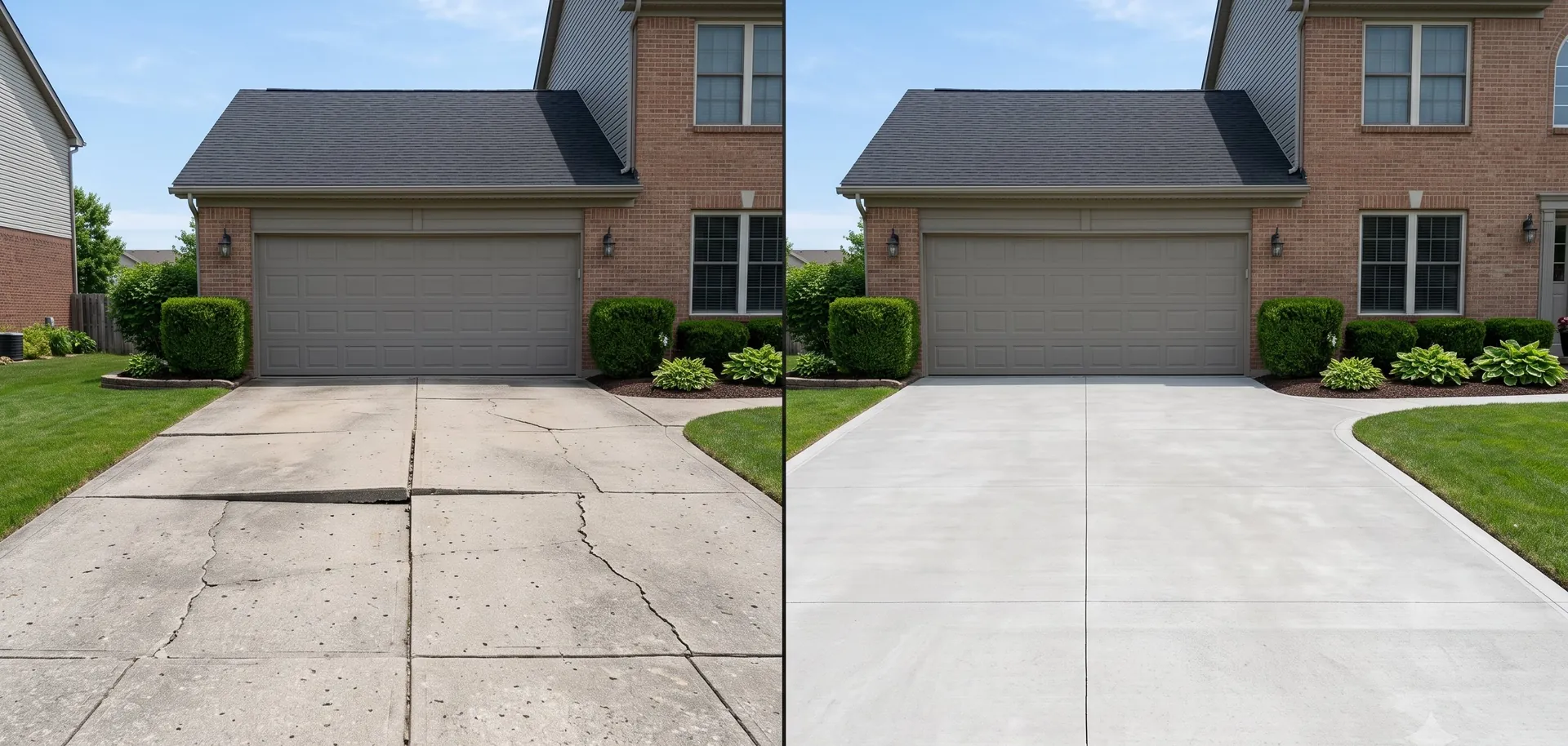
Concrete leveling is clearly worth it when the slab is structurally sound but sitting at the wrong height. That covers a lot of ground: a sidewalk panel that's become a trip hazard, a driveway that's dipped enough to catch water or scrape a car's undercarriage, a patio that's pulled away from the house, or steps that no longer sit flush with the porch. In every one of these cases, the concrete you already have is fine. It just needs to go back where it belongs. Foam injection does that without the mess, downtime, or cost of a full replacement. It also solves the underlying issue in most cases, since the process fills the void that let the slab sink in the first place, rather than just patching the surface.
In the KC metro, a trip-hazard sidewalk can also trigger a municipal repair notice with a response deadline — our guide to the sidewalk repair notice process explains what that means for your timeline.
When It's a Judgment Call
Some situations aren't as clear-cut. A slab with a few hairline cracks but otherwise solid can usually still be leveled. Foam doesn't require perfect concrete, just concrete that's structurally intact. But a slab with several problem areas, a mix of settling and cracking, or one that's been patched before might need a closer look to know whether leveling alone solves it or whether part of the area needs more work. This is exactly the kind of call that's hard to make from a photo or a phone description. It depends on how the cracks run, how deep the settling goes, and what's happening underneath. PolyJacks looks at all of that during a free estimate and will tell you plainly which category your project falls into before recommending anything.
When Replacement Is the Honest Answer
Sometimes the honest answer is that concrete leveling isn't the right fix, and we'll say so. If a slab is severely cracked, broken into separate pieces, crumbling at the surface, or has lost so much structural integrity that foam can't give it anything solid to support, lifting it back up won't make it sound again. In cases like that, replacement is the more honest recommendation, even though it's the bigger job. We'd rather tell you that upfront than sell a lift that won't hold. For a full breakdown of how to tell the difference, see concrete leveling vs. replacement. PolyJacks isn't in the business of talking people into work that won't last. If foam isn't the right fix for your slab, we'll tell you straight during the estimate.
The Value Compared to Doing Nothing
It's also worth weighing what happens if you leave a settled slab alone. Uneven concrete around a home in the Kansas City metro tends to get worse, not better, as clay soil keeps swelling and shrinking through the seasons and water keeps finding the low spots. A sunken section can direct water toward a foundation instead of away from it, and a lifted edge or dropped panel is a genuine trip risk for anyone walking across it. None of that means every settled slab is an emergency: plenty of homeowners live with minor settling for years. But when a slab is affecting drainage, safety, or how a space actually functions, leveling it usually pays for itself in avoided hassle, even without needing a full replacement.
It's also worth weighing what happens if you leave a settled slab alone. Uneven concrete around a home in the Kansas City metro tends to get worse, not better, as clay soil keeps swelling and shrinking through the seasons and water keeps finding the low spots. A sunken section can direct water toward a foundation instead of away from it, and a lifted edge or dropped panel is a genuine trip risk for anyone walking across it. If you want to see how your specific neighborhood stacks up, our KC Settlement Risk Index maps the parts of the metro where slab movement is most common. None of that means every settled slab is an emergency: plenty of homeowners live with minor settling for years. But when a slab is affecting drainage, safety, or how a space actually functions, leveling it usually pays for itself in avoided hassle, even without needing a full replacement.
Why the Method Itself Holds Up
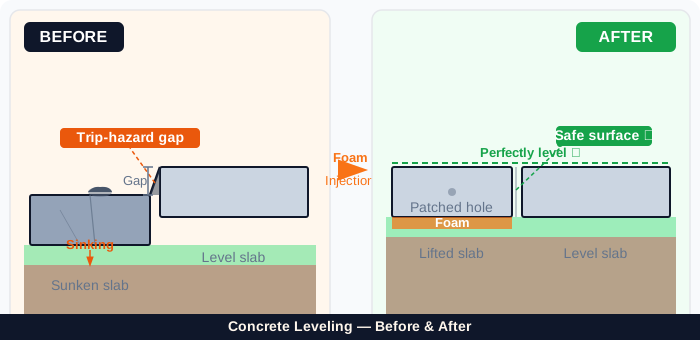
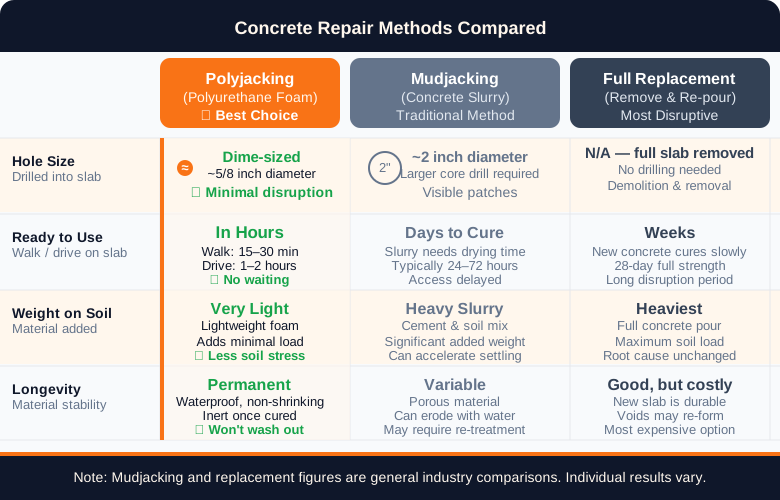
Part of what makes concrete leveling worth it long-term is the method itself. PolyJacks uses waterproof polyurethane foam, injected through a few dime-sized holes, that expands to fill the void under a slab and lift it back into place. Because the foam is waterproof, it won't break down or wash out the way soil or slurry can. Because it's lightweight, it doesn't add the kind of heavy load to weak soil that can cause a slab to sink again down the road. It also cures fast enough that most surfaces can be walked on in as little as 15 to 30 minutes and driven on within a couple of hours. You can read the full process on our polyurethane concrete raising page or our polyjacking overview.
How PolyJacks Makes the Call
There's no way to answer 'is it worth it' for your specific slab without seeing it, which is why PolyJacks doesn't guess over the phone. We offer a free, no-obligation on-site estimate anywhere in the Kansas City metro, in both Kansas and Missouri, where we'll look at the concrete, explain what's likely causing the settling, and tell you honestly whether leveling is the right call or whether something else makes more sense. We're a locally owned crew based in Spring Hill, and we'd rather earn a job by giving a straight answer than by overselling one. If you want to understand what's going on before you even call, try our Diagnose tool or learn more about us. Otherwise, call (913) 713-7794 directly.
In practice that means we look at how the cracks run, how deep the settling goes, and what's happening underneath the slab, then tell you plainly which category your project falls into before recommending anything.
How polyjacking works in 90 seconds
Our team walks you through the three-step process: dime-sized holes, high-density polyurethane foam that fills every void and compresses the soil beneath your slab, and use within hours with no heavy trucks. Call (913) 713-7794 or book a free estimate below.
Frequently asked
How do I know if concrete leveling will work for my slab?
If the slab is intact but sunken, tilted, or uneven, leveling almost always works. If it's badly cracked or crumbling, it may need replacement instead. A free estimate will tell you which.
Is concrete leveling a permanent fix?
The lift itself is permanent for the slab that's raised. Whether new settling happens later depends on soil and drainage conditions, which is why fixing water runoff around a slab matters too.
Will PolyJacks tell me if leveling isn't worth it?
Yes. If foam isn't the right fix for your concrete, we'll say so during the estimate instead of recommending a lift that won't hold up.
Is it worth leveling a slab that's only mildly uneven?
Often yes, especially if it's a trip hazard or directing water toward your home. Minor settling can also get worse over time with Kansas City's freeze-thaw cycles.
How do I get a straight answer for my property?
Call (913) 713-7794 or request a free on-site estimate through our contact form. We'll look at your actual slab before recommending anything.
Is polyjacking in Kansas City worth it for a slab that has settled?
For a slab that is solid but sitting low, usually yes. Polyjacking in Kansas City raises it with waterproof, lightweight foam injected through a few dime-sized holes, so you avoid a tear-out, and most surfaces can be walked on in as little as 15 to 30 minutes. If the concrete is crumbling or broken into pieces, replacement is the honest answer, and we will tell you that during the free estimate.
Have a sinking slab?
Book a free on-site inspection. Honest advice, usable within hours.
Pick a time that works for you
Book right here on this page. Prefer to talk? Call (913) 713-7794.