
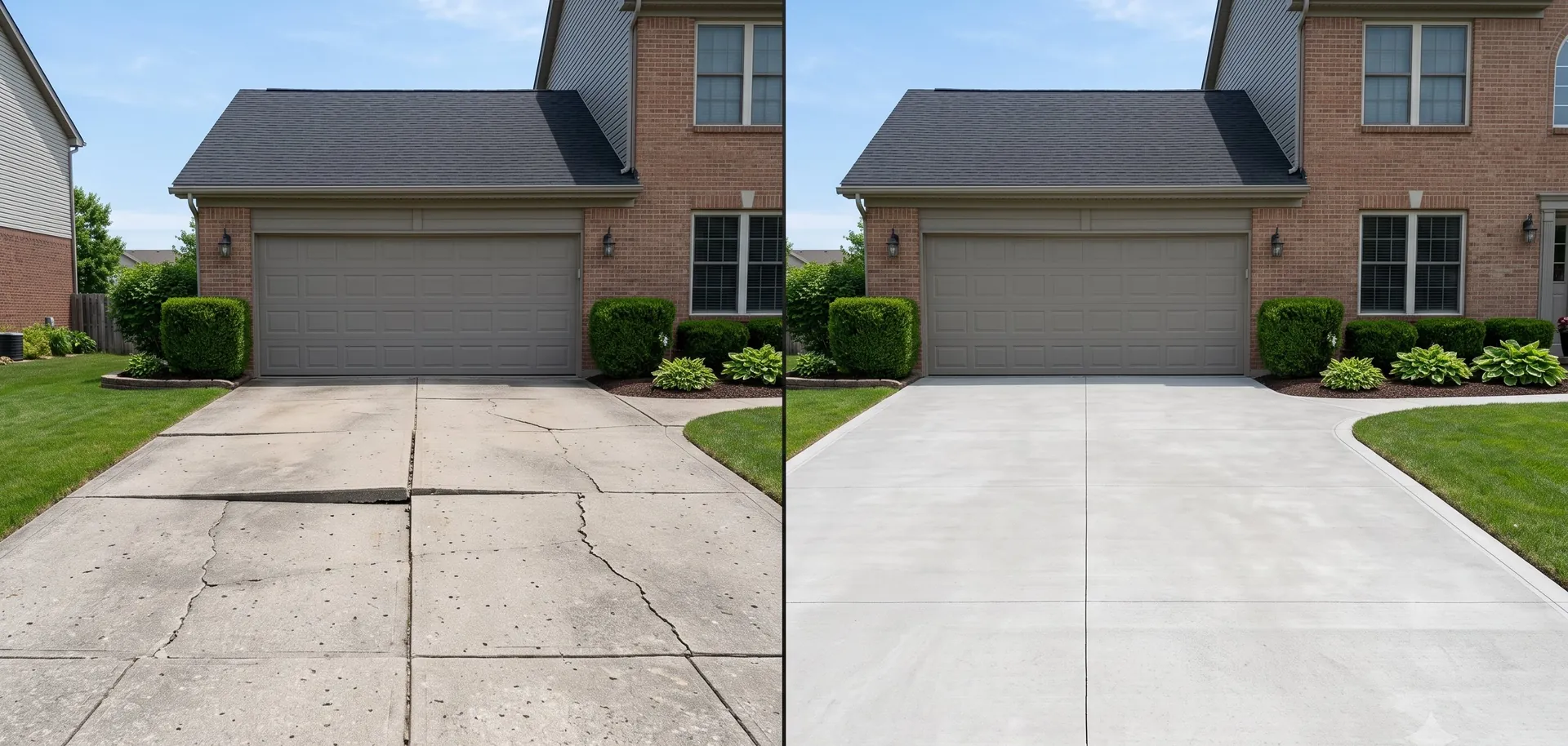
 Illustrative
Driveway Leveling & Repair in Kansas City
PolyJacks lifts a sunken or settled driveway—especially where it drops off at the garage—by injecting waterproof polyurethane foam through dime-sized holes, raising the slab back into place without tearing out or replacing concrete. Most driveways are lifted and leveled in 2-4 hours, with the surface ready to use within hours. PolyJacks offers free on-site estimates throughout the Kansas City metro, at a fraction of replacement cost.
Your Driveway Doesn't Need a Jackhammer
A sunken driveway isn't a demolition job. It's a lifting job. PolyJacks raises settled concrete driveways back to level using high-density polyurethane foam injected right through the slab. No tear-out, no dumpster in your yard, no week of dust.
We drill dime-sized holes, pump in foam that expands 30 to 40 times its liquid volume underneath the slab, and watch your driveway rise back to where it started. Most jobs wrap up in two to four hours. You'll be parking on it within hours.
If your driveway has a step-down at the garage, a puddle that never drains, or a corner that's dropped an inch or two. That's what we fix. Free estimate, no pressure, no obligation.
The Gap Where the Driveway Meets the Garage
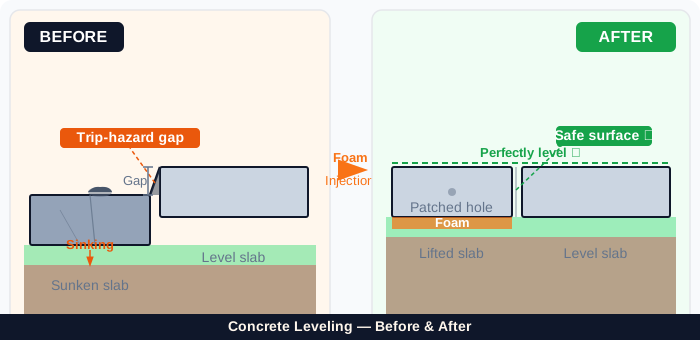
This is the one almost every homeowner calls us about. The driveway settles a little at a time, and one day you notice there's a lip where the driveway meets the garage floor. A step you catch your toe on, or a gap wide enough that water and leaves wash straight into the garage every time it rains.
That gap is a symptom, not the actual problem. The slab next to your foundation has lost the ground underneath it. Usually from soil washout, poor drainage, or a downspout dumping water in the wrong spot for years. The driveway didn't crack, it dropped.
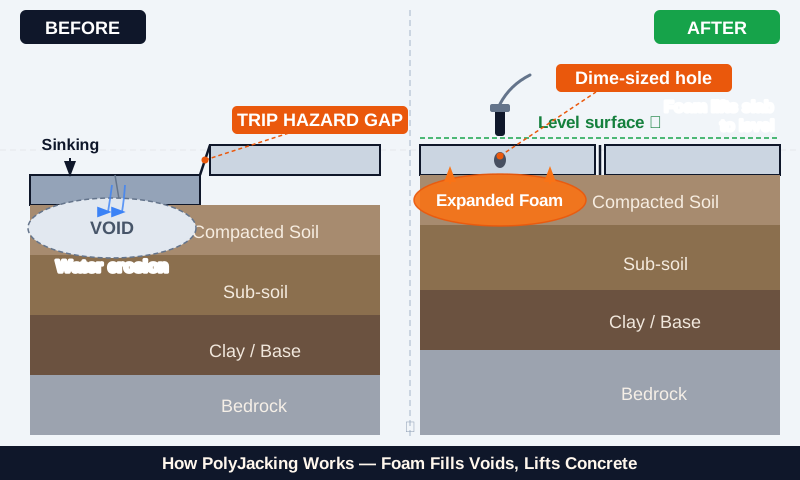
We lift that section of driveway back up to meet the garage floor and close the gap for good. Foam goes in right at the trip point, the slab rises, and the transition levels out. No more lip to trip over, no more water finding its way inside.
If that is the exact problem at your house, we have written it up in full. Why the driveway pulls away from the garage covers why the gap is so common on Kansas City clay, what it costs you beyond the trip hazard, and when foam is not the right fix for it.
Why Driveways Sink in Kansas City
Your driveway isn’t sinking because the concrete is bad. It’s sinking because of what’s underneath it, and in Kansas City that means two forces working against you simultaneously.
The first is the soil itself. The KC metro sits on the Wymore-Ladoga clay complex. A heavy-clay series identified by the USDA NRCS with commonly 35 to 55 percent clay (USDA-NRCS) content and a “very high” shrink-swell rating. When it rains, this clay absorbs water and expands by 10–15% in volume, pushing upward on the slab above it. When it dries out in late summer, it contracts and pulls away, leaving voids under your concrete. The slab drops into those voids. Kansas City gets around 40 inches of rainfall per year but it arrives unevenly: heavy spring rains followed by dry late summers, which is exactly the wet-dry cycle that keeps that clay moving.
The second force is frost heave. Kansas City gets roughly 80 freeze-thaw days in a typical winter (NOAA KCI records). Each one forces water into micro-cracks in the subsoil, and when that water freezes it expands about 9%, pushing the ground upward. When it thaws, the soil doesn’t always repack. It leaves a gap beneath the slab instead. After 50 cycles of that in a single winter, even a well-built driveway on poor fill can drop an inch or more.
The usual culprits we find on-site beyond soil movement: erosion washing soil out from under an edge, poor fill compaction under newer slabs, a plumbing leak feeding water under the concrete, downspouts dumping water at the wrong corner, tree roots working under an edge, or a void that simply opened over time. Fixing the concrete without addressing the cause is a temporary win. Part of the free estimate is us telling you what we think caused it.
You can check your specific risk score in our KC Settlement Risk Index. For a deeper breakdown of the soil mechanics, see our guide on why concrete sinks in Kansas City.
How We Level a Driveway
The process is the same reason we can get you back to driving on it within hours.
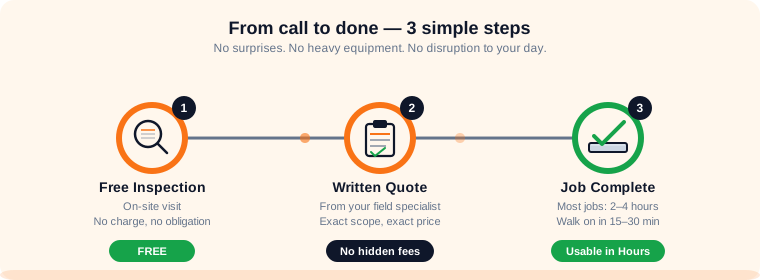
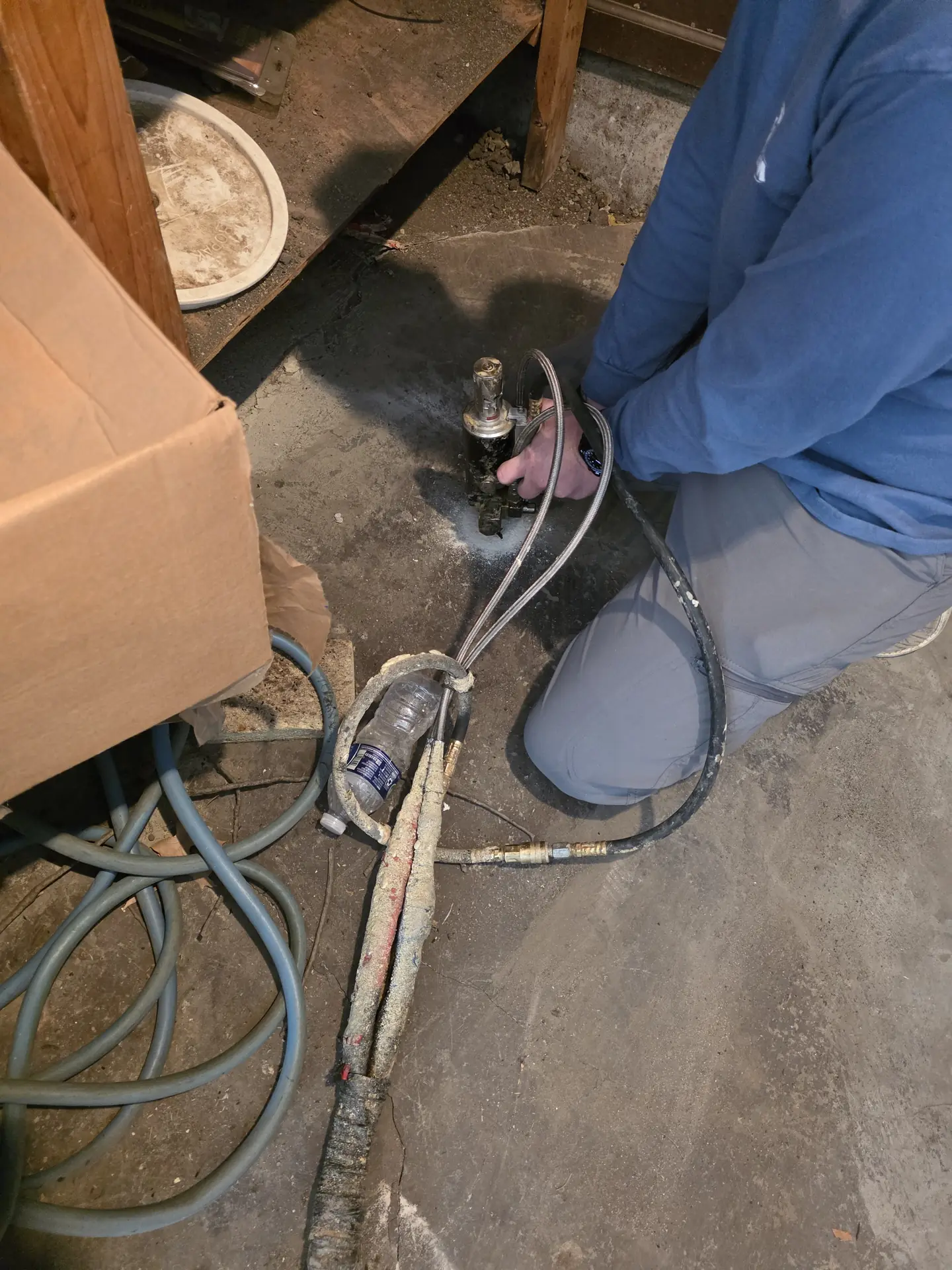
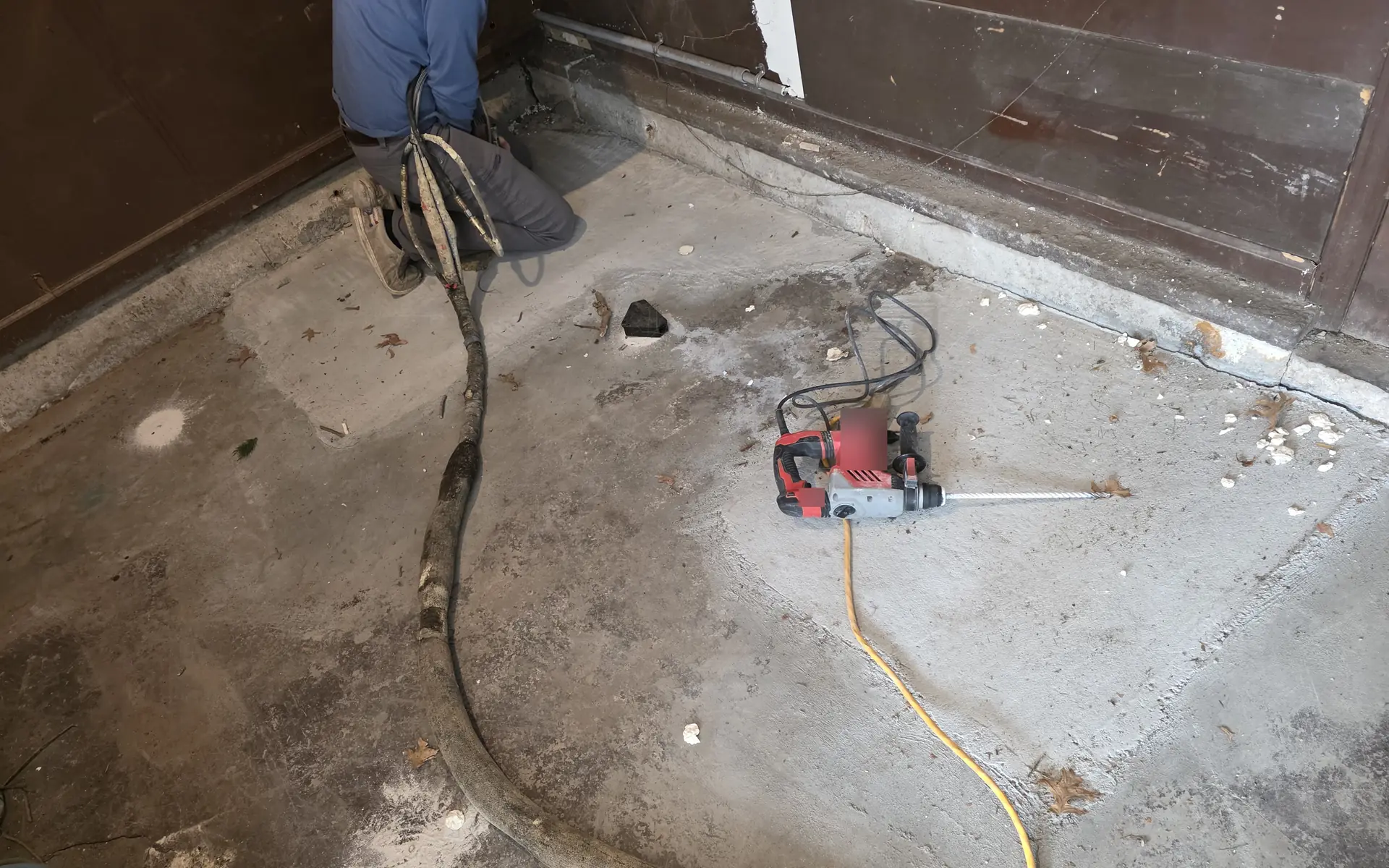
We start with a free on-site inspection. We walk the slab, check the low spots, and figure out roughly how much foam and how many injection points the job needs. Then, on the day of the job: we drill a pattern of dime-sized holes, typically somewhere between 4 and 12 depending on the size of the sunk area. Through those holes, we inject waterproof high-density polyurethane foam directly under the slab.
The foam expands 30 to 40 times its starting volume, filling the void underneath and lifting the concrete back to level as it goes. We watch the slab rise in real time and stop exactly where it needs to be. This isn't guesswork, it's controlled. Once it's level, we patch the injection holes, clean up, and you're done. Two to four hours, most jobs, start to finish.
On-site visit. No charge, no obligation.
FREEFrom your field specialist. Exact scope, exact price.
NO HIDDEN FEESMost jobs: 2–4 hours. Walk on it in 15–30 minutes.
USABLE IN HOURSWe lift your slab from underneath. In hours, not days
A dime-sized hole. Waterproof foam. Your concrete rises back to level.
- 1. Drill dime-sized holes
- 2. Inject expanding foam
- 3. Slab lifts back to level
Level. Done. In Hours.
2–4 HOURS · WALK ON IT IN 30 MIN · WATERPROOF FOAM
The foam is lightweight. It re-supports your slab without overloading the soil, and it’s waterproof, so it won’t wash out like mudjacking.
Usable in Hours, No Downtime
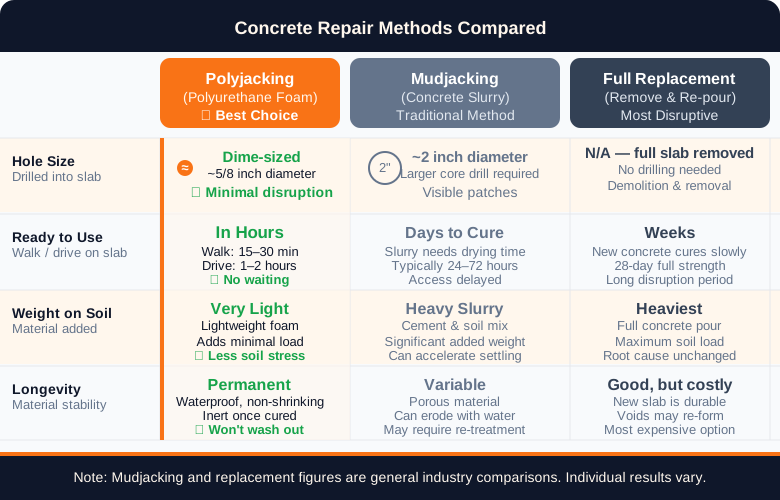
You don't lose your driveway for a week. Walk on it in 15 to 30 minutes. Drive a car on it in 1 to 2 hours. The only real restriction is heavy vehicles (moving trucks, RVs, that kind of load) for 48 hours while the foam finishes curing all the way through.
Compare that to the alternatives. Mudjacking uses a cement slurry that takes 24 to 72 hours before you can use the surface, weighs far more, and isn't waterproof. A full tear-out and replacement needs roughly a week before it's usable and 28 days to hit full strength. Our foam weighs a small fraction of the weight, cures waterproof, and gets you back in your driveway before dinner.
Those windows are the curing side of the job. If you would rather see the whole day mapped out, how long a polyjacking job actually takes runs through setup and drilling, the injection and lift, patching and wrap-up, and the things that can push a job longer than planned.
What It Costs
We don't post a price list, because no two driveways need the same amount of foam. A one-inch dip at a corner and a three-inch drop at the garage threshold are two different jobs.
Here's how it actually works: we come out for a free, no-obligation inspection, measure what's going on, and give you a firm quote based on the exact foam volume your driveway needs. No surprises after we start.
What we can tell you up front is the comparison that matters: polyjacking consistently runs far less than tearing out and pouring a new driveway, and it gets you back in service within hours instead of a week later.
For a detailed breakdown of the factors that influence pricing, see our guide on what polyjacking costs in Kansas City.
Our Warranty
We back the lift with a 5-year limited warranty, written to the owner who paid for the work at that address, and it ends if the house is sold. If the slab we leveled settles more than 1/2 inch within 5 years due to our work, we come back and re-lift it at no charge.
That warranty covers our work. It doesn't cover new problems. It excludes settling caused by drainage or gutter neglect, tree roots, loads beyond normal residential use, acts of God, and cosmetic or hairline cracking that was already there. We'll walk you through exactly what's covered before you sign anything.
To file a claim, call (913) 713-7794. We'll verify the settlement against the 1/2-inch threshold and, if it qualifies, re-lift the slab at no charge.
When Driveway Leveling Isn't the Right Answer
We'd rather tell you the truth than sell you a fix that won't last. Polyjacking lifts and levels sound concrete. It doesn't repair concrete that's actually broken. Not sure which camp your slab is in? Our guide on whether to level or replace your driveway walks through a quick 15-minute check.
If a section of your driveway is cracked all the way through or shattered, that section needs replacement, not lifting. If water is actively leaking under the slab from a broken pipe, that gets fixed by a plumber first. Foam injected under an active leak won't hold. If a tree root is actively pushing a slab up or apart, the root situation needs to be addressed before or alongside the lift.
And if what you're dealing with is actually foundation settlement rather than a driveway or flatwork issue, that's outside what we do. We'll tell you that plainly and point you toward someone who handles foundations, rather than take the job anyway.
Licensed, Insured, and Serving the KC Metro
PolyJacks is licensed and insured. We cover the Kansas City metro out of Spring Hill, Kansas, around 35 suburbs across Johnson, Wyandotte, Jackson, Clay, and Platte counties, roughly 50 miles out for residential work. We also handle commercial driveways, parking lots, and warehouse floors, with a service radius up to 100 miles for those jobs.
Every estimate is free. Call (913) 713-7794 or book online, and we'll get eyes on your driveway.
What the work actually looks like
How polyjacking works in 90 seconds
Our team walks you through the three-step process: dime-sized holes, high-density polyurethane foam that fills every void and compresses the soil beneath your slab, and use within hours with no heavy trucks. Call (913) 713-7794 or book a free estimate below.
Frequently asked
How long does it take to level a driveway?
Most driveways are done in two to four hours, start to finish. Inspection, drilling, injecting foam, patching the holes: same visit. You'll know your time estimate before we start, once we've mapped out how many injection points the job needs.
How soon can I drive on my driveway after leveling?
You'll walk on it in 15 to 30 minutes. Park a car on it in 1 to 2 hours. The only thing we ask is you hold off on heavy vehicles (think delivery trucks or RVs) for 48 hours while the foam finishes fully curing. Compare that to mudjacking (24 to 72 hours before use) or a full tear-out and pour, which needs about a week before you can drive on it and a full 28 days to cure completely.
Will polyjacking close the gap between my driveway and garage floor completely?
That's exactly what it's built to do. We lift the sunken slab back up to meet your garage floor and threshold, closing the trip lip and the gap water's been sneaking through. If the slab is cracked or broken at that edge, we'll tell you straight. That's a different fix, and we'll say so.
How much does driveway leveling cost?
We don't quote a price until we've seen the job. Every driveway needs a different amount of foam depending on how far it's sunk and how much void is underneath it, so we measure that on a free, no-obligation site visit and give you a firm number before any work starts. What we can tell you: polyjacking consistently runs far less than tearing out and replacing the slab.
What if my driveway has cracks, not just settling?
Depends on the crack. Hairline cracks and cosmetic surface stuff. Foam handles that fine, we lift right through it. But if a section of slab is actually broken or shattered, foam can't glue concrete back together. That section needs replacement, and we'll tell you that on the estimate instead of trying to sell you a fix that won't hold.
Is the fix permanent?
It's permanent as long as whatever caused the sinking in the first place gets addressed. If a downspout's been dumping water under your slab or a tree root is still growing under there, the ground can shift again no matter what's holding the concrete up. We'll flag the likely cause when we're out there, and we back the lift itself with a 5-year limited warranty, written to you and your address, ending if the house is sold.
Does frost heave cause driveway sinking in Kansas City?
Yes: it’s one of the primary causes in this climate. Frost heave happens when water in the soil freezes and expands (ice takes up about 9% more space than liquid water). Kansas City gets roughly 80 freeze-thaw days in a typical winter (NOAA KCI records), meaning that expansion-and-contraction cycle repeats dozens of times before spring. Each thaw can leave a small void beneath the slab instead of the soil repacking. Combine that with the Wymore-Ladoga clay that dominates KC metro subsoil (commonly 35 to 55 percent clay content, per USDA-NRCS). A clay that already moves 10–15% in volume between wet and dry seasons, and you have subsoil that’s constantly in motion under your driveway. Polyjacking fills those voids with waterproof foam and lifts the slab back to grade. It doesn’t fix the soil, but it closes the void and stops the settling.
Do I need a permit for driveway leveling?
We do not have confirmation from the Kansas City building department or the relevant Kansas county authorities regarding permit requirements for polyurethane concrete leveling in the specific jurisdictions we serve. We cannot state whether a permit is required without that verification. If a permit is required in your area, we would handle the filing as part of the job. We recommend checking with your local building department or asking us directly during your free estimate to confirm the requirements for your specific address.
Get your free concrete leveling estimate
No obligation, and if foam isn't the right fix, we'll tell you straight.
Pick a time that works for you
Book right here on this page. Prefer to talk? Call (913) 713-7794.