
 Illustrative
Most Polyjacking Jobs Wrap in Hours, Not Days
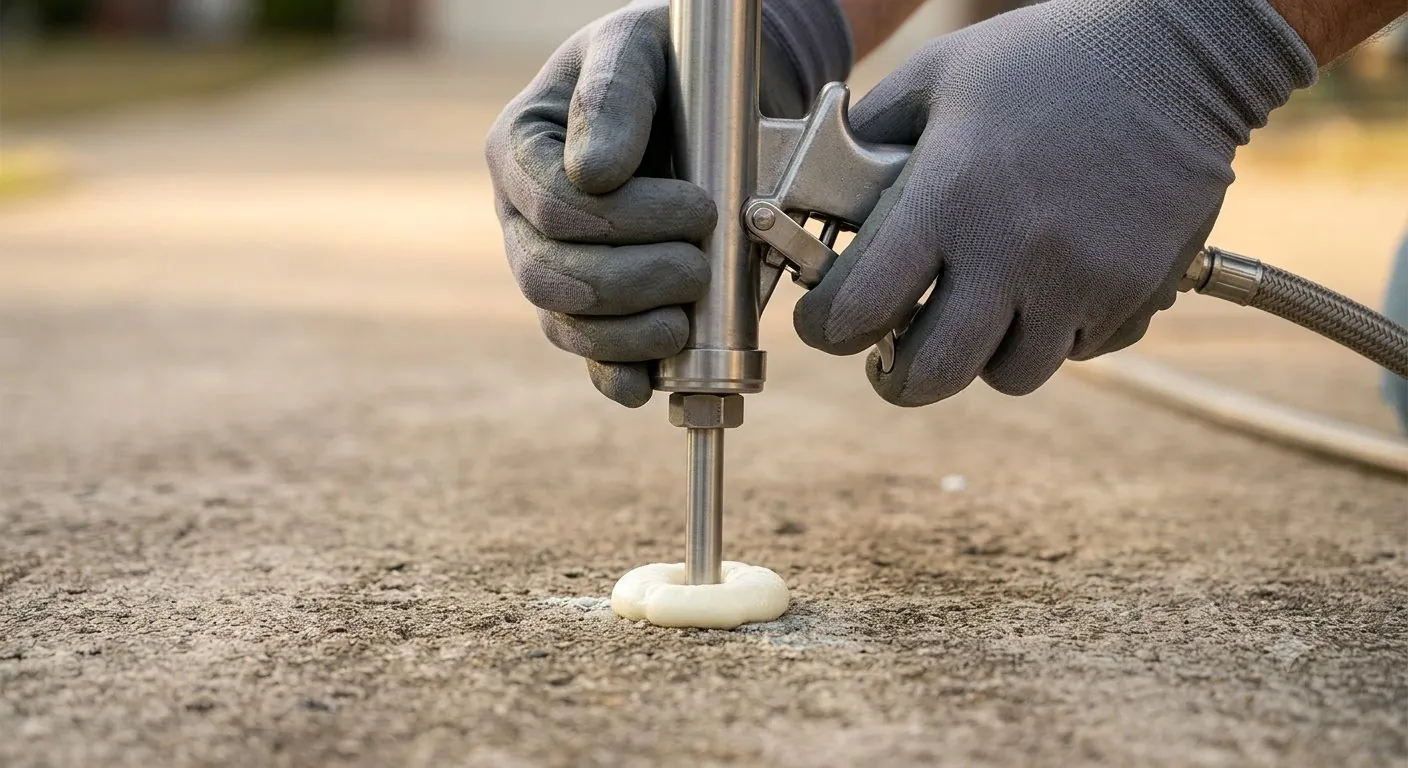
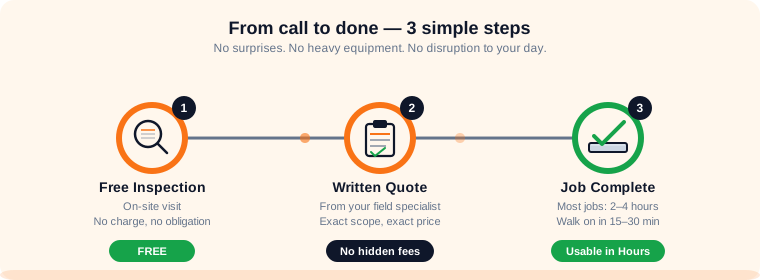
For most residential jobs — a driveway, walkway, patio, or set of steps — polyjacking is done in a matter of hours, not days. The crew drills dime-sized holes, injects expanding foam that lifts the slab, then patches the holes. You can usually walk on it within 15 to 30 minutes and drive on it within a couple of hours.
The Short Answer
Most polyjacking jobs are finished in hours, not days. That's one of the biggest practical differences between concrete leveling and a full replacement, which involves demolition, pouring, and days of cure time before the surface is usable. A typical single-slab or small-area job can often be completed in a single visit. Larger projects, like a full driveway or a commercial lot, naturally take longer simply because there's more square footage and more injection points to manage. The best way to get a real timeline for your specific project is a free estimate, where PolyJacks can look at the area and tell you what to expect before scheduling anything.
Before the Work Begins: The Free Estimate
The process starts before any drilling happens, with a free, no-obligation on-site estimate. PolyJacks measures the settled area, looks at the concrete's condition, and identifies what's likely causing the settling. Often tied to Kansas City's expansive clay soil, freeze-thaw cycles, or drainage issues washing soil out from under the slab. This visit is also when we'll tell you honestly if leveling is the right fix or if something else makes more sense. The estimate itself usually takes well under an hour depending on the number of areas involved. Once you decide to move forward, scheduling the actual work is typically straightforward. There's no waiting on permits or lengthy prep the way there can be with a full concrete replacement project.
What to Do Before the Crew Arrives
The morning of the job, the main thing is to make sure the slab is clear. Move any furniture, planters, or debris off the area the crew will be working on, and if the slab is in a garage, confirm the door can be opened fully so the crew has room to position their equipment. If access is through a gate or narrow path, make sure it's open and unobstructed. Keep pets and children away from the work area while the crew is drilling and injecting. On the prep side, there's nothing you need to do to the concrete itself. No pre-drilling, no surface cleaning, no covering of adjacent areas. The crew handles all of that.
Job-Day Timeline: Setup and Drilling
On the day of the job, the crew starts by confirming the injection plan based on how the slab has settled, then drills a series of small, dime-sized holes: at the chosen points. This step goes quickly since the holes are small and there's no demolition involved. For a typical residential area like a sidewalk panel or a porch landing, drilling might take well under an hour. Larger areas, like a full driveway or a pool deck with multiple panels, take proportionally longer simply because there are more holes and more of the slab to map out and check for level before starting injection.
Job-Day Timeline: Injection and Lift
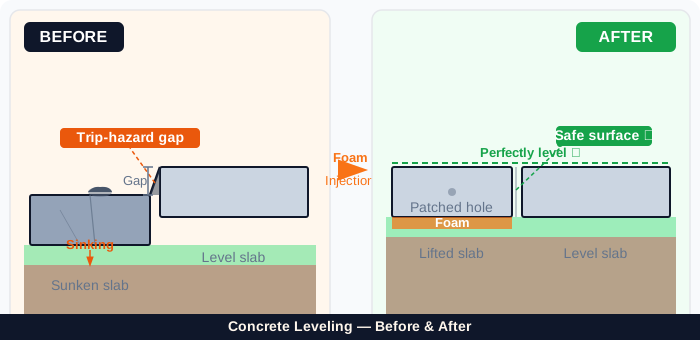
Once drilling is done, the crew injects the two-component polyurethane foam through each hole. The foam expands within seconds, filling the void underneath the slab and lifting it as it fills. This is the most closely monitored part of the job. The crew checks the slab's height at each point as it rises, adjusting the injection so the whole surface comes up evenly instead of tilting or over-lifting one section. Because the foam reacts fast, this step moves quicker than people often expect; there's no lengthy waiting period between injecting and seeing the slab respond. For void fill work where there's no lift needed, just a gap to fill underneath a slab, this step can be even more straightforward since there's no height target to hit.
Job-Day Timeline: Patching and Wrap-Up
Once every section is at the right elevation, the crew patches each injection hole with a matching material and does a final check across the whole area to confirm everything is level and properly supported. Cleanup is minimal since there's no excavated dirt, broken concrete, or slurry runoff to deal with: polyurethane concrete raising doesn't generate the kind of debris a demolition-and-repour job does. The patched holes are small enough that most people stop noticing them within a short time as they weather in with the surrounding concrete. For most single-area residential jobs, this brings the whole visit (drilling through patching) in well under a day.
When You Can Walk and Drive on It Again
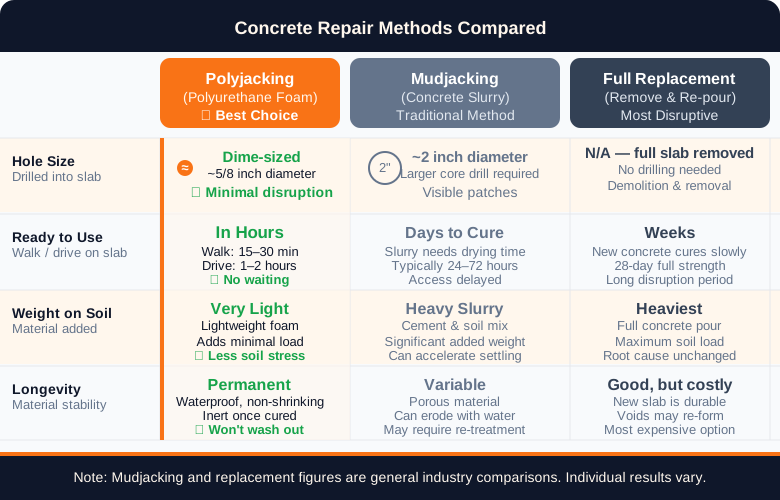
One of the most practical advantages of polyjacking is how quickly the surface goes back into use. Because the polyurethane foam cures fast, most lifted areas can be walked on in about 15 to 30 minutes after injection. Driving on a lifted driveway typically needs a bit longer (usually around one to two hours) to make sure the foam has fully cured and can handle vehicle weight. That's a sharp contrast to a full concrete replacement, where a new pour generally needs to cure for days before it can safely bear weight at all. If you're leveling a driveway you use daily or a patio you don't want out of commission for long, that turnaround is often the deciding factor over replacement.
For comparison, a mudjacking (slurry) job typically needs considerably longer before the surface can bear vehicle weight, because the cement-based slurry cures slowly. The polyurethane foam used in polyjacking reaches full structural strength in the time frame described above.
If you are still weighing a lift against a tear-out, what to consider before you replace your driveway walks through the decision.
What Can Make a Job Take Longer
A few things can extend a polyjacking timeline beyond the typical single-visit job. Larger square footage, obviously, takes more injection points and more time. Difficult access can still slow setup, but because the equipment footprint is small and there's no slurry truck or mixer to position, most tight spaces are manageable. Unusually severe settling, where a slab has dropped several inches and needs a larger void filled before it lifts, takes more material and more careful monitoring. And multi-area projects, like leveling a driveway, walkway, and patio in the same visit, naturally take longer than a single panel. None of this is unusual. It's exactly the kind of detail PolyJacks accounts for during the free estimate so there are no surprises on job day. In Kansas City, the crew can work in most conditions, but sustained rain or cold temperatures that prevent the foam from curing properly will delay the job. Winter scheduling is possible, though the crew may need to wait for a dry, above-freeze window before injecting. If you're planning a project in the colder months, our guide on winter concrete leveling in Kansas City covers what to expect.
A few things can extend a polyjacking timeline beyond the typical single-visit job. Larger square footage, obviously, takes more injection points and more time. Difficult access. A patio behind a narrow gate, a pool deck surrounded by landscaping, or steps close to a foundation: can slow down setup and equipment positioning. Unusually severe settling, where a slab has dropped several inches and needs a larger void filled before it lifts, takes more material and more careful monitoring. And multi-area projects, like leveling a driveway, walkway, and patio in the same visit, naturally take longer than a single panel. None of this is unusual. It's exactly the kind of detail PolyJacks accounts for during the free estimate so there are no surprises on job day. In Kansas City, the crew can work in most conditions, but sustained rain or cold temperatures that prevent the foam from curing properly will delay the job. Winter scheduling is possible, though the crew may need to wait for a dry, above-freeze window before injecting. If you're planning a project in the colder months, our guide on winter concrete leveling in Kansas City covers what to expect.
Kansas City weather can also shift a timeline. Rain that saturates the expansive clay soil around a slab, or temperatures near freezing, can push a job to the next day or the following week. The crew needs dry, workable access to set up equipment and drill, so if conditions are off on the scheduled day, we will let you know in advance rather than show up and wait. The estimate visit is when we flag any weather-related timing risk for your specific location and season. For more on how cold weather affects the foam and the work, see our guide on winter concrete leveling in Kansas City.
Scheduling Your Project
If you've got a sunken driveway, walkway, patio, or other slab and want a real timeline instead of a guess, the next step is a free, no-obligation on-site estimate. PolyJacks serves the whole Kansas City metro, in both Kansas and Missouri, from our base in Spring Hill. We'll look at your specific area, explain what's involved, and give you an honest idea of how long your job will actually take before you commit to anything. Call (913) 713-7794 or use our contact form to get scheduled, or start with our Diagnose tool if you want to understand what's happening under your slab first.
How polyjacking works in 90 seconds
Our team walks you through the three-step process: dime-sized holes, high-density polyurethane foam that fills every void and compresses the soil beneath your slab, and use within hours with no heavy trucks. Call (913) 713-7794 or book a free estimate below.
Frequently asked
How long does a typical polyjacking job take?
Most single-area residential jobs, such as a walkway, patio section, or small driveway area, are completed in a matter of hours, often in a single visit.
How soon can I walk on the surface after it's lifted?
Usually about 15 to 30 minutes, since the polyurethane foam cures quickly.
How soon can I drive on a leveled driveway?
Typically within one to two hours, once the foam has fully cured enough to handle vehicle weight.
What makes a job take longer than average?
Larger square footage, difficult site access, more severe settling that needs more material, or leveling multiple areas in one visit.
Does the estimate visit take long?
No. It's usually well under an hour, and it's free with no obligation to schedule the actual work.
Is polyjacking faster than mudjacking for sinking concrete repair?
For sinking concrete repair, polyjacking returns the surface to use sooner. Foam lets you walk on a lifted slab in about 15 to 30 minutes and drive on it in around one to two hours, while a mudjacking slurry job typically needs considerably longer before it can bear vehicle weight because the cement-based slurry cures slowly.
Have a sinking slab?
Book a free on-site inspection. Honest advice, usable within hours.
Pick a time that works for you
Book right here on this page. Prefer to talk? Call (913) 713-7794.