
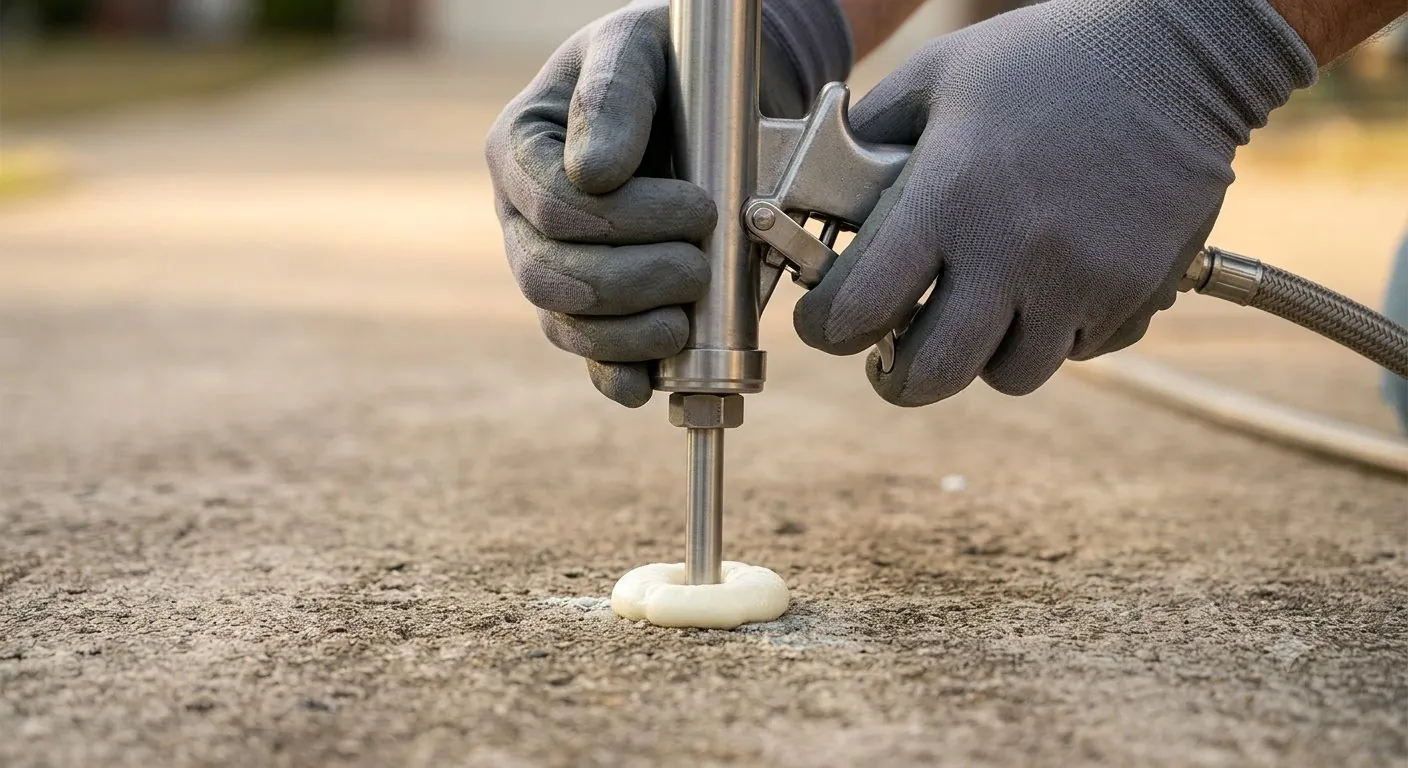
 Illustrative
Void Under Your Concrete Slab in Kansas City
A void is an empty pocket that forms under a slab when soil erodes, settles, or washes away. Left alone, the unsupported concrete eventually cracks or sinks. PolyJacks fills voids by injecting expanding polyurethane foam through small holes, stabilizing the soil and supporting the slab before it drops, with no excavation needed.
What Void Fill Under Concrete Means
Void fill means injecting material into a void under a concrete slab (an empty gap that's formed beneath it) before that gap gets big enough to cause visible sinking. Voids happen when soil erodes, compacts, or shifts out from under a driveway, patio, sidewalk, or garage floor, leaving the concrete resting on nothing but its own strength at that spot.
Left alone, a void will usually turn into a sunken or cracked slab eventually, since concrete isn't designed to span open space indefinitely. Filling it early - with waterproof polyurethane foam - stabilizes the ground underneath and can help prevent the kind of settling that leads to a full concrete leveling repair down the road. It's one of the more overlooked but genuinely preventive things a homeowner can do.
Why Voids Form Under Kansas City Slabs
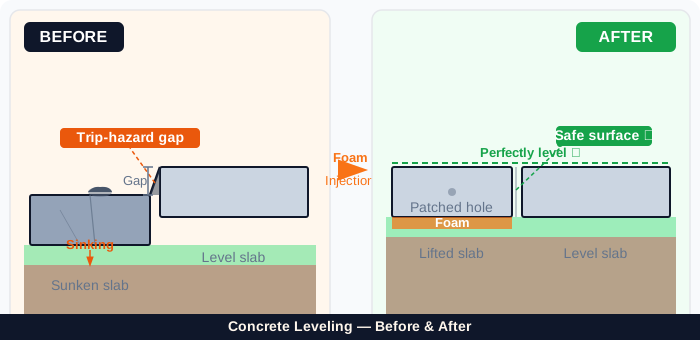
Kansas City sits on expansive clay soil, and that soil is a big part of why voids form under slabs across the metro. Clay swells when it absorbs water and shrinks as it dries out, and that constant movement through wet springs, dry summers, and freeze-thaw winters gradually opens gaps beneath concrete.
Drainage plays a huge role too. Downspouts that empty right next to a foundation, grading that pitches toward the house instead of away from it, and clogged gutters all wash soil out from under slabs over time - often well before anyone notices the concrete has actually started to sink. That's why void filling is worth considering even on a slab that still looks level. We cover the local causes in more detail on why is my concrete sinking in Kansas City.
Soil conditions vary from neighborhood to neighborhood across the metro, which is why an on-site inspection matters more than any blanket description. The clay shrink-swell cycle is the dominant pattern, but the rate at which a void opens also depends on local drainage, how the ground was originally graded and compacted, and whether water is being directed toward or away from the slab - all of which differ from one property to the next.
How Polyurethane Foam Fills and Stabilizes a Void
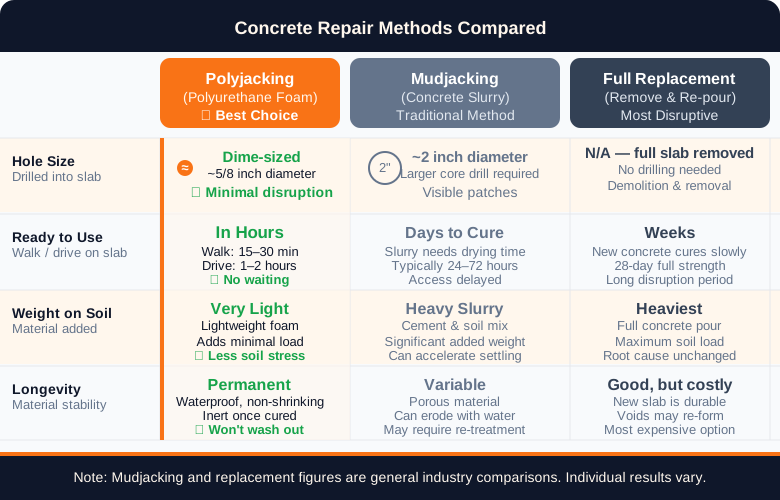
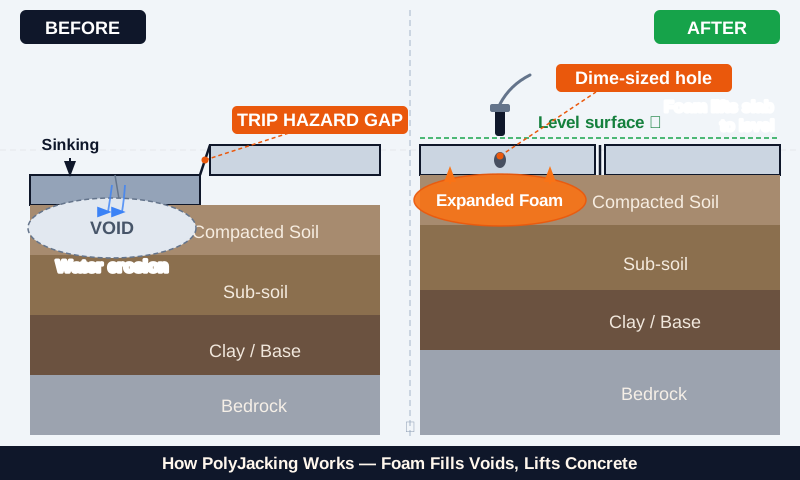
We fill voids the same way we handle full concrete leveling jobs: by drilling a series of small, dime-sized holes into the slab and injecting a two-part polyurethane foam. The foam expands as it cures, spreading through the void to fill the empty space and bond with the soil and the underside of the slab.
Because the foam is waterproof, it won't break down or wash out the way loose soil or a slurry mix can, so the stabilization holds up over time. It's also lightweight, which matters on soil that's already soft or shifting - it stabilizes the area without adding significant new load. The whole process cures in minutes, and most areas can be walked on in 15 to 30 minutes and driven on in 1 to 2 hours. See the full method on our polyjacking in Kansas City page.
Void Filling vs. Full Concrete Leveling
Void filling and full concrete leveling use the same foam and the same injection method - the difference is timing and goal. Void filling stabilizes a gap under the slab before it's caused noticeable sinking, cracking, or trip hazards. Concrete leveling raises a slab that has already settled, using foam to fill the void and lift the concrete back toward its original position in the same step.
In practice, we often find both on the same property: one slab that's holding steady but has a hollow spot underneath, and another nearby that's already visibly sunken. If you're not sure which situation you're in, that's exactly what a free estimate is for - we'll check for voids and settling and explain what we find in plain terms.
If a slab has already sunk, our guide on whether sunken concrete can be fixed without replacing it explains the options.
Where Void Filling Matters Most
Voids can form under just about any slab on a property, but we see them most under driveways, walkways, patios, garage floors, pool decks, and porch and step footings, and around foundation edges where drainage problems concentrate. See our driveway leveling and patio leveling pages for more on those specific jobs.
We handle void filling for homeowners across the Kansas City metro, from Olathe to Lee's Summit, on both the Kansas and Missouri sides. Commercial properties deal with the same soil and drainage issues we see at homes, and our crew takes on those jobs too.
Signs You May Have a Void, Even Without Visible Sinking
A void doesn't always announce itself with an obviously sunken slab. Some of the more common early signs include a hollow or drum-like sound when you tap or drive over a section of concrete, a crack that's opened up without much visible height difference yet, a small gap where the slab meets the house or a step, or water pooling in a spot that used to drain fine.

None of these guarantee a void is present, but they're worth having looked at, especially in a region with as much clay soil movement as Kansas City sees. Catching a void before it turns into real sinking is usually a simpler, smaller job.
Timing matters when you're trying to read these signs. After a wet spring, the clay is saturated and soft, and a slab can sound slightly hollow as it settles into that soft ground. That hollow sound often fades once the soil dries and firms up through the summer, so a tap test right after a soaking March isn't as reliable as one in August.
A hollow sound that persists or gets worse through a dry summer is a stronger signal. The clay is shrinking and pulling away from the underside of the slab, so if the gap is still there when the soil is at its tightest, it's less likely to be seasonal movement and more likely to be a real void.
After the first hard freeze, check again. Freeze-thaw cycles can open a new gap or widen an existing one, and a void that was stable all summer can suddenly become a problem once the ground freezes and thaws. If you notice a new hollow spot or a crack that wasn't there before the freeze, that's worth a look.
You can start by describing what you're seeing with our diagnose tool.
Getting a Free Void Fill Estimate
We don't publish blanket pricing for void filling because every slab and every void is different in size and cause - a free on-site estimate is how we give you an accurate answer. We'll check the slab, look for the telltale signs of a void, and explain honestly what we find. If foam void filling is the right call, we'll walk you through it. If something else is going on, we'll say so instead of pushing a fix that won't hold.
Call us at (913) 713-7794 or reach out through our contact page to schedule. PolyJacks is locally owned and based in Spring Hill, and we serve the whole Kansas City metro on both sides of the state line.
What the work actually looks like
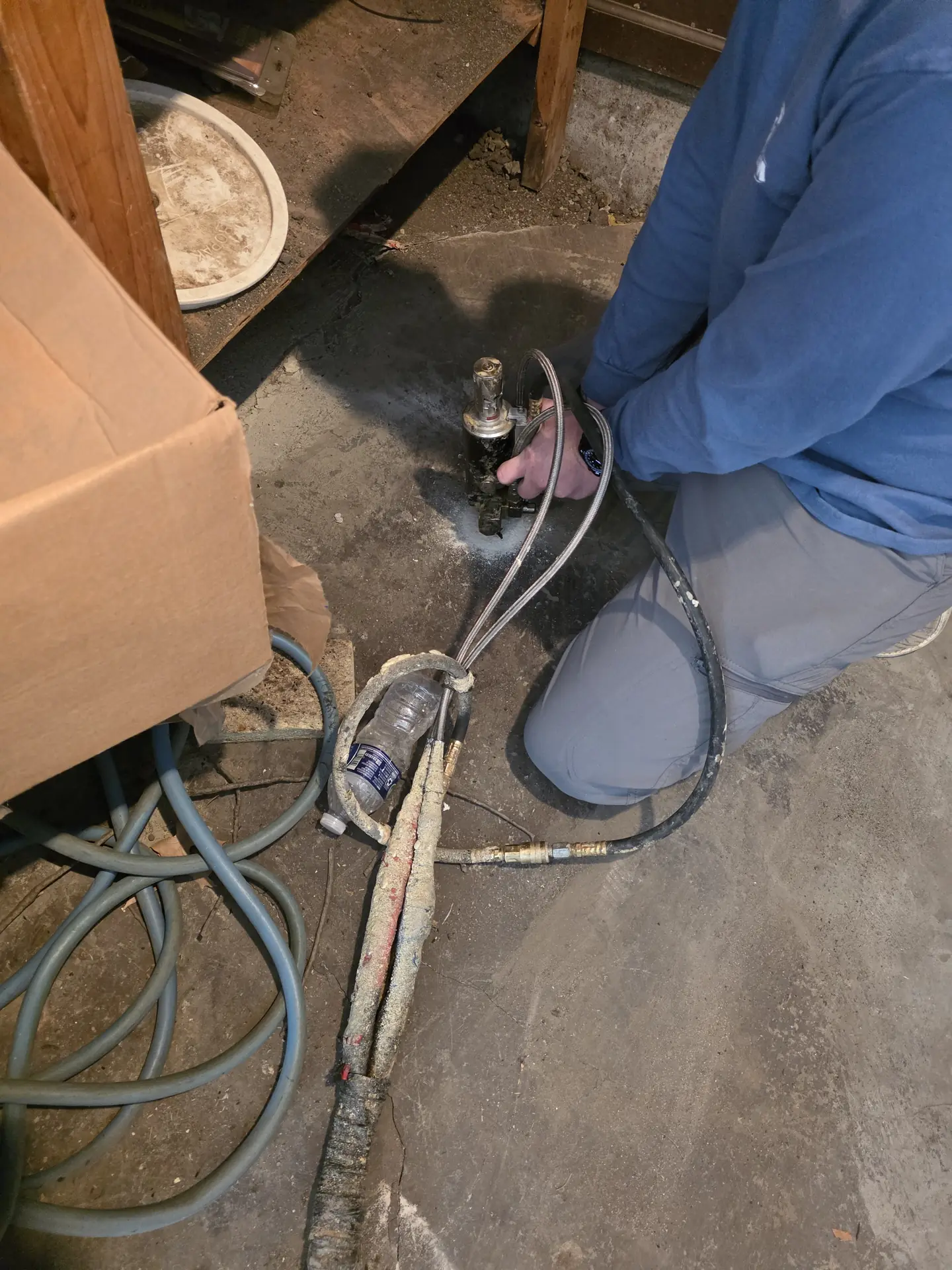
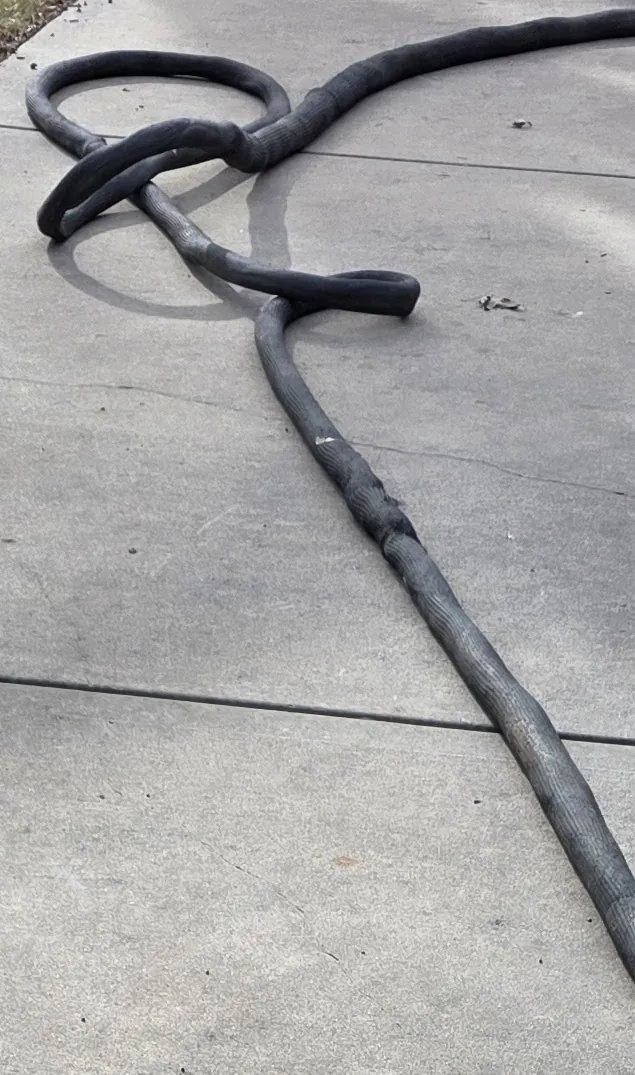
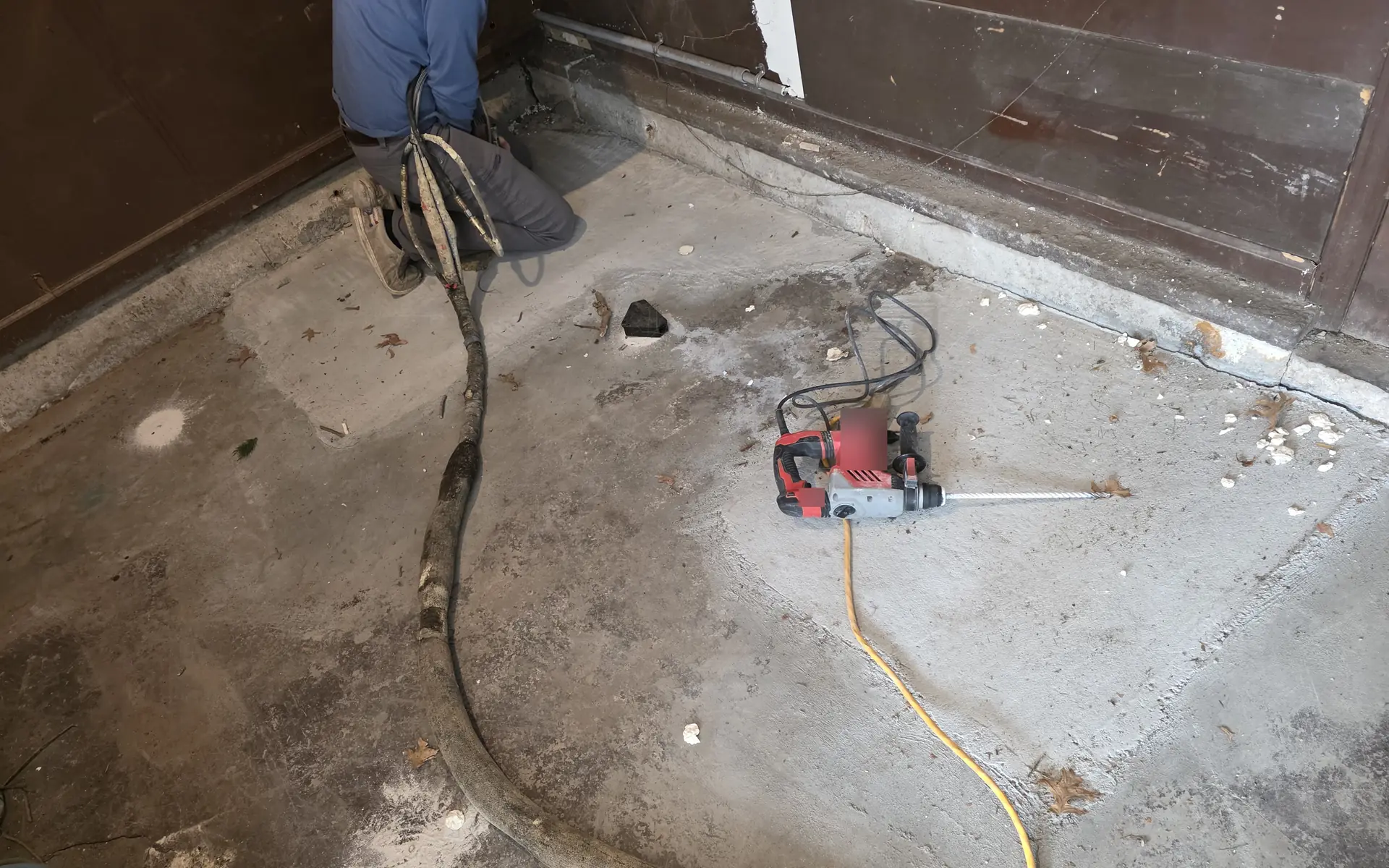
How polyjacking works in 90 seconds
Our team walks you through the three-step process: dime-sized holes, high-density polyurethane foam that fills every void and compresses the soil beneath your slab, and use within hours with no heavy trucks. Call (913) 713-7794 or book a free estimate below.
Frequently asked
What does void fill under concrete actually involve?
We drill a series of small, dime-sized holes into the slab and inject waterproof polyurethane foam that expands to fill the empty space underneath, stabilizing the ground before it can cause sinking.
How do I know if I have a void under my slab?
Common signs include a hollow sound when you tap or drive over the concrete, small unexplained cracks, gaps where the slab meets a step or wall, or drainage that's changed. A free estimate can confirm what's actually there.
Does filling a void also raise a sunken slab?
Sometimes. If the slab has already settled, the same foam injection used for void filling can also lift it back into place - that's the concrete leveling process. If it hasn't sunk yet, void filling alone stabilizes the area.
What does void filling cost?
Cost depends on the size and location of the void and the slab involved. We don't publish blanket pricing - a free on-site estimate gives you an accurate number for your specific situation.
Is the foam safe for Kansas City's clay soil?
Yes - it's lightweight, so it doesn't add significant new load to soil that's already soft or shifting, and it's fully waterproof, so it won't break down the way loose soil can.
How long before I can use the area again?
The foam cures in minutes. Most areas can be walked on in about 15 to 30 minutes and driven on in about 1 to 2 hours.
How do I schedule a void fill inspection?
Call (913) 713-7794, use our diagnose tool, or reach out through the contact page - we'll set up a free on-site estimate.
Get your free concrete leveling estimate
No obligation, and if foam isn't the right fix, we'll tell you straight.
Pick a time that works for you
Book right here on this page. Prefer to talk? Call (913) 713-7794.