
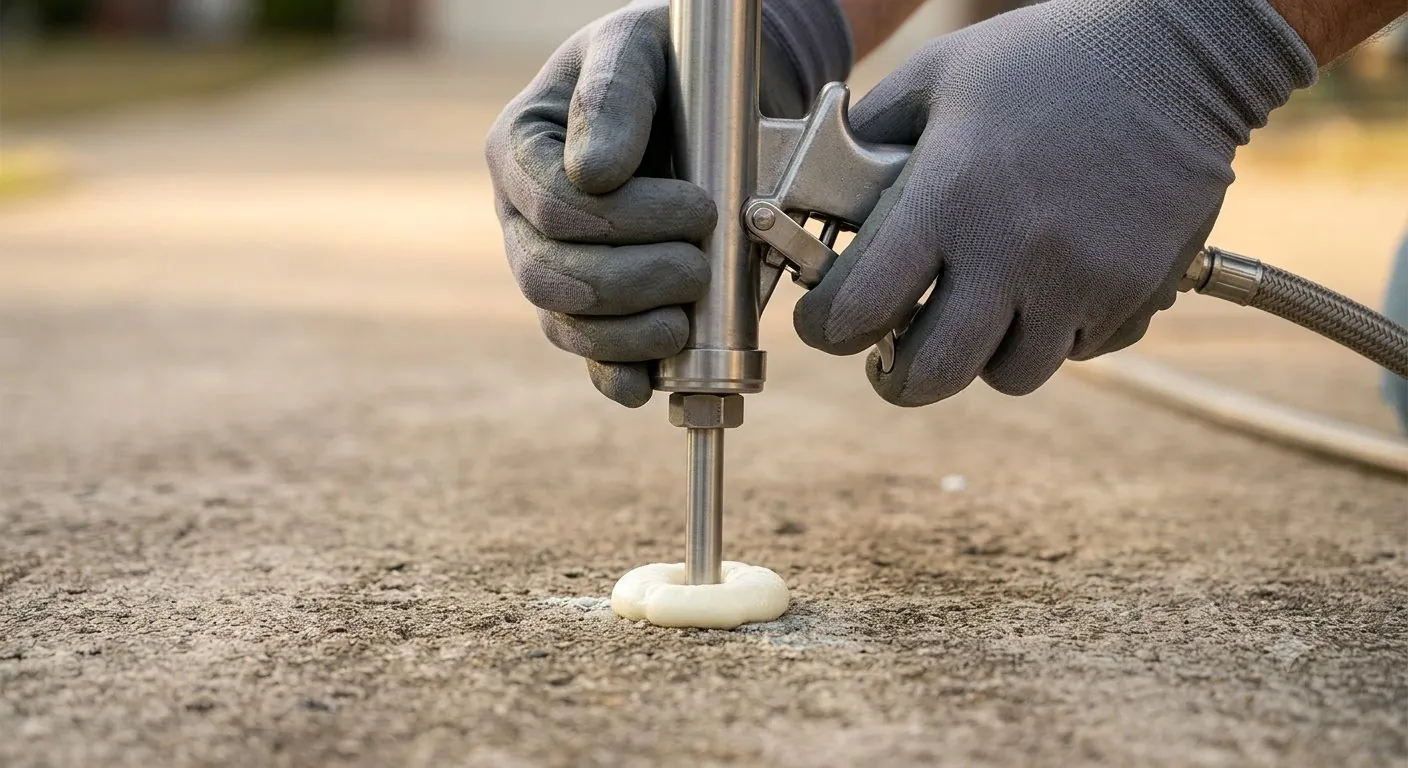
 Illustrative
A hollow sound when you tap or walk on a slab usually means there is an air gap, a void, where soil used to support the concrete. The slab is spanning empty space and will eventually crack or sink. Filling the void with injected foam re-supports it before that happens; a free estimate confirms.
That Hollow Sound Is Telling You Something
If you've ever tapped a driveway, patio, or walkway and noticed it sounds different when you walk or drive over one spot versus another, you've picked up on something real. Solid concrete sitting on well-supported soil sounds dense and dull when struck. Concrete with empty space underneath it sounds hollow, sometimes almost like a drum, because there's air where soil should be doing the work of holding the slab up.
That hollow sound means a void has formed beneath the slab - a gap between the bottom of the concrete and the ground it was originally poured on. It's one of the earliest, most useful warning signs a property owner can catch, often well before any cracking or visible sinking shows up on the surface.
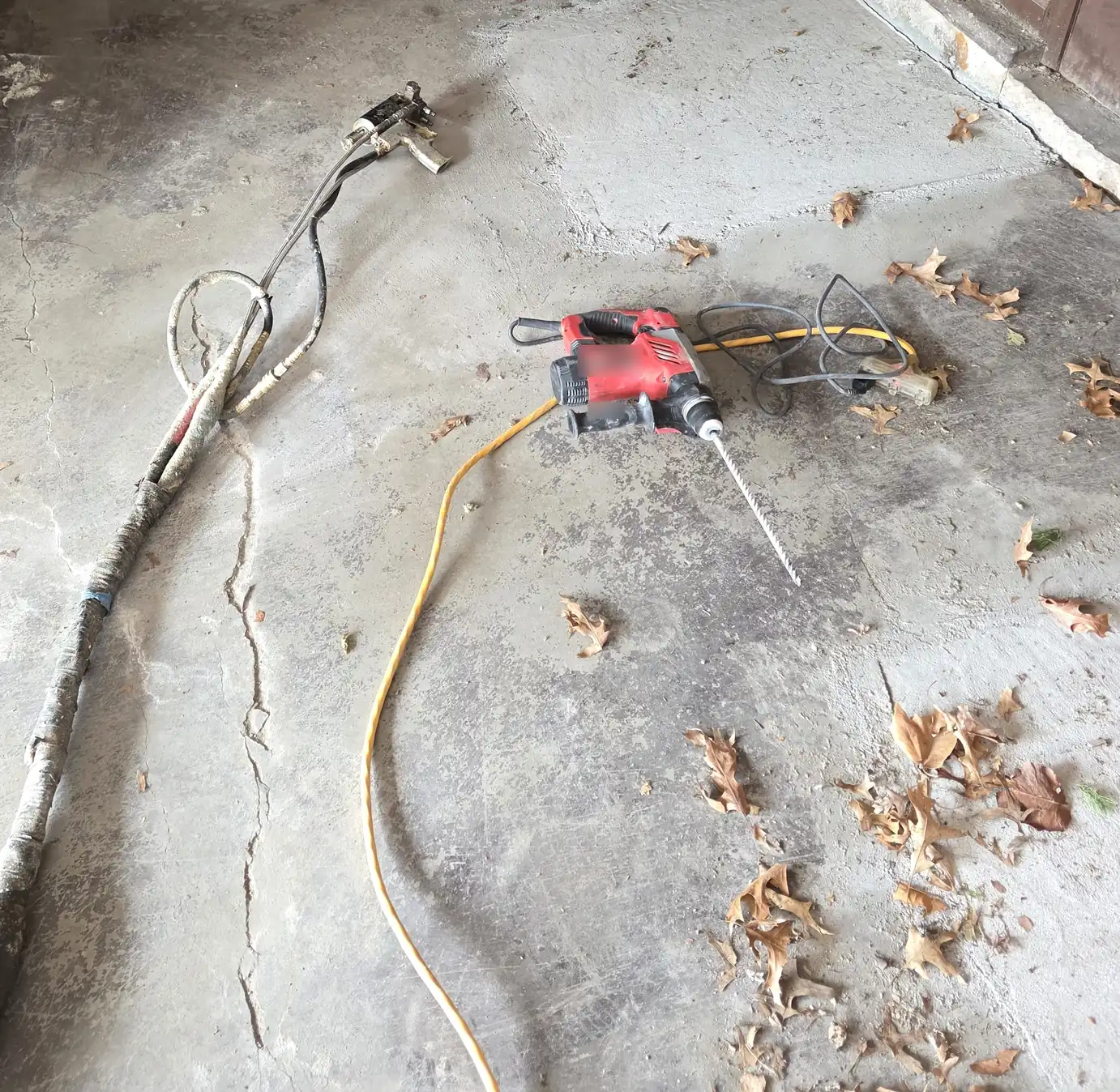
How Voids Form Under a Slab
Voids don't appear overnight. In the Kansas City area, they usually build up gradually through the same handful of causes: expansive clay soil that swells when wet and shrinks when dry, leaving a little more empty space behind each cycle; freeze-thaw swings through the winter that work the same way faster; and water erosion, where runoff or poor drainage washes soil out from under a slab edge bit by bit.
None of these happen because a slab was poured wrong. They're normal ground conditions playing out under concrete that was solid and well-supported the day it went in. The problem is that once the void starts, it tends to keep growing with every wet season and dry spell, since nothing stops the forces that created it. If you want to see how your specific neighborhood's soil and drainage profile factor into void risk, our KC Settlement Risk Index breaks it down by area.
Those are the weather-driven causes. Ground can also start out short of support when the fill under a slab was never properly compacted at build time, which is why a driveway can sound hollow far younger than you would expect. What causes voids under a concrete slab takes all four causes in turn and shows how to confirm a void is actually there.
Why Hollow Concrete Comes Before Sinking
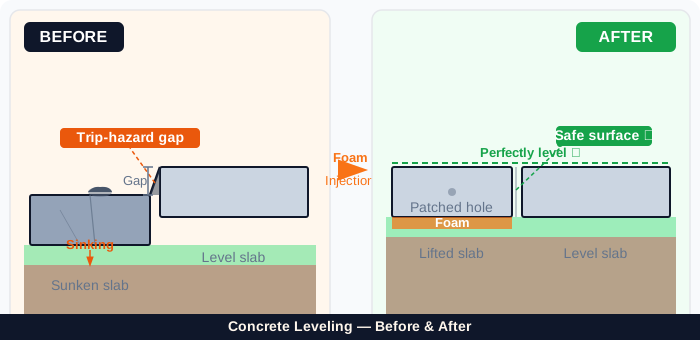
A void under a slab doesn't cause visible sinking right away, because the concrete itself has some rigidity and can bridge a small gap for a while, especially near the middle of a large slab. But that bridging isn't permanent. As the void widens, or as enough weight - a vehicle, foot traffic, seasonal ground movement - passes over the unsupported section, the slab eventually settles into the space that's opened up beneath it, or cracks under the added stress.
That's why a hollow sound is worth paying attention to before it becomes a visible dip or a spreading crack. Catching it at the hollow stage is usually a smaller, simpler repair. See our page on why concrete sinks for how the two stages connect.
A Simple Way to Check Your Own Slab
You don't need special equipment to get a rough sense of whether a slab has hollow spots:
- Walk the slab slowly and listen for a change in sound underfoot, especially near edges and corners
- Tap different spots with the heel of your shoe or a rubber mallet and compare the sound
- Look for early cracking, a slight slope, or a gap at an expansion joint near where it sounds hollow
- Pay closest attention to areas near downspouts or low spots where water tends to collect
This isn't a substitute for a real diagnosis - some hollow spots are minor and stable, others are actively growing - but it's a useful first check before calling for a professional look.
If you also see cracking or a slope, signs you need concrete leveling, not replacement can help you judge what the slab needs.
Where Hollow Spots Usually Show Up in Kansas City
In the KC metro, hollow spots most often appear along the outer edges of residential driveways and patios, particularly within a few feet of a downspout or a low spot where water pools. Thinner residential slabs are more vulnerable to voiding than thicker commercial pours.
If the hollow spot is on a patio, why a patio sinks in Kansas City explains what usually happens next.
Why It's Worth Fixing Before It Sinks
Filling a void while the slab above it is still level and crack-free is a smaller job than waiting until it sinks or breaks. Void filling uses the same waterproof polyurethane foam as a full leveling repair, injected through a few dime-sized holes, but the goal is simply to fill the empty space and restore support - not to lift a slab that hasn't dropped yet. See our void-filling service page for what to expect on the day of the visit.
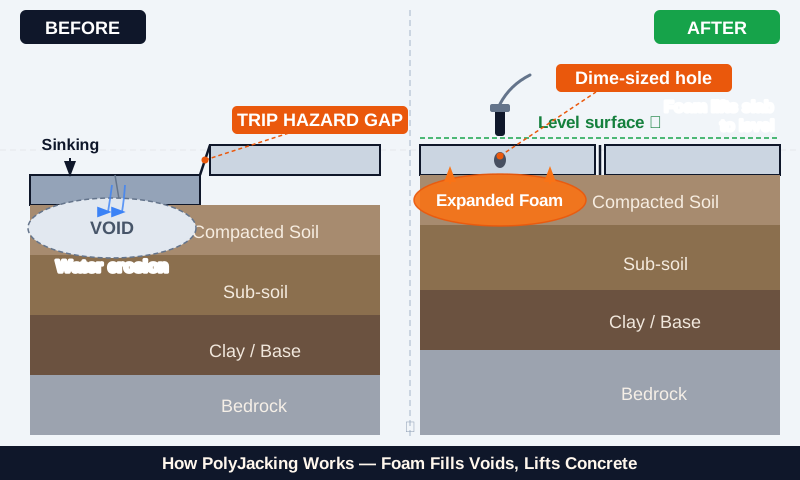
It's a genuinely preventive step, not an upsell: a stabilized slab with no void underneath it is far less likely to develop the cracking, sloping, or trip hazards that come with a slab that's lost its support entirely. If you're already hearing that hollow sound, you're in a good position to get ahead of it.
If the slab above a hollow spot has already dropped, the job moves from void filling to sinking concrete repair, which is the lifting work described on our concrete leveling page.
How the Foam Injection Process Works
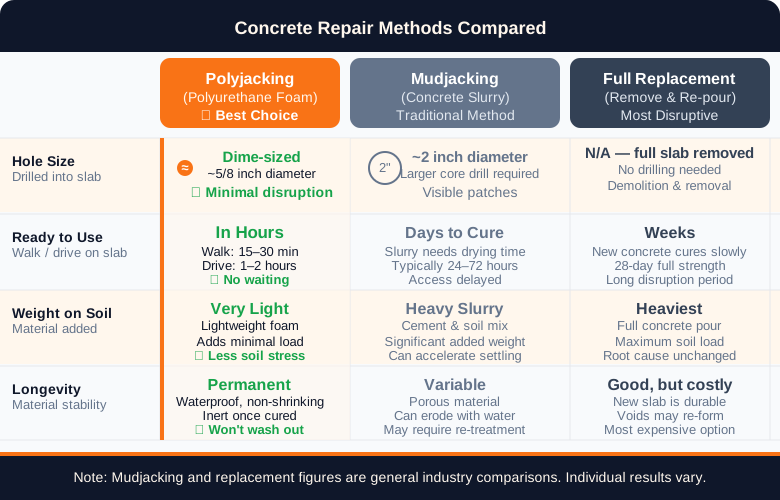
The process for filling a void is the same polyjacking injection method used across driveways, patios, sidewalks, and floors: a series of dime-sized holes, drilled into the slab over the hollow area, followed by an injection of expanding waterproof polyurethane foam. The foam spreads to fill the void completely, curing within minutes rather than the days a full replacement would take.
Because the foam is lightweight, it doesn't add stress to soil that may already be marginal, and because it's waterproof, it won't break down or wash out the way loose fill can. Most areas are ready for normal use within 15 to 30 minutes on foot and a couple of hours for a vehicle.
Getting a Free Look at Your Slab
PolyJacks is a locally owned concrete leveling crew based in Spring Hill, KS, serving the full Kansas City metro on both sides of the state line. A technician can sound out your slab, confirm whether there's a void underneath, and give you a straight recommendation - whether that's void filling now or simply keeping an eye on it.
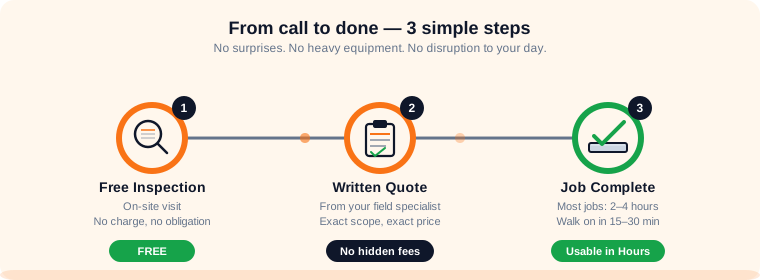
Call (913) 713-7794 or fill out the contact form to schedule a free, no-obligation estimate. You can also start with our Diagnose tool if you're not sure what you're looking at, or see the full range of services we offer.
How polyjacking works in 90 seconds
Our team walks you through the three-step process: dime-sized holes, high-density polyurethane foam that fills every void and compresses the soil beneath your slab, and use within hours with no heavy trucks. Call (913) 713-7794 or book a free estimate below.
Frequently asked
Does a hollow sound always mean the slab will sink?
Not necessarily right away, but it does mean there's a void underneath with less support than the slab was originally poured on, and voids tend to grow over time rather than fix themselves.
Can I fill a void without lifting the slab?
Yes. Void filling injects foam to fill the empty space and restore support without necessarily raising the slab, which differs from a full leveling repair on a slab that's already sunk.
Is it better to fix a void now than wait for it to sink?
Every slab is different, but addressing a void before it causes visible settling is generally a smaller-scope repair than a slab that's already sunk or cracked.
How can I tell a hollow spot from a solid one?
Tapping or walking over the concrete and comparing the sound in different spots is a reasonable first check, though a technician can confirm it more precisely during a free estimate.
Does PolyJacks check for voids even if the slab looks level?
Yes - sounding out a slab for hollow spots is a standard part of a free estimate, whether or not there's any visible sinking yet.
Have a sinking slab?
Book a free on-site inspection. Honest advice, usable within hours.
Pick a time that works for you
Book right here on this page. Prefer to talk? Call (913) 713-7794.