
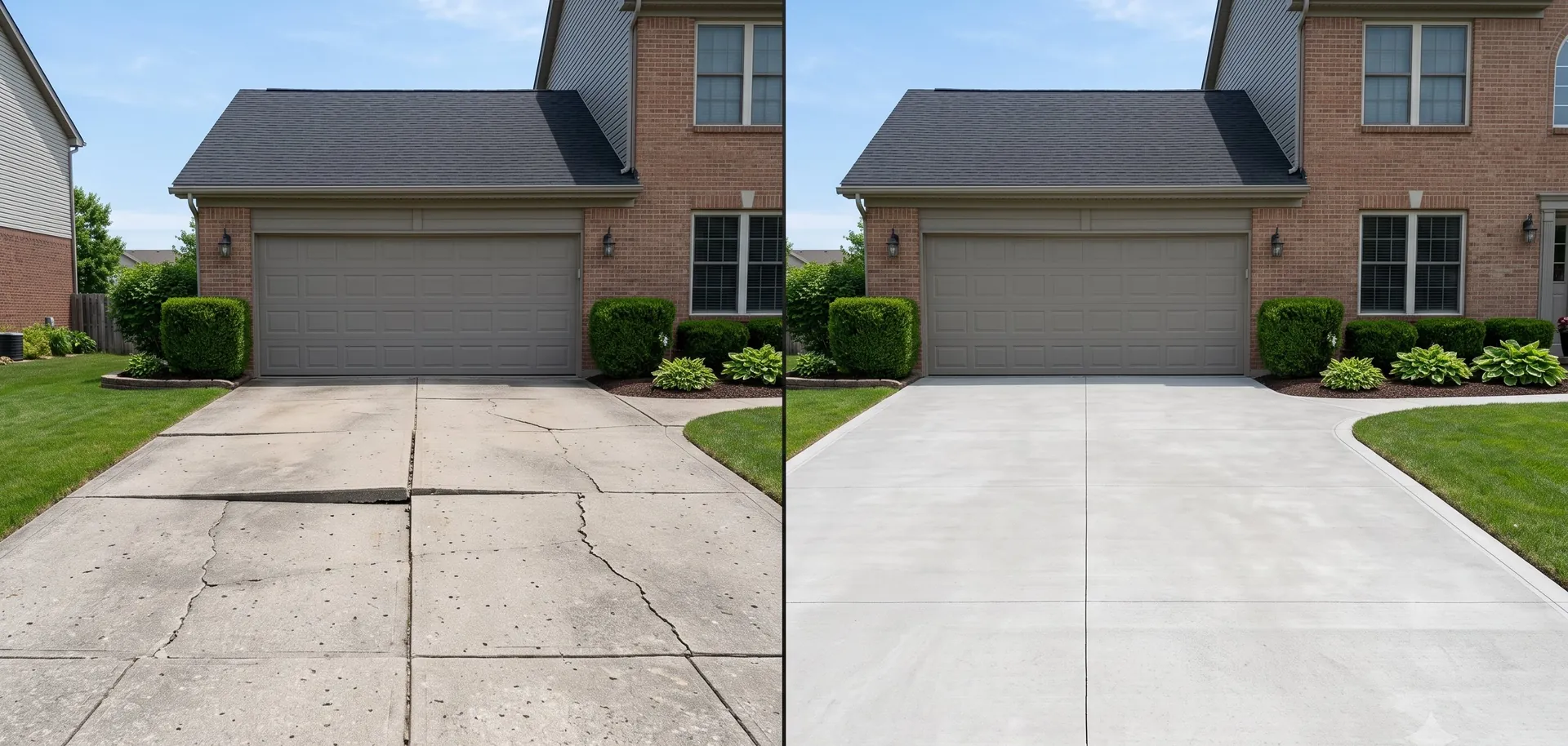
 Illustrative
Winter Concrete Leveling in KC: Foam Still Cures in the Cold
Yes. Polyurethane foam cures chemically rather than by drying, so it sets in cold weather and concrete leveling continues through Kansas City winters unless the ground is frozen solid. The crew just needs safe, ice-free access to the slab and injection points. Winter leveling can even get ahead of the freeze-thaw cycles that cause more settling.
Short Answer: Yes
Yes. Concrete leveling with polyurethane foam works in cold weather, including through a typical Kansas City winter. This is one of the real practical advantages foam injection has over older repair methods: it cures through a chemical reaction, not by drying out in the sun or waiting on warm air temperatures. That means a sunken section of driveway or a trip hazard on a walkway doesn't have to wait until spring to get fixed. If ice and snow are making an already-uneven walkway more dangerous right now, that's a good reason to call sooner, not a reason to put it off until the weather warms up.
Why Foam Isn't as Weather-Dependent as Slurry
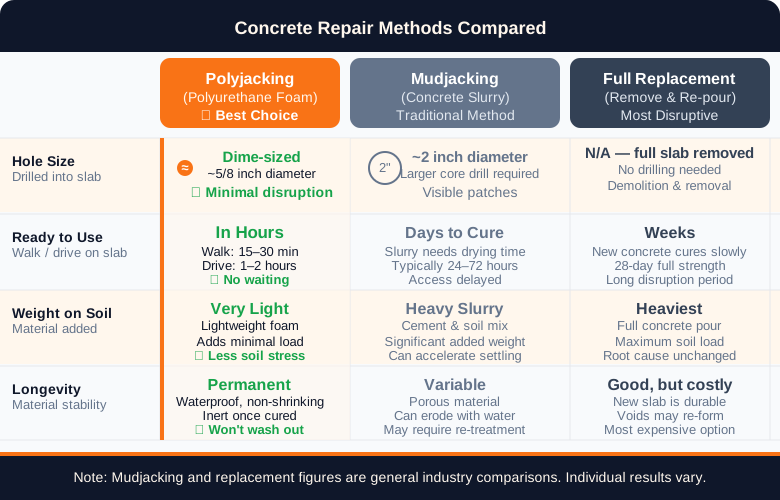
Mudjacking's mud-and-cement slurry behaves more like traditional concrete. It needs time and reasonably warm conditions to set up properly, and a hard freeze while it's still curing can be a real problem. Polyurethane foam expands and cures through its own chemical reaction within minutes, generating some of its own heat in the process, which makes it far less dependent on outside air temperature. What matters is the temperature of the slab and the soil directly beneath it, not the reading on your porch thermometer. The same air temperature over a slab that's been in the sun for an hour is a very different working condition than that same temperature over a slab that's been in shade since morning. That's a meaningful difference if you're dealing with a sunken slab in January and don't want to wait months for a fix. You can read more about how the polyjacking method works if you want the mechanics behind why it holds up in cold weather.
Kansas City's Freeze-Thaw Problem
Winter isn't just a scheduling question here. It's often part of why the slab sank in the first place. Kansas City sits on expansive clay soil that swells when wet and shrinks when it dries out, and our winters swing between hard freezes and warm thaws more than a lot of regions. Every freeze-thaw cycle can open up small voids under a slab as the soil beneath contracts and expands. Over a few winters, those voids add up, which is a big part of why concrete sinks across the metro. Foam injection fills those voids directly, year-round, unless the ground is frozen solid.
If you want to see how your specific address scores against the metro's freeze-thaw and clay-soil risk factors, check the KC Settlement Risk Index.
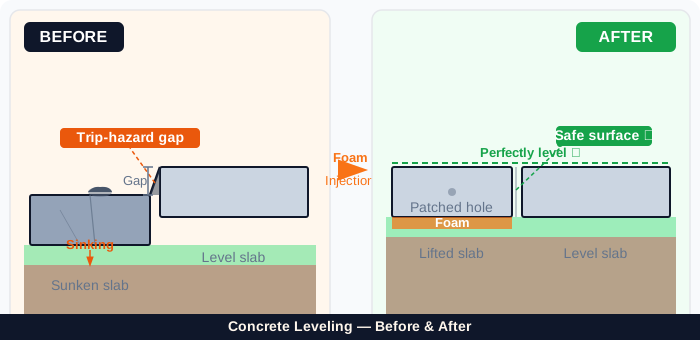
For the full breakdown of the main causes of slab settlement in KC, see our guide on why concrete sinks.
Timing Considerations We Do Watch
Cold weather doesn't stop the work, but we do pay attention to conditions on the day of the job: heavy snow cover or ice sitting directly over a work area can slow us down or push a visit back a day, simply because we need to see and access the slab and drilling spots clearly. That's a scheduling issue, not a limitation of the material itself. We'll always be straight with you if weather is going to affect your appointment window, and we'd rather reschedule a day than do the work sloppy just to keep to a date.
Why Problems Often Surface in Winter
Winter isn't only a season you can level concrete in. It's often the season that exposes the problem. A lot of homeowners notice their sinking slab specifically in winter. A step that used to be flush now catches your boot, or a driveway panel puddles and ices over because it's tilted. That's not a coincidence. Kansas City crosses above and below freezing dozens of times each winter, and every cycle lets water in the soil expand and contract. Water trapped in a void beneath a slab freezes, shifts the surrounding soil, then melts and drains away, leaving the space a little larger than before. Freeze-thaw cycling accelerates settling that was already starting, and ice sitting in a low spot makes an uneven surface more obviously dangerous than it would be in July. By late winter, a slab that looked only slightly off in the fall can show a visible drop or a fresh trip lip. If you're noticing it now, the underlying void has likely been there a while: winter just made it visible enough to act on. Addressing it during the same winter, rather than waiting for spring, fills that void before another freeze can widen it. The lift itself is unaffected by the cold, so there's rarely a reason to postpone once you've noticed the movement. (For the bigger picture on scheduling any time of year, see the best time of year for concrete leveling in KC.)
If you're not sure whether what you're seeing is seasonal movement or actual settling, run our diagnose tool for a quick read before you call.
The Surfaces That Come Up Most This Time of Year
Walkways and steps top the list in winter, since an uneven step or a dip that collects ice turns into a real slip hazard fast: see our porch and step leveling page. Driveways are close behind, especially sections near downspouts where runoff refreezes overnight. Garage floors can also settle near the entrance, where melting snow tracked in and drainage patterns concentrate water against the slab edge all winter long, slowly working soil out from underneath.
Booking a Winter Estimate
If something on your property is uneven right now, don't wait for spring. We offer free on-site estimates year-round across the Kansas City metro, cold weather included, and we'll tell you honestly whether foam injection is the right call for your specific slab. Call (913) 713-7794, or run our diagnose tool first if you want a quick read on what's likely going on.
Why Winter Often Reveals the Problem First
Winter isn't only a season you can level concrete in. It's often the season that exposes the problem. Kansas City crosses above and below freezing dozens of times each winter, and every cycle lets water in the soil expand and contract. Water trapped in a void beneath a slab freezes, shifts the surrounding soil, then melts and drains away, leaving the space a little larger than before. By late winter, a slab that looked only slightly off in the fall can show a visible drop or a fresh trip lip. Addressing it during the same winter, rather than waiting for spring, fills that void before another freeze can widen it. The lift itself is unaffected by the cold, so there's rarely a reason to postpone once you've noticed the movement.
How polyjacking works in 90 seconds
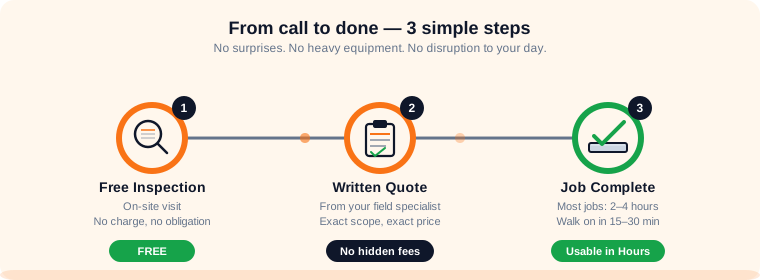
Our team walks you through the three-step process: dime-sized holes, high-density polyurethane foam that fills every void and compresses the soil beneath your slab, and use within hours with no heavy trucks. Call (913) 713-7794 or book a free estimate below.
Frequently asked
Does cold weather affect how well the foam cures?
Not meaningfully. The foam cures through its own chemical reaction rather than relying on warm air, so it sets up in minutes even in winter.
Is winter actually a common time for concrete to sink in KC?
Yes: freeze-thaw cycles here open up voids under slabs, which is a big driver of settling homeowners notice through winter.
Will snow or ice delay my appointment?
Heavy snow or ice directly over the work area can push a visit back a day so we can access the slab safely; the material itself isn't the limiting factor.
Can mudjacking be done in winter too?
It's more weather-dependent, since the slurry mix needs time and warmer conditions to set up properly.
Should I wait until spring to fix a trip hazard?
No. An icy, uneven step or walkway is more dangerous in winter, so it's a good reason to call sooner rather than later.
Do I need to keep the garage or house warm for a winter concrete leveling job?
No. The work happens on the slab and in the soil beneath it, and the two-part polyurethane is warmed in the equipment and generates its own heat as it reacts, so there's no need to heat the space beforehand. Interior slabs like garage and basement floors are leveled the same way in winter as in summer.
Have a sinking slab?
Book a free on-site inspection. Honest advice, usable within hours.
Pick a time that works for you
Book right here on this page. Prefer to talk? Call (913) 713-7794.