
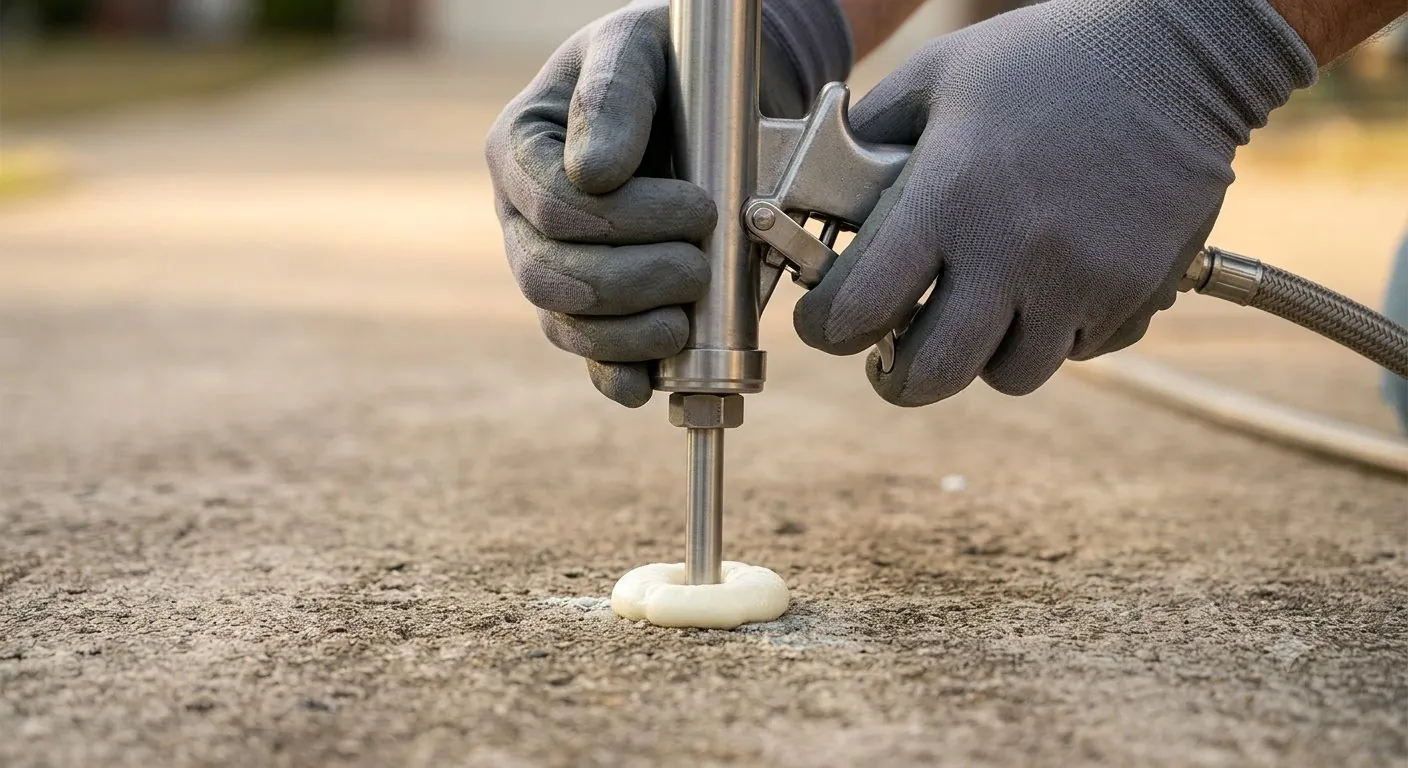
 Illustrative
Yes. Injecting polyurethane foam under a sunken slab reliably fills voids and lifts the concrete back to level, and it holds up well in Kansas City soil because the foam is waterproof and light. It is not right for every slab: severely cracked or crumbling concrete is better replaced, and we will tell you so.
The Short Answer
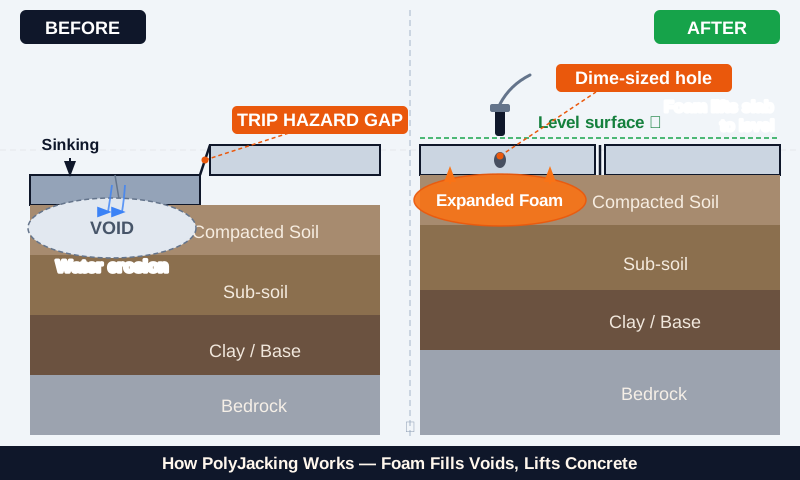
Yes — when it's done right, with the right material, on a slab that's a good candidate for it. Concrete leveling isn't a gimmick or a patch job. It's a straightforward mechanical fix: pump waterproof polyurethane foam under a sunken slab, let it expand and lift the concrete back to where it belongs, and let it cure. The engineering behind it is solid. The real question homeowners should ask isn't "does it work" — it's "will it work on my slab, and will it still be working in five years." We'll answer both honestly below.
How the Foam Actually Lifts a Slab
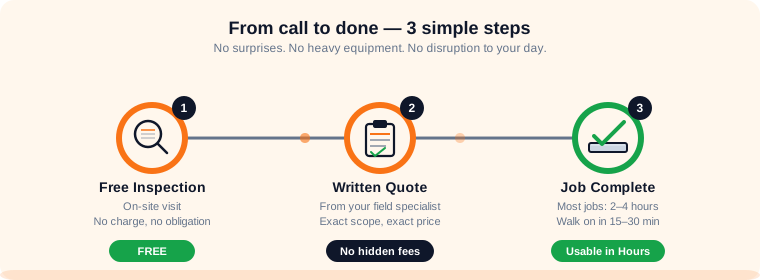
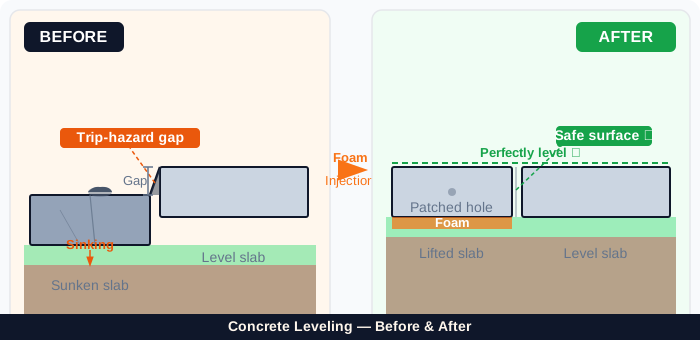
We drill dime-sized holes through the sunken concrete, usually somewhere between 4 and 12 holes depending on the size of the area. High-density polyurethane foam gets injected through those holes and expands roughly 30-40 times its original volume as it fills the voids underneath the slab. That expansion is what does the lifting — it's not pressure from a pump forcing concrete up, it's the foam physically filling the empty space left by eroded or compacted soil and pushing the slab back to level.
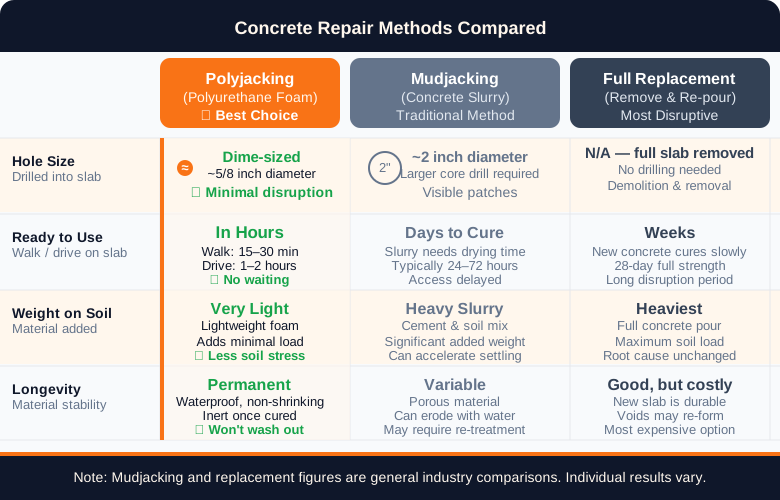
Most jobs take 2-4 hours from start to finish. The foam cures in 15-30 minutes, so you're walking on it again in about that same window, and it can typically handle regular driving traffic within 1-2 hours. We do ask that heavy vehicles — moving trucks, RVs, dumpsters — stay off it for 48 hours while it fully sets.
Why It Holds Up in Kansas City Soil
This area isn't easy on concrete. KC metro sits on expansive clay that swells when it's wet and shrinks when it dries out, and we get repeated freeze-thaw cycles every winter. Both of those movements are exactly what causes slabs to sink and settle in the first place, and they're also what can defeat a weak repair.
From Overland Park to Olathe to Lee's Summit, the same shrink-swell and freeze-thaw cycle is what's sinking slabs across the metro. The degree of movement does vary from one neighborhood to the next, which is why we look at the specific ground under your slab rather than applying a one-size-fits-all fix.
That's where the foam itself matters. It's waterproof and non-shrinking, and it weighs far less than traditional mudjacking slurry. Mud is heavy, can hold water, and can settle again as the ground keeps moving underneath it. Foam doesn't absorb water and doesn't break down the same way, so it's built to ride out the swelling, shrinking, and freezing that Kansas City soil puts a slab through year after year. Our KC concrete settlement risk index lays out the local soil shrink-swell ratings and freeze-thaw counts behind that.
What Backs That Up
We're licensed and insured. And every job we do carries a 5-year limited warranty: if the slab settles more than 1/2 inch within 5 years because of our work, we come back and re-lift it at no charge. It is written to the owner who paid for the work, at that address, and it ends if the house is sold. That warranty isn't marketing — it's us putting our own work on the hook, which is a fair way to judge whether a company believes in its own material.
When Concrete Leveling Isn't the Right Fix
We'll say this plainly because it matters: polyjacking doesn't fix everything, and we'd rather tell you that up front than sell you a lift that won't hold.
If a slab is cracked clean through, broken into pieces, or badly spalled, lifting it won't put it back together — that concrete needs to be replaced, not raised. If you've got an active water leak under a slab, that has to be found and fixed by a plumber first, or the same problem comes right back. And if the sinking is being caused by tree roots heaving or displacing the ground, that root issue needs to be addressed before leveling will hold. We'll tell you straight during your free inspection which category your slab falls into.
Our guide to signs you need concrete leveling, not replacement shows how to tell the two apart before the inspection.
What This Costs You (and What It Doesn't)
We don't publish prices because every slab is different — the amount of foam a driveway needs versus a patio versus a garage floor varies, and guessing at a number before we've seen the concrete wouldn't be honest. What we can tell you is that polyurethane leveling typically runs far less than tearing out and pouring new concrete, and unlike replacement — which takes about a week before it's usable and 28 days to fully cure — a leveled slab is back in service within hours.
The only way to get a real number is a free inspection. We'll look at the slab, tell you straight whether leveling is the right call, and if it is, price it by the foam volume the job actually needs.
For more on how the job is priced, see how much concrete leveling costs in Kansas City.
How polyjacking works in 90 seconds
Our team walks you through the three-step process: dime-sized holes, high-density polyurethane foam that fills every void and compresses the soil beneath your slab, and use within hours with no heavy trucks. Call (913) 713-7794 or book a free estimate below.
Frequently asked
How long does concrete leveling actually last?
A properly done lift lasts as long as the soil underneath stays stable, typically years and often the remaining life of the slab. The reason is the material: the foam is waterproof and non-shrinking, so it doesn't lose volume or wash out the way mud can, even through Kansas City's freeze-thaw winters and expansive clay. Every lift also carries a 5-year limited warranty (we re-lift it if the slab settles more than 1/2 inch within 5 years because of our work), and the full answer is in our guides on how long a lift lasts and whether foam leveling is permanent.
Will it sink again like mudjacking sometimes does?
Different material, different failure mode. Mudjacking slurry is heavy and is basically wet dirt and cement — it can hold water, stay soft, and settle again. Our polyurethane foam is featherlight, waterproof, and doesn't shrink or break down once it cures. That's a big part of why it holds up better long-term in soil that's constantly swelling and shrinking with the seasons.
How much does concrete leveling cost?
We don't quote a number until we've actually seen the slab. Every job gets a free inspection first, and we price based on how much foam volume the lift needs — every driveway, patio, or garage floor is different. What we can tell you is that leveling typically runs far less than tearing out and replacing the concrete. Book a free estimate and we'll give you a real number, not a guess.
Can I drive on my driveway right after it's leveled?
Most jobs take 2-4 hours start to finish, and the foam cures in 15-30 minutes, so you can walk on the slab again in 15-30 minutes and it's usually fine for foot and light driving traffic within 1-2 hours. We do ask that you keep heavy vehicles — moving trucks, RVs, that kind of thing — off it for 48 hours while everything fully sets up.
Have a sinking slab?
Book a free on-site inspection. Honest advice, usable within hours.
Pick a time that works for you
Book right here on this page. Prefer to talk? Call (913) 713-7794.