
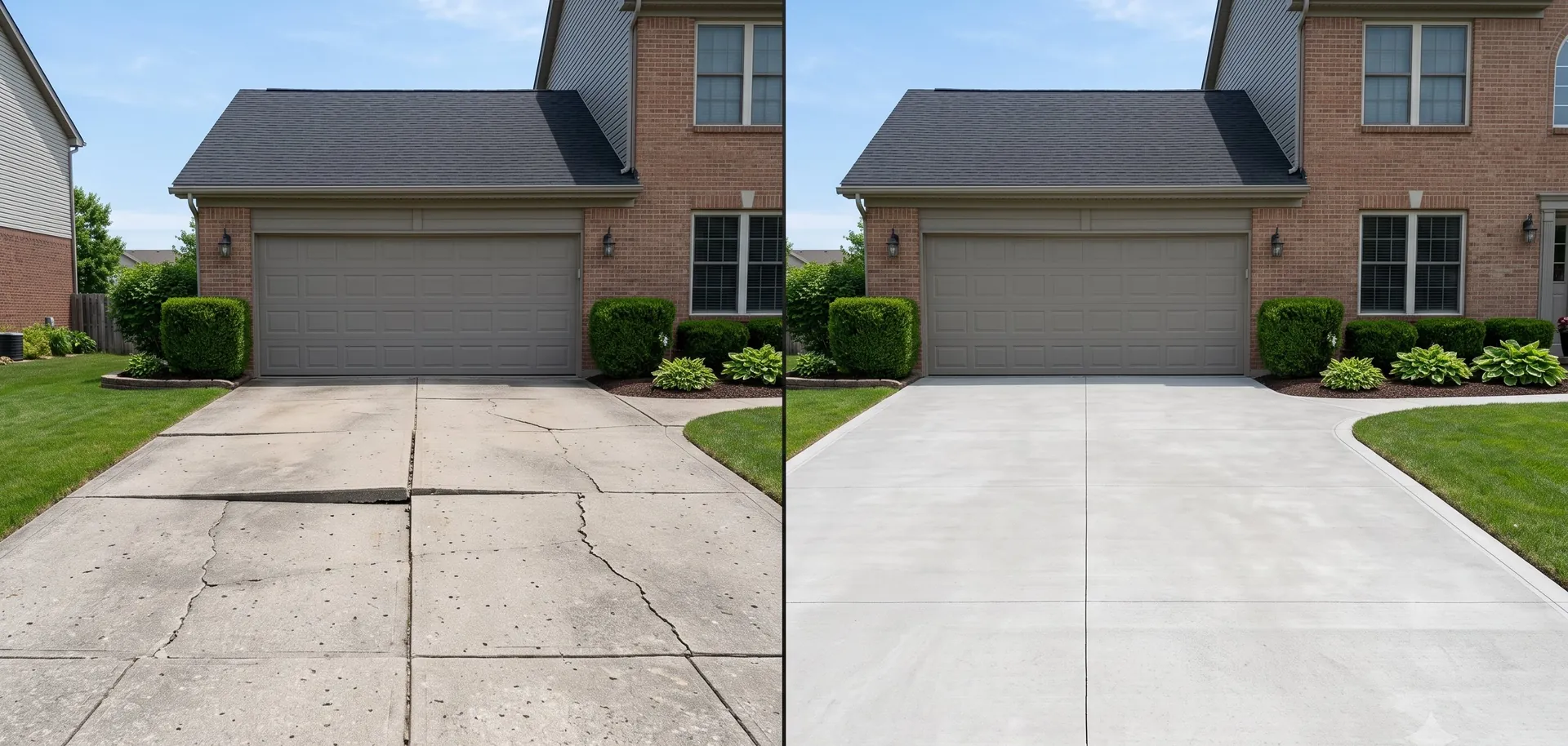
 Illustrative
Lift It or Tear It Out? Deciding Between Leveling and Replacement
Choose leveling when the slab is structurally sound but has settled: foam lifts it back to level for far less cost and mess than replacement. Choose replacement when concrete is severely cracked, spalling, or crumbling. A free on-site estimate weighs the slab's condition, the soil beneath it, and how far it has dropped.
The Core Question: Is the Concrete Itself Still Good?
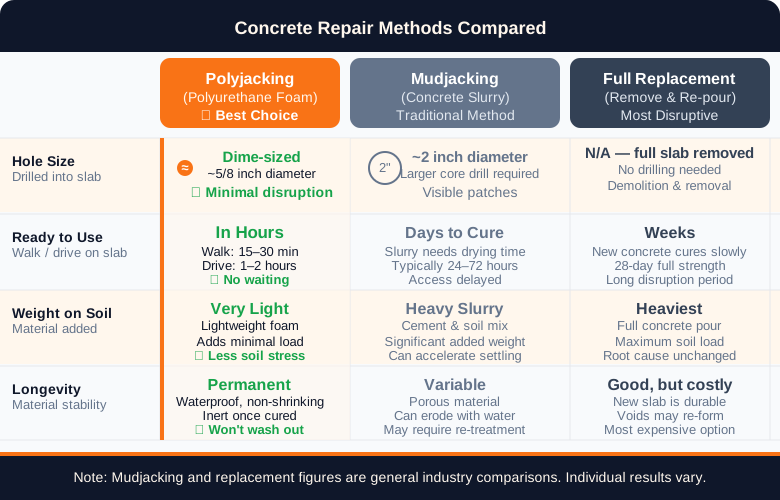
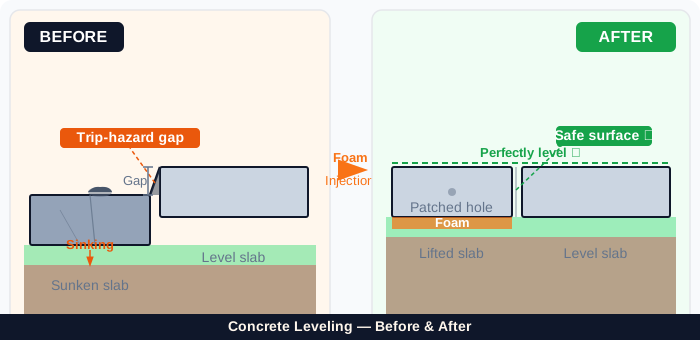
The decision between concrete leveling and replacement comes down to one core question: is the concrete itself still structurally sound? If a slab has sunk, tilted, or dropped at a joint but the surface is intact. No major cracking, no crumbling, no broken sections. It's usually a strong candidate for leveling. The problem isn't the concrete; it's what's underneath it. Polyurethane foam injected beneath the slab fills that gap and lifts the surface back to where it belongs, using concrete you already have. If the slab itself has failed: deep cracks running through it, sections that have broken apart, or edges that are crumbling. No amount of lifting will make it sound again, and replacement becomes the more honest option. Our concrete leveling page walks through what the process actually does.
Signs a Slab Is a Good Candidate for Leveling
A few signs point toward leveling being the right call:
- The slab has sunk or tilted as a whole piece rather than breaking apart.
- Cracks, if present, are hairline and cosmetic rather than structural.
- The edges and corners are still solid enough to bear weight.
- The settling traces to a void underneath - common with driveways, sidewalks, patios, and porch and step areas across the Kansas City metro, where expansive clay soil and drainage wash material out from under slabs over time.
If that sounds like what you're seeing, leveling will very likely solve it - and do it while keeping the concrete you already paid to have poured, instead of starting from scratch.
Signs a Slab Needs Replacement Instead
On the other side, some slabs are past the point where lifting helps:
- The concrete is broken into multiple separate pieces.
- Deep structural cracks run through the slab.
- The surface is crumbling or spalling badly.
- Reinforcement is exposed and corroded.
- A previous failed repair or root-driven heaving has physically fractured the slab.
When a slab looks like that, foam has nothing solid to lift - injecting material underneath just raises broken concrete, it doesn't fix it. This is why PolyJacks always inspects the concrete itself, not just how uneven it looks, before recommending a fix. If your slab falls into this category, we'll tell you directly rather than attempt a lift that won't last.
Not sure whether a crack counts as structural? Our guide on when cracks in concrete are worth worrying about can help you tell the difference.
What Leveling Can't Fix
It's worth being clear about what concrete leveling doesn't do. It won't repair a slab that's structurally broken, it won't fix concrete that was poured too thin or with a bad mix to begin with, and it won't stop future settling if the underlying drainage or soil problem isn't addressed. Leveling raises and supports the slab you have. It doesn't rebuild it. For homeowners dealing with a slab that has ongoing water problems, our why is my concrete sinking page explains the local causes, like poor downspout drainage and Kansas City's clay soil, that can cause a slab to settle again even after a good lift if they're not managed. Understanding the cause matters as much as fixing the symptom, whichever route you take.
If you choose to wait, the void underneath the slab will keep growing as drainage washes more material out over time, and water will pool in the low spots, accelerating the wash-out and working its way under the slab edges. On walkways and steps, even a modest drop becomes a trip hazard that gets worse with each season. If you do decide to monitor rather than repair right away, the one thing worth doing is fixing the drainage that is feeding the void, so the problem stops growing while you plan the repair.
Time and Disruption: A Real Difference
Beyond the condition of the concrete, time and disruption are a real part of the decision. Replacement means breaking out the old slab, hauling away debris, forming and pouring new concrete, and waiting for it to cure before it can bear weight again. Often days of a driveway, patio, or walkway being unusable. Concrete leveling works with the existing slab, so there's no demolition and no long cure time; most surfaces can be walked on in about 15 to 30 minutes and driven on within a couple of hours. For a driveway you use daily or a patio you don't want torn up mid-summer, that difference alone can make leveling the far more practical choice when the concrete condition allows for it.
Comparing to Mudjacking, Not Just Replacement
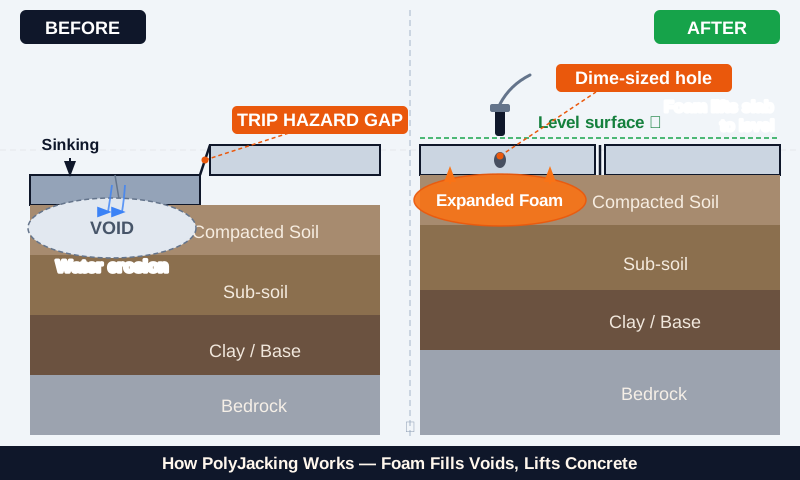
Concrete leveling and replacement aren't the only two options people compare: mudjacking is another. Mudjacking lifts slabs with a heavy cement-based slurry pumped through larger holes, which adds significant weight on top of soil that may already be too weak to support it, and can wash out over time since it isn't waterproof. PolyJacks uses polyurethane foam instead: smaller, dime-sized holes, a lightweight material that won't overload soft soil, and a waterproof cure that won't break down from water intrusion the way mud-based slurry can. See our full polyjacking vs. mudjacking comparison for the details. If you're weighing leveling against replacement, it's worth knowing which lifting method you'd actually be choosing between.
How PolyJacks Helps You Decide
There's no substitute for someone actually looking at your slab. PolyJacks offers a free, no-obligation on-site estimate anywhere in the Kansas City metro (Kansas and Missouri both) where we inspect the concrete's condition, explain what's likely happening underneath it, and give you a straight recommendation: level it, or be honest that replacement is the better call. We're not in the business of pushing a fix that won't hold. If you want a starting point before you call, our Diagnose tool can help you describe what you're seeing. Otherwise, reach us directly at (913) 713-7794 and we'll help you figure out which side of this decision your slab is really on.
Every lift we perform carries a 5-year warranty. For the full terms, coverage scope, and conditions that would void it, see our warranty policies page.
How polyjacking works in 90 seconds
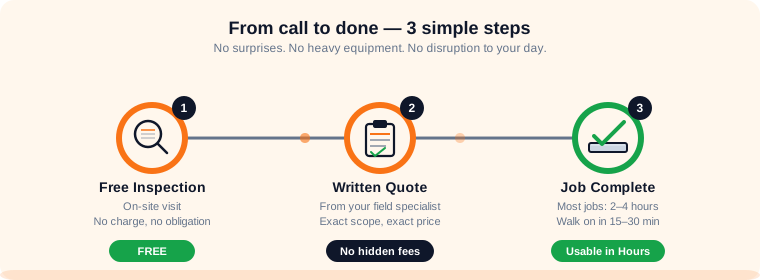
Our team walks you through the three-step process: dime-sized holes, high-density polyurethane foam that fills every void and compresses the soil beneath your slab, and use within hours with no heavy trucks. Call (913) 713-7794 or book a free estimate below.
Frequently asked
How can I tell if my slab is a good candidate for leveling?
If it's sunk or tilted but still solid. No deep cracks, no crumbling, no broken pieces. It's very likely a good candidate. A free on-site estimate will confirm it.
Is leveling always cheaper than replacement?
In most cases leveling is a smaller job since it works with concrete you already have, but the honest comparison depends on your specific slab. That's what the estimate is for.
Can a slab be leveled if it has some cracks?
Hairline, cosmetic cracks usually aren't a problem for leveling. Deep structural cracks or broken sections generally point toward replacement instead.
Does leveling stop concrete from sinking again?
It fixes the current settling by filling the void underneath. Whether it settles again later often depends on drainage and soil conditions around the slab, which are worth addressing too.
How is this different from mudjacking?
PolyJacks uses lightweight, waterproof polyurethane foam through small holes instead of heavy cement slurry through larger ones: see our polyjacking vs. mudjacking page for the full comparison.
Have a sinking slab?
Book a free on-site inspection. Honest advice, usable within hours.
Pick a time that works for you
Book right here on this page. Prefer to talk? Call (913) 713-7794.