
 Illustrative
Does Uneven Concrete Affect Your Home's Value?
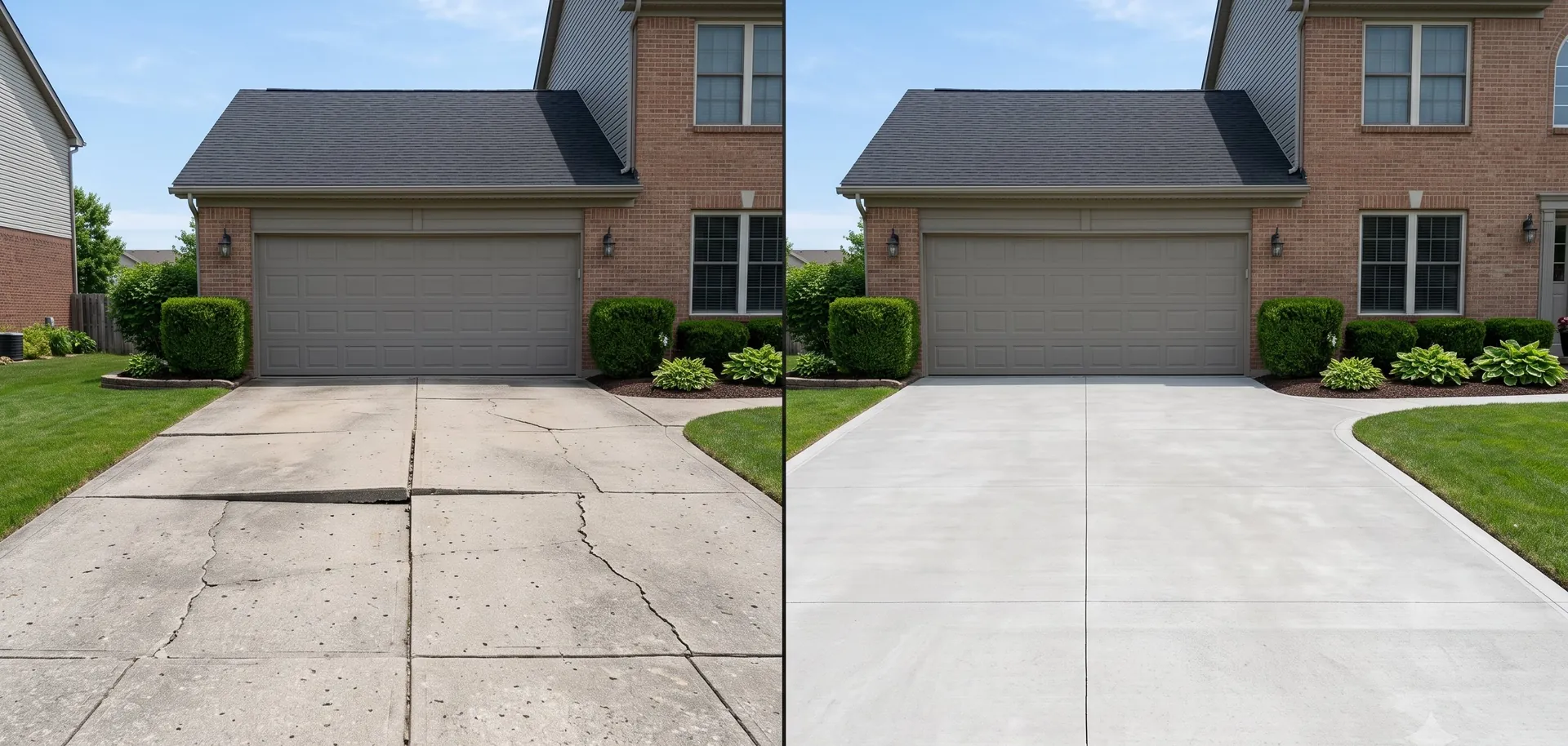
Yes. Sunken or uneven driveways, walks, and patios read as deferred maintenance, hurt curb appeal, and can be flagged as trip hazards during inspections, all of which weigh on appraisals and buyer offers. Leveling the concrete back to flush is a low-cost way to remove that drag before listing.
The Short Answer
Yes, uneven concrete can affect what a property is worth, though usually indirectly rather than through some hard deduction. Appraisers and inspectors document visible condition issues, buyers read those reports and form impressions during showings, and both of those things influence what a buyer is willing to offer or negotiate down. A sunken driveway or walkway doesn't necessarily mean anything is structurally wrong with the house, but it signals deferred maintenance, and that perception carries real weight in a sale or refinance. The good news is that unlike a lot of home value concerns, this one has a fast, well-understood fix. Learn more on our concrete leveling in Kansas City page.
How Appraisers Look at Concrete Condition
Appraisers assign condition ratings to a property based partly on visible exterior features (driveways, walkways, patios, steps) alongside the interior. A slab that's noticeably sunken, cracked, or uneven can pull that condition rating down a notch, even if the appraiser isn't itemizing a specific deduction for it. Combined with other visible wear, it contributes to an overall impression of a property that needs work, which tends to translate into a more conservative valuation. Because appraisals lean heavily on comparable sales and visible condition, a well-maintained exterior (level driveway, flush walkway, solid steps) supports a stronger comparison against similar homes nearby that are in better shape.
The Perception Problem
Here's the part that surprises people: the actual structural risk from a settled driveway slab is often minor, but the perception it creates is not. Buyers touring a home aren't concrete engineers. They see a dip in the driveway or a lip in the sidewalk and assume the worst, whether that's a foundation issue, a drainage problem, or just general neglect. That assumption shapes their offer and their negotiating posture even when it has nothing to do with reality. Sellers who fix visible settling before listing remove that assumption from the equation, letting buyers focus on the house itself instead of wondering what's going on underground.
Trip Hazards Carry Their Own Value Hit
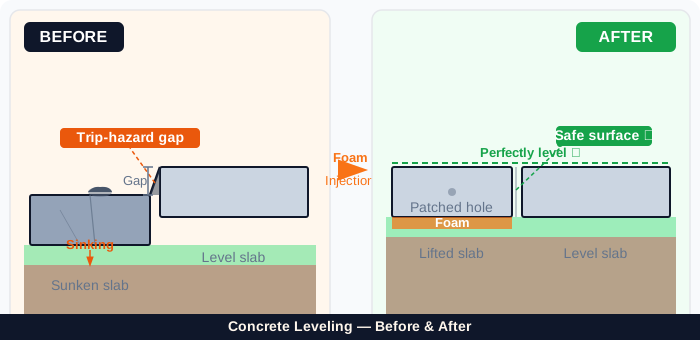
When an inspector flags an uneven walkway or step, it typically shows up as a specific note in the report rather than a general condition comment, because trip hazards are a safety issue that gets called out explicitly in disclosures. That note then becomes a discrete point of negotiation, separate from the broader condition rating, and a buyer can use it to push for a pre-closing repair or negotiate on that specific defect. The distinction matters: a cosmetic crack gets folded into an overall impression, but a raised lip between panels or a step pulled away from a porch is the kind of item that stands on its own in the report. If the slab is leveled before the inspection happens, that line item simply isn't there, and the buyer walks the property without a concrete reason to negotiate on that specific defect. Because foam injection can raise an individual panel without touching the ones around it, the fix is straightforward enough to fit the tight timelines that come with getting a house market-ready.
If you are getting ready to list, our guide to concrete leveling before selling your house walks through what to fix first.
What's Really Going On Underground
Uneven concrete near a home's foundation can also raise drainage questions in a buyer's mind, and in the Kansas City metro, that's often a fair question to ask. Expansive clay soils here swell when wet and shrink when dry, and combined with freeze-thaw cycles and downspouts that dump water too close to the slab, that movement is a common, well-documented cause of settling. Not a sign of a failing foundation. Still, an unexplained dip near the house is the kind of thing that makes buyers nervous until someone can tell them what's actually happening. Read more on why concrete sinks in Kansas City.
Why Waiting Tends to Make It Worse
A small void under a slab rarely stays small. As soil keeps shifting seasonally and water keeps finding the same low spots, the space under a sunken section tends to grow rather than stabilize on its own, and settling can spread to neighboring panels over time. That means the small dip a homeowner decides to live with today has a reasonable chance of becoming a bigger, more visible problem (and a bigger inspection flag) down the road. Addressing it while it's still a single-panel repair is generally simpler than waiting until multiple panels are involved.
Fixing It Doesn't Require Tearing It Out
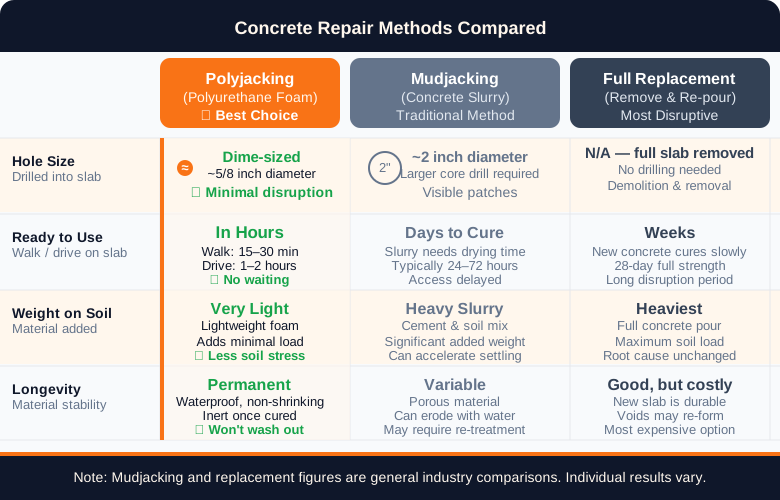
The upside is that fixing uneven concrete usually doesn't mean replacing it. Polyurethane foam injection lifts the existing slab back toward level through a handful of dime-sized holes, without demolition or days of downtime. It's the kind of repair that can realistically happen before a listing goes live, a refinance appraisal, or just because you're tired of the dip in your driveway. See our polyjacking in Kansas City page for how the process works from start to finish.
Get an Honest Read on Your Property
If you're weighing whether uneven concrete is worth addressing before a sale, refinance, or just for your own peace of mind, the best next step is a free, no-obligation on-site estimate. We'll look at what's actually happening, tell you plainly whether it's worth fixing now, and go from there. Call (913) 713-7794 or reach out through our contact form.
How polyjacking works in 90 seconds
Our team walks you through the three-step process: dime-sized holes, high-density polyurethane foam that fills every void and compresses the soil beneath your slab, and use within hours with no heavy trucks. Call (913) 713-7794 or book a free estimate below.
Frequently asked
Do appraisers deduct a specific amount for sunken concrete?
Not usually as a line item. It factors into an overall condition rating and comparison against similar homes, rather than an itemized deduction.
Is a sunken driveway a sign of foundation problems?
Not usually. In the Kansas City area, settling is most often caused by expansive clay soil movement, freeze-thaw cycles, or drainage issues. Not a failing foundation. A free estimate can confirm what's actually happening.
Can fixing one panel help the whole property's impression?
Yes: buyers and inspectors tend to generalize from what they see. A level driveway and walkway support an overall impression of a well-maintained property.
How long does it take to fix uneven concrete before a sale or appraisal?
Most leveling jobs are completed in hours, with the surface ready to walk on in 15 to 30 minutes and drive on in 1 to 2 hours.
Should I get concrete leveled even if I'm not selling soon?
It's worth it if you're dealing with a trip hazard, water pooling, or a dip that's getting more noticeable: waiting tends to let the underlying void grow rather than shrink.
Is it worth leveling concrete right before listing the house?
Usually yes for the visible, high-traffic slabs a buyer walks across first. The driveway, front walk, and porch. A level, trip-free approach reads as a well-maintained home and removes an easy point for a buyer to negotiate on after inspection. Because foam leveling is usable within hours rather than days, it also fits the tight timelines that come with getting a house market-ready.
Have a sinking slab?
Book a free on-site inspection. Honest advice, usable within hours.
Pick a time that works for you
Book right here on this page. Prefer to talk? Call (913) 713-7794.