
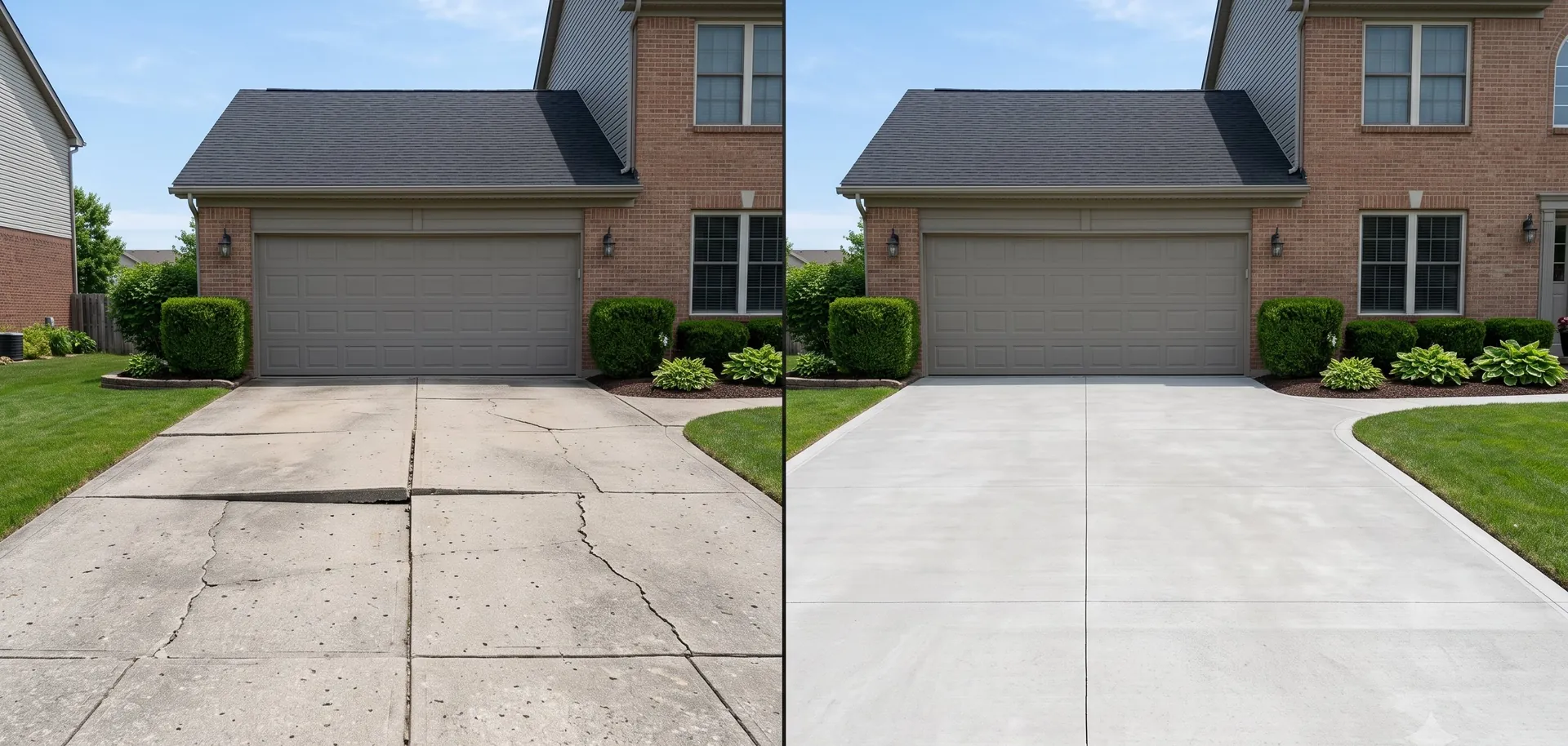
 Illustrative
Fixing Sunken Concrete Before You List: What It's Worth
Leveling sunken concrete before selling your house protects your first impression at the curb, heads off a settlement flag on the home inspection, and removes a trip-hazard liability. Because foam leveling is done in hours rather than the days a replacement takes, it fits easily into a pre-listing timeline. Every job starts with a free on-site estimate.
First Impressions Start at the Curb
Leveling a sunken driveway or walkway before you list usually pays for itself - it clears an inspection flag, removes a buyer negotiating point, and most jobs finish in hours. Curb appeal is where it starts.
Buyers form an opinion before they ever walk through the front door, and a sunken or cracked driveway, walkway, or entry step is one of the first things they see. Often before the house itself. A driveway that's visibly settled, or a walkway with a lip between panels, reads as deferred maintenance even if the rest of the home is in great shape. It raises the question in a buyer's mind: what else wasn't taken care of? That's not really about the concrete. It's about the story that concrete tells. Fixing visible settling before you list removes that question from the conversation entirely, and it's a faster fix than most sellers expect. See our concrete leveling in Kansas City overview for the basics.
Written by the PolyJacks field team, who perform pre-sale concrete leveling for sellers across the Kansas City metro.
What a Home Inspector Actually Flags
Inspectors are trained to note settling, cracking, and trip hazards, and those notes show up in the report every buyer reads. A sunken front walk, an uneven porch step, or a driveway panel that's dropped relative to the next one are common items on inspection reports across older Kansas City neighborhoods, where expansive clay soils and years of freeze-thaw cycles have had time to work on the concrete. None of that necessarily means anything is wrong with the house structurally, but an inspection report doesn't make that distinction for the buyer. It just lists the defect, and buyers tend to assume the worst. Getting ahead of it before the inspection means one less flagged item, and one less thing a buyer's agent can point to during negotiations.
If you're trying to figure out whether your specific neighborhood is more prone to the kind of settling inspectors flag, our KC Settlement Risk Index is a good place to start.
The Liability and Safety Angle
A tripping hazard on a walkway or step isn't just a cosmetic issue at sale time. It's a real safety concern for anyone touring the home, including agents, inspectors, and appraisers walking the property before you've even accepted an offer. An uneven sidewalk section or a porch step pulled away from the house is exactly the kind of thing that gets called out by name in disclosures. Leveling those areas before listing removes both the safety risk during showings and the disclosure headache later. See our pages on sidewalk and trip-hazard repair and porch and step leveling for what those repairs involve.
Protecting Your Negotiating Position
Visible concrete problems give buyers something to negotiate against, and it's rarely a fair trade. A buyer will often ask for a credit out of proportion to what the actual repair takes, simply because they assume the worst. Fixing the settling ahead of time, while you still control the timeline and the contractor, puts that decision back in your hands instead of a buyer's. A driveway that's level and a patio that sits flush read as a well-maintained property, and that's worth more in a negotiation than any credit a buyer might ask for.
Why the Timeline Works in Your Favor
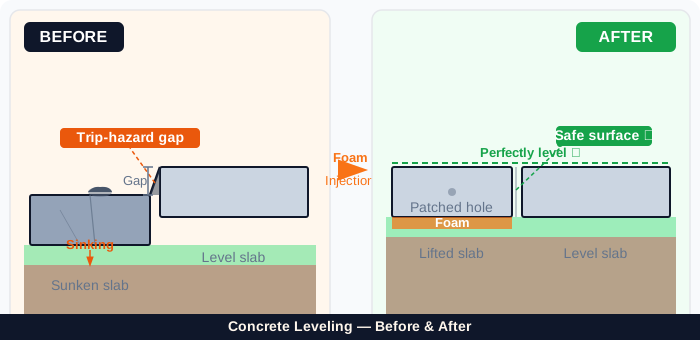
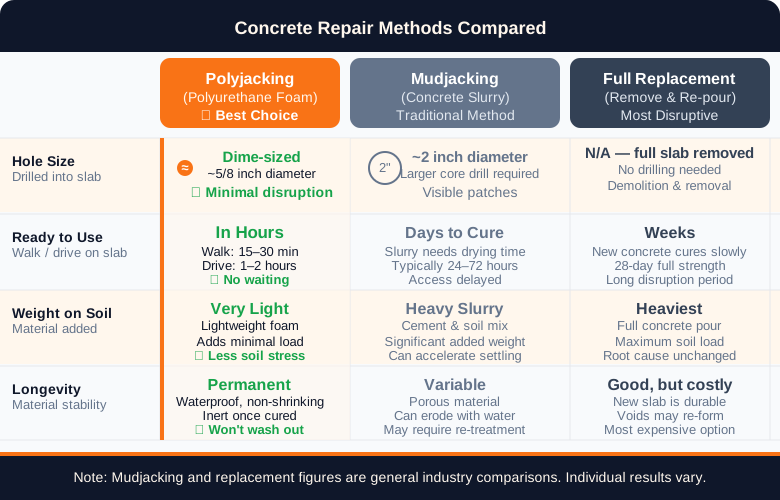
One advantage of foam-based leveling over replacement is speed. There's no demolition, no waiting days for new concrete to cure, and no construction zone disrupting a house you're trying to show. Most leveling jobs are done in hours, with the surface ready to walk on in about 15 to 30 minutes and drive on in roughly 1 to 2 hours. That means it's realistic to get a driveway or walkway leveled the week you decide to list, without pushing back your timeline or leaving your yard torn up for showings. It's a repair that fits into a listing schedule instead of working against it.
As a rule of thumb, book your free estimate two to three weeks before your target list date. That gives you time to schedule the leveling, clean up the work area, and have the property photo-ready before the inspection and showings begin.
If the timeline fits your schedule, the next step is a free on-site look. Book your estimate and we will walk the property with you.
What's Worth Fixing Before You List
Not every uneven slab needs attention before a sale. A slightly settled section of backyard patio a buyer may never notice matters less than a front walkway, driveway, or entry step that every visitor crosses. If you're deciding where to focus, prioritize anything near the entrance, anything an inspector or appraiser will walk across, and anything that could be flagged as a trip hazard. A patio that's cosmetically uneven but out of the main sightline can often wait, while a front step or driveway panel is worth addressing before the sign goes in the yard.
Get a Free Estimate Before You List
If you're prepping a house to sell, the smartest move is getting an on-site look at what's actually worth fixing before you spend time or energy guessing. We'll walk the property, tell you honestly which areas matter for a sale and which don't, and give you a free estimate with no obligation. Call (913) 713-7794 or send details through our contact form. We work throughout the Kansas City metro on both the Kansas and Missouri sides.
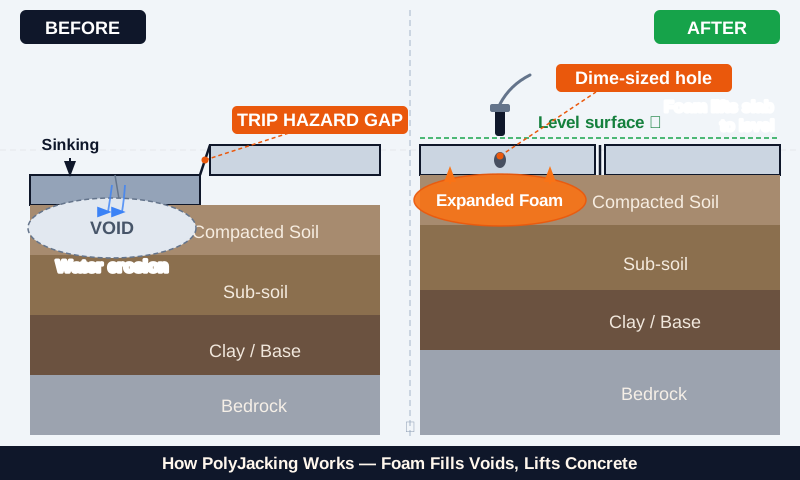
How polyjacking works in 90 seconds
Our team walks you through the three-step process: dime-sized holes, high-density polyurethane foam that fills every void and compresses the soil beneath your slab, and use within hours with no heavy trucks. Call (913) 713-7794 or book a free estimate below.
Frequently asked
Should I level concrete before or after the home inspection?
Before, if possible. Fixing visible settling ahead of the inspection means it won't show up as a flagged item on the report buyers see.
Does concrete leveling help with appraisal value?
An appraiser notes visible condition issues just like an inspector does. A level, well-maintained driveway and walkway support a stronger overall condition assessment than visibly sunken concrete.
How fast can this be done before a listing deadline?
Most jobs are completed in a matter of hours, with the surface usable again in 15 to 30 minutes for walking and 1 to 2 hours for driving, so it can typically be scheduled close to your list date.
Is it worth fixing a patio buyers might not even see?
Usually the priority is anything near the entrance or along a path buyers and inspectors actually walk. A patio out of the main sightline is a lower priority than a front walkway or driveway.
Do I need to disclose settling I already fixed?
Disclosure requirements vary and that's a question for your real estate agent or attorney. The specific forms and obligations differ between Kansas and Missouri, on each side of the state line. We can tell you what we found and repaired, but we don't advise on disclosure law.
Have a sinking slab?
Book a free on-site inspection. Honest advice, usable within hours.
Pick a time that works for you
Book right here on this page. Prefer to talk? Call (913) 713-7794.