
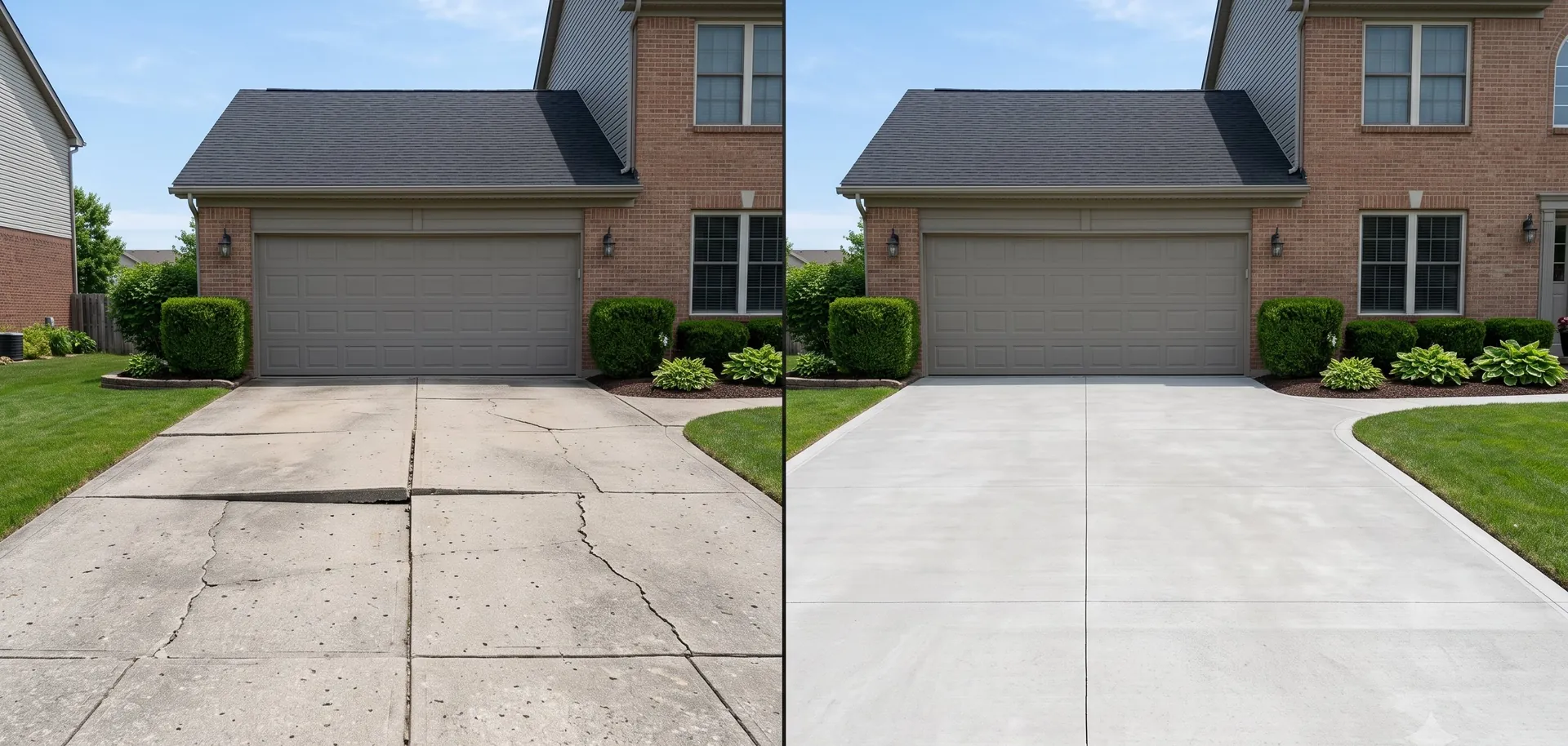
 Illustrative
Why Insurance Rarely Pays for a Sinking Driveway
Usually not. Most homeowners policies exclude gradual earth movement and settling, which is what sinks a driveway, so the repair typically is not covered. Check your policy's earth-movement language to be sure. Because leveling costs far less than replacement, many homeowners simply have the slab foam-lifted rather than filing a claim.
The Short Answer: Usually No
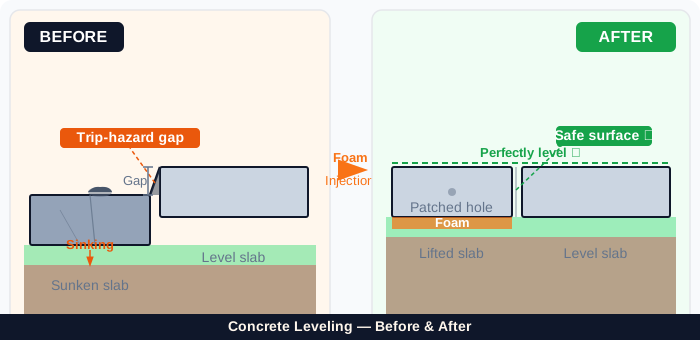
Most homeowners insurance policies do not cover a sinking driveway. Standard policies are built to pay for sudden, accidental damage: a fire, a windstorm, a tree falling on your roof. A driveway that's dropped an inch over the last two winters doesn't fit that definition. Insurers classify that as gradual settling or earth movement, and both are near-universal exclusions in homeowners policies.
That's the headline. The fine print matters more than the headline, so here's the reasoning behind it, and the few cases where it plays out differently.
Why Insurers Draw the Line Where They Do
Two exclusions usually do the work here. "Earth movement" excludes damage caused by the ground itself shifting, settling, or shrinking. Even when weather is part of the chain of events. "Wear and tear" exclusions treat concrete, soil, and the base under a driveway the same way a policy treats an aging roof or fading paint: normal wear that comes with owning a home, not damage from an accident.
Put those two together and a sinking driveway lands outside coverage in the large majority of cases, no matter how expensive or frustrating the fix turns out to be. Both are standard, industry-wide exclusions - the Insurance Information Institute explains how a standard homeowners policy treats gradual earth movement.
The Exceptions Worth Checking
Coverage isn't zero across the board. If the sinking is the direct result of a sudden, named peril your policy does cover (say, a water line breaks and floods the base under the slab overnight), some policies will pay for the resulting damage, even though earth-movement language is often still carved out somewhere in the same policy. Some carriers also sell separate "collapse" endorsements that read differently than standard earth-movement clauses.
None of that is universal, and it varies policy to policy. The only way to know for sure is to pull your declarations page and call your agent before you assume it either way.
What's Actually Sinking Your Driveway in Kansas City
Kansas City sits on expansive clay soil that swells when it's wet and shrinks when it dries out, on top of repeated freeze-thaw cycles most winters. That constant expansion and contraction pulls support out from under a slab a little at a time, which is exactly the gradual, earth-movement pattern insurers exclude.
It's not damage from an accident. It's just what clay soil does under a driveway in this climate, year after year.
What to Actually Do About It
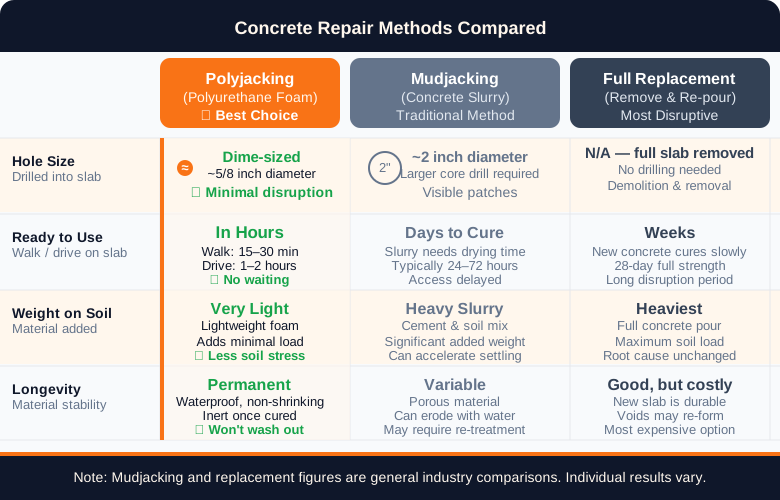
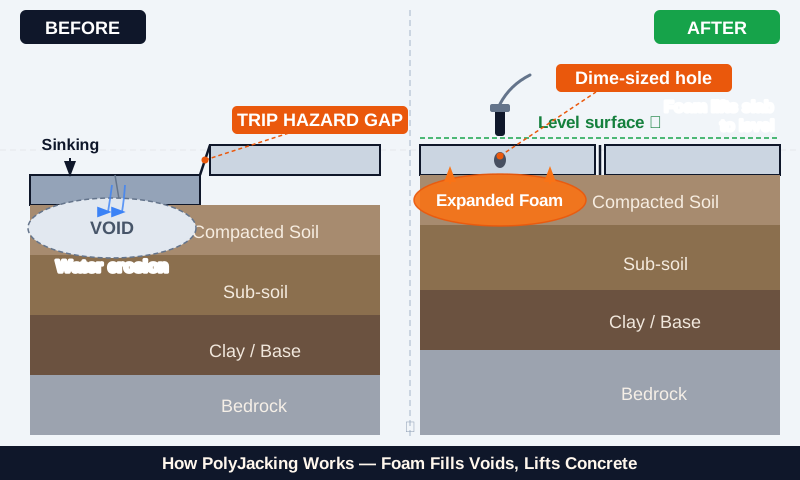
Since insurance usually isn't the path, the smart move is figuring out what kind of fix the slab needs and pricing that directly. If the concrete itself is solid (no big cracks, no broken pieces) but it's dropped or tilted, that's a textbook case for polyjacking. We drill dime-sized holes, usually 4 to 12 of them depending on the slab, and inject a waterproof, high-density polyurethane foam that expands 30 to 40 times its volume to lift the concrete back into place. Most jobs take 2 to 4 hours. You can walk on it in 15 to 30 minutes, drive on it in 1 to 2 hours, and the driveway's back in use within hours.
We price every job by how much foam it takes, after a free, no-obligation inspection (no set fee, no guessing) and it typically runs far less than tearing out and repouring the slab.
If you're weighing lifting against tearing out the slab, our guide on whether sunken concrete can be fixed without replacing it walks through the options.
When Polyjacking Isn't the Answer
We'll tell you straight if it's not the right fix. A slab that's cracked or broken into pieces needs replacement, not lifting. Foam can lift a solid slab, it can't hold a broken one together. If water is actively leaking or pooling from a pipe, get a plumber out first; lifting concrete over an active leak just covers up the real problem. And if tree roots are heaving the slab, that root issue has to be dealt with or the lift won't hold.

A free estimate tells you which category your driveway falls into, honestly, before any work starts. Book My Free Estimate or call (913) 713-7794.
Not sure which side your slab falls on? Here are the signs you need concrete leveling, not replacement.
How polyjacking works in 90 seconds
Our team walks you through the three-step process: dime-sized holes, high-density polyurethane foam that fills every void and compresses the soil beneath your slab, and use within hours with no heavy trucks. Call (913) 713-7794 or book a free estimate below.
Frequently asked
Will filing a homeowners insurance claim for a sinking driveway raise my rates?
That depends on your carrier and policy, and since most sinking-driveway damage isn't covered in the first place, most homeowners never actually file a claim for it. Ask your agent directly before you file anything, so you know what you're getting into either way.
What's the difference between "settling" and "sudden collapse" in insurance terms?
Settling is gradual movement over months or years, the kind expansive clay soil and freeze-thaw cycles cause, and it's almost always excluded. A sudden collapse tied to one specific covered event, like a pipe bursting overnight, gets judged differently by some policies. The line is drawn by your policy's wording, not by how sudden it feels standing in your driveway.
If insurance won't cover it, is polyjacking still cheaper than replacing the driveway?
Yes. Polyjacking typically runs far less than full replacement, and because we price every job by the volume of foam it takes after a free inspection, you'll know the real number before we drill a single hole.
How do I know if my driveway needs a lift or a full replacement?
A free inspection will tell you. Solid concrete that's dropped or tilted but isn't cracked or broken is usually a good candidate for polyjacking. Concrete that's cracked into pieces, or sinking because of an active leak or root problem, needs a different fix, and we'll tell you that straight.
Should I document the driveway before it's repaired in case I file a claim?
Yes. Dated photos of the crack or drop, a note on when you first noticed it, and any evidence of a covered cause (a plumbing line, a burst pipe, or a specific storm event) all strengthen a claim if you decide to file one. Keep the written estimate as well. Even in the common case where gradual settling isn't covered, that record is useful later for your own resale disclosure and for tracking whether the movement is getting worse.
Related guides
Have a sinking slab?
Book a free on-site inspection. Honest advice, usable within hours.
Pick a time that works for you
Book right here on this page. Prefer to talk? Call (913) 713-7794.