
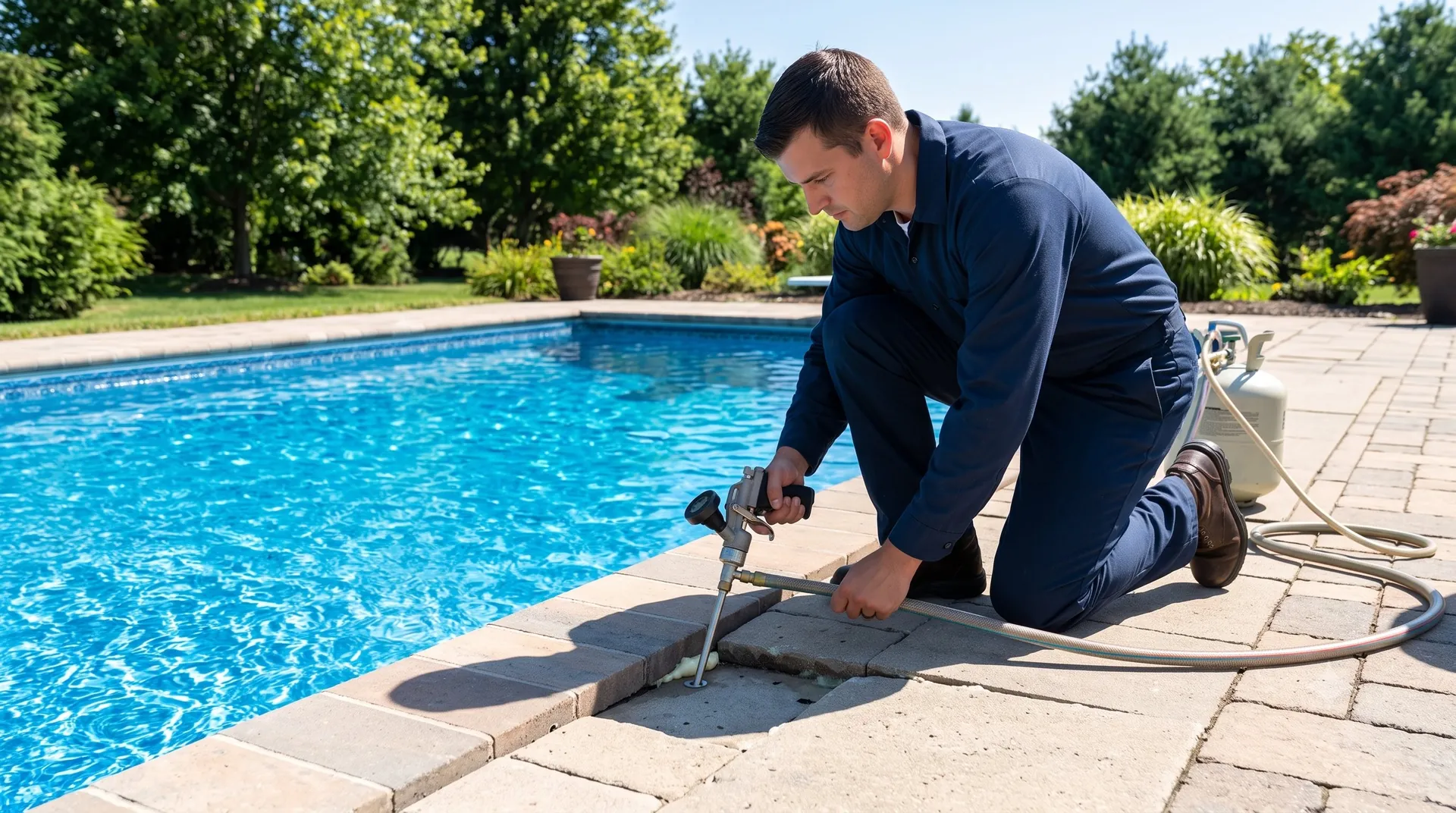
 Illustrative
Pool decks settle when the soil around a pool, often disturbed during installation, compresses or erodes, especially with splash-out and runoff soaking it. That leaves voids that let sections dip or gap. Foam injection lifts the deck back to level through small holes, with no need to drain the pool.
A Very Common Problem Around KC Pools
If the concrete around your pool has started to dip, crack, or pull away from the coping, you're not imagining it and you're not alone. Pool decks are some of the most likely slabs on a property to settle, for a simple reason: the ground right under and around a pool was disturbed during construction, and disturbed soil takes years to fully settle back into a stable state.
Add in Kansas City's clay-heavy soil and seasonal wet-dry swings, and a pool deck that looked perfectly level the year it was poured can develop real settling within a handful of seasons. It's worth taking seriously early, since a sinking pool deck tends to worsen gradually rather than stabilize on its own, especially with water in the mix.
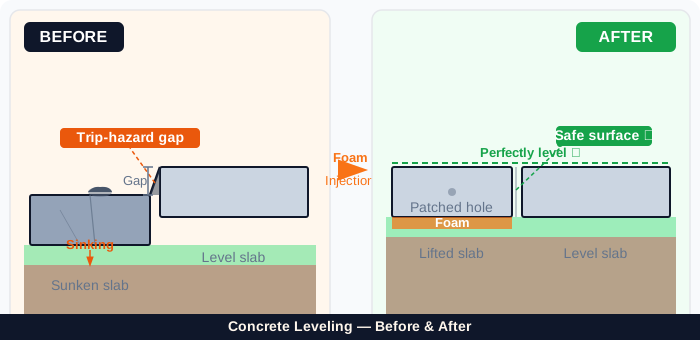
This guide covers poured-concrete in-ground pool decks, which is the most common type in the KC metro. If your deck is pavers or you have an above-ground pool, the settling mechanics are different and the fix is different.
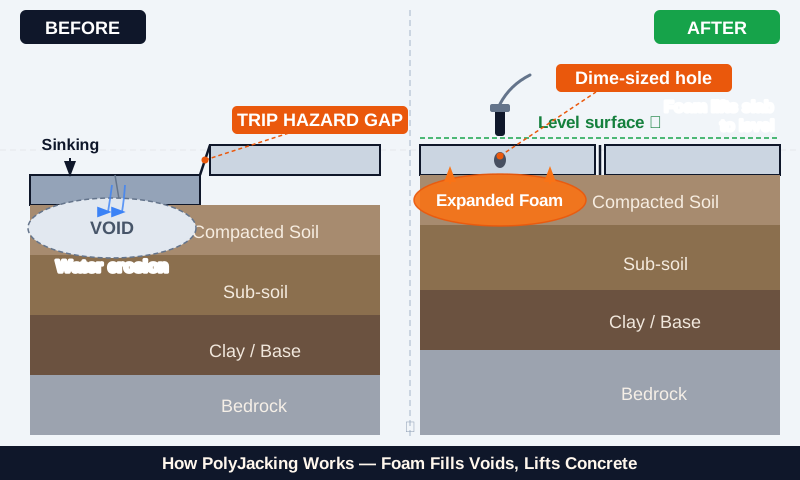
Backfill Settling Around the Pool Shell
When a pool is installed, the excavation around the shell gets backfilled with loose soil that's compacted as best as possible at the time, then the deck is poured on top of it. But loose backfill never compacts as tightly as undisturbed native ground, and it continues settling for years afterward under its own weight and every rainstorm that soaks through it.
As that backfill settles, the deck slab poured on top of it settles with it - unevenly, since compaction rarely happens perfectly consistently around the whole pool. That's why pool deck settling often shows up first right at the edge nearest the coping, where the backfill zone is widest and least stable, rather than out at the far edge of the deck.
The specific pool type matters here because excavation depth and backfill volume vary by construction method. Gunite, vinyl-liner, and fiberglass pools all require different amounts of soil removal and replacement around the shell. Excavation depth varies by pool type and manufacturer specification, which means the width and depth of the unstable backfill zone differ from one installation to the next. A deeper excavation typically leaves a larger volume of loose soil that must settle over time. The shell weight and how that load is distributed through the backfill also change depending on the material and construction method. This is why two pool decks in the same neighborhood can settle at different rates or in different patterns.
A full in-ground pool adds a substantial static load to the surrounding soil through the shell. When the backfill settles unevenly, the load distribution shifts, making the settling progressive rather than one-time. This is the core engineering reason pool decks settle more than driveways or patios, which do not carry this specific type of sustained, shifting weight.
KC Clay, Drainage, and Splash-Out Water
Beyond backfill, ordinary KC ground conditions play a role too. Expansive clay soil swells when wet and shrinks when dry, and a pool deck sees plenty of both - splash-out water, rain runoff, and normal watering nearby all keep soil moisture swinging. Over enough cycles, voids open under the slab the same way they do under a driveway or patio.
Poor drainage away from the deck makes it worse, since water that pools instead of running off has more time to work its way under the slab edge and wash soil out from beneath it. If your deck already slopes slightly toward the house or a low spot instead of away from the pool, that's often part of what's feeding the settling.
There is a feedback loop specific to pool decks that makes this cycle self-reinforcing in a way a driveway or patio does not experience. As the slab settles, the sealant joint between the deck and the coping cracks, letting splash-out water and rain runoff reach the backfill directly instead of running off the deck surface. That water erodes the already-loose backfill, which opens a larger void, which drops the slab further and widens the crack in the joint. The constant source of splash-out water at the coping is what keeps this loop running season after season.
If you want to see how your specific area ranks for settlement risk, our KC settlement risk index breaks it down by neighborhood.
Signs Your Pool Deck Has Started to Sink
A few specific signs point to real settling rather than ordinary surface wear:
- A widening gap between the deck and the pool coping or shell
- Cracks radiating out from a corner or from around a deck drain
- A section sloping away from - or toward - the pool where it didn't before
- Water pooling on the deck in spots after rain or pool use
- A noticeable dip you can feel underfoot near one edge
Any of these on their own can be minor, but together - or worsening over a season - they usually mean a void has opened under that section of slab.
Before a technician gets there, a few common DIY moves are worth skipping because they make the problem harder to fix. Pouring a concrete or epoxy patch over the gap adds dead load directly over a void, and the patch will crack as the slab continues to shift beneath it. Using a hydraulic jack to push the slab back up will crack the concrete, since the slab is not supported evenly and the force concentrates at the point of contact. Re-sealing the coping joint without addressing the void underneath just slows the water in temporarily; the joint will crack again once the slab settles further. None of these steps are difficult to do, which is exactly why they are worth leaving to the estimate visit.
If your pump, filter, or heater sits on the deck, check whether the equipment pad has shifted or whether the slab under it has dipped relative to the rest of the deck, since point loads from equipment accelerate localized settling.
If you are unsure whether a settled slab needs lifting or a full tear-out, see signs you need concrete leveling, not replacement.
What to Do Before the Estimate
Photograph the gap or dip with a ruler or coin in the frame for scale, which helps the technician assess severity before arriving.
Check that splash-out water and rain runoff are draining away from the deck, not pooling against the coping or flowing toward the house.
Remove heavy furniture, grills, or equipment from the dipping section to stop adding load to the weakest spot.
Note whether the gap or dip has widened over the last week or two, as a photo from a month ago is useful context.
How Foam Lifts a Deck Without Draining the Pool
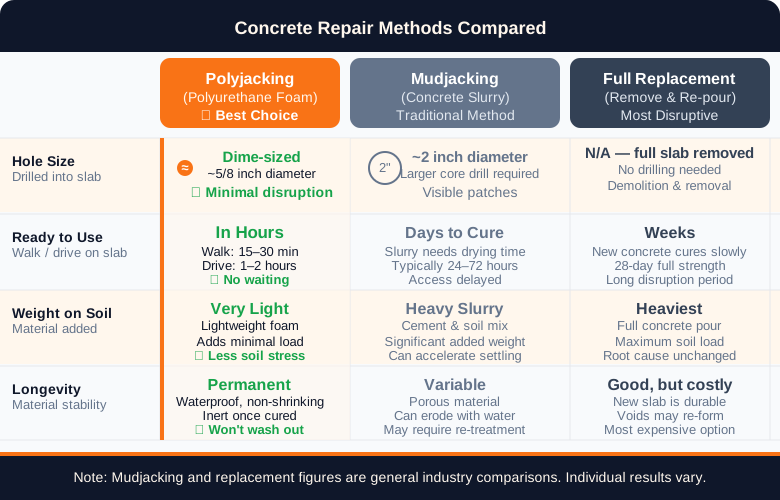
This is where concrete leveling has a real advantage around pools. We drill a series of dime-sized holes into the affected deck sections and inject waterproof polyurethane foam underneath, the same polyjacking method used on driveways and patios. Because the process works from the top of the slab down, there's no need to drain the pool, dig up the deck, or disturb the coping to get underneath it.
The foam is lightweight, so it won't add the kind of heavy load that risks re-settling soil that's already unstable near the pool shell, and it's waterproof, so it holds up in a location that's wet more often than almost anywhere else on the property. Most decks cure and are ready for foot traffic in well under an hour.
Timing and the hardscape around the deck matter too. Our guide to leveling a sunken pool deck without draining it covers working carefully around coping and pool equipment, what changes if the deck has already cracked, and how to line the work up before swim season opens.
When It's Not a Simple Fix
We'll be straight with you if a pool deck's problem is bigger than a settled slab. If the pool shell itself has shifted or cracked - not just the surrounding deck - that's a structural issue with the pool, separate from what foam injection under a deck slab addresses, and it needs its own evaluation. Void filling can still be the right move to stabilize the deck itself even in that situation, but it won't be sold to you as a fix for the pool structure.
An honest read on which problem you actually have is the point of the free estimate, before anything gets drilled.
Scheduling a Free Estimate
PolyJacks is a locally owned crew out of Spring Hill, KS, and we work on pool decks across the full Kansas City metro on both sides of the state line. A technician will check for hollow spots around your deck, look at drainage and grading nearby, and give you a clear answer on whether leveling will hold. The estimate covers slab size, number of injection points, access around the pool, and whether the equipment pad needs separate attention — see what typically drives the cost of a KC leveling job.
Call (913) 713-7794 or reach out through our contact page to get a free, no-obligation estimate on the calendar. For voids without visible sinking yet, our void fill page covers preventive options, or browse the rest of our services.
We work year-round, but very cold or saturated ground can affect the injection process. Late fall, after the pool season, and early spring are common booking windows, so it is worth mentioning the timing when you call so we can schedule around ground conditions.
How polyjacking works in 90 seconds
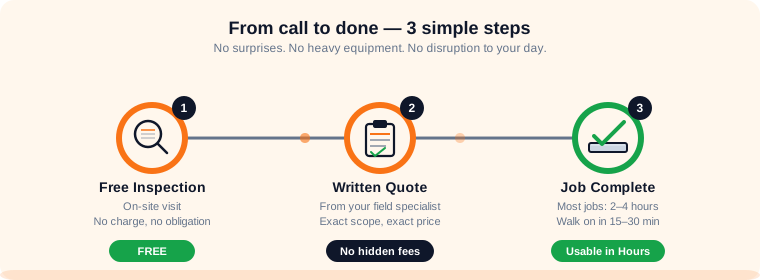
Our team walks you through the three-step process: dime-sized holes, high-density polyurethane foam that fills every void and compresses the soil beneath your slab, and use within hours with no heavy trucks. Call (913) 713-7794 or book a free estimate below.
Frequently asked
Does the pool need to be drained to level the deck?
No. Concrete leveling works from the top of the deck slab, so the pool stays full and undisturbed during the repair.
Will the foam hold up being near pool water?
Yes - the polyurethane foam we use is waterproof by design, which matters more around a pool deck than almost any other slab on the property.
What if the pool shell itself is cracked, not just the deck?
That's a different, structural issue with the pool rather than the surrounding slab, and we'll tell you plainly if that's what we're seeing during the estimate.
How soon can I use the deck after leveling?
The foam cures in minutes, and most decks are ready for foot traffic well within an hour of the injection.
Do you serve pool decks outside Spring Hill?
Yes, across the whole Kansas City metro, Kansas and Missouri sides both. Call (913) 713-7794 to confirm your address is in our service area.
Have a sinking slab?
Book a free on-site inspection. Honest advice, usable within hours.
Pick a time that works for you
Book right here on this page. Prefer to talk? Call (913) 713-7794.