
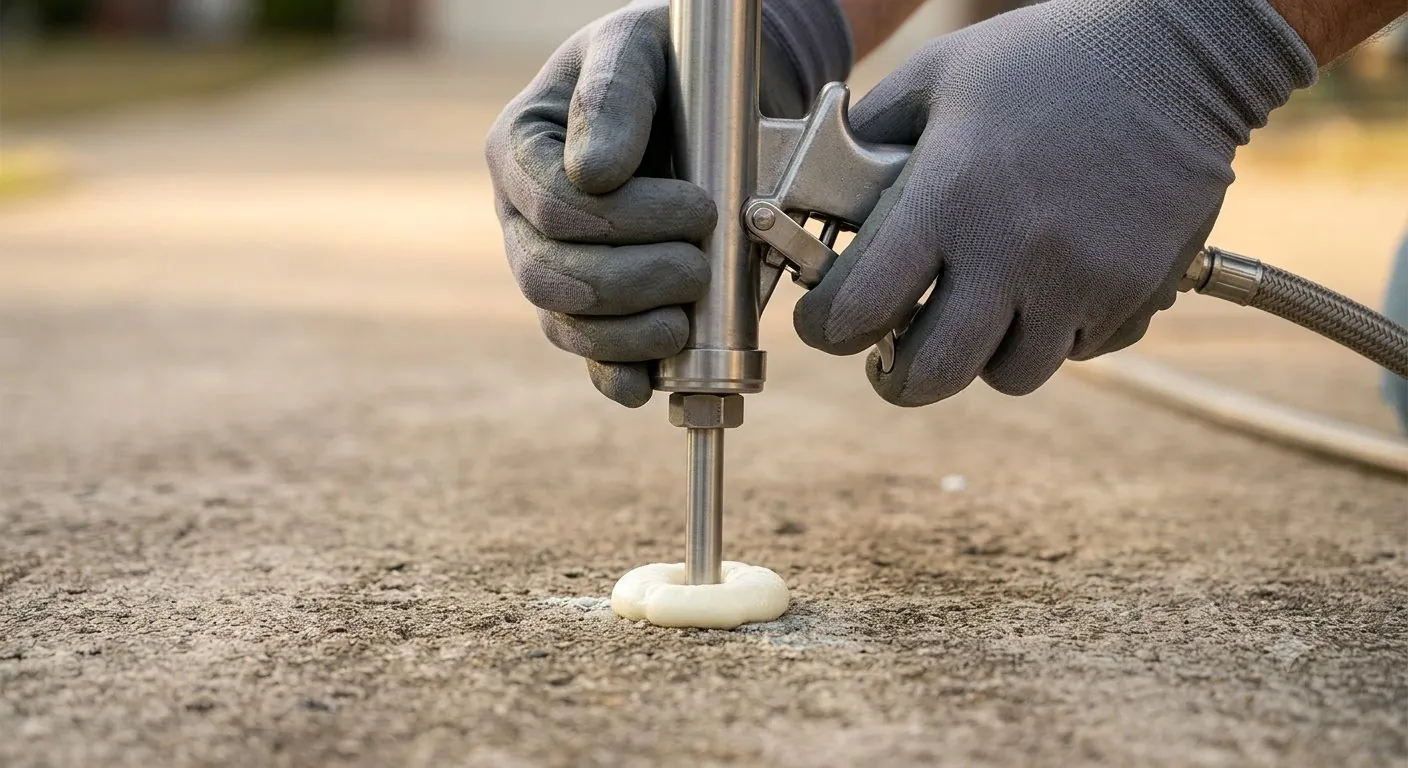
 Illustrative
Why Is My Garage Floor Uneven or Cracked? (Kansas City)
A garage floor turns uneven or cracked when the soil beneath the slab settles or washes out, leaving voids that let sections drop or slope. Poorly compacted backfill and water intrusion are common Kansas City causes. Foam injection lifts the floor back to level through small holes without replacing the slab.
A Garage Floor Is Its Own Slab
Most homeowners assume a garage is one solid piece with the house. It isn't. The floor is usually a separate concrete slab poured on compacted fill dirt, sitting next to - but not structurally tied to - your home's foundation footings. That's actually good news: when that slab settles, dips, or cracks, it's very often a slab problem, not a foundation problem.
Because it's a standalone slab, it settles the same way a driveway or patio does - as the soil underneath shifts, compacts, or washes away. You'll typically see it first where the garage floor meets the driveway apron, since that seam is where two separately-poured slabs can settle at different rates. Understanding that distinction matters before you assume the worst. See our services page for how we handle floor slabs specifically.
What's Really Happening Underneath
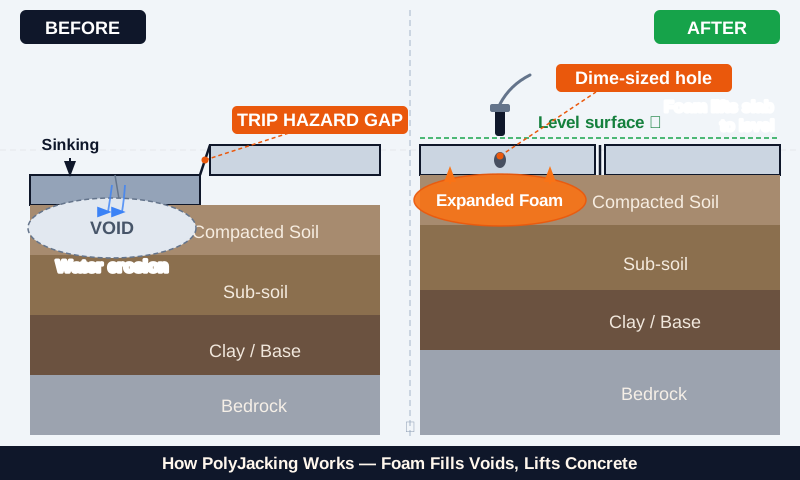
Kansas City sits on expansive clay soil that swells when it's wet and shrinks when it dries out. That constant movement, repeated over enough wet-dry cycles, gradually reworks the soil under a slab and leaves gaps where solid support used to be. Add in a Midwest winter's freeze-thaw swings, and the ground under your floor is rarely still.
Poor drainage makes it worse. If downspouts, sloped grading, or gutters push water toward the garage instead of away from it, that water finds its way under the slab edge and washes soil out from underneath - a very common local cause of settling we see across the metro. Once enough soil is gone, the slab has nothing left to rest on evenly, and it starts to sink, tilt, or crack.
Signs Your Garage Floor Has Settled
A settled garage floor doesn't always announce itself with a dramatic crack. Often it's smaller signs that add up:
- A gap opening between the floor slab and the wall or the driveway apron
- Cracks starting at a corner and running toward the center of the slab
- A noticeable slope toward one side, or standing water after rain
- A lip or step where the garage floor meets the driveway, catching your foot or a mower wheel
- Storage shelving or parked vehicles that no longer sit level
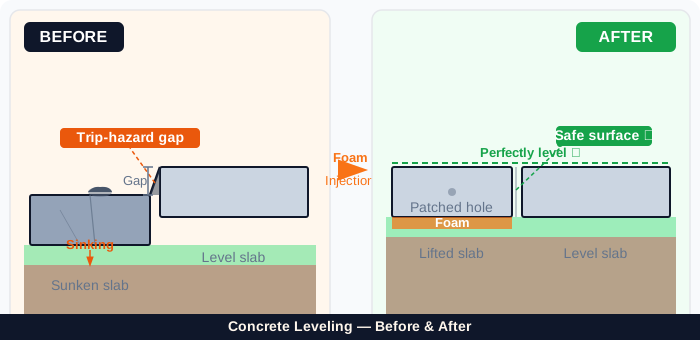
Any one of these alone might be minor. Together, or getting worse over a season or two, they usually point to soil loss under the slab rather than a one-time crack from age or a heavy load.
Left unaddressed, the process feeds itself. The void under the low spot widens, and the next rain pools in that depression and carries more soil out. The crack that started at a corner propagates further as the slab sections on either side settle at different rates. Eventually the slab breaks into pieces that move independently, and the void is no longer a single gap that foam can fill and bridge. The repair gets more complex at that point, not because the slab is beyond saving, but because the problem has shifted from one void to several. Acting while it's still one gap keeps the work straightforward.
For a broader checklist covering driveways, patios, and sidewalks, see our signs of uneven concrete guide.
Not every crack means the slab has dropped, so our guide on when a crack in concrete is worth worrying about can help you sort cosmetic cracks from settling.
Garage Floor Pulling Away From the Wall: What It Means
A garage floor pulling away from the wall is usually the slab moving, not the house. The floor is its own slab poured on compacted fill, sitting next to your foundation but not tied to it. When the clay under the slab edge shrinks in a dry stretch, or runoff from a downspout washes soil out from underneath, the slab drops or tilts and the seam along the wall opens into a visible gap.
To tell whether it is still moving, check whether the gap is getting worse over a season or two. A gap that keeps widening points to soil loss under the slab, which is what garage floor leveling is built to fix. If the foundation wall itself is cracked, that is a different signal, and our guide on whether it's the foundation or just the slab walks through the difference.
If You're Not Ready to Book Yet
A few things will keep the problem from getting worse while you decide. Redirect any downspout that discharges toward the garage so water runs away from the slab edge. Avoid parking your heaviest vehicle on the low side, since extra load accelerates settlement where the slab is already sinking. If you see pooling after rain, photograph it with a coin or ruler in frame for scale. And don't caulk or fill a crack you notice - it will just mask the movement and make it harder to tell whether things are stable or still shifting.
Garage-Floor-Specific Considerations

If your garage floor has an epoxy or paint coating, bring it up during the estimate. Depending on condition and thickness, we may drill and inject over it as-is, or it may need stripping first. We'll tell you which applies before we start.
There's also a seasonal factor specific to garages. In winter, de-icing salt tracked in on tires dissolves into brine that seeps along the slab edge into the soil below. That's another path for moisture to reach the ground under your floor, feeding the same wash-out process that creates voids. If the slope gets worse each spring, that cycle is likely part of it.
Is It the Slab or the Foundation?
This is the question worth answering before you spend a dime worrying. Cracks and unevenness confined to the floor slab - especially near edges, corners, or the threshold - are almost always a slab settling issue, and that's squarely what concrete leveling is built to fix.
Cracks in the actual foundation walls, framing that's visibly out of square, or doors and windows throughout the house sticking are different signals that point toward the home's foundation itself, a separate problem outside what foam injection addresses. If you're not sure which one you're looking at, our Diagnose tool walks through the common signs, and a technician can tell you plainly during a free, no-obligation look at the slab.
How Concrete Leveling Fixes an Uneven Garage Floor
For a settled slab, concrete leveling is usually a single-visit fix. We drill a series of dime-sized holes through the low areas of the slab, then inject a waterproof polyurethane foam underneath. The foam expands within the void, filling the gap left by lost soil and gently lifting the slab back toward level as it does.
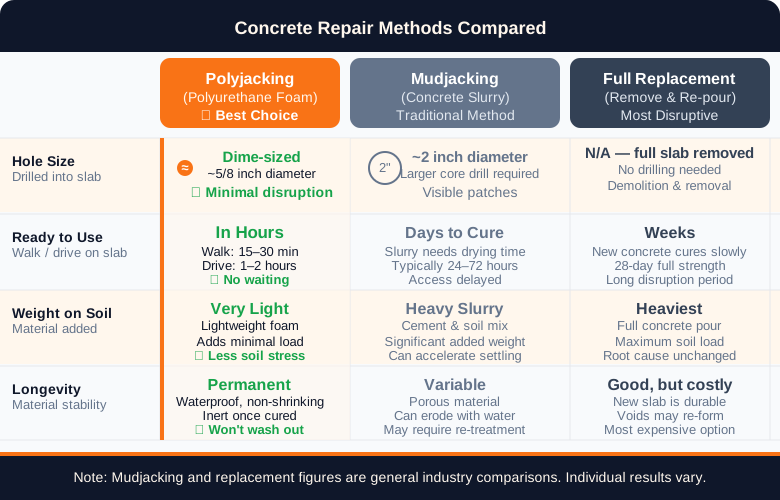
It's the same polyjacking method we use on driveways and patios, just applied to a garage floor. The foam cures in minutes, not days, and because it's lightweight, it won't add the kind of heavy load that can cause a repair to sink again on soil that's already struggling. Most floors are walkable in 15 to 30 minutes and hold a vehicle within a couple of hours.
For a fuller walkthrough of the process on a garage slab, see our garage floor leveling guide.
When Foam Isn't the Right Fix
We'll tell you straight if foam isn't the answer. If the slab itself is cracked into several separate pieces that move independently, or if the settling is tied to an actual foundation issue rather than the floor slab, injecting foam underneath won't hold up the way it should. In those cases we'll say so during the estimate rather than sell you a repair that won't last.
Foam concrete leveling works because it fills a specific problem - a void under a slab that's otherwise intact. It's not a universal fix for every concrete or structural issue, and an honest look at your specific floor is the only way to know which category yours falls into. That's what the free estimate is for.
What Happens at Your Free Estimate
A technician walks the garage floor with you, checks for hollow spots by sounding out the slab, measures how far out of level it's gotten, and looks at where water and drainage might be contributing. You'll get a straightforward explanation of what's causing it and whether concrete leveling is the right call - no pressure, no price posted online because every floor is different.
PolyJacks is a locally owned crew based in Spring Hill, KS, working across the whole Kansas City metro on both sides of the state line. Reach us at (913) 713-7794 or through our contact page to get a free estimate scheduled, or browse our services to see the other slabs we level around the house.
How polyjacking works in 90 seconds
Our team walks you through the three-step process: dime-sized holes, high-density polyurethane foam that fills every void and compresses the soil beneath your slab, and use within hours with no heavy trucks. Call (913) 713-7794 or book a free estimate below.
Frequently asked
Can a settling garage floor damage my house's foundation?
Not directly - the garage floor slab and the home's foundation footings are typically separate structures. A settling floor slab is a slab issue, though it's worth confirming with a look at the whole picture during a free estimate.
Is a cracked garage floor always a sign of settling?
Not always. Some cracking is normal shrinkage from when the concrete originally cured. Cracks paired with a slope, a gap at the edge, or a rising lip at the threshold are the stronger signs of actual settling.
How long does concrete leveling take on a garage floor?
Most garage floors are completed in a matter of hours. The foam cures in minutes, so the floor is typically walkable in 15-30 minutes and ready to park on within a couple of hours.
Will lifting the slab damage my walls or door frame?
The foam lift is gradual and controlled, aimed at restoring the slab toward its original level rather than forcing dramatic movement, which keeps the risk to surrounding framing low.
Do you serve my part of the Kansas City metro?
Yes - PolyJacks serves the full metro on both the Kansas and Missouri sides, out of our base in Spring Hill, KS. Call (913) 713-7794 to check your address and get a free estimate.
Why is my garage floor pulling away from the wall?
Because the garage floor is its own slab, separate from the foundation it sits next to. When the clay under the slab edge shrinks or water washes soil out from underneath, the slab settles or tilts and the seam at the wall opens up. If the gap and cracking stay confined to the floor slab, it is usually a slab problem that concrete leveling can fix. Cracks in the foundation walls themselves point to a separate issue.
Have a sinking slab?
Book a free on-site inspection. Honest advice, usable within hours.
Pick a time that works for you
Book right here on this page. Prefer to talk? Call (913) 713-7794.