
Concrete Crack Repair: When Cracks in Concrete Mean Trouble
Not every crack signals trouble. Thin, stable surface cracks are usually cosmetic. Worry when cracks widen, offset in height, run in a stair-step pattern, or pair with sinking or pooling water; those point to soil settling under the slab. Settlement cracks are what concrete leveling addresses, and a free estimate confirms the cause.
Two Very Different Kinds of Cracks
Not every crack means a sinking slab: hairline cracks that stay level are cosmetic, but a crack where one side sits lower - or that keeps widening - points to settlement underneath. Here's how to tell them apart.
Every concrete driveway, sidewalk, and patio in the Kansas City metro will crack eventually - that's normal for the material. The question isn't whether you have a crack, it's what kind. Hairline cracks that stay the same width and don't change the slab's height are almost always cosmetic, caused by ordinary shrinkage as concrete cures. Cracks tied to settling are a different story: one side of the crack sits lower than the other, the gap keeps widening, or the crack runs along the edge where a slab has visibly dipped. That second kind usually means the soil underneath has shifted or washed away, leaving a void the slab is slowly dropping into. If you're not sure which you're looking at, our why is my concrete sinking guide walks through the warning signs in more detail.
Cosmetic Cracks: Normal and Not Urgent
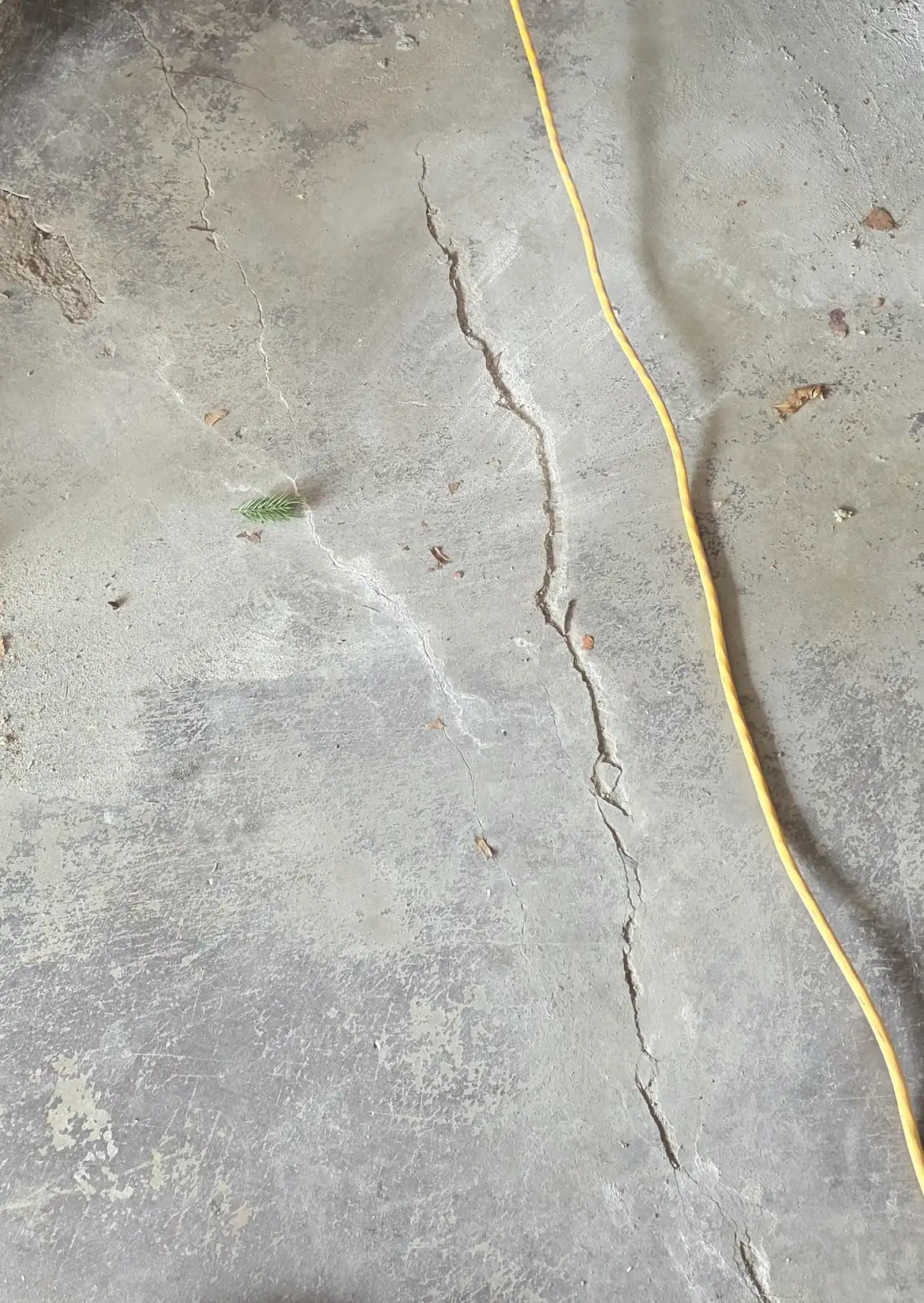
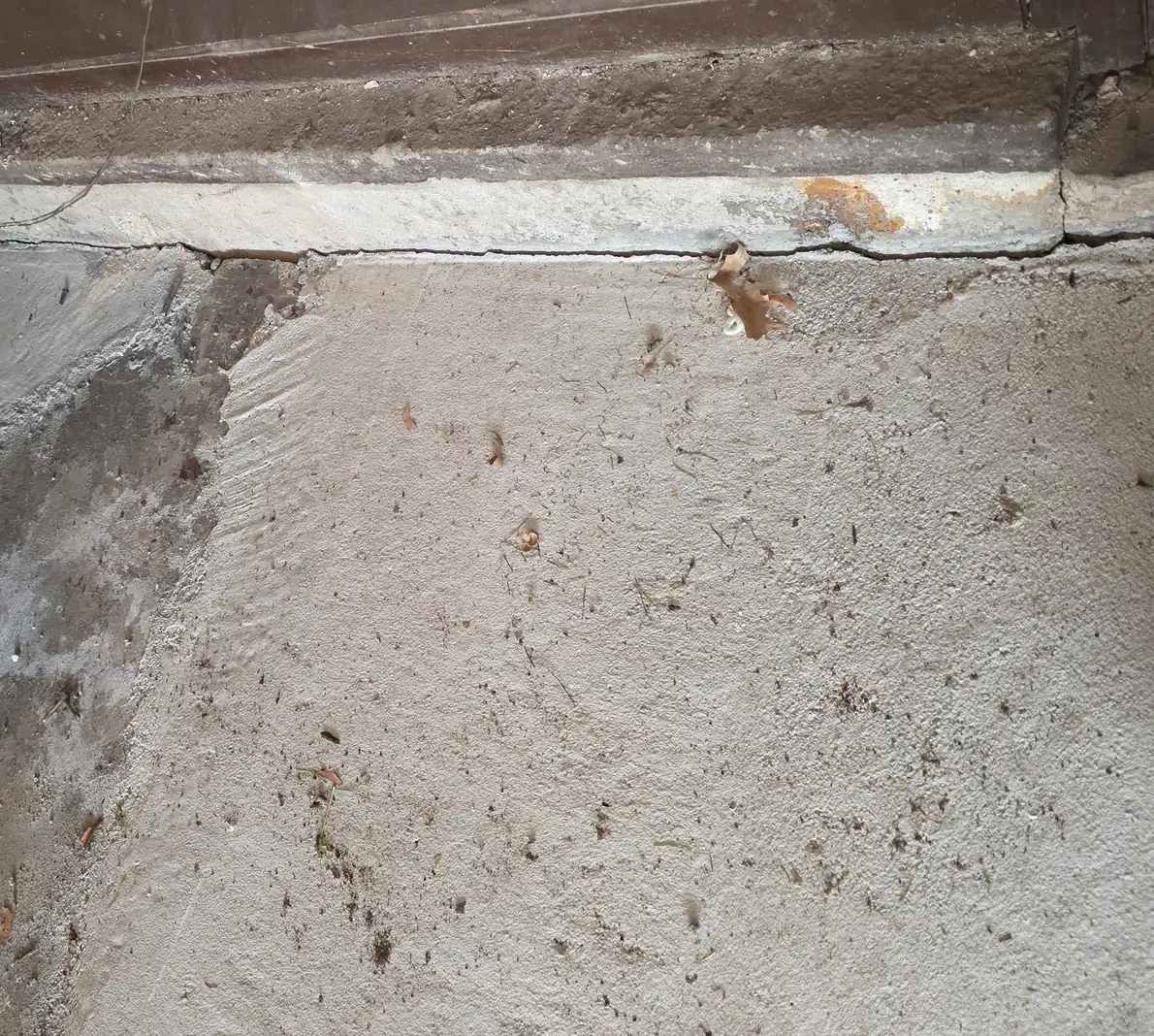
Shrinkage cracks show up as concrete cures and loses moisture in the first months after it's poured. They're usually thin, straight, don't cross the full thickness of the slab, and both sides stay level with each other - run a hand across one and you won't feel a step. These are common on driveways, sidewalks, and patios throughout the metro and don't mean the slab is failing. The only real risk is water getting into the crack, softening the soil below over years, and eventually turning a cosmetic issue into a settlement one. Sealing a hairline crack is cheap insurance; it doesn't require lifting anything. If a contractor tells you every crack needs the slab raised, get a second, honest opinion - we'll always tell you straight when a crack just needs a sealant, not a full concrete leveling fix.
If a contractor does recommend lifting, these questions to ask a concrete leveling contractor help you judge whether the advice is honest.
Structural Cracks: Signs of a Real Problem
Settlement cracks look and behave differently. Watch for stair-step cracking near a slab, a crack where you can visibly see or feel one side sitting lower than the other, or a crack that keeps getting wider month over month instead of staying put. Sidewalks and driveway approaches are common spots because they're poured in shorter panels that can settle independently of each other - one panel drops while its neighbor doesn't move at all, and the crack (or the joint) becomes a trip hazard. If a section of walkway has separated enough that you catch your toe on it, that's no longer cosmetic. Our sidewalk and trip hazard repair page covers that specific situation, and if the crack sits over a hollow-sounding spot, it may need void filling before anything else.
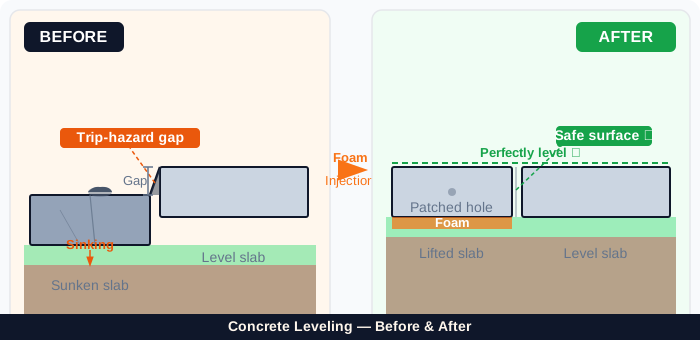
If you are weighing a lift against tearing the slab out, see the signs you need concrete leveling, not replacement.
Why Kansas City Concrete Cracks and Settles
Most settlement cracks around here trace back to the ground, not the concrete itself. Kansas City sits on expansive clay soil that swells when it's wet and shrinks when it dries out, and our freeze-thaw winters make that cycle worse - the soil is never quite the same volume two seasons in a row. Add a downspout dumping water next to a slab edge, or grading that lets runoff pool against the foundation, and soil gets washed out from underneath the concrete entirely. Once there's a void down there, the slab above it has nothing to rest on, and gravity plus everyday traffic does the rest. None of this is anyone's fault - it's just how clay soil and Midwest weather interact with concrete over years. Fixing the drainage is often part of the real solution, not just the slab.
A Simple Test You Can Do This Weekend
You don't need a contractor to get a first read on a crack. Lay a straightedge or a level across it and see if there's a visible gap on one side - that's height difference, not just a crack. Mark the ends of the crack with a pencil or piece of tape, note the date, and check back in a month; if it's grown past your marks, it's active. A crack that hasn't moved in years and sits flush on both sides is low priority. One that's widening, or where you can feel a lip when you walk across it, deserves a closer look - especially anywhere kids, guests, or older family members walk regularly. Photos over time are the cheapest diagnostic tool you have before calling anyone out. If your straightedge shows a gap or your pencil marks have moved, call (913) 713-7794 and we'll tell you honestly whether it needs a visit or just a sealant.
Concrete Crack Repair: What Actually Fixes a Settlement Crack
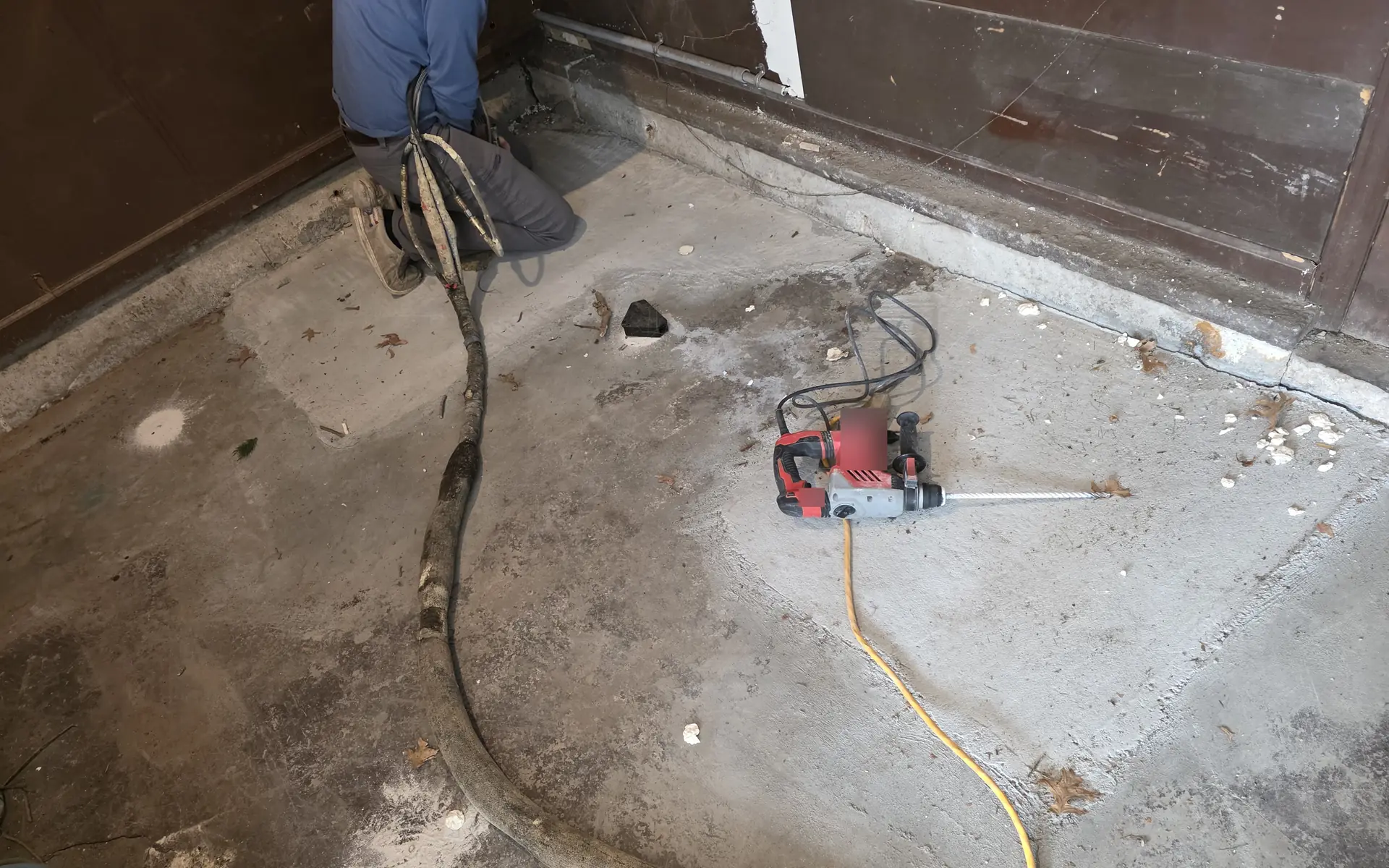
For cracks caused by settling, the fix isn't patching the crack itself - it's addressing the void underneath so the slab stops moving. Polyjacking for settlement cracks does this with polyurethane foam: we drill a few dime-sized holes near the affected area, inject foam that expands to fill the void, and use that expansion to gently raise the slab back toward level. The foam is waterproof, so it won't break down or wash out the way soil does, and it's light enough that it won't overload the same weak soil that caused the problem to begin with. Cracks that are purely cosmetic don't need any of this - they just need a sealant to keep water out. We check for a height difference before recommending a lift, because raising a slab that doesn't need it isn't a fix, it's an upsell. One honest note on scope: PolyJacks does concrete crack repair by leveling - we lift and stabilize the settled slab so the settlement cracks stop widening. We don't sell standalone crack injection, sealing, or resurfacing; when a crack is purely cosmetic we'll tell you to seal it yourself with a masonry caulk rather than sell you a lift you don't need.
Get an Honest Read on Your Cracks
If you're staring at a crack in your driveway, sidewalk, or patio and can't tell which category it falls into, that's exactly what a free on-site estimate is for. We're a locally owned crew based in Spring Hill, and we walk the whole Kansas City metro on both sides of the state line - Kansas and Missouri - looking at slabs like this every week. We'll check for height difference, look for signs of a void, and tell you plainly whether it's a sealant job, a foam lift, or nothing urgent at all. There's never a charge to find out. Call (913) 713-7794 or fill out our contact form to get a time on the calendar.
How polyjacking works in 90 seconds
Our team walks you through the three-step process: dime-sized holes, high-density polyurethane foam that fills every void and compresses the soil beneath your slab, and use within hours with no heavy trucks. Call (913) 713-7794 or book a free estimate below.
Frequently asked
Does every crack in my driveway mean the slab is sinking?
No. Most cracks are cosmetic shrinkage cracks from the concrete curing and don't involve any height difference. A crack becomes a settlement concern when one side sits lower than the other or it keeps widening over time.
Can you fix a crack without lifting the whole slab?
Yes, if it's cosmetic - a sealant keeps water out and that's it. If the crack is tied to a void underneath, we lift with foam injection instead of just patching the surface, since sealing alone won't stop the settling.
Will sealing a crack stop it from getting worse?
Sealing keeps water from washing out soil beneath the slab, which slows future settling, but it won't fix a crack that already has height difference. That needs foam injection to fill the void.
How much height difference across a crack is too much?
There's no single number that applies everywhere, but any noticeable lip you can feel underfoot - especially on a sidewalk or step - is worth having looked at, since it's also a trip hazard.
Does PolyJacks work on both sides of the state line?
Yes, we're based in Spring Hill, Kansas, and serve the full Kansas City metro across Kansas and Missouri.
Is foam jacking the same thing as polyjacking for a settlement crack?
Yes. Foam jacking is another name for polyjacking: we drill dime-sized holes near the settled area and inject polyurethane foam that fills the void under the slab and lifts it back toward level. It's only the right call when the crack has a height difference; a cosmetic crack just needs a sealant. Our polyjacking guide explains the process in full.
Have a sinking slab?
Book a free on-site inspection. Honest advice, usable within hours.
Pick a time that works for you
Book right here on this page. Prefer to talk? Call (913) 713-7794.