
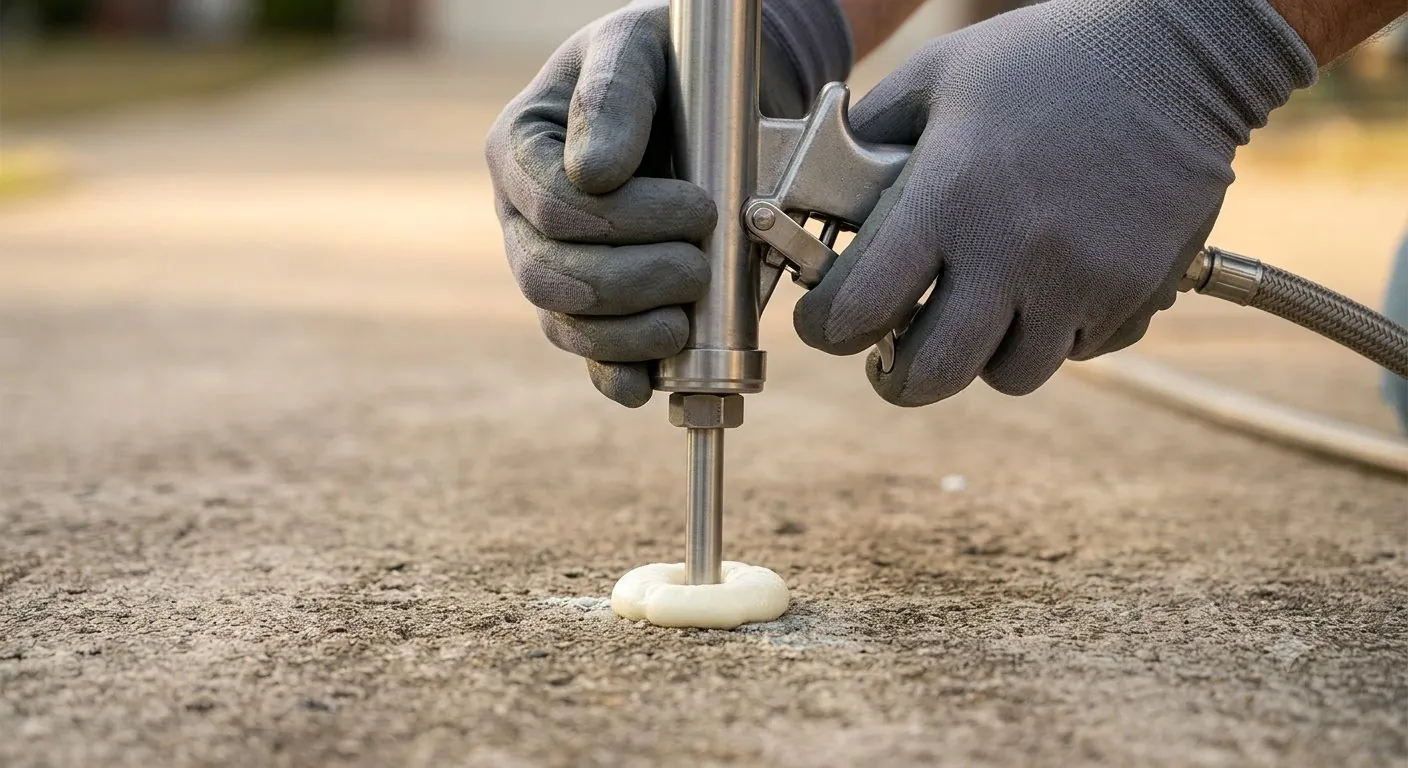
 Illustrative
Why Your Garage Floor Dropped, and How Foam Lifts It Back
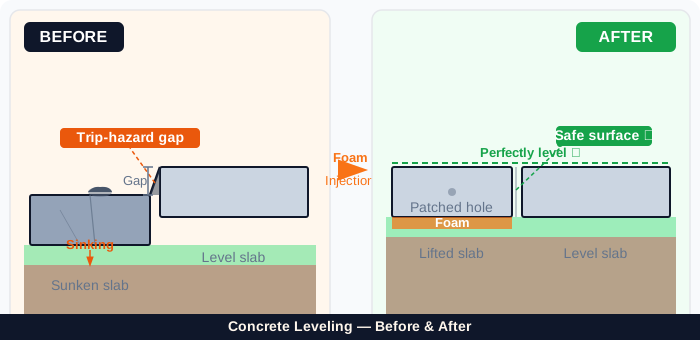
Garage floors sink when the soil or backfill beneath them settles, leaving voids that let the slab drop, crack, or slope toward a drain. Foam injection lifts the floor back to level through dime-sized holes without replacing it, even with the slab in place. A free estimate confirms the slab is a candidate.
Why Garage Floors Sink More Than You'd Expect
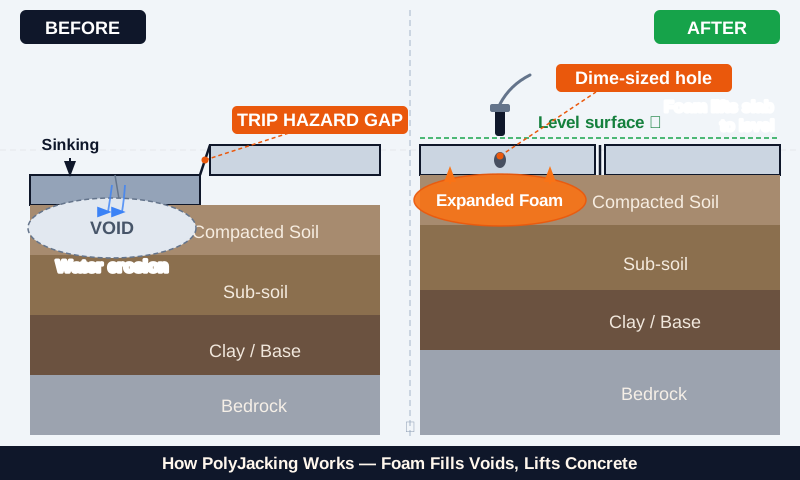
Most garage floors are what's called a floating slab - poured separately from the home's foundation, not physically tied to it. That's normal construction practice, but it also means the garage floor and the house settle independently of each other. If the soil under the garage slab wasn't compacted as thoroughly as the soil under the foundation footings, or if it's shifted over time, the garage floor can start to drop while the rest of the house stays put. Kansas City's clay-heavy soil makes this more common, since it swells and shrinks with moisture and freeze-thaw cycles year after year. For the broader explanation of why concrete settles here, see our why is my concrete sinking page.
Signs Your Garage Slab Has Settled
The clearest sign is a visible gap where the garage floor meets the foundation wall or the threshold into the house - something that used to sit flush now has a step or a shadow line. Water pooling in a corner of the garage after rain, instead of draining toward the opening, is another common tell. You might also notice a crack running along that same edge, or a slope toward the middle of the floor where there didn't used to be one. None of these are usually urgent emergencies, but they're worth having looked at before the gap gets wide enough to let water or pests into the space regularly.
For a broader checklist covering driveways, patios, and sidewalks, see our full signs of uneven concrete guide.
Why It's More Than a Cosmetic Problem
A settled garage floor isn't just an eyesore. A gap at the edge where the slab has dropped away from the foundation gives water a direct path toward your home's foundation wall, which is exactly the kind of moisture exposure that causes bigger problems over years. An uneven floor is also a trip hazard for anyone carrying groceries, tools, or a laundry basket across it, and it makes the space harder to use for storage or projects since nothing sits level. Catching it while it's still a quarter-inch to half-inch of settling is a lot simpler than waiting until it's a multi-inch drop with real water intrusion behind it.
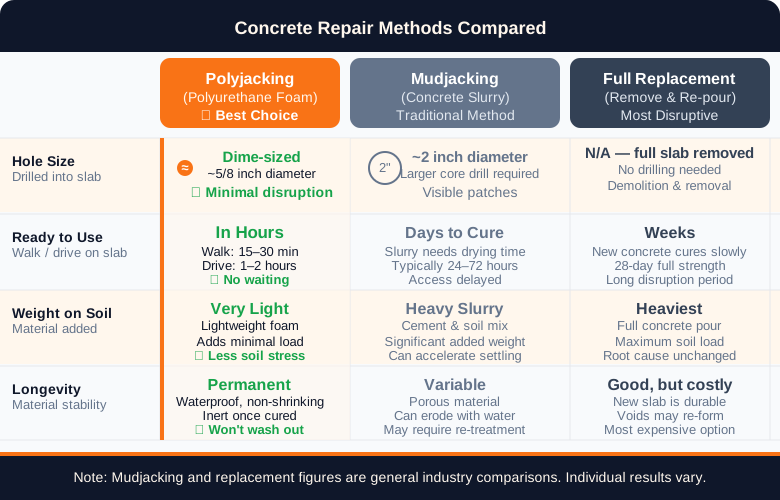
If you're weighing whether the fix is worth it for a space you use a few hours a week, our guide on when concrete leveling pays off breaks down the math.
How Foam Injection Levels a Garage Slab
The repair works the same way it does on a driveway or patio: we drill a handful of dime-sized holes through the low areas of the garage floor, then inject expanding polyurethane foam beneath the slab. The foam fills the void left by settled or washed-out soil and, as it expands, lifts the concrete back toward level. Because the foam is waterproof, it won't degrade if moisture gets underneath again later, and because it's lightweight, it doesn't add stress to soil that's already struggled to support the slab. If the space under your garage floor needs filling but doesn't need a full lift, that's covered under our void filling service instead.
The scope of a garage floor lift varies from one property to the next, and a few things drive that more than others. The total area of the slab is the baseline, since a two-car garage has more square feet to address than a single-car. The extent of the void underneath is the biggest factor: a small pocket of washed-out soil under one corner is a different job than a broad area of settled ground under the whole floor. Accessibility plays a role, because stored items, shelving, or a workbench in the way add time to clearing the space before the crew can drill. If the garage has a floor drain, the lift has to maintain or create a slope toward it, which can mean adjusting the foam volume in certain spots. And the slab's thickness affects how many holes are needed and how the lift is distributed. Your free estimate walks through all of these on-site, so the scope is specific to your garage rather than a one-size-fits-all job.
If the slab is severely cracked into multiple pieces, bonded to the foundation rather than floating, or showing signs of active structural movement rather than settlement, foam injection may not be the right fix — your free estimate will tell you honestly if that's the case.
Garage-Specific Things to Check Before the Lift
A garage floor has a few elements a driveway or patio doesn't, and the crew walks through them before the first hole is drilled. The garage door track is the first. It's bolted to the slab or the wall near the slab, and if the floor has dropped enough to pull the track out of plumb, the lift can shift it back into alignment or shift it further. We check the track before and after the lift so the door still rolls true once the slab is back where it should be.
The floor drain is the second. If your garage has a drain set into the concrete, the slope toward it is what keeps water from pooling after a rain or a hose-down. Lifting the slab changes that slope, so we verify the water still runs to the drain and not away from it once the foam has set. If the original pour didn't grade toward the drain well, the lift is a chance to get that right.
Finish is the third. Most garage floors are a plain concrete pour, but some have an epoxy or sealant coat on top. The dime-sized drill holes go through whatever is on the surface, and the patching after the lift is done to match the existing finish as closely as the material allows. If you've got a coated floor, mention it when you call so we can note it on the estimate.
Leveling vs. Coating: Fix the Slab Before You Epoxy It

Garage floor leveling and coating sound alike, but they solve different problems. Leveling works under the slab: foam fills the empty space where soil settled or washed out and raises the concrete back to where it sat. A coating such as epoxy works on top. It is a surface finish that takes the shape of the concrete beneath it. It does not fill a void or raise a section that has dropped, so a dip, a slope toward the middle of the floor or a gap at the foundation wall is still there under a fresh coat.
That makes the order simple: lift first, coat later. An already coated floor can still be lifted, and the patches are matched to the finish as closely as the material allows. If a coating is on your list, leveling the slab first gives the new finish a flat, supported floor to sit on.
What the Repair Day Looks Like
A garage floor lift is typically finished in a matter of hours. After confirming during your free estimate that foam injection is the right call, we drill the holes, inject the foam, and raise the slab while monitoring the lift. The foam cures within minutes of injection, and the floor is generally ready for foot traffic in about 15 to 30 minutes. Vehicles usually need to wait roughly an hour or two before driving on the surface, just to be safe. The drill holes are small and get patched, so there's no lasting mark on the floor once the job's done - no jackhammering, no dumpster of broken concrete sitting outside for a week.
Before the crew arrives, clear the area over the low spots — typically the section of floor that's visibly dropped. Wall-mounted shelving, the garage door, and anything on the walls stay in place.
Garage Floors vs. Driveways: What's Different
Garage floors and driveways settle for similar reasons, but a garage floor adds a wrinkle: it's enclosed, sits right against the house, and any water that gets in has fewer places to go. That makes catching settling early more valuable indoors than out. The repair process itself is the same foam injection method either way, and it's common for us to find both areas need attention on the same property, since they're often poured around the same time with similar soil underneath. If you're dealing with both, our driveway leveling page covers that side of the property, and we can quote both in a single visit.
Because the space is enclosed, moisture that gets trapped under the slab evaporates more slowly than it would on an open driveway, so water lingers longer and keeps working at the soil. The slab also sits directly against the foundation wall, which means even a small gap at that edge is more visible than a driveway edge and creates a more direct path for water toward the house. And drainage in a garage typically runs toward the door opening rather than a dedicated floor drain, so the slope the lift has to maintain is different from what a driveway needs.
Get a Free Look Before It Gets Worse
A gap or slope in a garage floor rarely fixes itself, and it's a lot easier to address while it's still a minor lift than after years of water working its way behind the slab. We're a locally owned crew out of Spring Hill, serving the full Kansas City metro across both Kansas and Missouri, and a free on-site estimate is the fastest way to find out if your garage floor needs leveling, void filling, or nothing at all. Call (913) 713-7794 or reach out through our contact form, and take a look at our full range of services while you're at it.
If you'd like to see what a typical visit covers before you call, our garage floor leveling service page walks through the process from the estimate to the patch.
How polyjacking works in 90 seconds
Our team walks you through the three-step process: dime-sized holes, high-density polyurethane foam that fills every void and compresses the soil beneath your slab, and use within hours with no heavy trucks. Call (913) 713-7794 or book a free estimate below.
Frequently asked
Why does a garage floor sink when the rest of the house doesn't move?
Garage floors are usually a floating slab poured separately from the foundation, so they can settle independently if the soil beneath them shifts or wasn't compacted as thoroughly.
Can a garage floor be leveled without breaking up the concrete?
Yes. Foam injection lifts the slab through a few dime-sized holes rather than removing and repouring the floor.
How soon can I park in the garage after a repair?
The foam cures in minutes and foot traffic is generally fine within 15 to 30 minutes; we typically recommend giving it roughly an hour or two before driving a vehicle on it.
Will fixing the gap at the foundation stop water from getting in?
Closing that gap by lifting the slab back toward the foundation removes the direct path water was taking, which is one of the main reasons homeowners fix it.
Do you patch the holes after the lift?
Yes, the dime-sized holes are patched after the foam cures, so there's no lasting mark on the floor.
Do vehicles and stored items need to come out of the garage for the leveling work?
The area over the slab needs to be clear so the crew can drill and inject, so vehicles and anything sitting directly on the floor come out for the lift. Wall-mounted shelving can usually stay in place. Because the slab is walkable within about 15 to 30 minutes and ready for vehicles within a couple of hours, most homeowners are able to move everything back once the crew wraps up.
Why is my garage floor slab pulling away from the wall?
Most garage floors are a floating slab, poured separately from the foundation and not tied to it. When the soil under the slab settles or washes out, the floor drops while the house stays put, and a gap opens where it meets the foundation wall. Foam injection fills the void and lifts the slab back toward the wall, closing the path water was taking.
Can I put epoxy on a garage floor that has sunk?
You can, but the coating will not fix the drop. Epoxy is a surface finish that follows the shape of the concrete under it, so the low spot, the slope and any gap at the foundation wall stay where they are, just under a new coat. If the slab has settled, have it leveled first. Foam fills the void beneath the slab and lifts it back toward level, and then the coating goes down on a flat, supported floor.
Have a sinking slab?
Book a free on-site inspection. Honest advice, usable within hours.
Pick a time that works for you
Book right here on this page. Prefer to talk? Call (913) 713-7794.