
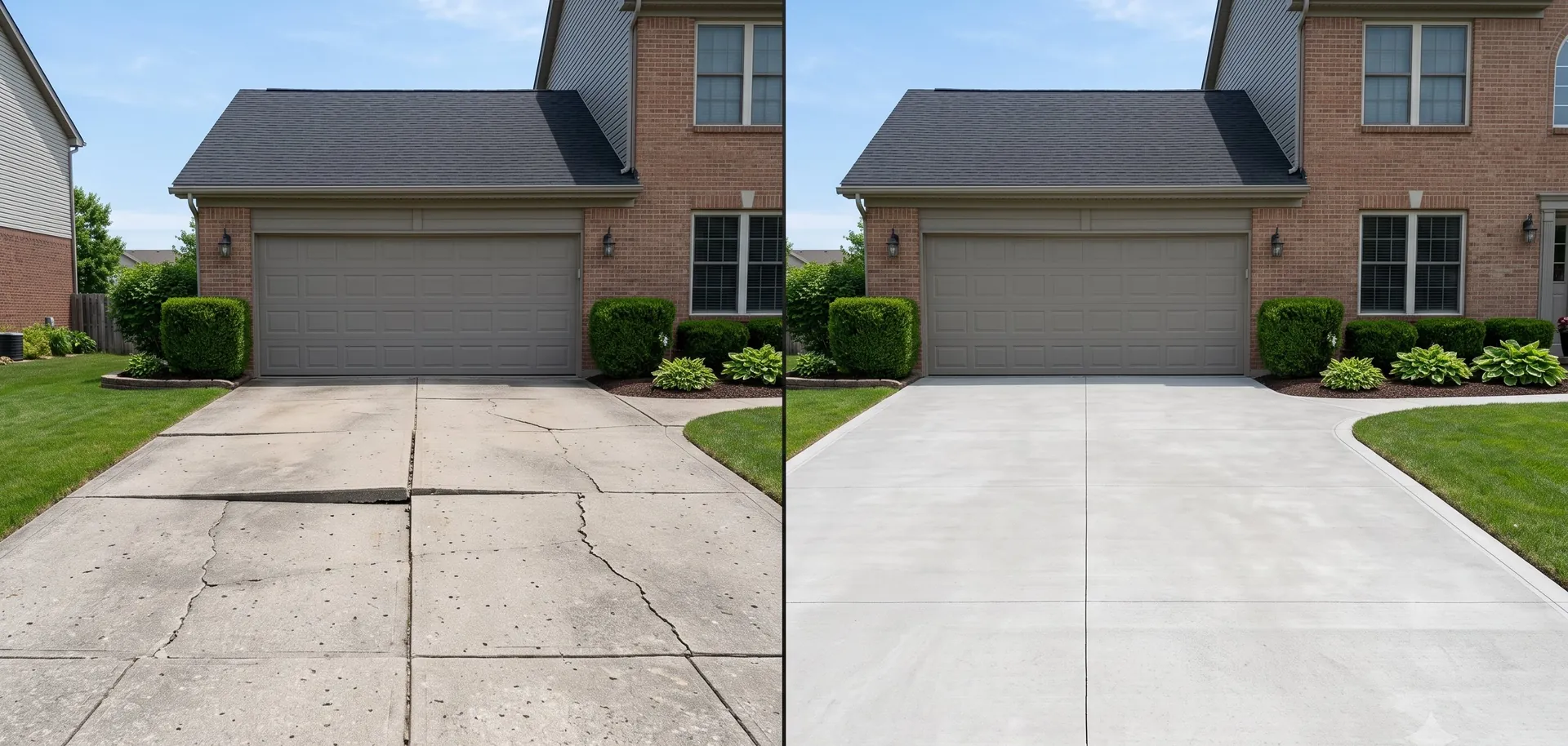
 Illustrative
A void is empty space that opens between a concrete slab and the soil it was poured on. In Kansas City the usual causes are water erosion and poor drainage, soil that was never compacted well at the original build, expansive clay shrinking in dry spells, and freeze-thaw cycles. Once a void forms, the rigid slab drops into it.
What a "Void" Actually Is
A void forms when the soil under a slab erodes, settles, or shrinks away, leaving the concrete bridging an empty gap. Concrete doesn't stretch or sag - it's rigid, so when a slab sinks, cracks, or tilts, the ground underneath moved or washed away and the slab dropped into the space that opened up. Voids can be small - a few inches under one corner - or they can run several feet under a slab, invisible until the concrete above it finally settles into them. For the full picture of what makes Kansas City concrete settle in the first place, see why concrete sinks in Kansas City. Most of it traces back to a handful of causes.
Cause #1: Water Erosion and Poor Drainage
Water is the most common reason voids form under concrete slabs. Downspouts that dump right next to a foundation, grading that slopes toward the house instead of away from it, and sprinkler heads aimed at a slab edge all send water underneath concrete over time. That water carries fine soil particles away with it - a slow process, often invisible for years, that eventually leaves a hollow pocket under the slab. It shows up most at slab edges and corners, which is why driveway aprons near downspouts and patios below gutters tend to be the first spots to sink. This is also one of the more preventable causes: redirecting a downspout or regrading a slope away from a slab won't undo an existing void, but it slows the next one from forming after a repair.
Cause #2: Poor Compaction From the Original Build
Not every void is erosion - some were built in from day one. When a slab is poured, the soil or fill underneath is supposed to be compacted in layers before the concrete goes down. If that step was rushed, skipped, or done in wet conditions, the fill settles under its own weight and the slab's traffic load over months or years, and a gap opens up gradually as the ground compresses to where it should have been compacted to begin with. This tends to show up as a slow, even settling rather than a sudden drop, and it's common on additions, newer driveways, or any concrete poured over fill dirt rather than undisturbed native soil. It's also one of the more predictable causes - if a slab is younger than the house around it, poor original compaction is worth ruling out. If you're planning an addition or new driveway, ask the contractor to compact fill in lifts and verify compaction before the pour, as this prevents the most predictable void cause.
Cause #3: Expansive Clay Soil Shrinkage
Kansas City sits on a lot of clay-heavy soil, and clay behaves differently than sand or loam - it swells when it's wet and shrinks noticeably when it dries out. That swell-shrink cycle repeats every year with the seasons, and over time it can pull soil away from the underside of a slab as the clay contracts during hot, dry stretches, leaving a gap that doesn't fully close back up when the soil rehydrates. It's a major reason concrete settling is so common across the metro regardless of how well a slab was originally built or drained. Why concrete sinks in this region usually comes back to some combination of this clay behavior plus drainage, rather than one single cause - which is also why a lasting fix needs to fill the actual void, not just raise the slab and leave the gap. You can't stop the clay from shrinking, but keeping water away from the slab reduces the swell-shrink amplitude and slows the cycle. The KC Settlement Risk Index maps which neighborhoods are most prone to clay-driven settling.
Cause #4: Freeze-Thaw Cycles
Kansas City winters swing between freezing nights and 40- or 50-degree days, sometimes within the same week. Any moisture that's worked its way under a slab edge freezes and expands, then thaws and contracts, over and over through the season. That repeated cycle disturbs the soil structure under the concrete and can widen an existing void or help start a new one, especially at joints and edges where water tends to collect first. It's part of why settling issues often become more noticeable heading into spring - the freeze-thaw stress of winter has had months to work on soil that was already compromised by drainage or clay movement. None of these four causes usually act alone; erosion, compaction, clay shrinkage, and freeze-thaw tend to compound each other under the same slab over the years. The fix is upstream: make sure water isn't pooling under the slab edge in the first place, so there's less moisture to freeze and expand.
How to Tell a Void Is Actually There
You generally can't see a void directly, but there are reliable signs of one: a slab section that's visibly lower than the panel next to it, a hollow or drummy sound when you tap the concrete with something solid, cracks radiating from one corner, or water pooling in a spot that used to drain fine. A driveway or patio that rocks slightly under weight, or a step that's pulled away from the slab it's attached to, is also a strong indicator. None of these are guesswork you have to do alone - the diagnose tool walks through common signs, and a free on-site look confirms what's actually happening underground rather than leaving it a guess based on what's visible above the surface.
Filling the Void vs. Just Raising the Slab
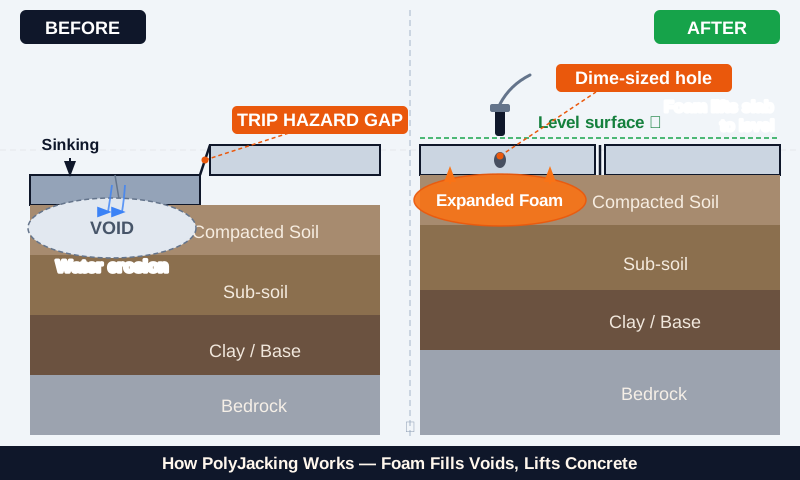
Here's the part that matters most: raising a slab without filling the void underneath it just moves the same empty space to a different spot, waiting to cause the next settling. Polyjacking is built around that distinction - injected polyurethane foam expands to fill the actual void first, then continues expanding to lift the slab, so the concrete ends up resting on solid support instead of a hollow pocket with a raised slab sitting on top of it. That's also why the foam being waterproof matters - it won't erode out the way loose soil or heavy mudjacking slurry can over time. If a slab's been sinking and you're not sure why, a free estimate at (913) 713-7794 gets an honest read on which of these causes is actually at play under your concrete. You can also reach us through the contact form.
If you are wondering whether a sunken slab needs to come out at all, see can sunken concrete be fixed without replacing it.
How polyjacking works in 90 seconds
Our team walks you through the three-step process: dime-sized holes, high-density polyurethane foam that fills every void and compresses the soil beneath your slab, and use within hours with no heavy trucks. Call (913) 713-7794 or book a free estimate below.
Frequently asked
Can a void under concrete cause the slab to collapse?
It's uncommon for a residential slab to fully collapse, but an unsupported slab over a large void is more prone to cracking under weight - vehicle loads especially - since it's essentially a bridge over empty space rather than sitting flat on solid ground.
Why does my driveway keep sinking in the same spot every year?
That pattern usually points to an ongoing cause - like a downspout draining nearby or clay soil that shrinks every dry season - rather than a one-time event, so the same void keeps reopening after each fix unless the cause is addressed too.
Is a void under a slab always caused by a leak or plumbing issue?
Not usually. Surface water from drainage, gutters, and grading causes most voids; plumbing leaks can contribute but are a less common cause than rain and clay soil movement in this region.
Does filling a void require tearing out the concrete?
No. Foam injection fills the void and lifts the existing slab through a few small drilled holes, so the original concrete stays in place rather than being removed and repoured.
How do I know if I have a void or just a cosmetic crack?
A hollow sound when tapping the slab, uneven height compared to the panel next to it, or new pooling water are signs of a real void; a hairline crack with no height change or drainage change is often cosmetic. A free estimate can confirm which one you're looking at.
Does polyjacking in Kansas City fill the void or only lift the slab?
It does both. The injected polyurethane foam expands to fill the void first and then keeps expanding to lift the slab, so the concrete ends up resting on solid support. It goes in through a few small drilled holes and the original concrete stays in place. If water or clay movement caused the void, that cause still needs attention so the gap does not reopen.
Have a sinking slab?
Book a free on-site inspection. Honest advice, usable within hours.
Pick a time that works for you
Book right here on this page. Prefer to talk? Call (913) 713-7794.