
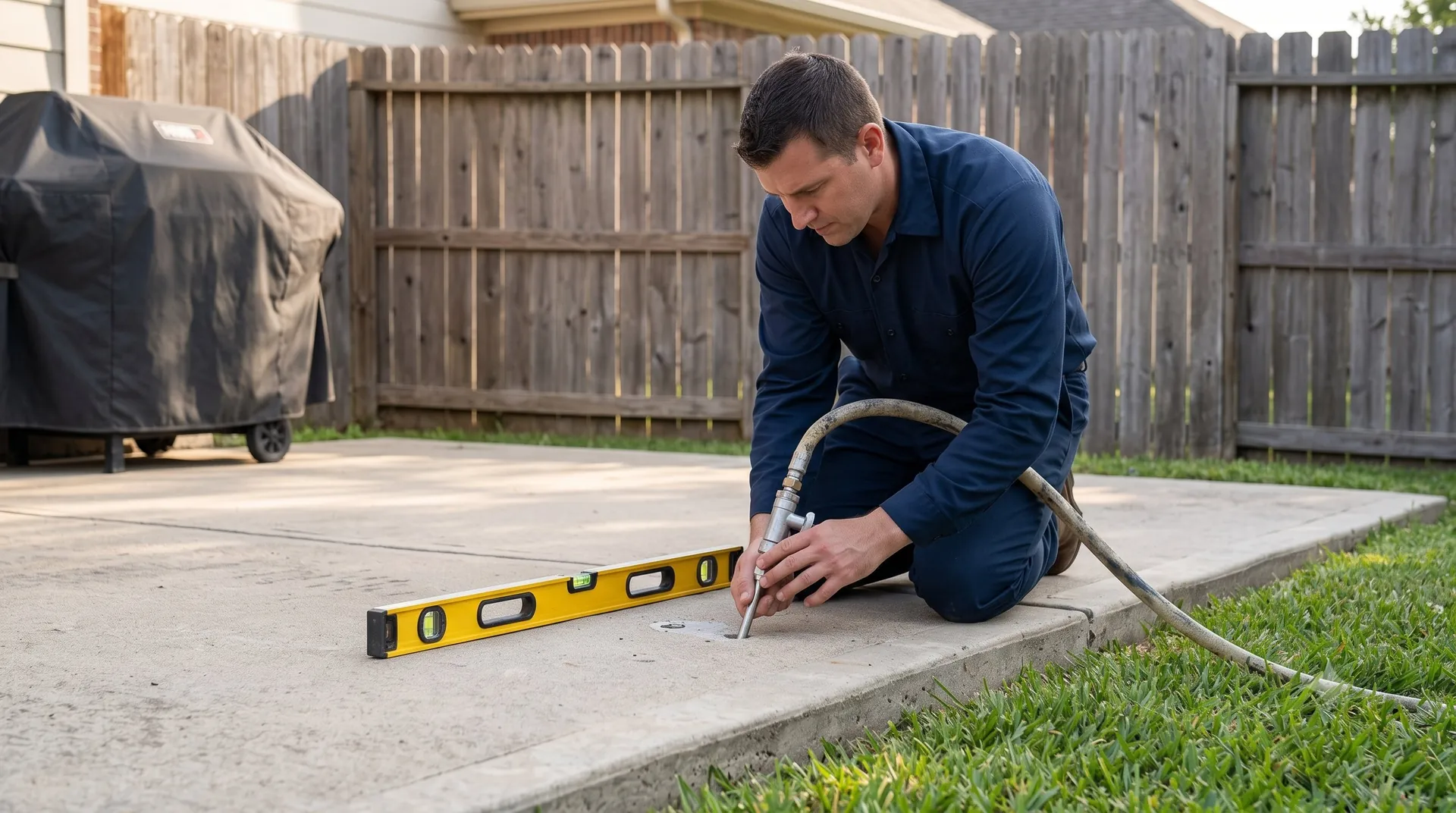
 Illustrative
Patios sink in Kansas City for a few specific reasons: expansive clay soil that shrinks in dry spells, poor drainage soaking the base, and backfill that was never fully compacted. Each leaves voids that let the slab drop. Foam injection fills those voids and lifts the patio back to level.
You're Not Imagining It
If a corner of your patio has started pulling away from the house, or you're noticing standing water pooling in a spot that used to drain fine, that's not just cosmetic wear. It's settling, and it has a specific cause underneath. Patios are actually one of the more common calls we get across the Kansas City metro, right alongside driveways and walkways. The good news is that a sinking patio slab is almost always a soil and support issue, not a sign the concrete itself is bad, and it's usually fixable without tearing anything out. Our patio leveling page covers the repair side; this one covers the "why."
This guide covers poured concrete patios. If you have a paver or brick patio, the settling mechanism is similar but the fix is different, since pavers can often be re-leveled by adjusting the base without any injection. Mention your patio type when you call so we can point you in the right direction.
Three Things to Check Before You Call
Lay a long straightedge or a level across the patio surface, pressing it down at both ends. If there is a visible gap between the straightedge and the concrete at one end, you have measurable settling, not just a perception of unevenness. The size of that gap gives you a rough sense of how much the slab has dropped in that spot.
After a good rain, watch where water goes on the patio. If the same spot holds standing water while the rest of the surface drains, that points to a drainage or grading issue feeding water under the slab. Check whether a downspout, a yard slope, or a low spot is directing runoff toward that area rather than away from it.
Walk the edge where the patio meets the yard and look at the soil line. If the soil has pulled back from the slab edge and you can see a gap or a dark line of separation, that is consistent with clay shrinkage or soil washout underneath. It is a visible sign that the support under the slab is changing.
Expansive Clay Soil Under Your Patio
A lot of the Kansas City metro sits on expansive clay soil, and clay behaves very differently depending on how wet or dry it is. When it rains, clay soil absorbs water and swells. During dry stretches, especially in late summer, it shrinks back down and can pull away from the underside of a slab. That swell-shrink cycle happens every year, and every cycle can leave a small gap or void under your patio that wasn't there before. Over a few seasons, those gaps add up into the kind of noticeable dip or tilt you're probably seeing now: more detail is on our why is my concrete sinking page.
The clay content varies across the metro, and your local extension office can tell you exactly what soil series is under your property. That distinction matters because the swell-shrink cycle described above does not hit every slab with the same force, and knowing your specific soil profile helps set realistic expectations for how quickly voids will form under your patio.
Drainage and Downspouts: The Most Common Culprit
If your patio sits anywhere near a downspout, a sloped yard, or a spot where water tends to collect after a storm, that's worth a close look. Water finding its way under the edge of a slab: from a downspout dumping right next to it, grading that channels runoff toward the patio instead of away, or a low spot that never quite drains: can slowly wash soil out from underneath over time. That washed-out soil leaves a void, and the slab settles into it. This is genuinely one of the single most common causes of patio settling we see on site visits, and it's often fixable alongside leveling with a drainage adjustment.
Poor Base Prep from the Original Pour
Not every patio was built the same way. If the base underneath wasn't compacted properly before the concrete was poured, which happens more than people expect, especially on older patios or additions poured in a hurry. The soil underneath was never fully stable to begin with. That kind of settling can start showing up within the first few years rather than after a decade, and it tends to affect a whole section evenly rather than just one corner. It's not something you did wrong as a homeowner; it's a base issue baked in from day one that concrete leveling can correct without a full replacement.
Freeze-Thaw Winters Making It Worse
On top of clay soil's wet-dry swelling, Kansas City winters add another layer: repeated freezing and thawing. Water in the soil freezes and expands, then thaws and contracts, and that cycle repeats through the colder months. Each cycle can shift soil slightly and open small voids under a patio slab that's already sitting on inconsistent support. That's part of why a lot of homeowners notice patio settling has gotten visibly worse by the time spring rolls around. The winter freeze-thaw cycle did real work underneath the surface even though nothing seemed to be happening above ground.
Furniture, Hot Tubs, and Concentrated Weight
Patios carry weight that driveways and walkways usually don't: grills, full outdoor furniture sets, and especially hot tubs, which can weigh well over a ton once filled. Concentrated weight sitting in one spot for years puts sustained pressure on whatever soil is directly underneath it, and if that soil is already compromised by drainage or clay movement, the extra load can accelerate settling in that specific area. If you've got a heavy fixture on your patio and you're seeing sinking concentrated right around it, that's a strong clue about where the problem started.
How Concrete Leveling Fixes a Sinking Patio
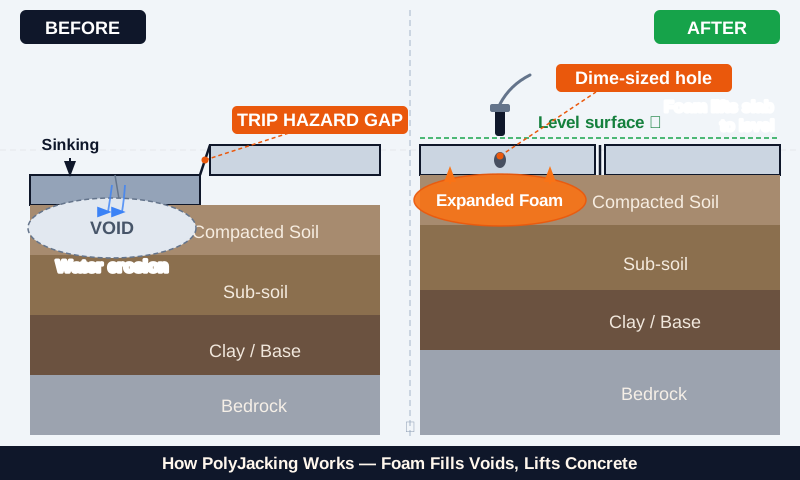
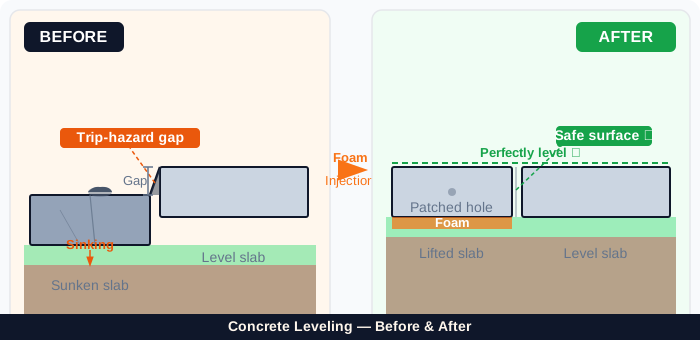
Once we know why a patio settled, fixing it doesn't mean tearing it out. We drill a few dime-sized holes, inject waterproof polyurethane foam into the void underneath, and it expands to fill the gap and lift the slab back into position: cured in minutes, safe to walk on in 15 to 30 minutes. If drainage is part of what caused the problem, we'll flag that too, since leveling the slab without addressing water flow can mean facing the same issue again down the road. That's true whether the concern is visible sinking or just a void starting to form underneath before it's noticeable.
Getting a Straight Answer for Your Patio
Every patio settles for its own combination of reasons, and the only way to know yours for sure is to have someone look at it in person. We offer free on-site estimates across the Kansas City metro: from Overland Park to Lee's Summit and everywhere between, and we'll tell you plainly what we think is causing it, not just quote you a fix. Call (913) 713-7794, or run our diagnose tool for a first read before we even show up.
How polyjacking works in 90 seconds
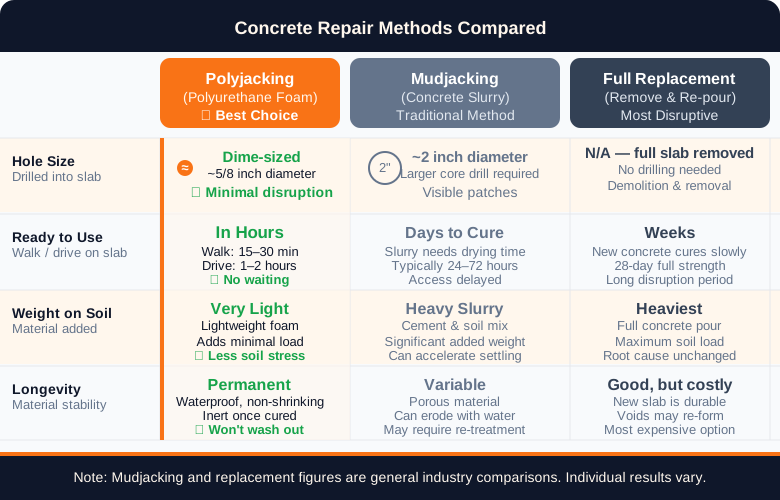
Our team walks you through the three-step process: dime-sized holes, high-density polyurethane foam that fills every void and compresses the soil beneath your slab, and use within hours with no heavy trucks. Call (913) 713-7794 or book a free estimate below.
Frequently asked
Is patio settling always caused by drainage?
No: drainage is common, but expansive clay soil, poor base prep, and concentrated weight from things like hot tubs can all cause or contribute to it too.
Do I need to remove furniture or a hot tub before an estimate?
Not for the estimate itself; we'll assess around it and talk through logistics if leveling work is recommended.
Can a sinking patio be fixed without replacing it?
In most cases, yes. Concrete leveling lifts and supports the existing slab through a few small injection holes rather than requiring a full tear-out.
Will fixing the drainage stop it from happening again?
It can significantly reduce the risk if drainage was a driving cause; we'll tell you honestly if we think that's part of your situation.
How fast does settling on a patio usually happen?
It varies: poor base prep can show up within a few years, while clay soil and freeze-thaw cycles tend to cause more gradual settling over several seasons.
Have a sinking slab?
Book a free on-site inspection. Honest advice, usable within hours.
Pick a time that works for you
Book right here on this page. Prefer to talk? Call (913) 713-7794.