
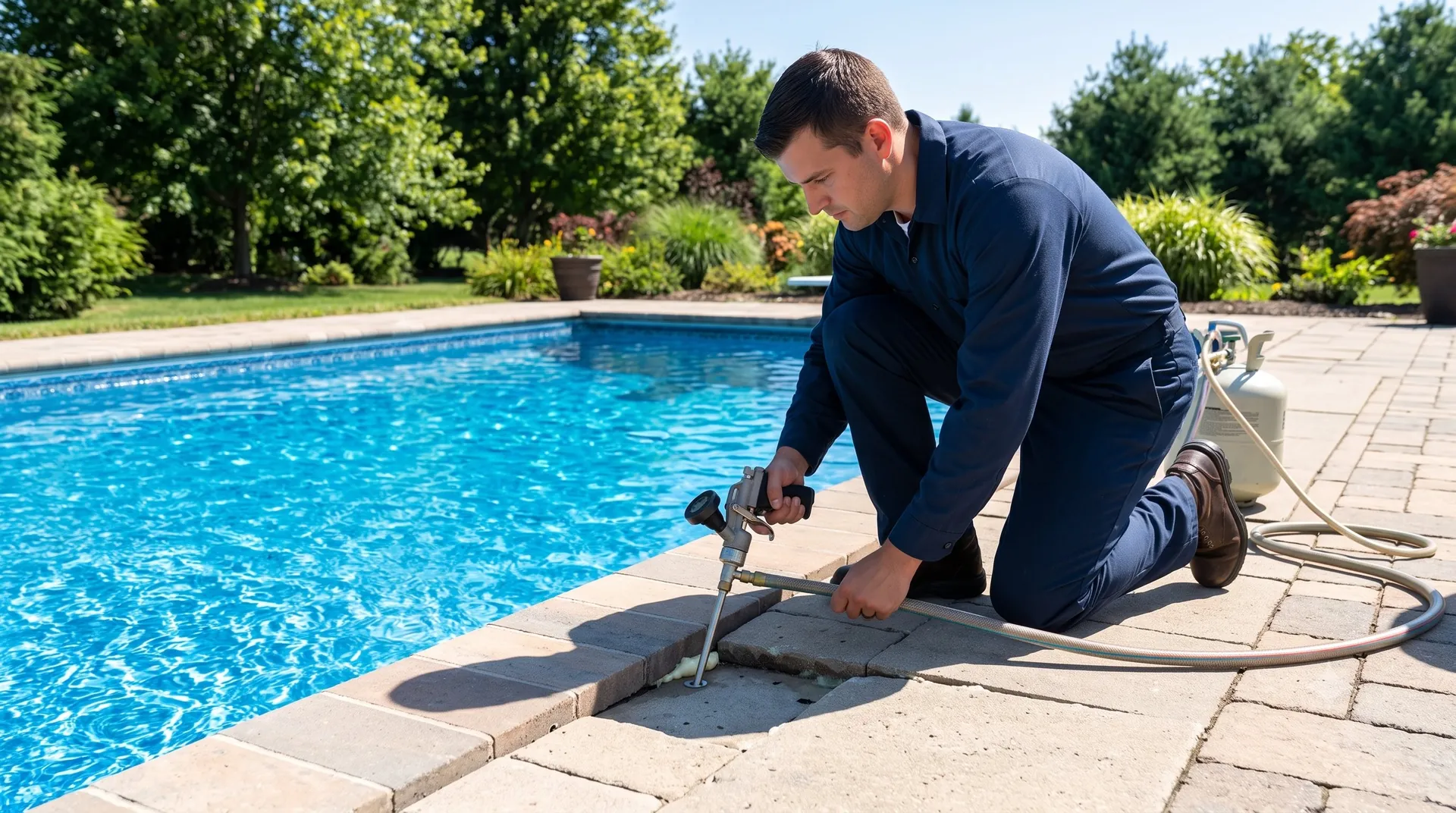
 Illustrative
Leveling a Sunken Pool Deck Without Draining the Pool
Pool decks settle more than most slabs because the soil around a pool is dug up during construction and rarely compacts evenly afterward. PolyJacks raises a sunken pool deck by injecting waterproof foam through dime-sized holes — no draining the pool and no tear-out. The foam won’t wash out, and the deck is usable within hours.
Why Pool Decks Settle More Than Other Slabs
Pool decks settle faster than most slabs because the soil around a pool was dug up and backfilled during construction - and foam injection lifts them back level in hours, without draining the pool. Here's why they sink and what to expect.
Pool decks are especially prone to settling, and there's a straightforward reason why: the soil around a pool is disturbed during construction - trenched for plumbing, excavated for the pool shell, then backfilled - and backfilled soil rarely compacts as evenly as undisturbed ground. Add Kansas City's clay-heavy soil, which expands when wet and contracts when dry, plus constant moisture exposure from splashed and drained water, and the ground under a pool deck moves more over the years than the ground under, say, a driveway. The pool structure itself typically sits on deeper, more stable footings, which is exactly why the deck around it settles while the pool doesn't - creating the height difference and separation homeowners eventually notice at the coping.
The Safety Issue: Wet Feet and Uneven Concrete
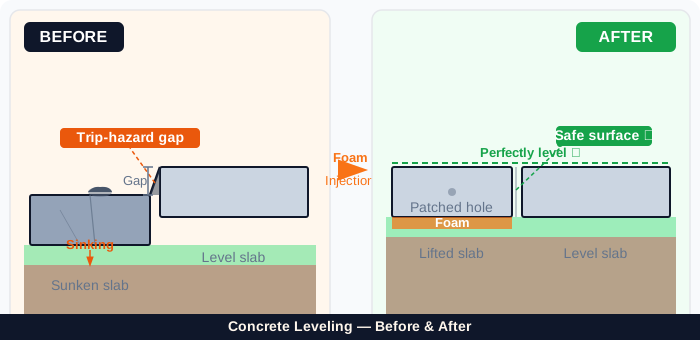
A trip hazard is more dangerous around a pool than almost anywhere else on a property. Bare, wet feet have less grip and less ability to catch a stumble, and pool decks see concentrated foot traffic from swimmers running, adults carrying trays and coolers, and everyone moving in and out of the water all afternoon. A settled section of deck that's dropped even a half-inch below the coping or an adjoining slab is exactly the kind of edge that catches a toe. It's worth walking your deck barefoot and paying attention to any spot where you feel a lip underfoot, especially near ladders, steps into the pool, or high-traffic paths between the house and the water.
A trip hazard is more dangerous around a pool than almost anywhere else on a property. Bare, wet feet have less grip and less ability to catch a stumble, and pool decks see concentrated foot traffic from swimmers running, adults carrying trays and coolers, and everyone moving in and out of the water all afternoon. A settled section of deck that's dropped even a half-inch below the coping or an adjoining slab is exactly the kind of edge that catches a toe. It's worth walking your deck barefoot and paying attention to any spot where you feel a lip underfoot, especially near ladders, steps into the pool, or high-traffic paths between the house and the water. If you're not sure whether what you're feeling is a settling issue or just a construction joint or a normal expansion gap, our signs of uneven concrete page walks through what to look for before you call anyone out.
Is Foam Injection Safe to Use Near a Pool?
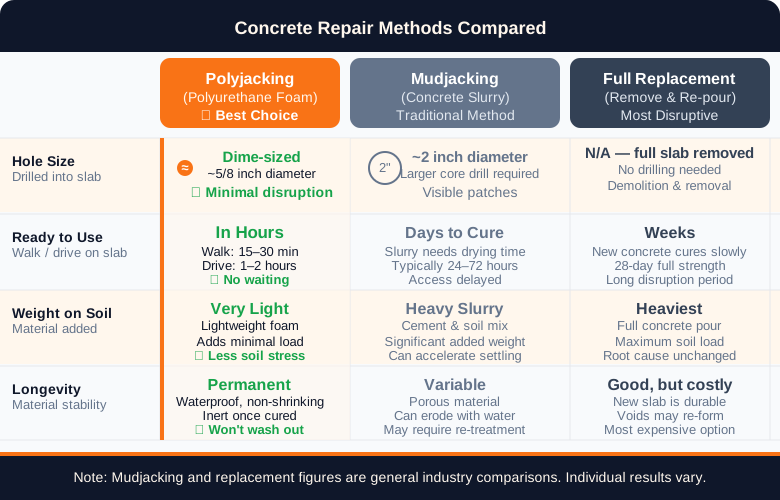
Polyurethane foam is waterproof by nature, which makes it a good fit for an area that's wet as often as a pool deck is. Unlike mudjacking, which pumps a heavy cement-and-soil slurry underneath the slab, foam injection uses a much lighter material through much smaller holes - about the size of a dime - so there's less disruption to the deck surface and less risk of overloading soil that's already been softened by years of splash-out and drainage. We compare the two methods directly on our polyjacking vs. mudjacking page, but around pools specifically, the lighter, waterproof approach is generally the better match for the conditions.
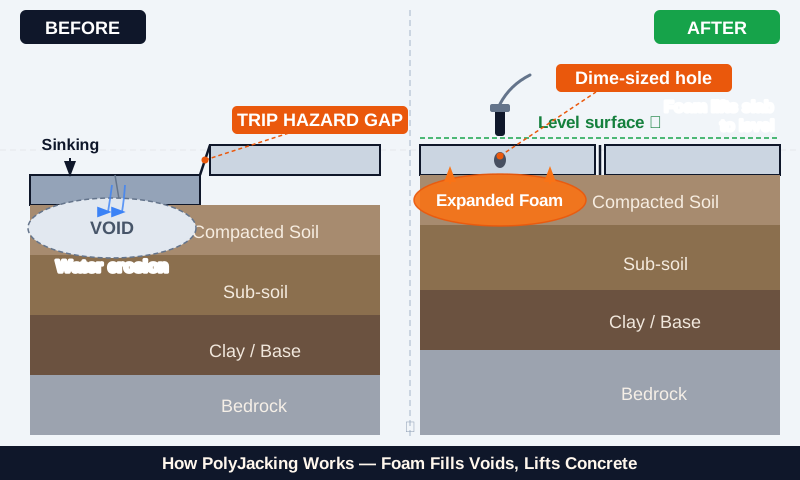
The deck is connected to the coping and the pool shell, and the pool structure sits on deeper, more stable footings than the deck around it. That relationship is why the repair has to be planned from below rather than forced from above. A jack under the deck applies point loads that are hard to control, and the deck's connection to the coping and shell means an uneven lift can pull at that joint in a way that's difficult to reverse. Foam injection avoids that by working through dime-sized holes in the deck itself, expanding beneath the slab to raise it gradually. During the estimate we plan each injection point to lift the deck without disturbing the pool structure or its fittings, and if a section is too close to plumbing or equipment to safely inject, we'll tell you that directly rather than force a repair that isn't a good fit for the spot.
Working Carefully Around Pool Equipment and Coping
A pool deck isn't an open slab - there's coping, skimmers, drains, ladders, and often equipment pads to work around. During a free estimate, we look at exactly where the low spots are and plan the injection points to lift the deck without disturbing the pool structure or its fittings. The goal is to bring the deck back toward level with the coping and pool shell, closing the gap that opened as the deck settled independently. If a section is too close to plumbing or equipment to safely inject, we'll tell you that directly rather than force a repair that isn't a good fit for the spot - the same honesty we'd want if it were our own backyard.
What Causes the Gap Between Deck and Pool
Because the pool shell sits on deeper, more stable ground than the deck around it, the two rarely settle at the same rate - the deck moves, the pool mostly doesn't, and a gap or height difference opens up where they meet. Poor drainage makes it worse: water splashed out of the pool, or rain that isn't graded away from the deck, works its way into the soil beneath the concrete and washes it out over time, leaving a void the slab sinks into. This is the same basic mechanism covered in our why is my concrete sinking page, just concentrated by the amount of water a pool naturally puts into the ground nearby.
If you want a closer look at the signs and causes specific to pool decks, see why is my pool deck sinking.
What If the Deck Has Already Cracked?
A settled deck that has cracked is a different repair than a settled deck that has not, and the crack changes the sequence of work. During the estimate visit, we assess the crack's width, depth, and whether it's structural or cosmetic, and we'll tell you what the repair sequence looks like before any foam goes in. If the crack needs repair before the lift, that work is part of the same visit and the same estimate - you're not getting two separate quotes for what is really one project. We'll walk you through what we see and what we'd do, the same way we'd walk you through a simple lift if the deck is intact.
If you're unsure how serious a crack is, our guide on when cracks in concrete are worth worrying about can help you judge.
Timeline: Getting the Deck Ready for Swim Season
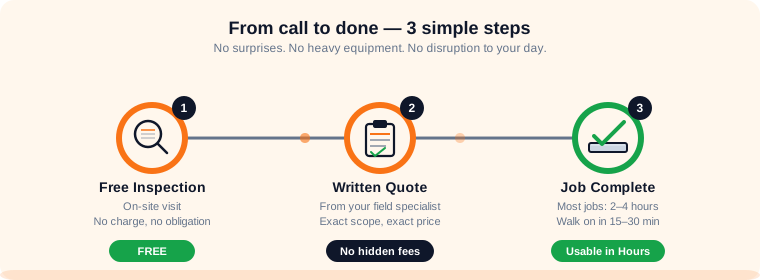
A pool deck lift moves fast once it starts. We drill the injection holes, pump in the foam, and the slab rises as the foam expands beneath it - the whole process is usually measured in hours, not days. The foam cures within minutes, and the deck is typically safe for foot traffic again within about 15 to 30 minutes. That timeline makes it realistic to get a deck leveled in the days right before opening the pool for the season, rather than needing to plan around a multi-day construction project. Full details on the method are on our pool deck leveling page.
A pool deck lift moves fast once it starts. We drill the injection holes, pump in the foam, and the slab rises as the foam expands beneath it - the whole process is usually measured in hours, not days. The foam cures within minutes, and the deck is typically safe for foot traffic again within about 15 to 30 minutes. That timeline makes it realistic to get a deck leveled in the days right before opening the pool for the season, rather than needing to plan around a multi-day construction project. Full details on the method are on our pool deck leveling page. If your next question is whether the level actually holds after the foam cures, our is concrete leveling permanent page covers that directly.
Check the Rest of the Backyard While You're At It
Pool decks rarely settle in isolation - if you've got a patio, porch, or steps nearby that were poured around the same time on similar soil, it's common for more than one area to need attention. A single estimate visit lets us look at the whole backyard at once instead of calling us back out for each section separately. Our patio leveling and porch and step leveling pages cover those areas specifically, and combining them into one visit is often the more efficient way to handle a yard that's had a few uneven spots creep in over the years.
Get an Honest Estimate Before You Open the Pool
We're a locally owned business based in Spring Hill, and we cover the full Kansas City metro on both sides of the state line. A free on-site estimate is the fastest way to find out whether your pool deck needs a foam lift, and we'll walk the whole deck, check the gap at the coping, and give you a straight answer - including telling you if leveling isn't actually the right call. Call (913) 713-7794 or use our contact form to get scheduled before the deck becomes the thing everyone in the family knows to step around.
We're a locally owned business based in Spring Hill, and we cover the full Kansas City metro on both sides of the state line. A free on-site estimate is the fastest way to find out whether your pool deck needs a foam lift, and we'll walk the whole deck, check the gap at the coping, and give you a straight answer - including telling you if leveling isn't actually the right call. The cost depends on the size of the settled area, the number of injection points needed, and whether the deck has cracks that need repair before the lift - our cost guide breaks down what drives the number. Call (913) 713-7794 or use our contact form to get scheduled before the deck becomes the thing everyone in the family knows to step around.
How polyjacking works in 90 seconds
Our team walks you through the three-step process: dime-sized holes, high-density polyurethane foam that fills every void and compresses the soil beneath your slab, and use within hours with no heavy trucks. Call (913) 713-7794 or book a free estimate below.
Frequently asked
Is polyurethane foam safe to use around a pool?
Yes - the foam is waterproof, which makes it well suited to an area that's frequently wet, and it's lighter than mudjacking slurry, reducing stress on soil that's already been softened by splash-out and drainage.
Do you need to drain the pool to level the deck?
No. The repair works through small holes drilled in the deck itself and doesn't require draining or disturbing the pool.
Will the repair damage pool equipment or plumbing?
We plan injection points around coping, skimmers, drains, and equipment during your estimate specifically to avoid that, and we'll flag any spot that isn't a good fit for injection.
How fast can guests walk on the deck after a repair?
The foam cures in minutes, and the surface is typically safe for foot traffic again within about 15 to 30 minutes.
Why does my pool deck keep settling unevenly around the pool?
The pool shell usually sits on deeper, more stable footings than the deck, so the two settle at different rates - especially with Kansas City's clay soil and the extra moisture a pool adds to the surrounding ground.
Have a sinking slab?
Book a free on-site inspection. Honest advice, usable within hours.
Pick a time that works for you
Book right here on this page. Prefer to talk? Call (913) 713-7794.