
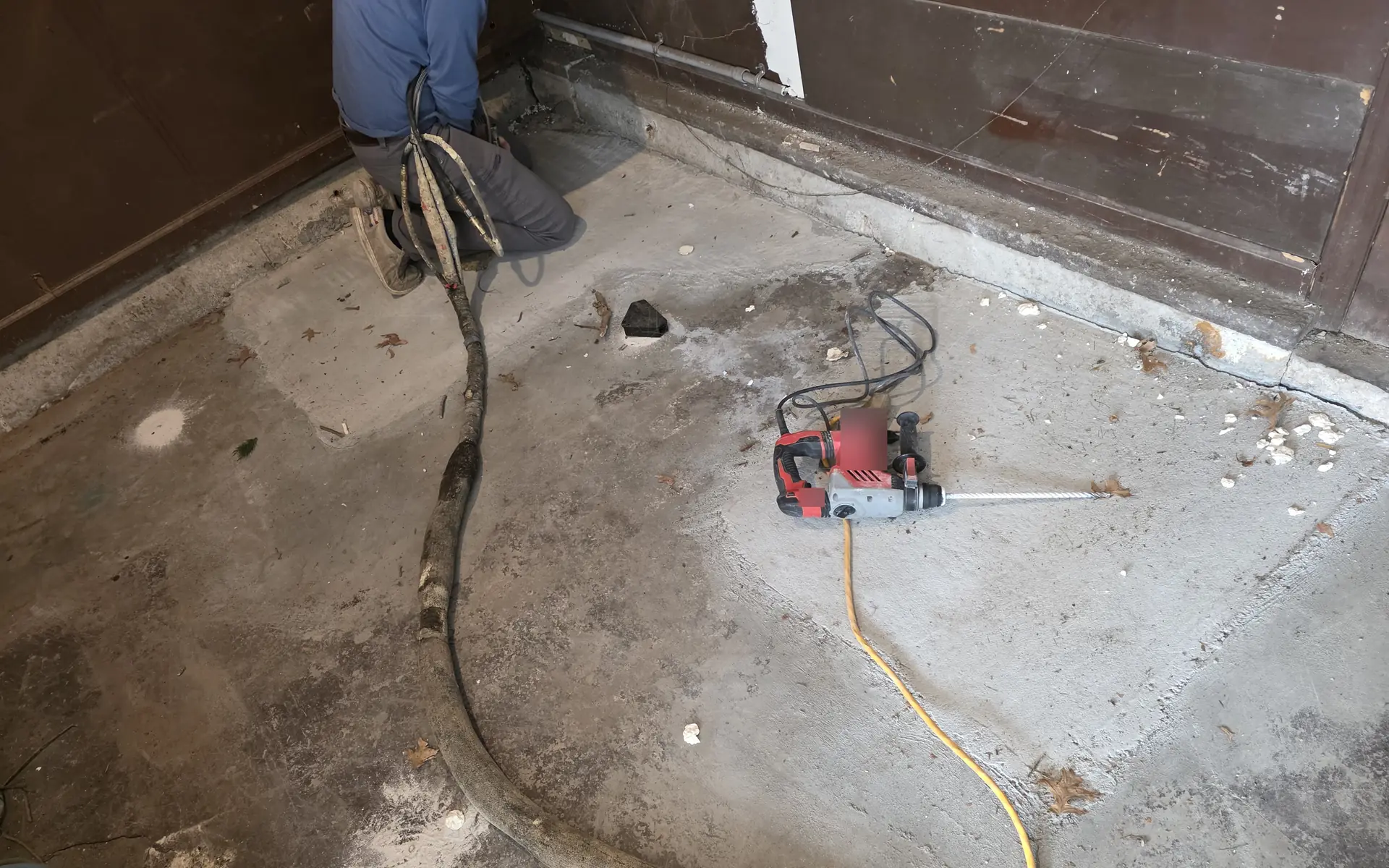
Weight, Water, Time: Why Foam Beats Mudjacking Long-Term
Foam outlasts mudjacking for three reasons: it is far lighter, so it does not add load that re-compresses the soil; it is waterproof, so it will not wash out the way cement slurry can; and it does not erode. In Kansas City's wet clay and freeze-thaw climate, that usually means fewer repeat settlements.
This Isn't the Full Comparison: It's the Longevity Question
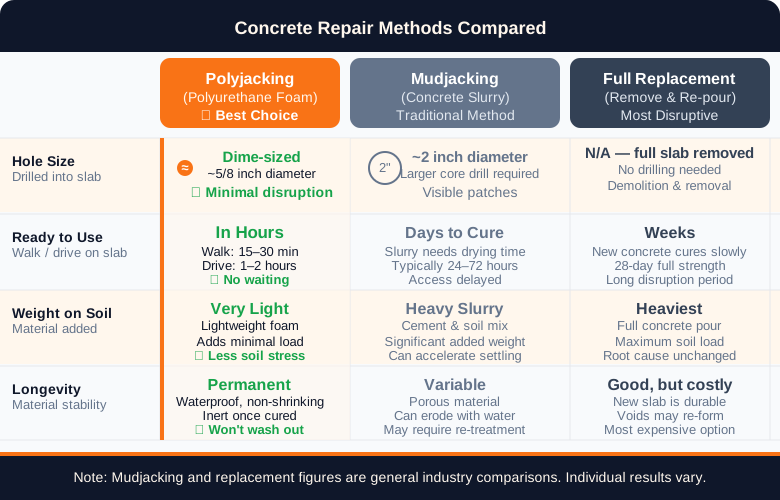
We've already written up the full side-by-side of polyjacking versus mudjacking: hole size, process, mess, timeline. This article narrows in on one specific question we hear a lot: why does foam actually last longer? It's not marketing language, it comes down to three concrete differences between the materials: how much each one weighs, how each one handles water, and what happens under the slab years down the road. Understanding those three things is the difference between picking a repair that holds and picking one you'll be redoing in a few years.
Weight: Why a Few Pounds Per Cubic Foot Matters
Polyurethane foam weighs a small fraction of what mudjacking's mud-and-cement slurry weighs per cubic foot. That matters because the reason a slab sank in the first place is usually that the soil underneath couldn't support the load anymore. It compacted, washed out, or wasn't compacted well to begin with. Pumping in a heavy slurry to lift the slab puts significant additional weight right back onto that same compromised soil. Foam expands to fill the same void and lift the same slab, but at a fraction of the load, so it isn't fighting the same soil weakness that caused the problem to begin with.
Water: The Reason Mudjacked Slabs Sink Again
Mudjacking slurry is a wet mix, and even after it firms up, it stays porous enough to absorb water over time. Water gets under slabs constantly here (through cracks, joints, and poor drainage) and a porous fill material sitting in that path will slowly reabsorb moisture, soften, and lose structural integrity. Polyurethane foam is waterproof once cured. It doesn't take on water, doesn't break down when it's sitting in a damp void, and doesn't wash out the way loose fill or absorbent slurry can. That single property (waterproof versus porous) is one of the biggest reasons foam holds its lift longer.
Void Re-Opening: The Slow Failure Mode
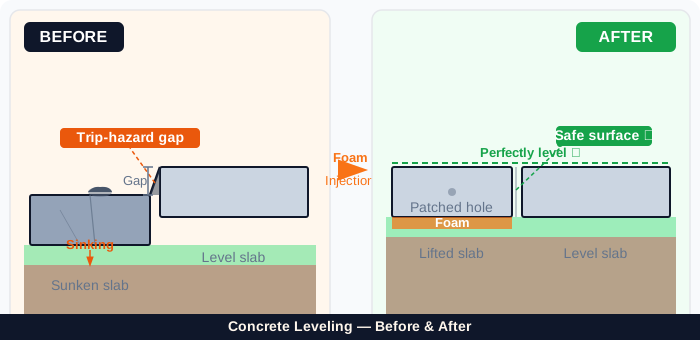
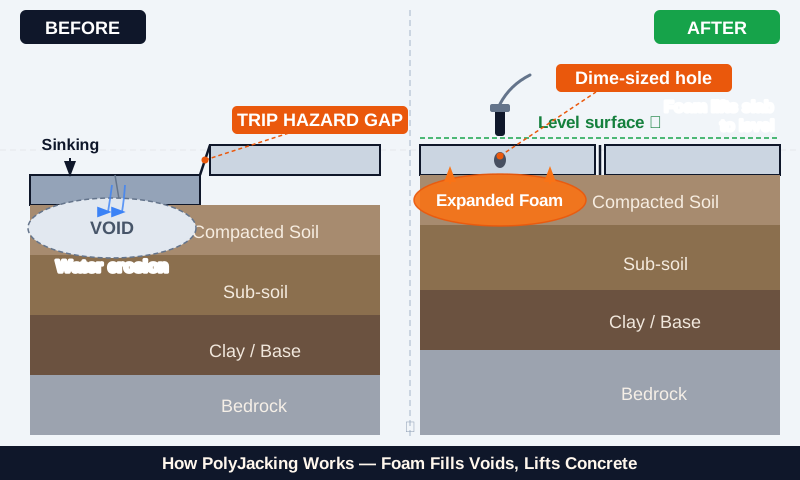
Here's what a lot of homeowners don't realize about mudjacking failures: it's rarely a dramatic collapse. It's a slow re-opening of the void underneath as the slurry breaks down, erodes, or gets displaced by water movement, and the slab gradually sinks again: sometimes over just a few years. Because foam is inert and waterproof, that gradual re-opening isn't happening underneath it the same way. The void gets fully and durably filled, not just packed with a material that's still vulnerable to the same water and soil conditions that caused the original settling.
As for the voids themselves, why voids form under Kansas City slabs covers how they start, and foam void filling covers filling one before the slab above it sinks.
How Kansas City Soil Makes This Worse for Slurry
Our region's expansive clay soil swells when wet and shrinks when dry, and that constant movement is hard on any fill material sitting in the ground. A heavier, water-absorbent slurry sitting in soil that's already cycling through wet and dry seasons is more exposed to that movement than a lightweight, waterproof foam. Combine that with Kansas City's freeze-thaw winters, and you've got conditions specifically tough on materials that hold water. See our page on why concrete sinks in Kansas City for the fuller picture of what local soil does to slabs over time.
You can also look at our KC Settlement Risk Index for the local data behind those conditions.
What Longer-Lasting Actually Looks Like Day to Day
In practical terms, this means a driveway or patio leveled with foam is less likely to need a repeat visit for the same section in a few years. It's also part of why we can offer solid warranty coverage on our workmanship. We're standing behind a material we trust to hold, not one with a well-documented pattern of settling again. That said, we won't claim foam makes a slab immune to every future soil issue: ask us for the honest version of that answer during your free estimate.
For the specifics of what we cover and how long it runs, see our warranty policies.
If you want the broader picture of how long a lift holds, see how long concrete leveling lasts.
Getting the Honest Read for Your Slab
Every slab and every yard's soil is a little different, which is why we don't sell longevity claims blind. We look at your specific situation during a free on-site estimate and tell you what we're seeing. If foam isn't the right fix for a particular spot, we'll say so. Call (913) 713-7794 or check our driveway leveling and patio leveling pages for surface-specific detail, or use the diagnose tool to get a first read before we even show up.
The Long-Term Math: One Lift Versus Repeat Visits
Longevity isn't only a durability claim. It changes the total cost of the repair over the years you own the property. Mudjacking's heavy slurry adds weight to soil that already failed to support the slab, and because the cured mud is porous it can wash out or compress, so a mudjacked slab can need to be re-lifted sooner. Each of those return visits means new holes and more material pumped underneath. Polyurethane foam weighs a fraction as much, doesn't absorb water, and resists compression, so a single foam lift is designed to hold under normal soil conditions.
How polyjacking works in 90 seconds
Our team walks you through the three-step process: dime-sized holes, high-density polyurethane foam that fills every void and compresses the soil beneath your slab, and use within hours with no heavy trucks. Call (913) 713-7794 or book a free estimate below.
Frequently asked
Why does foam weighing less matter for longevity?
Lighter material puts less additional load on soil that's already struggled to support the slab, reducing the chance of new settling.
Does mudjacking slurry really absorb water?
Yes, it stays porous enough to take on moisture over time, which is a common reason mudjacked slabs settle again.
Is foam completely waterproof?
Once cured, yes: it doesn't absorb water or break down when sitting in a damp void.
Does Kansas City soil make this difference bigger?
Our expansive clay and freeze-thaw winters are tough on any water-absorbent fill, so the gap between foam and slurry tends to show up more here than in drier, more stable soil regions.
Where can I read the full mudjacking comparison?
Our polyjacking versus mudjacking page covers hole size, process, and timeline side by side.
If a slab was previously mudjacked, can it still be leveled with foam?
Usually yes. Foam can be injected around and beneath old mudjacking material to re-support a slab that has settled again, without tearing anything out. The estimator checks what's under there first, since a heavily mudjacked slab has already added weight to the soil, but a prior mudjacking job rarely rules out a foam lift.
Have a sinking slab?
Book a free on-site inspection. Honest advice, usable within hours.
Pick a time that works for you
Book right here on this page. Prefer to talk? Call (913) 713-7794.