
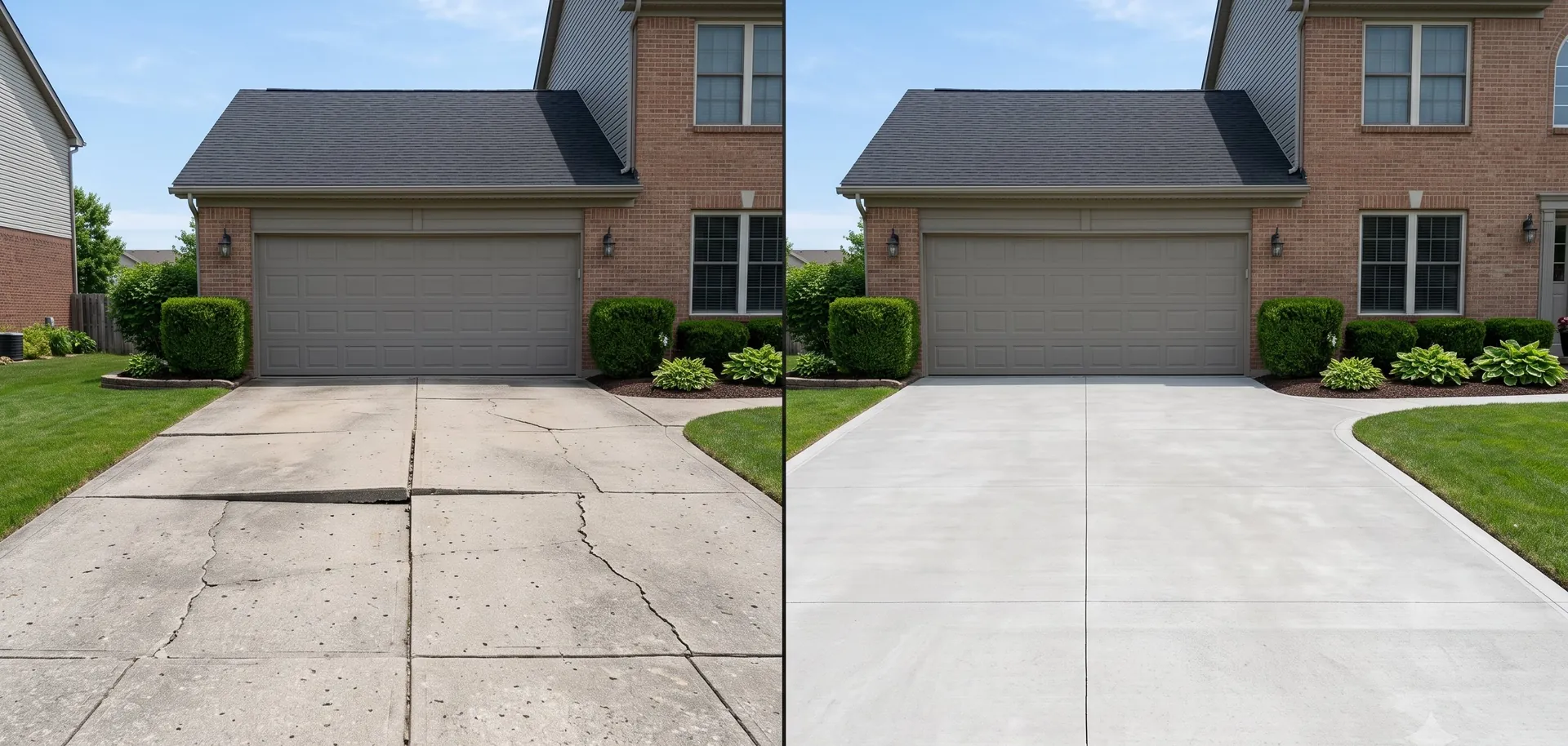
 Illustrative
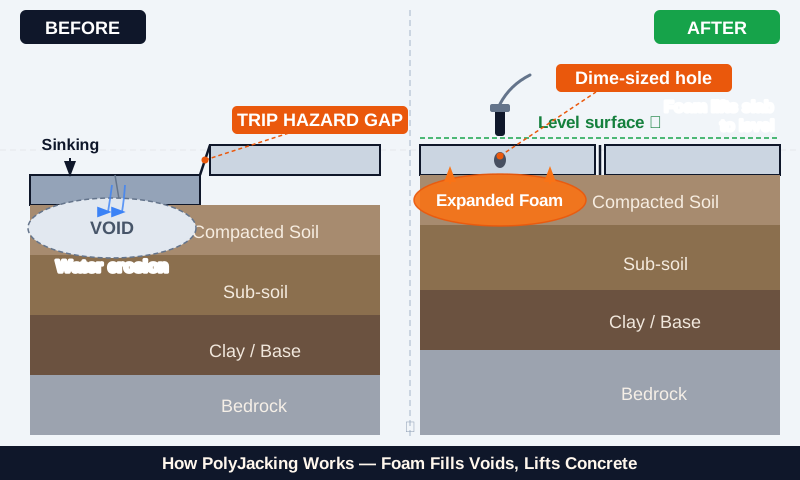
Freeze-thaw damages Kansas City concrete by working on the soil beneath it: water in the ground expands as it freezes, then leaves a void when it thaws. A typical KC winter runs through roughly 80 of these freeze-thaw days (NOAA KCI records), and each one lets the slab settle a little further. PolyJacks fills those voids and lifts the slab with waterproof foam.
What Freeze-Thaw Actually Does to Soil
Freeze-thaw damage isn't about concrete freezing and cracking on its own - it's about what happens to the soil underneath it. When ground temperatures drop below freezing, any moisture in the soil expands as it turns to ice, pushing soil particles apart. When temperatures climb back above freezing, that ice melts and the soil contracts again, but it rarely settles back into exactly the same arrangement. Repeat that cycle enough times across a winter, and the soil under your driveway, patio, or walkway gradually loosens and shifts, leaving small voids. The slab above doesn't move right away - concrete is rigid - but once enough support disappears underneath, gravity and vehicle or foot traffic eventually pull a section down into the gap.
Why Kansas City's Winters Are Especially Hard on Concrete
The Kansas City metro doesn't get one long, steady freeze - it gets swings. A hard freeze one week can be followed by a 50-plus degree thaw the next, and that pattern can repeat several times in a single winter. Each swing is a fresh freeze-thaw cycle working on the soil under your concrete, which means KC properties often see more cumulative freeze-thaw stress than regions with a steadier cold season. This applies across the metro - Overland Park, Lenexa, Olathe, Lee's Summit, Independence, and Spring Hill all see the same swing pattern, just with local variation in drainage and soil composition. It's a big part of why so many homeowners notice new settling, or existing settling getting worse, specifically after winter.
Clay Soil Makes the Cycle Worse
Much of the metro also sits on expansive clay that swells and shrinks with moisture on its own, independent of temperature. Layer freeze-thaw on top and the soil moves even more each season - which is why Kansas City clay soil gets its own full breakdown. Together, clay and freeze-thaw are the main reason concrete keeps sinking here. In sandy or gravelly soil the same freeze-thaw cycles produce far less vertical movement, because the particles do not expand and contract with moisture the way clay does. Two driveways built to the same spec, one on clay and one on sand, can show very different settling patterns after the same winter.
Signs Freeze-Thaw Has Already Affected Your Concrete
A few patterns point specifically at freeze-thaw and seasonal soil movement rather than a one-time cause:
- New or wider gaps at expansion joints after winter
- A slab edge or corner that's dropped compared to the rest
- Steps that feel slightly different in height than they used to
- Settling that seems to get a little worse each spring
If you're noticing any of these on a driveway, patio, or walkway, it's a reasonable sign the ground underneath has shifted enough to leave a void, even if the concrete itself still looks structurally sound.
If two or more of those match what you're seeing this spring, a free on-site estimate will confirm whether a void is forming under the slab. Call (913) 713-7794 to schedule one.
Why Sealing Cracks Doesn't Fix the Underlying Cause
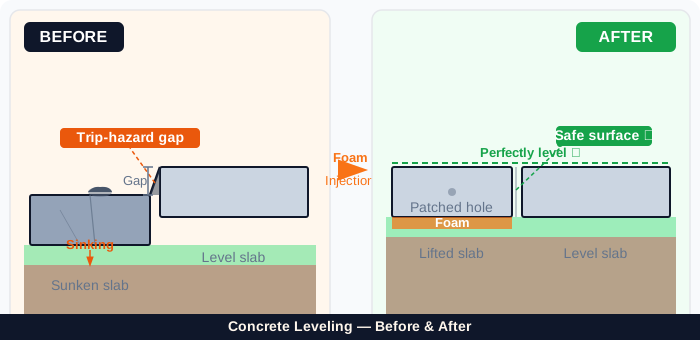
Caulking a joint or sealing a crack addresses water getting into the surface, which is worth doing, but it does nothing for the void that freeze-thaw cycling already created underneath. The slab is still resting on less support than it was originally built on, and another winter of swings will keep working on whatever soil is left. Concrete leveling addresses the actual gap: injecting expanding polyurethane foam into the void fills the space the soil movement left behind and lifts the slab back toward its original position. It's a fix aimed at the cause, not just the symptom on the surface. Our void filling service specifically targets these underground gaps, even on slabs that haven't visibly sunk yet.
If you're wondering whether a slab like this has to be torn out, see whether sunken concrete can be fixed without replacing it.
Getting Ahead of Next Winter's Cycle
Freeze-thaw damage compounds - a void that starts small this winter tends to get a little bigger next winter if nothing's done about it. That doesn't mean you need to panic about a hairline gap, but earlier is generally easier than later. Foam injection works year-round, except when the ground is frozen solid, so there's no need to wait for a "right time" to address it - see our page on the best time of year for concrete leveling in KC for more on that. If you're not sure whether what you're seeing is freeze-thaw related or something else, our diagnostic guide walks through the common causes, or you can get a free on-site estimate and we'll tell you plainly what we're looking at.
The progression is mechanical. The void widens with each cycle, the slab edge loses more support, the gap at the joint gets wider, and the unsupported edge starts to flex under foot or vehicle traffic. Eventually a crack forms at the edge where the slab is no longer fully supported. At that point the damage has moved from the soil into the concrete itself, and leveling alone may not be enough to restore the slab to its original condition.
How polyjacking works in 90 seconds
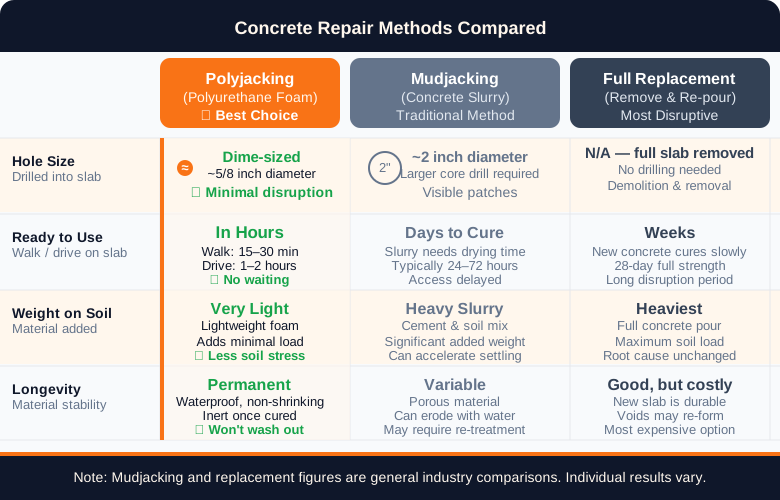
Our team walks you through the three-step process: dime-sized holes, high-density polyurethane foam that fills every void and compresses the soil beneath your slab, and use within hours with no heavy trucks. Call (913) 713-7794 or book a free estimate below.
Frequently asked
Does freeze-thaw damage happen every winter, or only in unusually cold ones?
It happens to some degree most winters in Kansas City because of how often temperatures swing above and below freezing here, not just during one hard cold snap. Mild winters cause less movement, but the cycle is rarely absent entirely.
Can concrete leveling be done in winter?
Yes, except when the ground is frozen solid. Polyurethane foam injection isn't dependent on warm weather to cure - it reacts and cures within minutes, so there's no need to wait for spring.
Will my slab just keep sinking every year if I don't do anything?
Not necessarily every year, but voids left by freeze-thaw cycling tend to grow rather than heal on their own, so settling in one spot often continues or worsens over successive winters if the void is never filled.
How is freeze-thaw settling different from settling caused by poor drainage?
They often overlap, but drainage-related settling usually shows up near downspouts or low spots where water pools and washes soil out, while freeze-thaw settling can appear anywhere soil holds moisture and cycles through freezing. A free estimate can help sort out which is driving your situation.
Does PolyJacks serve both sides of the state line?
Yes, we're based in Spring Hill, Kansas, and serve the full Kansas City metro on both sides of the state line. Call (913) 713-7794 to schedule a free on-site look.
Does sealing my concrete help against freeze-thaw damage?
A quality surface sealer slows water from soaking into the top of the concrete, which helps the surface resist the scaling and flaking that freeze-thaw causes. It doesn't address water down in the soil, though, and that's what drives the settling foam leveling corrects. Sealing and leveling solve two different halves of the freeze-thaw problem, so on many Kansas City slabs both are worth doing.
Have a sinking slab?
Book a free on-site inspection. Honest advice, usable within hours.
Pick a time that works for you
Book right here on this page. Prefer to talk? Call (913) 713-7794.