
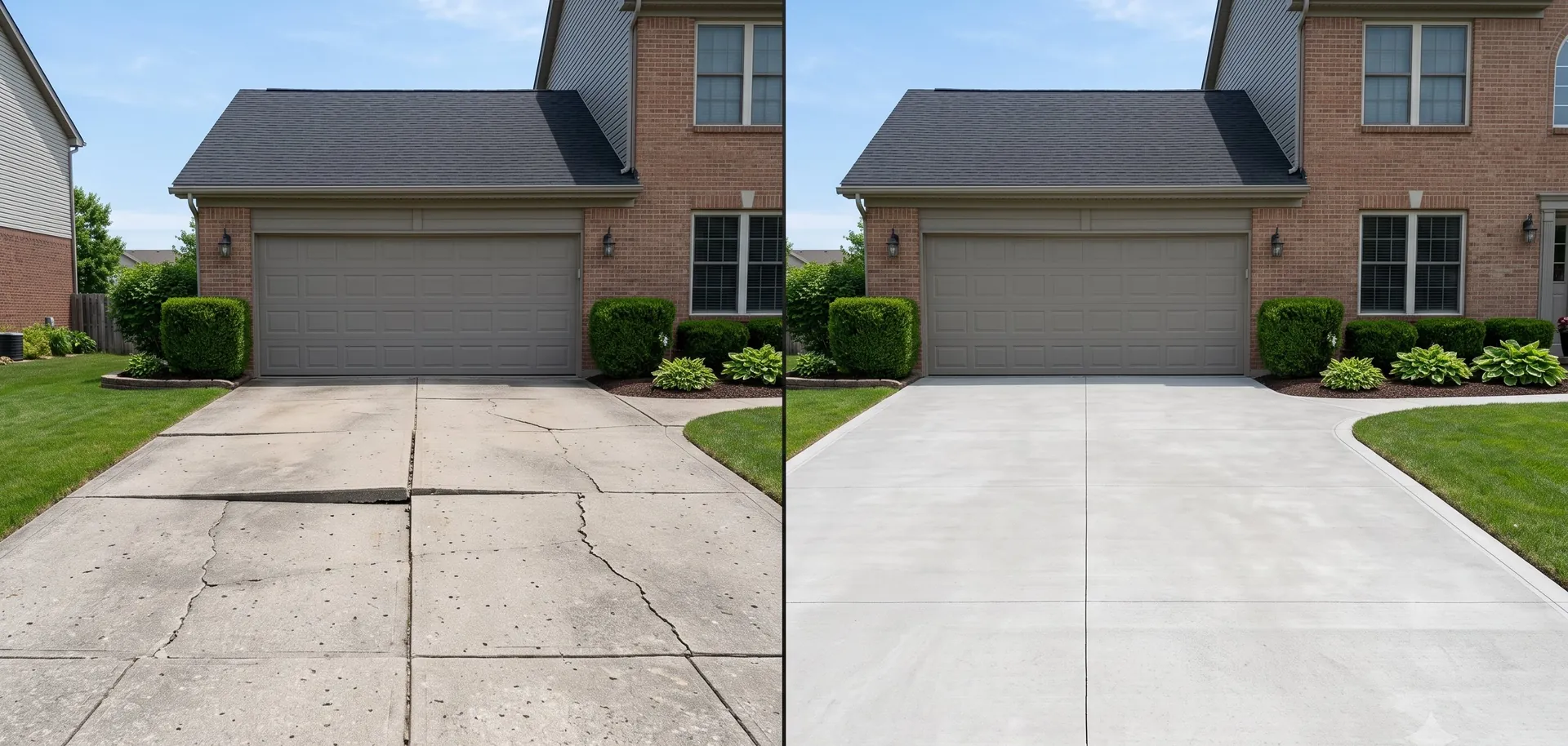
 Illustrative
Why Every Spring Is Sinking-Concrete Season in Kansas City
Winter drives the damage: Kansas City's clay soil swells and shrinks, and repeated freeze-thaw cycles open voids under slabs. By spring, that movement shows up as sunken, tilted, or cracked concrete. Spring is when most homeowners notice it, and a good time to level slabs before heavy summer use.
The Same Story, Every March
Concrete sinks over winter - Kansas City's freeze-thaw cycles and expansive clay settle the soil under your slab - and spring is simply when the damage becomes visible. It didn't happen overnight; here's the pattern we see every March.
Every spring, we hear a version of the same call. "My driveway was fine in the fall: now there's a dip by the garage floor." "The patio slab wasn't tilted like this last summer." It feels sudden, but it isn't. That concrete didn't move overnight. It's been settling all winter, and spring is just the season it finally shows.
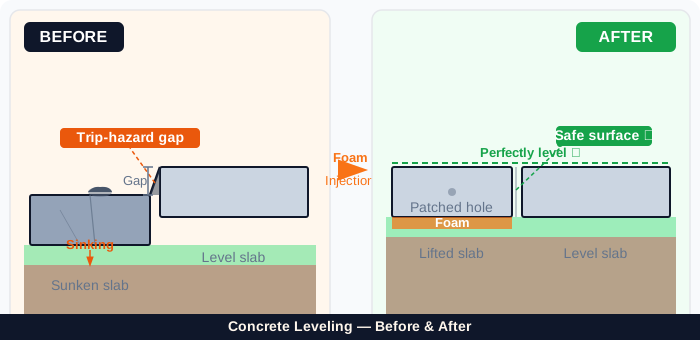
The slab itself hasn't changed. What's changed is the ground underneath it.
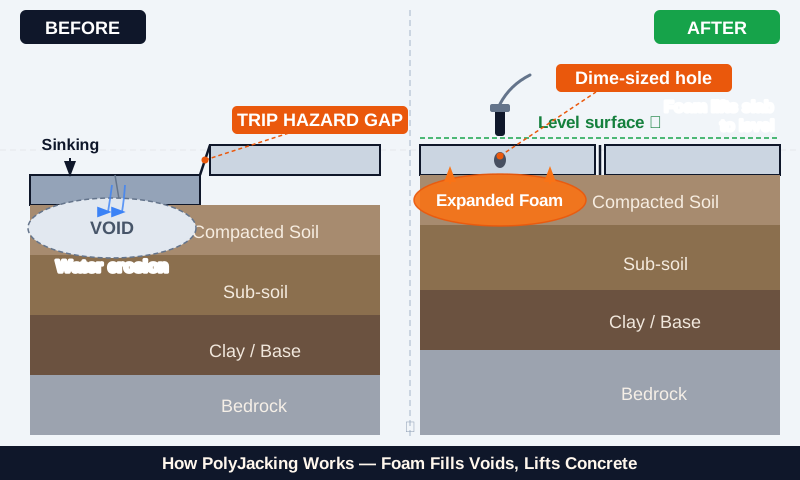
What's Really Happening Under Your Slab
Kansas City sits on expansive clay soil. Soil composition varies by neighborhood; the USDA NRCS Web Soil Survey maps the specific series for your address. That clay swells when it's wet and shrinks when it dries out, and it does that over and over through the seasons. On top of that, our winters bring repeated freeze-thaw cycles. Water works into small gaps under the edges of a slab, freezes and expands, thaws, and does it again the next cold snap.
Each cycle leaves a little more empty space under the concrete. Your driveway, patio, or sidewalk isn't going anywhere on its own. It's resting on ground that's been shifting under it all winter long.
Why Spring Makes It Obvious
By spring, that ground is saturated: snowmelt on top of Kansas City's usual spring rain. The extra water and weight finish off what the freeze-thaw cycles started, and any voids that formed over winter settle the rest of the way.
Water also has a way of finding every low spot first. That's why a puddle that never used to form on your patio, or standing water along one edge of the driveway, is often the very first sign something's settled underneath.
If that puddle keeps showing up on your patio, here is why a patio sinks in Kansas City.
What To Watch For This Spring
Walk your property after the next spring rain and look for:
- Standing water on a patio or pool deck that used to drain fine
- A step or lip where the driveway meets the garage floor or the front walk
- A sidewalk joint where one slab sits noticeably higher than its neighbor. A trip hazard waiting to happen
- A pool deck pulling away from the coping
None of these mean the concrete is ruined. They mean the ground under it moved, and that's fixable. Spotted one of these? Book a free on-site inspection and we'll tell you straight what's going on.
When Polyjacking Isn't the Right Fix
We'll say this plainly because it matters: polyjacking isn't the answer for everything. If a slab is cracked into separate pieces rather than just settled, lifting it won't hold. That needs replacement. If there's an active water leak under the concrete, a plumber needs to fix that first, or the void just comes back. And if root heave from a nearby tree is pushing the slab, that root issue has to be dealt with too.

We don't do foundation repair here, either. If that's what your home needs, we'll tell you and point you to someone who does. A free inspection tells you which situation you're actually in before any work starts. Book a free inspection and we'll walk you through exactly what you're dealing with.
Why Spring Is a Good Time to Actually Fix It
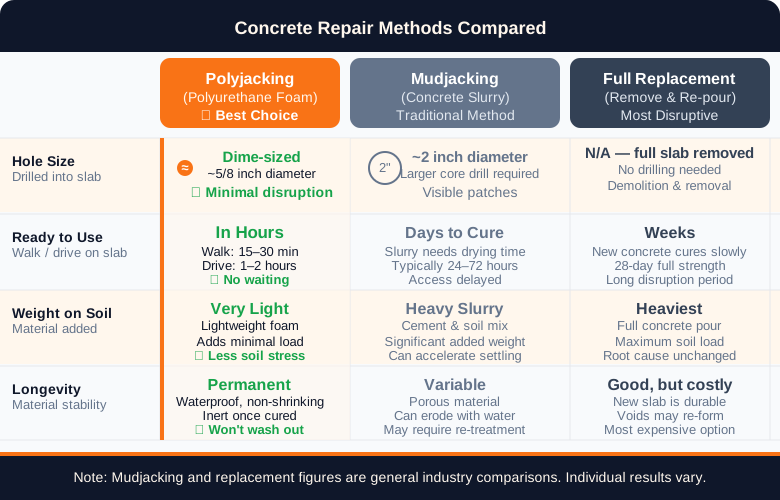
When polyjacking is the right call, spring conditions don't slow it down. We drill dime-sized holes. Typically 4 to 12 of them depending on the slab, and inject a waterproof, high-density polyurethane foam that expands 30 to 40 times its size, filling the voids and lifting the slab back into place. It's waterproof and non-shrinking, so spring moisture doesn't work against it the way it can with mudjacking.
Most jobs take 2 to 4 hours. The foam cures in 15 to 30 minutes: compare that to mud, which needs 24 to 72 hours, or a full replacement, which takes about a week before it's usable and 28 days to fully cure. You can walk on it in 15 to 30 minutes and drive on it in 1 to 2 hours, just no heavy vehicles for 48 hours.
The foam itself weighs far less than mud: less added weight sitting on ground that's already prone to shifting. And it typically runs far less than replacing the concrete outright. We price every job by foam volume after a free, no-obligation inspection, so you know what you're dealing with before you decide anything. (Timing a repair? See the best time of year for concrete leveling in KC.)
A Local Crew That Stands Behind the Work
PolyJacks is locally owned and based in Spring Hill, Kansas, serving the Kansas City metro since 2024. We're licensed and insured, and back every lift with a 5-year limited warranty, written to the owner who paid for the work at that address and ending if the property is sold. If a lifted section settles more than 1/2 inch within 5 years because of our work, we come back and re-lift it. We work on driveways, sidewalks, patios, garage floors, pool decks, and commercial concrete alike.
If you spotted a dip, a puddle, or a trip hazard this spring, don't wait for it to get worse over another freeze-thaw cycle. Book a free estimate and we'll tell you straight what's going on and what it'll take to fix it.
How polyjacking works in 90 seconds
Our team walks you through the three-step process: dime-sized holes, high-density polyurethane foam that fills every void and compresses the soil beneath your slab, and use within hours with no heavy trucks. Call (913) 713-7794 or book a free estimate below.
Frequently asked
How do I know if my concrete needs lifting or if it needs to be replaced?
It comes down to whether the slab itself is broken. If your driveway, patio, or sidewalk has settled but is still in one solid piece, it's usually a good candidate for polyjacking. If the slab is cracked into separate pieces or badly broken up, lifting won't fix that. It needs to be replaced. A free inspection will tell you which one you're dealing with, straight, no guessing.
Does wet spring ground cause problems for the repair itself?
No. The foam we use is waterproof and non-shrinking by nature, and it cures in 15 to 30 minutes regardless of ground moisture. That's actually one of the advantages over mudjacking, which needs 24 to 72 hours to cure and can be thrown off by wet conditions. Spring's the season that exposes the settlement. It doesn't get in the way of fixing it.
What if the sinking is happening right next to a leaky pipe or a big tree?
Those are cases where polyjacking needs to wait. If there's an active water leak under the slab, that has to be fixed by a plumber first: otherwise the void just comes back. If root heave from a nearby tree is pushing the concrete, that root issue needs to be addressed too. We'll tell you plainly during the free inspection if either of those is what's going on.
How long does a typical spring lifting job take, and when can I use the surface again?
Most jobs run 2 to 4 hours from start to finish. You can walk on the lifted surface in 15 to 30 minutes and drive on it in 1 to 2 hours. Just no heavy vehicles for 48 hours while it fully sets. Compare that to a poured replacement, which usually needs about a week before it's usable and 28 days to fully cure.
Related guides
Have a sinking slab?
Book a free on-site inspection. Honest advice, usable within hours.
Pick a time that works for you
Book right here on this page. Prefer to talk? Call (913) 713-7794.