
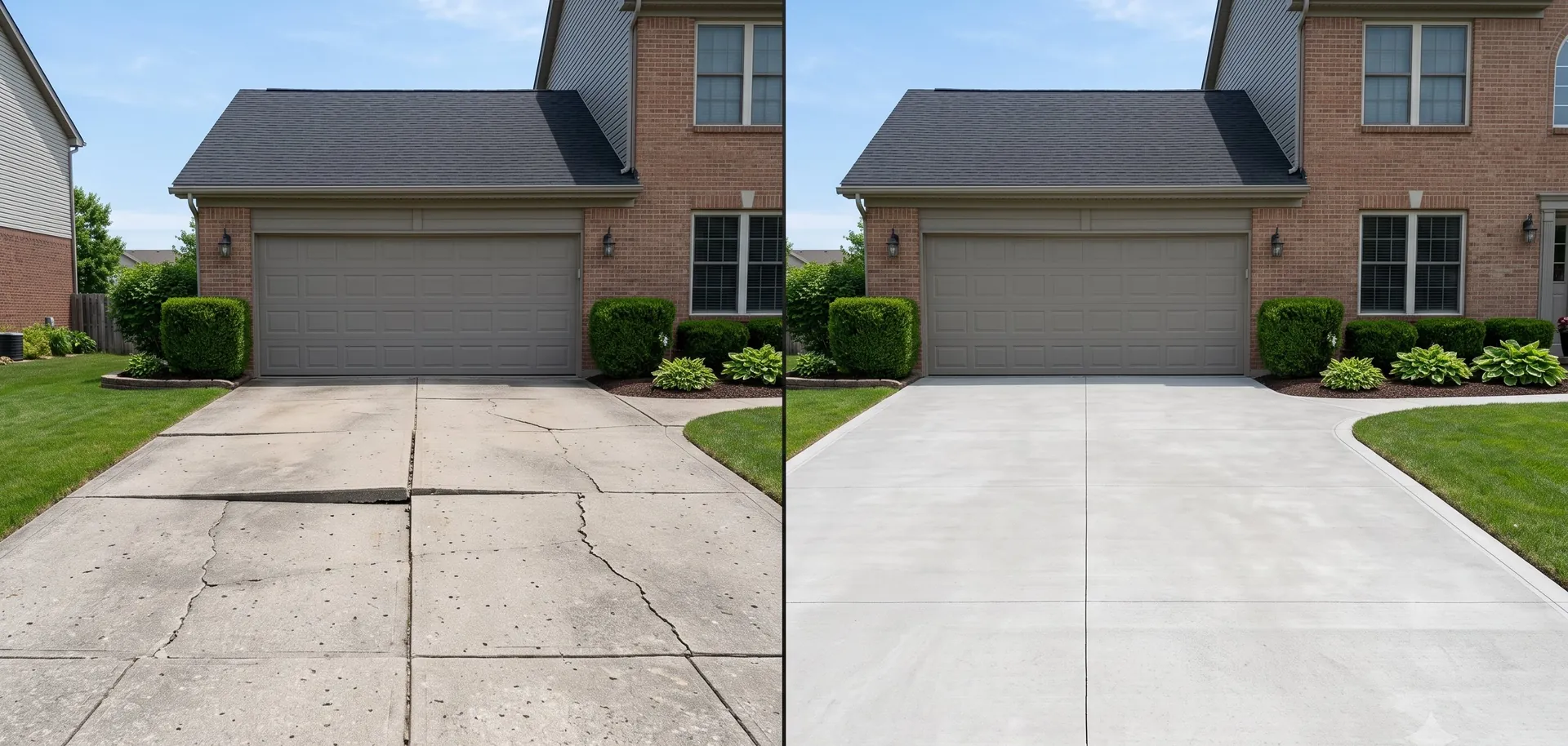
 Illustrative
The Best Time of Year for Concrete Leveling in KC
Polyurethane foam leveling works year-round in Kansas City, including winter, unless the ground is frozen solid. There is no single right season. Spring often reveals settling after winter freeze-thaw, so that is when many homeowners notice it, but you can level a slab any time it is safe to access.
The Short Answer: There Isn't a Bad Season for Foam
Unlike some outdoor projects, concrete leveling with polyurethane foam injection isn't really weather-dependent. The foam is a chemical reaction, not something that has to air-dry over days, so it sets up within minutes whether it's 90 degrees in July or well below freezing in January. That means you don't have to time a repair around "good concrete weather" the way you might with a fresh pour, which needs specific temperature and curing conditions to set up properly. If you've been putting off a call because you assumed spring or summer was the only realistic window, that's not the case - the best time to address a sinking slab in Kansas City is generally whenever you notice it, unless the ground is frozen solid.
Why Spring Feels Like 'Problem Season' in KC
A lot of homeowners first notice settling in spring, but that's usually because spring is when the damage becomes visible, not when it starts. Winter's freeze-thaw cycling works on the soil under your concrete for months, and then spring rains follow, softening ground that's already lost support and sometimes washing out remaining soil around a settled edge. What looks like a "spring problem" is really the accumulated result of the previous winter. That's useful to know because it means the underlying cause was already there - spring just made it obvious. It also means there's no reason to wait for spring itself if you notice a gap or dip earlier in the year.
You Don't Need to Wait for Warm, Dry Weather
Because foam injection cures fast and isn't affected by ambient drying time the way concrete replacement is, there's no meaningful weather window you need to hit. Cold doesn't stop it unless the ground is frozen solid, and typical seasonal humidity in Kansas City doesn't interfere with the reaction either. The main day-of consideration is active precipitation right at the work area, which is more of a scheduling convenience than a technical requirement for the foam itself. In practice, this means you can call about a sunken driveway or patio in the middle of winter and still get it leveled and usable again within the same visit, rather than waiting months for a "better" time. (Wondering specifically about the cold months? See can you level concrete in winter in Kansas City.)
If the sunken slab is a patio, why a patio sinks in Kansas City explains what is usually happening underneath.
The Real Cost of Waiting Isn't Seasonal - It's the Void Getting Bigger
The one timing factor that does matter is how long a void sits under your slab before it's filled. Voids from settling soil don't heal on their own, and each additional freeze-thaw cycle or heavy rain tends to make them a little larger, which can mean more settling before it's addressed. Waiting for a particular month doesn't protect the concrete - if anything, an extra season of cycling works against you. That's different from saying every gap is an emergency; plenty of settling is minor and stable for a while. But if you're deciding between "call now" and "call in a few months for no real reason," calling sooner tends to mean an easier fix. Our diagnostic guide can help you gauge urgency.
What Actually Affects When You Should Schedule
If timing isn't dictated by the foam or the weather, what should drive your decision? Mostly practical things: how much the settling bothers you day to day, whether it's creating a trip hazard, and contractor availability, which can get tighter in spring when more homeowners notice issues at once and call around the same time. Booking earlier in the year, or as soon as you notice a problem, often means more flexible scheduling. There's also no downside to getting a free estimate now and deciding later - it costs nothing to have someone look and give you a straight read on what's going on and whether foam is the right fix.
Booking in the Off-Season Often Means Faster Scheduling
There's a practical, non-technical reason to consider leveling outside of spring: crew availability. In Kansas City, calls spike as soon as the ground thaws and homeowners notice how far a slab dropped over winter, so spring and early summer are the busiest stretch of the year. Late fall and winter tend to be quieter, which usually means a shorter wait between your estimate and the actual lift. Because foam leveling works in any month as long as the ground isn't frozen solid, you give up nothing on quality by scheduling in the off-season. You often just get on the calendar sooner. If your slab is a trip hazard or the drop is getting worse, the best time is simply whenever you can get it addressed, and the colder months are frequently the path of least resistance.
How polyjacking works in 90 seconds
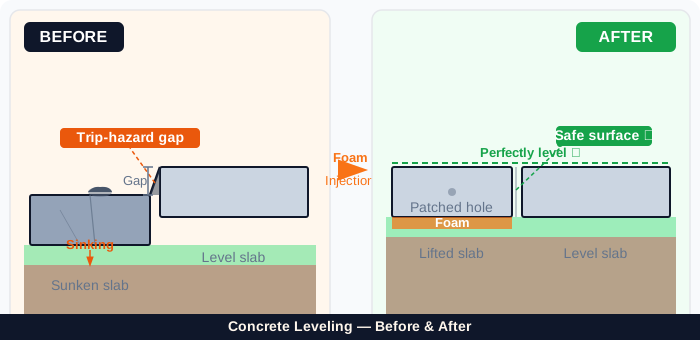
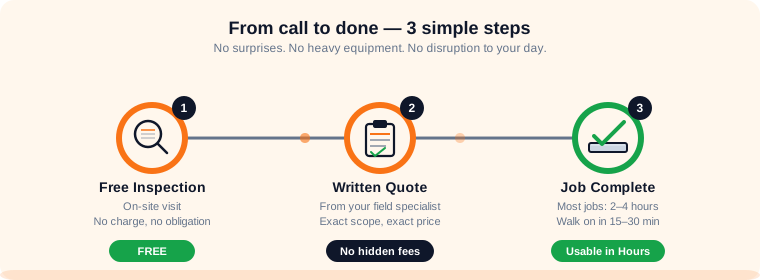
Our team walks you through the three-step process: dime-sized holes, high-density polyurethane foam that fills every void and compresses the soil beneath your slab, and use within hours with no heavy trucks. Call (913) 713-7794 or book a free estimate below.
Frequently asked
Can concrete leveling really be done in freezing temperatures?
Yes. The polyurethane foam used in the injection process cures through a chemical reaction that isn't dependent on warm outdoor air, so cold weather doesn't prevent the work or slow the cure time. The one exception is ground that's frozen solid.
Should I wait until spring to fix a sinking driveway or patio?
There's no technical reason to wait - foam injection works the same in winter as in summer, unless the ground is frozen solid. Waiting mainly gives the underlying void more time to grow, which isn't to your advantage.
Does rain on the day of service cause a problem?
Active rain at the work site is more of a practical scheduling issue than a limitation of the foam itself. We'll work with you to find a workable day if weather is a factor.
Is foam injection as effective in summer heat as it is in winter cold?
Yes - temperature doesn't meaningfully change how the foam expands, fills voids, or cures. The process is consistent across seasons.
How soon can I get an estimate after noticing a sunken slab?
Reach out any time - call (913) 713-7794 or fill out our contact form and we'll schedule a free on-site look.
Does the finished lift look any different depending on the season it's installed?
No. The cured polyurethane is the same material and the same strength whether it goes in during a summer heat wave or a January cold snap, and the patched injection holes look identical either way. Season affects scheduling convenience and how fast an untreated void grows over winter, not the quality or appearance of the finished repair.
Have a sinking slab?
Book a free on-site inspection. Honest advice, usable within hours.
Pick a time that works for you
Book right here on this page. Prefer to talk? Call (913) 713-7794.