
Closed-Cell Spray Foam Problems: Off-Ratio, Cold Steel, Pull-Away and the Checks That Prevent Them
Most spray foam problems trace back to the day of the install, not to the foam family. Reports of a bad spray foam job repeat the same few causes: the two parts were not mixed in the maker's ratio, a pass went on too thick, the surface was too cold or damp, or the crew skipped a check. This page is a catalog from the installer's side. Each failure is listed with its symptom, its cause in the sources we read, and the record that would have caught it.
We have not finished an insulation job yet, so nothing here describes our past work. It describes what to ask any contractor, us included, and what we plan to write down.
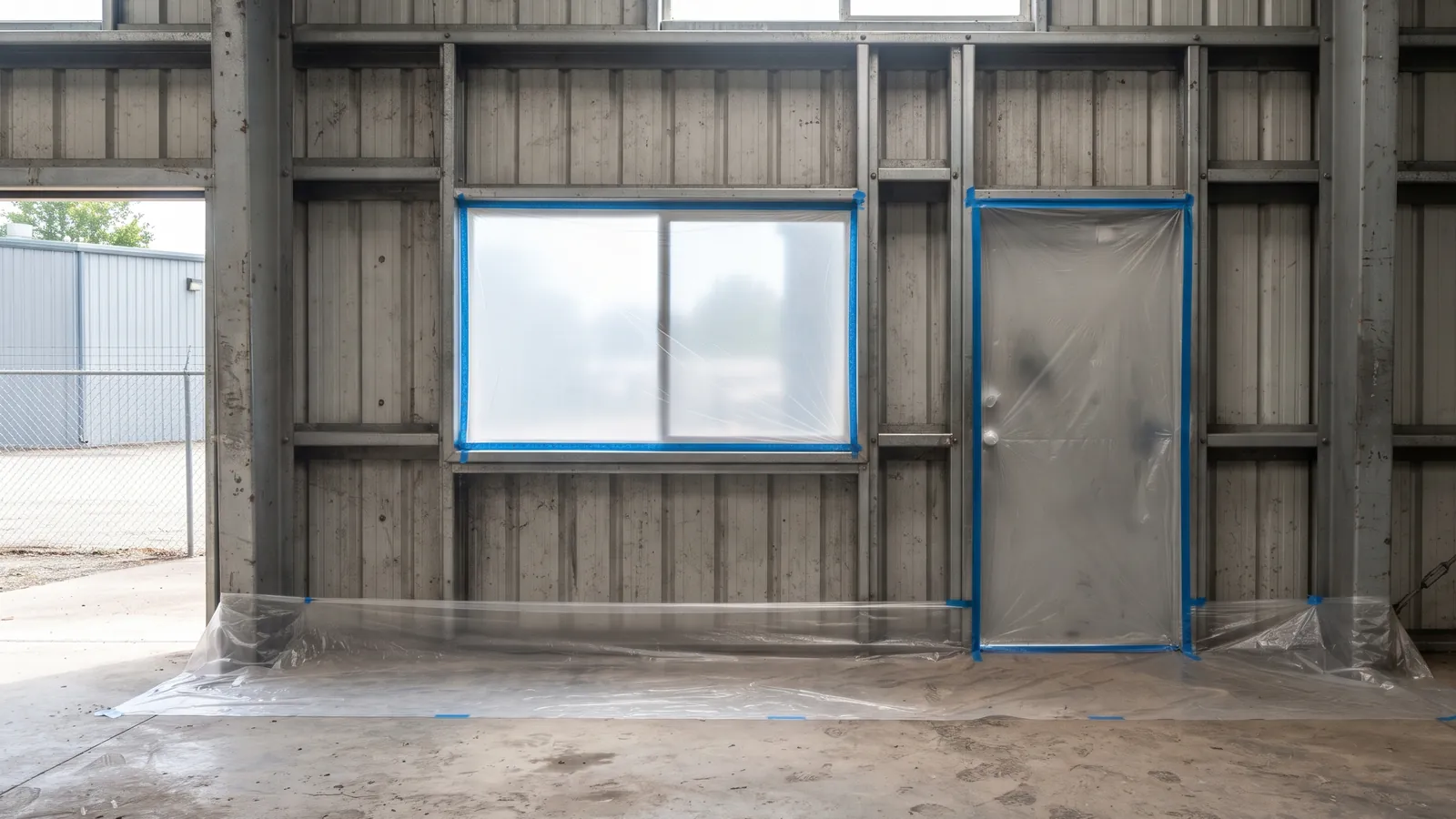
What can go wrong: the usual spray foam problems
Closed-cell foam is made on site. Two liquids are pumped, heated and mixed at the gun, and they react as they leave it. A handful of things have to be right at that moment: the ratio of the two parts, their temperature, the surface they land on, and the depth of each pass. If one is off, the foam can look fine for a day and fail later. That is why a sound job produces paper as well as foam.
The main failure families, each with its own section below:
- Off-ratio foam, where the mix was wrong.
- A pass that was too thick.
- A substrate that was cold, wet or dirty.
- Shrinkage and pull-away, which can follow any of the above.
- A lingering fishy odor.
Moisture trapped under foam and wood rot are a separate topic with its own page, spray foam and wood rot. Wiring, fixtures and the electrical details are on spray foam around wiring.
Failure catalog: symptom, cause, record
| Failure | What you see | Cause named in the sources | The record that catches it |
|---|---|---|---|
| Off-ratio foam | Hard and brittle, or sticky and soft; discoloration; a pungent smell | A clogged or misadjusted rig, cold weather, humidity or overheated or cold drums can all push the mix off | Ratio reading from the rig and the drum temperatures, logged each shift |
| Pass too thick | Cell damage inside the foam, shrinkage, poor adhesion, odor | Heat from the reaction builds in a thick lift and has to dissipate before the next one | A pass log: depth of each pass and the wait before the next |
| Cold or wet substrate | Foam lifting off the surface, poor bond, voids | Steel at or below the dew point, frost, or a surface outside the product's limits | Surface temperature, air temperature, humidity and dew point read before spraying |
| Shrinkage and pull-away | A gap between foam and framing or steel, foam pulled back from edges | Fast heavy application, wrong chemical balance, cold substrate, or foam that is not the product claimed | The lot number, the ratio log and the substrate reading, kept together |
| Lingering fishy odor | A fish-like or ammonia-like smell that lasts for months | In the cited cases, installer error such as off-ratio mix, a too-thick pass or wrong chemical temperature | Same logs, plus a cut sample from the foam if a smell shows up |
Every cell in the "cause" column comes from the sources in the next sections; none comes from our own experience. The first-hand version of this table, from our own rig, does not exist yet.
Off-ratio foam
Foam is off ratio when the two parts were not mixed in the maker's proportion, so the reaction does not finish the way the chemistry intends. An industry consultant, Mason Knowles, wrote on a trade forum in 2009 that foam sprayed with a poor mix, or off ratio, can react to give "a pungent odor" (Spray Foam Magazine forum, Aug 30, 2009). A forum reply is not a lab report. The same pattern also appears in a Green Building Advisor article by Martin Holladay, who collected reports of bad jobs and found the most common explanation was installer error (GBA, Sept 2, 2011).
What prevents it is a rig that is clean and tuned, drums held in the maker's temperature range, and a reading taken when the gun first fires and again as work goes on. Our rig is the POLY 10 with a PMC PH-2 proportioner and 200 feet of heated hose; how a spray day runs on it is on how spray foam is installed.
A pass that is too thick
Closed-cell foam is built up in layers. The Department of Energy's Building America guide puts the typical limit at about 2 to 3 inches per pass (DOE Building America, "Which Spray Foam Is Right For You?"). A foam-industry consultant quoted on a trade forum gives a tighter figure, 1.5 inches per lift with a wait for the heat to dissipate, 10 to 15 minutes in his words (Spray Foam Magazine forum, 2009). The two do not agree, and a product's own data sheet is what governs. Neither number is ours. The problem they point at is the same: too much foam at once builds heat inside the layer, and that heat can damage the cell structure.
The record is simple: the depth of each pass and the time before the next, per surface.
A cold, wet or dirty substrate
Steel at or below the dew point carries water that foam cannot bond through. The dew point is the temperature at which air's moisture condenses on a surface; the way to compute it is on the dew point and frost point tool. In cold weather the limits also apply to the air and the drums, not just the steel, and those limits are on cold-weather spray foam limits. A distributor article lists off-ratio and shrinking back among the defects of foam sprayed in the cold (sprayfoam.com winter article, undated). It has no author or date, so treat it as a dealer's view.
Surface problems are not only temperature. Dust, oil, loose rust and old coatings can all stop a bond, and surface-prep rules for painted or rusted steel come from the product's guide. The record: surface temperature, air temperature, humidity and the dew point worked out from them, taken before spraying. If the numbers are outside the limits, the job is rescheduled.
Shrinkage and pull-away
Spray foam shrinkage is foam drawing back from the surface or from itself after it cures. Pulling away from framing is the same thing seen at a stud or purlin edge. Both are easier to prevent than to repair. In a 2011 trade-forum thread, a contributor gave a list of possibilities for a shrinking closed-cell job: too much foam applied too fast, foam that was cheaper and not true closed-cell, water added to the resin side, off-ratio mixing, or a defect on the maker's side (Spray Foam Magazine forum, 2011). A 2025 trade-magazine piece on the same topic lists substrate temperature, lift thickness and chemical balance as the hidden causes, though the full article was behind a quiz and we only read the introduction (The Construction Specifier, Dec 9, 2025).
This is why the lot number matters. If shrinkage shows up, the first question is whether it is the product or the install, and only two records answer it: the lot number of the chemical used and the ratio and substrate readings from the day. With both, the maker and the crew can look at the same facts.
Lingering fishy odor
A spray foam smell that fades within the maker's re-entry time is one thing; a fishy smell that stays for months is another. Holladay's article says the most common complaint in reports of bad jobs is a bad odor, usually described as fish-like, that lasts for months. In the cases he collected, installer error was the explanation: foam put on too thick, or chemicals not heated to the right temperature before they were sprayed (GBA, Sept 2, 2011). Knowles's forum post names the mechanism as the foam's catalyst reacting with its surfactants when the mix is off or the reaction runs hot.
Two cautions from the sources. First, odor can have other origins: a GBA reader thread found a smell tied to foam sprayed over fiberglass in an attic, and the editor's comment was that a fishy smell "is not a good sign" (GBA Q&A, Oct 2013). Second, there are no published remediation standards, as one commenter put it in that thread, and in the cases we read, the foam had to be cut out. A 2017 forum case describes about 99 percent of a bad closed-cell job removed over nine days, with the odor still lingering in the home's materials (Spray Foam Magazine forum, Oct 23, 2017). The consultant's advice there was to cut a sample from the top to the bottom, because the foam smells strongly when cut if it is the source.
These are anecdotes, not rates. We are not saying fishy foam is common; we are saying that when it happens, the sources point to the install.
What bad foam looks like
Signs a reader can check without tools. None proves a defect on its own, and a building official or the maker investigates.
- Soft, gummy or damp foam that stays that way after it should have cured.
- Crumbly, brittle or chalky areas, or a surface that powders.
- Discoloration, grainy patches or bubbled, blistered areas. Holladay's reports include discolored, grainy foam, and the 2017 forum case describes odd bubble-like growth.
- Cracks and gaps at framing, purlins or the steel, where the foam has pulled back.
- Foam that peels off the steel when you press at an edge.
- A smell that lasts past the maker's re-entry time.
The Environmental Protection Agency and the Consumer Product Safety Commission cover health and re-entry; see is spray foam safe for that side.
How long foam lasts is on spray foam service life, and its R-value after aging is on aged R-value of spray foam.
Open-cell problems, and why this page is about closed-cell
People searching for open cell foam insulation problems often find stories about odor, shrinkage and moisture. Many of the causes above apply to both types, because both are mixed from two parts on site. We do not spray open-cell, so we do not give an open-cell prevention list. Where the type matters is moisture: open-cell is permeable, as the vapor barrier page shows, and that changes how it behaves against steel.
Records that prevent it
Each failure above ties to a record. Together they are the paper trail from a good job.
| Record | Catches |
|---|---|
| Ratio and pressure log, drum temperatures | Off-ratio foam, odor |
| Pass log: depth and wait | Thick passes, heat damage, shrinkage |
| Surface readings and dew point | Cold or wet steel, poor bond |
| Lot numbers of both parts | Whether a defect is the product or the install |
| Date, crew and building | Ties a problem to one day and one team |
Whether a record exists is a fair question for any contractor, and how to choose a spray foam contractor puts it among twelve. A log is only worth something if it can be shown to you. The dated record a customer would receive is described on how spray foam is installed.
What we do and do not fix
If foam goes wrong, the first step is to document it and call the maker. We do not remove foam. Taking foam off steel is a separate trade, and if a job needs it, someone else does that work. We also do not do crawl spaces or blown-in insulation. Our work is closed-cell foam sprayed inside buildings, within about 35 miles of Spring Hill, KS.
FAQ
What does bad spray foam look like?
Soft, crumbly, discolored, cracked or pulled away from the surface. The list above gives each sign and the cause the sources link to it; none of them is proof alone, so take photos and ask the maker.
What is off-ratio spray foam?
Foam where the two parts were not mixed in the maker's ratio, so it does not cure right. The prevention is a logged ratio reading and drum temperature each shift, plus a lot number so any complaint can be traced.
Why does spray foam smell like fish?
In the cited cases it was linked to installation problems such as off-ratio foam, a pass that was too thick or chemicals at the wrong temperature. The maker and the installer investigate, and the lot and ratio records are what they look at. Fishy smells can also come from other sources in a building, so a sample of the foam is the test.
Can spray foam shrink or pull away from steel?
Yes. Causes in the sources are heavy fast application, a cold substrate and the wrong chemical balance. Prevention is in the pass log and the surface readings.
Book a free on-site measurement
At the visit we measure the building, look at the steel, the old insulation and the moisture sources, and tell you which of these checks matter for your building. If foam is the answer you get a written estimate after the visit. The visit is free. More on how it works: the free estimate visit.
Book a free on-site measurement
Pick "Spray foam insulation" on the booking form. We work within about 35 miles of Spring Hill, KS.
Spray foam insulation is a new PolyJacks service line run by its own crew and rig.
Who wrote this: PolyJacks spray foam team. How it was made: drafted with AI assistance from the sources below, then checked against each source.
Sources
- Martin Holladay, "Spray Foam Jobs With Lingering Odor Problems," GreenBuildingAdvisor, September 2, 2011: greenbuildingadvisor.com
- GreenBuildingAdvisor Q&A, "Spray foam fishy odor," October 2013: greenbuildingadvisor.com
- Spray Foam Magazine forum, "Odor from poorly applied spray foam" (Mason Knowles, Aug 30, 2009): sprayfoammagazine.com
- Spray Foam Magazine forum, "Spray foam shrinkage problems," September to November 2011: sprayfoammagazine.com
- Spray Foam Magazine forum, "Bad closed-cell spray foam installation," October 23, 2017: sprayfoammagazine.com
- The Construction Specifier, closed-cell SPF shrinkage quiz introduction, December 9, 2025: constructionspecifier.com
- DOE Building America, "Which Spray Foam Is Right For You?": www1.eere.energy.gov
- sprayfoam.com, "Spray foam insulation in the winter" (undated): sprayfoam.com
Ready for a measurement?
Book a free on-site visit. We measure first, then quote in writing.
Book a free on-site measurement
We measure the building first, then you get a written quote. Prefer to talk? Call (913) 713-7794.