
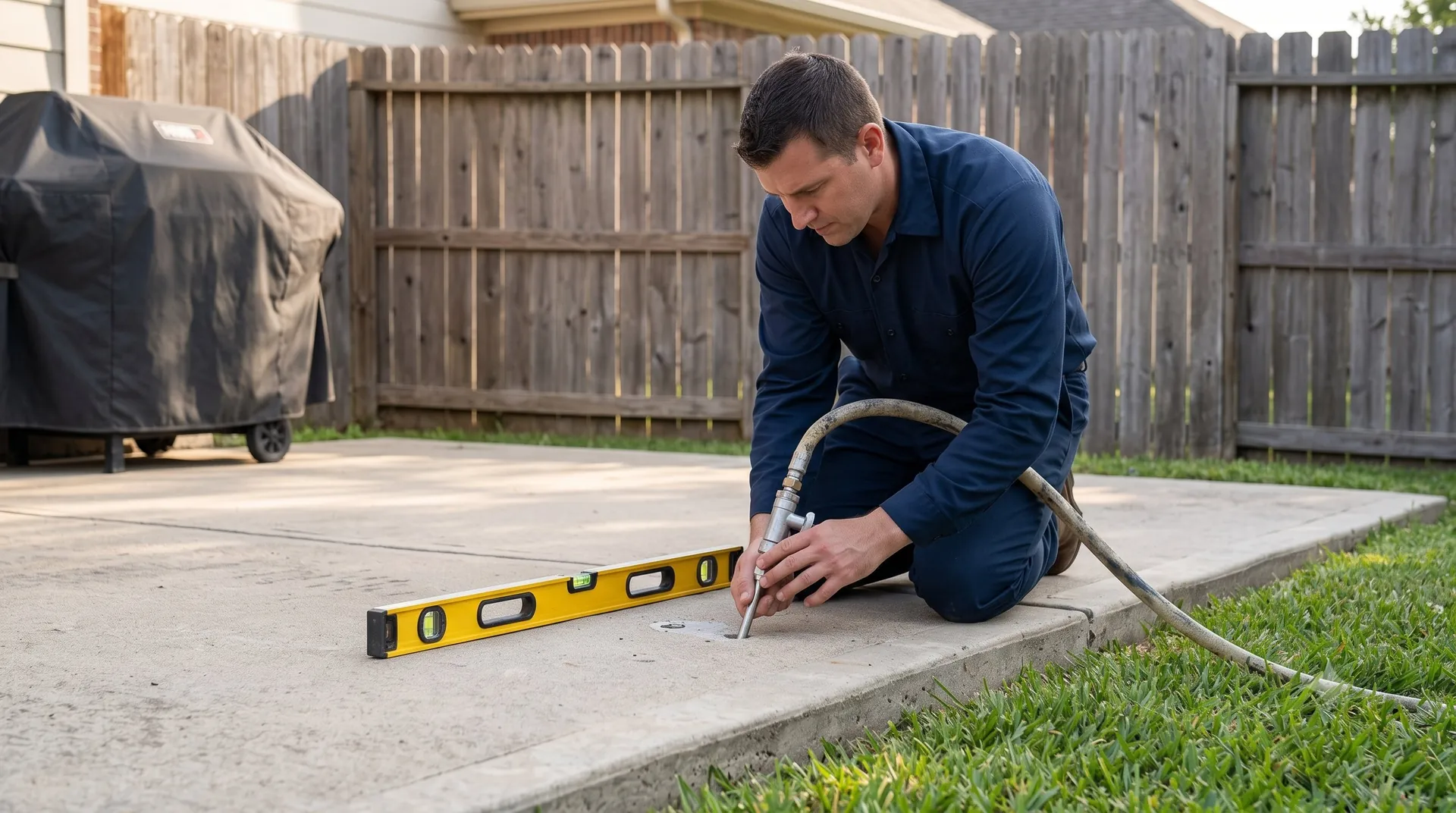
 Illustrative
Raise a Sinking Patio, No Jackhammers and No Repour
A sinking patio rarely needs demolition. Patios settle when the soil beneath them compresses or erodes; injecting polyurethane foam through small holes fills those voids and lifts the slab back to level. It is faster and far cheaper than tearing out and repouring, and the patio is usable within hours.
Signs Your Patio Is Actually Sinking
In most cases, yes - a sinking patio can be lifted back level with foam injection instead of being torn out and repoured. The fix takes hours, not days. First, here's how to tell your patio has actually settled.
A patio doesn't sink overnight - it happens slowly enough that most homeowners notice the symptoms before they notice the slab itself has moved. Water pooling in one corner after every rain instead of draining away is usually the first sign, followed by a gap opening up where the patio meets the back of the house, or furniture that no longer sits flat and starts to wobble. Cracks that follow a straight line and don't change height are just cosmetic, but a crack where one side is visibly lower than the other means the ground underneath has shifted. If you're comparing notes on what you're seeing, our why is my concrete sinking page lays out the broader warning signs for any slab, not just patios.
Why Patios Sink More Than People Expect
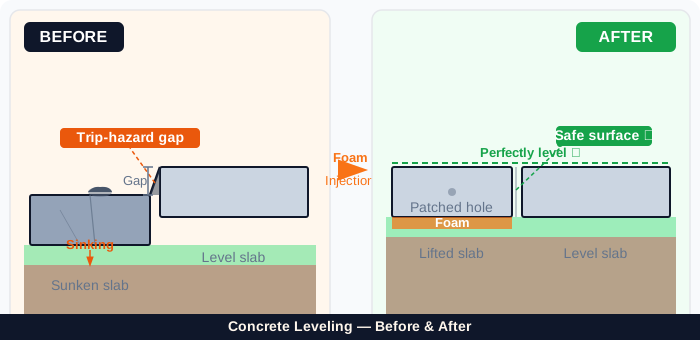
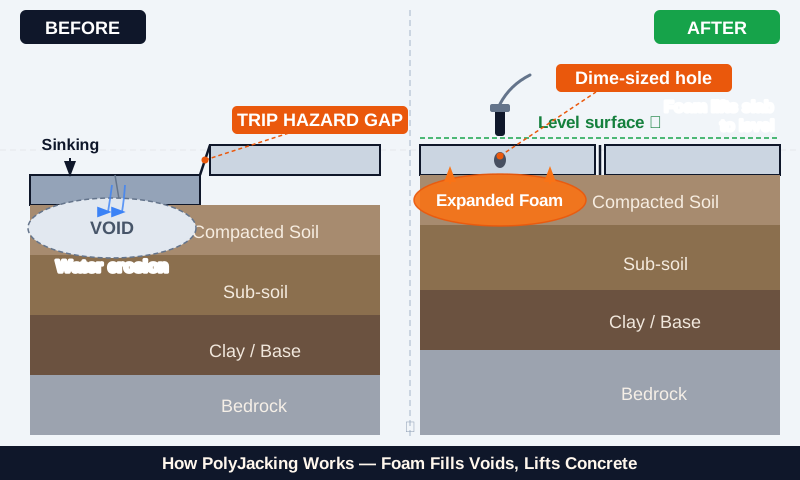
Patios are often more prone to settling than driveways, for a simple reason - the soil underneath frequently wasn't compacted to the same standard as soil under a structural footing, since a patio isn't holding up a house. Add Kansas City's expansive clay soil, which swells when saturated and shrinks during dry stretches, plus freeze-thaw cycles every winter, and that loosely settled soil moves more than most people expect. Downspouts and grading near the patio make it worse: water channeled off a roof and dumped at the patio's edge can wash soil out from underneath over several seasons, leaving a void the slab gradually sinks into. None of this means the patio was built wrong - it's just how soil and weather interact with concrete here over time.
For a closer look at what drives settling in this area, read why a patio sinks in Kansas City.
Why You Don't Need to Rip It Out
Full patio replacement means demolishing the existing slab, hauling it off, and pouring new concrete - which takes days, costs you the use of your backyard for a stretch, and doesn't even change the soil problem that caused the sinking to begin with. If the concrete itself is still in good shape and it's just sitting low, the actual problem is the void underneath, not the slab. Concrete leveling addresses that void directly instead of starting over, which is why it's become the more common repair for patios that are structurally fine but unevenly settled. We'll always tell you honestly if a patio is too far gone for leveling and actually needs replacement - but that's the exception, not the rule.
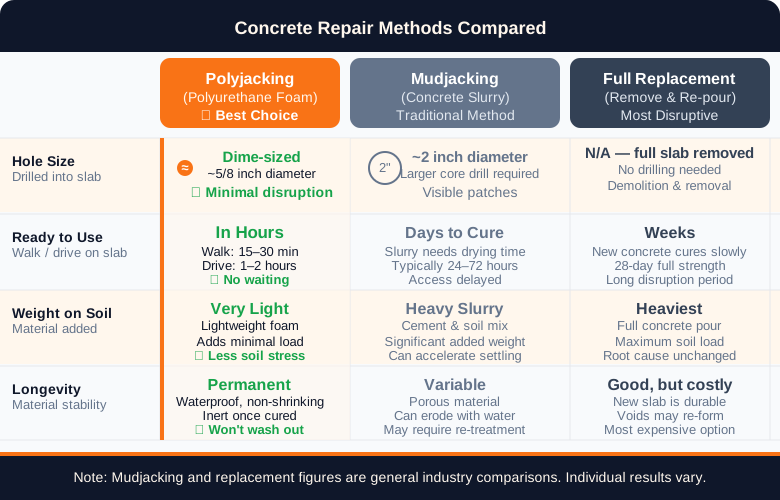
If you're weighing repair against replacement, is concrete leveling worth it walks through that decision.
How Foam Injection Levels a Patio
The process starts with drilling a handful of holes about the size of a dime through the low sections of the patio slab. We inject a two-part polyurethane foam through those holes; it expands underneath the concrete, filling the void left by washed-out or shifted soil, and that expansion gently lifts the slab back toward level. Because the foam is lightweight, it won't overload soil that's already soft or saturated - a real risk with heavier repair materials. It's also waterproof, so it holds up against the same moisture cycles that caused the original settling. For a full walkthrough of the method on any slab type, see our polyjacking in Kansas City page, and for patio specifics, patio leveling.
The target isn't a dead-flat surface – it's restoring the original drainage slope so water runs away from the house and off the patio edge. We measure the existing slope before we start and match it, so the patio drains the way it was designed to.
What to Expect the Day We Show Up
A patio lift is typically a one-visit job. After the estimate confirms foam injection is the right fix, we drill the holes, inject the foam, and the slab is raised and leveled while you watch. The foam itself cures in minutes. Foot traffic can generally return to the surface within about 15 to 30 minutes, so you're not staring at caution tape over your patio for a week - furniture can go back the same afternoon in most cases. There's no slurry, no mess left behind, and the drill holes are small enough that they're easy to patch and barely noticeable once finished. Compare that timeline to a demolition-and-repour project, and it's easy to see why foam has become the go-to for patios that don't need full replacement.
Before we arrive, move furniture and the grill off the slab if you can, and note where water pools after a rain – that tells us exactly where the void is. You don't need to do anything else; we bring the equipment.
Fixing the Drainage That Caused the Sinking
The foam fills the void, but the drainage issue that created it is still there. Before or at the same time as the lift, extend downspout spouts at least 6 feet from the patio edge so roof water doesn't dump at the slab's perimeter. If the soil slope around the patio grades toward the slab instead of away from it, a small regrade (a few inches of fill sloped away) prevents the next void from forming. If a broken drain line or irrigation line is the source, have it repaired before the lift – otherwise the water will just dig a new void in a different spot.
Poured Slabs vs. Paver Patios
Foam injection is built for poured concrete patios - solid slabs with a void underneath. If your patio is made of individual pavers or flagstone set in sand or gravel, the settling problem and the fix are different, since there's no single slab to lift, just individual units that need to be reset. During a free estimate, we'll look at what you actually have and tell you plainly whether foam injection applies or whether you need a different kind of repair - we're not going to recommend a method that doesn't fit your patio just to make a sale. If you're not sure which category your patio falls into, our diagnose page can help you figure out what you're looking at before we ever show up.
That includes stamped, colored, and exposed-aggregate concrete patios – if it's a single continuous slab, it's in this category regardless of the surface finish.
Get Your Backyard Back This Season
A sinking patio tends to get worse the longer it sits, since the same drainage and soil issues that caused it usually keep working in the background. The upside is that fixing it doesn't have to eat into your summer - a foam lift is often finished in a matter of hours, not a construction season. We're a locally owned business based in Spring Hill, and we cover the entire Kansas City metro on both sides of the state line. A free on-site estimate gets you an honest answer on whether your patio needs leveling, sealing, or nothing at all. Call (913) 713-7794 or use our contact form to get on the schedule.
How polyjacking works in 90 seconds

Our team walks you through the three-step process: dime-sized holes, high-density polyurethane foam that fills every void and compresses the soil beneath your slab, and use within hours with no heavy trucks. Call (913) 713-7794 or book a free estimate below.
Frequently asked
Can a sinking patio be fixed without tearing it out?
In most cases, yes. If the concrete itself is sound and it's simply sitting low due to a void underneath, foam injection lifts it back to level without demolition.
How long does patio leveling take?
Most patio lifts are a one-visit job. The foam cures in minutes, and you can typically walk on the surface again within 15 to 30 minutes.
How soon can my patio furniture and grill go back?
Usually, yes, once the foam has cured and the surface is level again - often within the hour.
Does this work on paver or flagstone patios too?
Foam injection is designed for poured concrete slabs. Paver and flagstone patios settle differently and need a different approach, which we'll walk you through during your estimate.
What causes a patio to sink in the first place?
Usually a combination of loosely compacted soil under the original pour, Kansas City's expansive clay soil, and drainage issues like downspouts washing soil out from underneath the edge.
Is foam injection a lasting sinking concrete repair for a patio?
Foam injection addresses the cause of a sinking patio, the void left by washed-out or shifted soil, rather than replacing the slab. The foam is waterproof, so it holds up against the same moisture cycles that caused the settling, but any downspout or grading problem should be fixed too so a new void doesn't form.
Have a sinking slab?
Book a free on-site inspection. Honest advice, usable within hours.
Pick a time that works for you
Book right here on this page. Prefer to talk? Call (913) 713-7794.