
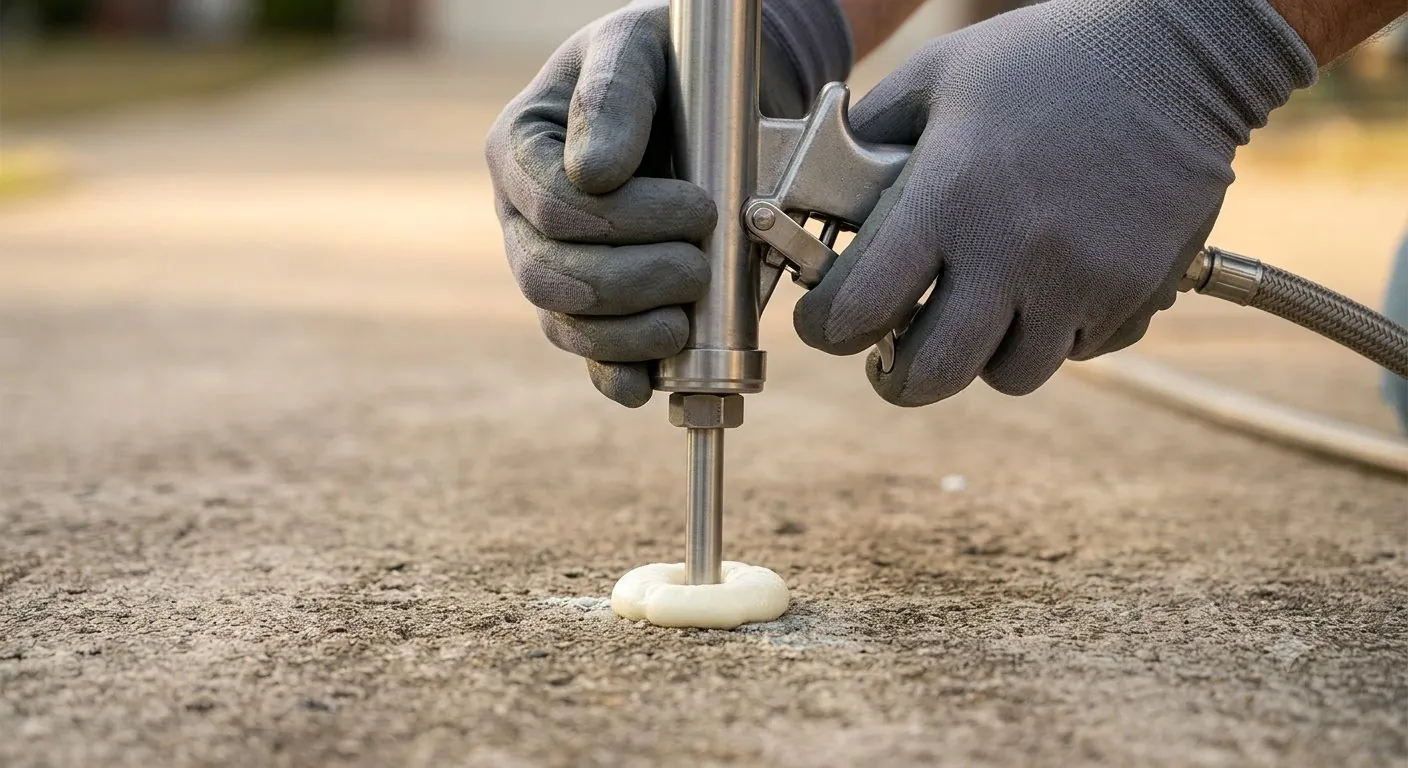
 Illustrative
The Questions That Separate an Honest Leveler From a Sales Pitch
Before hiring, ask: what material do you use and why; will you tell me if replacement is the better fix; are you licensed and insured; what warranty comes with the work; and can you show local references. Straight, specific answers signal an honest KC contractor. A free on-site estimate is a good test.
1. What's Actually Causing My Slab to Sink?
Ask these seven during the phone call or the on-site visit. A contractor who has actually looked at your slab can answer each one without checking a script. For the broader vetting checklist, see how to choose a concrete leveling company. Start with the cause:
In the Kansas City area, common causes include expansive clay soil that swells and shrinks with moisture, freeze-thaw cycling through winter, and poor drainage from downspouts or grading that washes soil out from under a slab. A contractor who's actually looked at your property should be able to point to which of these - or which combination - applies to your driveway, patio, or steps, not just say "concrete settles over time." If you want a primer before the visit, our page on why concrete sinks in Kansas City covers the main causes we see most often across the metro.
2. What Method Will You Use, and Why That One?
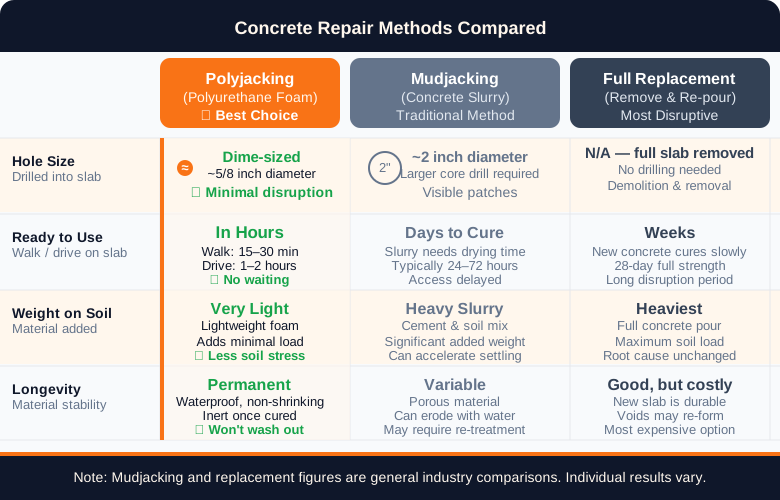
There's more than one way to lift a settled slab. Polyurethane foam injection and traditional mudjacking are the two most common, and they differ in hole size, material weight, and how they handle moisture over time - see our polyjacking vs. mudjacking comparison for specifics. A contractor should be able to explain which method they're recommending for your situation and why, not just tell you what they happen to offer. If foam isn't the right fix for a badly cracked or crumbling slab, an honest answer says so rather than pushing a repair that's unlikely to hold.
If your slab is badly cracked, this guide on when cracks in concrete are worth worrying about can help you judge what to ask.
3. How Many Holes, and How Big?
This tells you a lot about the method and the disruption to expect. Polyurethane foam injection typically uses a handful of dime-sized holes, since the foam expands significantly once it's injected. Mudjacking generally requires larger holes to pump through a heavier slurry. Neither is inherently wrong, but you should know what you're signing up for before the crew shows up. Ask specifically where the holes will be placed, especially on a visible surface like a front walkway or patio, and how they'll be patched afterward once the lift is complete.
4. How Long Until I Can Actually Use the Area Again?
Downtime matters, especially for a driveway you use daily or steps at your main entry. With foam injection, the cure happens within minutes, so light foot traffic is often possible in about 15 to 30 minutes, with vehicle use following in roughly 1 to 2 hours. That's a meaningful difference from methods that need longer to set up or cure. Ask for a specific, realistic timeline for your job rather than a vague "later today" - a contractor who's done this enough times should be able to tell you exactly what to expect for your driveway, patio, or garage floor.
5. Will This Address the Void, or Just Raise the Slab?
These sound similar but aren't quite the same thing. Simply lifting a slab back to level doesn't necessarily mean the space underneath is fully filled - if there's still an empty pocket where soil eroded or settled, the slab can be prone to sinking again. Ask whether the process is filling the actual void, not just pushing the concrete up. Void filling exists as its own service precisely because some slabs have gaps underneath that haven't caused visible sinking yet, and addressing those proactively is part of doing the job thoroughly rather than just cosmetically.
6. Do You Actually Work in My Part of the Metro?
Service area matters more than it might seem - a company based far from you may be less familiar with your specific soil and drainage conditions, or may treat your job as a lower scheduling priority. Ask directly whether they regularly work in your city, whether that's Overland Park, Lenexa, Olathe, Lee's Summit, Independence, or elsewhere across Johnson or Jackson County. PolyJacks is based in Spring Hill, Kansas, and covers the full Kansas City metro on both the Kansas and Missouri sides, so this is a reasonable thing to confirm with anyone you're considering.
7. Is the Estimate Free, and Will I Feel Pressured to Sign Today?
A free estimate should mean exactly that - someone comes out, looks at the slab, and gives you a straight read on the cause and the fix, with no cost and no obligation. Ask upfront whether there's any pressure tactic involved, like pricing that "expires" if you don't commit on the spot. A contractor confident in their diagnosis and reputation shouldn't need a countdown clock to get you to say yes. Take the time you need to compare answers before deciding who does the work.
How polyjacking works in 90 seconds
Our team walks you through the three-step process: dime-sized holes, high-density polyurethane foam that fills every void and compresses the soil beneath your slab, and use within hours with no heavy trucks. Call (913) 713-7794 or book a free estimate below.
Frequently asked
What if a contractor won't give a straight answer to these questions?
That's worth treating as information in itself. A company confident in its diagnosis and method usually doesn't mind explaining it - vague or dodged answers are a reasonable reason to keep looking.
Should I ask about experience with my specific type of concrete, like a patio versus steps?
Yes, it's a fair question. Different areas - driveways, patios, steps, pool decks - can have different soil conditions and access challenges, so relevant experience is worth confirming.
Is a free on-site estimate normal to expect?
It's common and reasonable to expect. Most concrete leveling companies, including PolyJacks, will come out and give you an honest, no-pressure assessment - call (913) 713-7794 and our team will find a time that works.
Do these questions apply if I'm also considering a mudjacking company?
Yes - the questions about cause, method reasoning, hole size, downtime, and pressure tactics apply regardless of which method a contractor uses.
Which of these questions matters most?
The first one - what's actually causing the sinking. Every other answer, including which method makes sense, should follow from a real diagnosis rather than come before it.
Should I get more than one estimate before choosing a contractor?
It's reasonable to, especially on a larger job. Comparing estimates is less about chasing the lowest number and more about whether each contractor diagnosed the same cause, proposed a similar scope, and can explain their reasoning. If one quote is dramatically different from the others, ask what they see that the rest didn't. A straightforward contractor will walk you through exactly why.
What should a sinking concrete repair estimate explain?
A good estimate for sinking concrete repair should name the cause of the settling, the method and why it fits your slab, where the holes go and how they will be patched, whether the void underneath is being filled, and a realistic timeline before you can use the area again. If any of those are missing, ask before you agree to the work.
Have a sinking slab?
Book a free on-site inspection. Honest advice, usable within hours.
Pick a time that works for you
Book right here on this page. Prefer to talk? Call (913) 713-7794.