
Concrete Leveling in Westwood, KS
PolyJacks levels sunken driveways and walks in Westwood, KS with polyurethane foam, without tearing out the existing concrete: free on-site estimate.
Westwood is one of Johnson County's smallest incorporated cities, tucked along the state line just west of Kansas City, Missouri, near Rainbow Boulevard. The land traces back to a stone home the Swatzell family built in 1898, and the city itself wasn't incorporated until June 7, 1949, after residents organized as the Hudson Mission Homes Association to bring streets and utilities to the growing postwar suburb. Its tight lots and narrow, decades-old driveways sit on the same clay soil that moves across the rest of the metro.
A Stone House, a Homes Association, and a City Born in 1949
The ground that became Westwood traces back to a stone house the Swatzell family built in 1898. After World War II, the area around that home started filling in fast as a Kansas City suburb, and residents organized the Hudson Mission Homes Association to get streets and utilities built out before the city was even official. Westwood incorporated on June 7, 1949, and today covers just 0.41 square miles. One of the smallest footprints of any city in Johnson County. That compressed timeline means most of Westwood's original driveways, walks, and garage floors went in within a fairly narrow postwar window and are now closing in on 75 years old, well before modern soil compaction and rebar standards, which is exactly the kind of older concrete that tends to develop voids first. All of it is settling on the same expansive clay at close to the same rate.
Why Concrete Sinks in Westwood
Westwood packs a lot of history into a very small area, and that means a lot of its concrete has had decades to settle. Homes here range from early-1900s construction to mid-century builds, and the driveways and walks that came with them were poured long before today's soil compaction and drainage standards. Underneath sits the same expansive clay found across Johnson County. Soil that swells when saturated and shrinks when dry, working a void open under a slab a little more with every cycle. Westwood's narrow lots also mean established trees are often close to the driveway or walk, and their root systems pull moisture unevenly from the soil nearby, which can tip a slab even when the surface looks fine everywhere else.
Because that clay swells and shrinks, a slab can rise in one season and drop in the next, and it helps to understand concrete settling vs. heaving before deciding on a fix.
What Settling Looks Like on a Westwood Slab
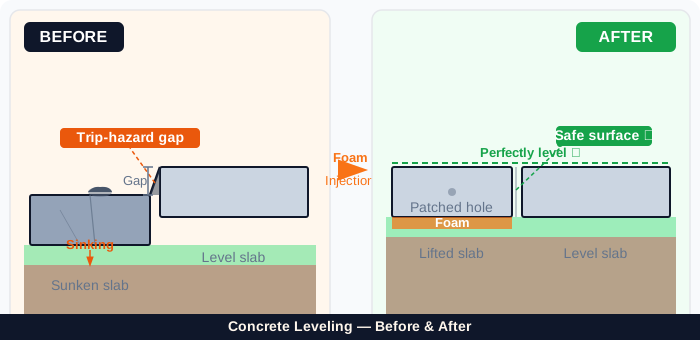
On the older Westwood properties we visit, the progression tends to follow a pattern. It starts as a hairline crack at the joint where the garage slab meets the driveway, or along the edge where the walk meets the house. The clay underneath has been cycling for decades, and the crack is the slab telling you the support is shifting. Next you notice a lip forming at the property line or the side of the driveway where a mature tree's roots are pulling moisture from the soil. The slab drops on that side, and you feel it underfoot before you see it from the street. In a wet spring the clay swells and can push the slab back up slightly on the opposite side, so it looks almost level again until the summer dries the ground out and the drop reappears. The point where leveling stops being an option is when the slab has fractured into separate pieces that no longer move as one unit. At that stage the concrete itself is the problem, not the support underneath, and we'll tell you that straight on the estimate visit.
If your slab has dropped but is still in one piece, our guide on whether sunken concrete can be fixed without replacing it explains what to expect.
One Building Wave, One Timetable
The practical consequence of a city built out in a single postwar push is that Westwood's concrete is on a shared schedule. If your driveway has developed a lip at the garage, or your front walk has a raised joint, there is a good chance the same thing is happening two doors down, because those slabs went in within a few years of each other, on the same clay, to the same standards of the day. That is useful information rather than trivia. It means a neighbor's settled walk is a preview instead of a coincidence, and it means the fix is worth looking at before the drop gets deep enough to crack the panel through, since a sound slab can be lifted and a broken one has to be replaced. Westwood's lots also put walks, drives and property lines close together, so a raised joint is often on a route other people use. Given that the city began as a homes association, confirm who is responsible for a shared or street-side walk first: HOA sidewalk trip hazard liability.
What We Level in Westwood
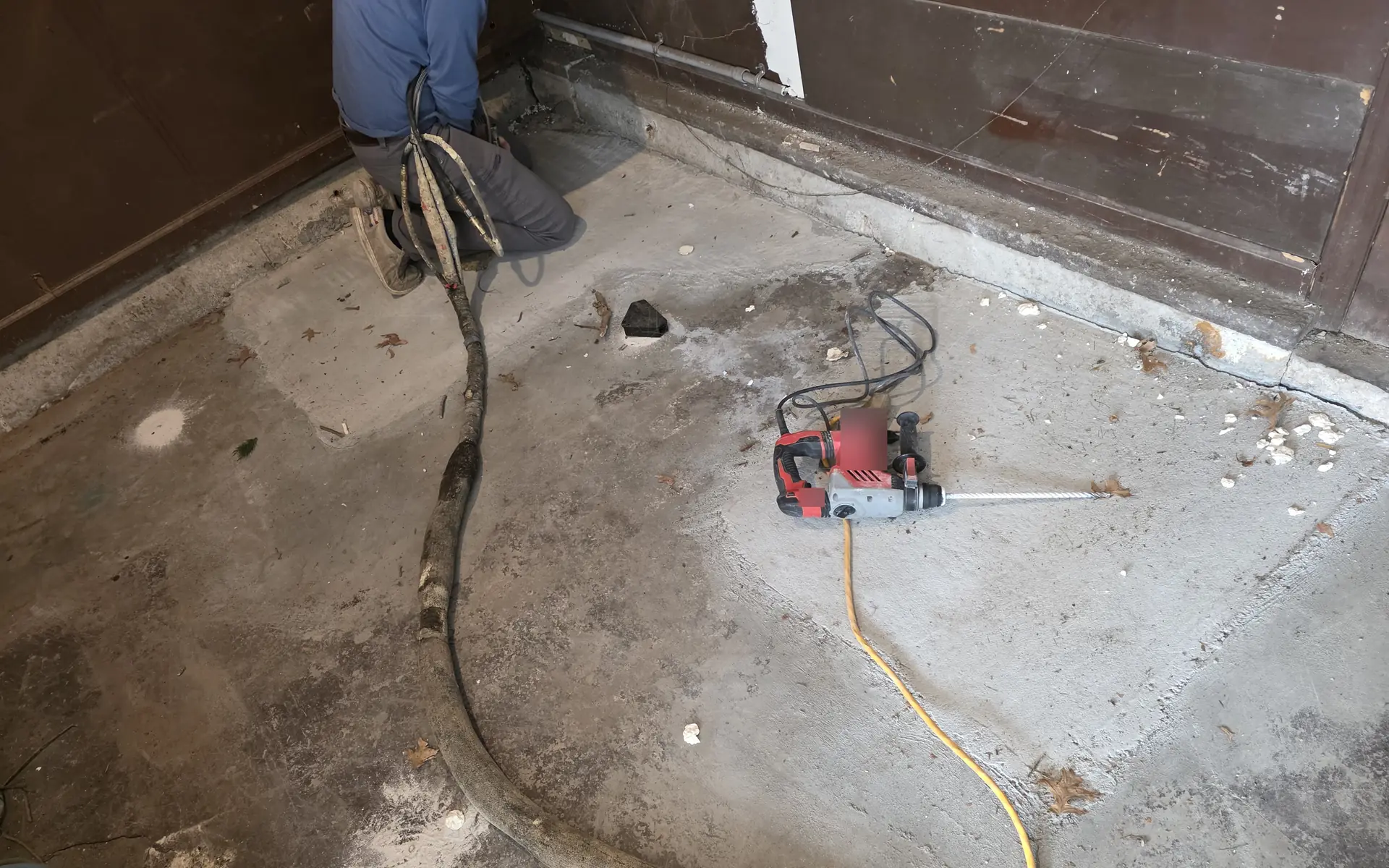
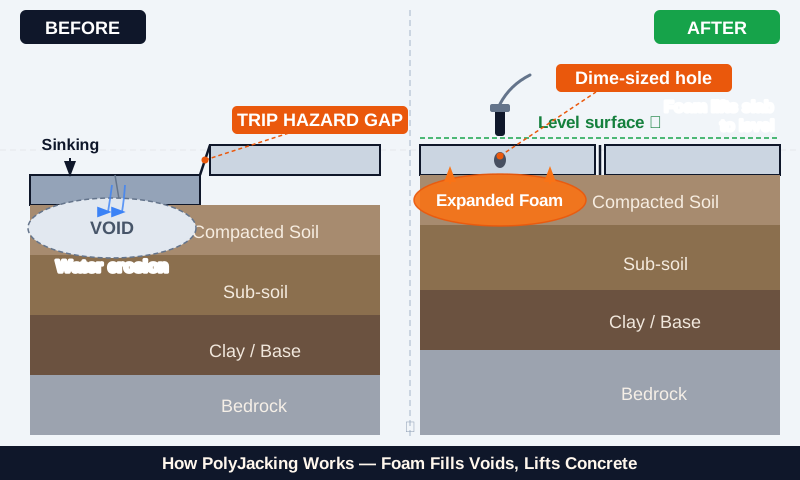
PolyJacks levels the concrete typical of a Westwood property: driveways, front and side walkways, patios, porch and step slabs, and garage floor pads, along with filling voids under slabs before they've dropped far enough to be an obvious trip hazard. Because Westwood lots tend to be smaller and tighter to the neighboring property than in newer suburbs, we're careful about equipment and access: polyurethane foam leveling only needs a few dime-sized holes, so there's no heavy equipment tearing up a narrow yard or shared drive. Every job starts with a free on-site estimate, where we look at the actual slab in person and give you a straight answer about whether foam is the right fix for what you're seeing.
Driveway Leveling vs. Mudjacking in Westwood
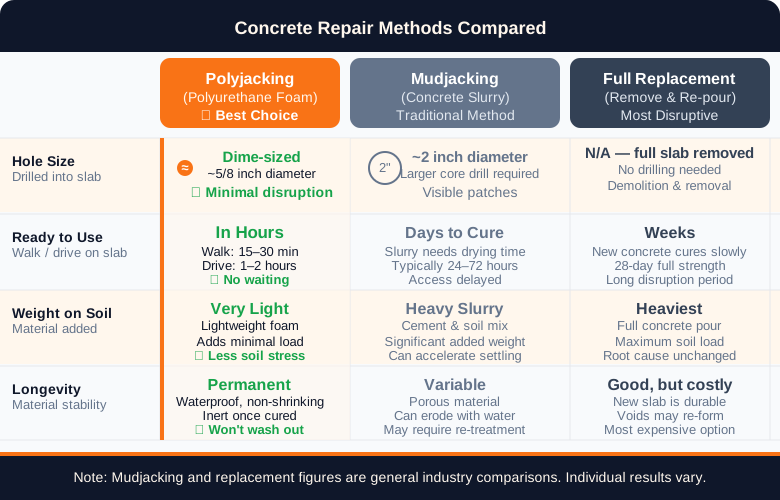
Mudjacking is still common in older Johnson County suburbs like Westwood, but it comes with real tradeoffs on a tight, older lot. It requires much larger holes and pumps in a heavy cement-based slurry, adding weight onto soil that, on a property that is decades old, may already be under stress from nearby trees and shallow fill. Polyjacking drills holes about the size of a dime and fills the void with a lightweight, waterproof polyurethane foam that expands to fill the space without the added weight or the wider holes. On a narrow Westwood driveway shared close to the property line, the smaller footprint and a return to use within hours make a real difference.
Serving Westwood and Nearby Communities
PolyJacks is based in Spring Hill and serves the whole Kansas City metro on both sides of the state line, including Westwood and the neighboring Johnson County communities of Roeland Park, Fairway, Mission Hills, Mission, Prairie Village, and Merriam. Given how small Westwood is, we're often already working a job on a street or two over when a call comes in, which is part of why homeowners here search concrete leveling near me and find us close by rather than a crew driving in from across town. For a free, no-obligation on-site estimate on your Westwood driveway, walk, or patio, call (913) 713-7794 or book online.
Why concrete settles in Westwood: the local risk data
In Westwood, about 77.7% of Johnson County's soil rates high-shrink-swell (USDA). At just 0.41 square miles Westwood is among Johnson County's smallest cities, its slabs tracing to homes built from the late 1940s onward.
Kansas City averages about 80 freeze-thaw days a winter — 79.6 over the last 31 winters at KCI (NOAA station records, 1995–2026).
Sources: USDA SSURGO · NOAA / ACIS (KCI) · local record. See the full KC Concrete Settlement Risk Index.
Our concrete leveling services
Driveway Leveling
Raise a sunken driveway (or a slab that's dropped at the garage) back to level in a few hours, no tear-out.
Level your driveway slabSidewalk Leveling
Kill trip hazards and even out uneven walks and paths: safer footing, less liability.
Level a settled sidewalkPatio Leveling
Re-level a patio that's settled, split at the seams, or pools water after every rain.
Patio levelingGarage Floor Leveling
Lift a settled garage floor slab back to even, without jackhammering it out.
Raise a sunken garage floorPool Deck Lifting
Raise a sunken pool deck back to level without draining the pool. Foam won't wash out.
Level an uneven pool deckPorch & Step Leveling
Bring settled porches, stoops, and concrete steps back to safe, even height.
Lift a settled porchCommercial Leveling
Warehouse floors, ADA trip hazards, parking and loading areas — leveled with minimal downtime.
Commercial levelingConcrete leveling near Westwood
PolyJacks is your local concrete leveling contractor in Westwood — we serve Westwood and the surrounding communities:
Real job documentation
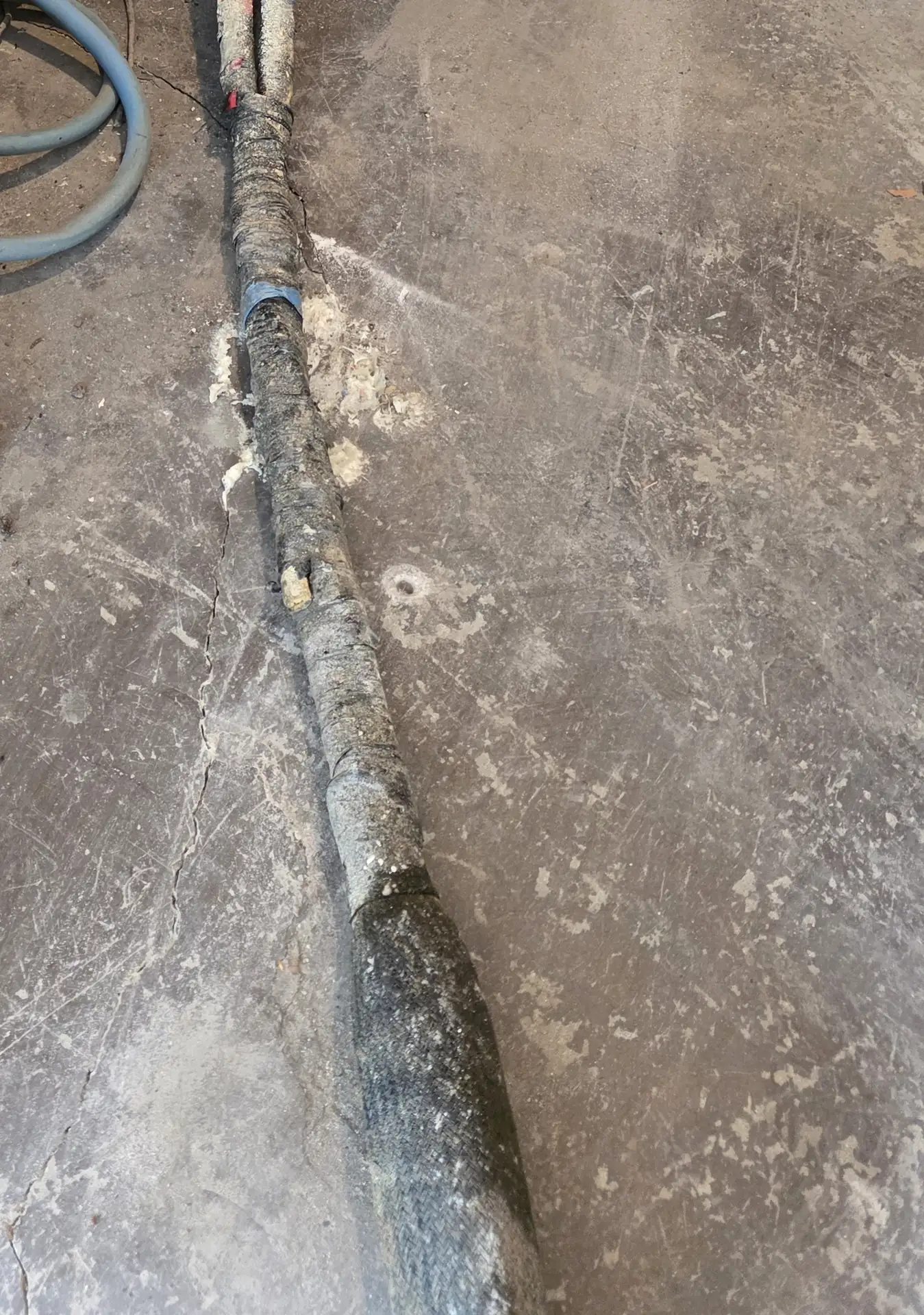
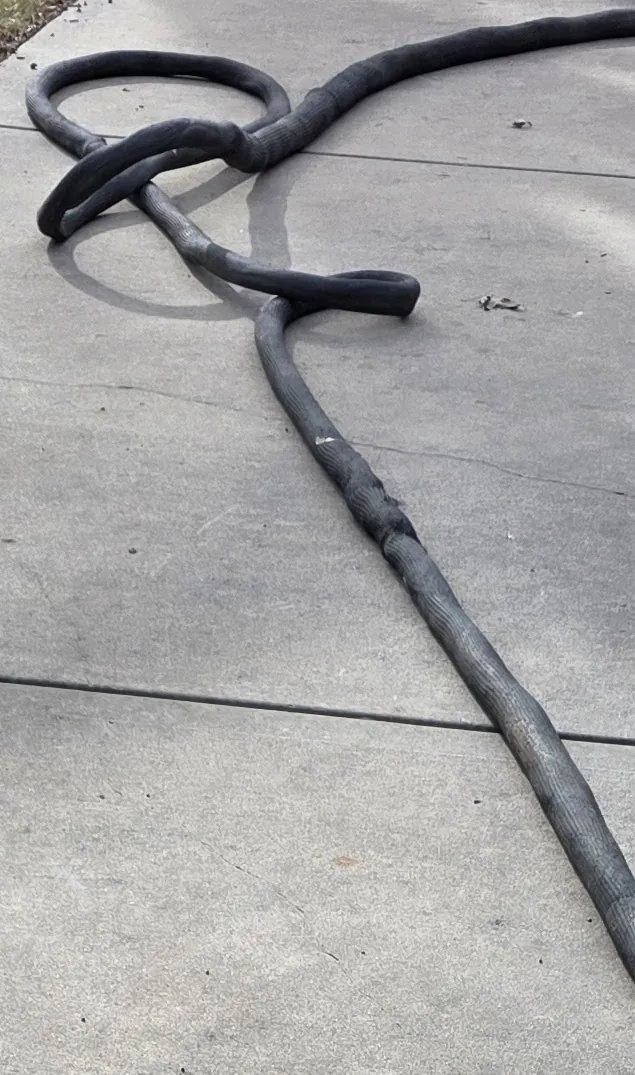
How polyjacking works in 90 seconds
Our team walks you through the three-step process: dime-sized holes, high-density polyurethane foam that fills every void and compresses the soil beneath your slab, and use within hours with no heavy trucks. Call (913) 713-7794 or book a free estimate below.
Frequently asked
How much does concrete leveling cost in Westwood?
We don't quote prices without seeing the slab — PolyJacks gives a free on-site estimate so you get a real number based on your driveway or walkway, not a guess.
Will leveling work on a really old driveway?
In many cases, yes. As long as the concrete itself is still structurally sound, polyurethane foam can lift and support even decades-old slabs without replacing them.
Is the repair permanent?
The foam is waterproof and won't break down in the ground the way mudjacking slurry can, so it's built to last under normal use.
Do you serve Roeland Park, Fairway, and Mission Hills too?
Yes, we regularly work throughout that stretch of Johnson County, including Roeland Park, Fairway, Mission Hills, Mission, Prairie Village, and Merriam.
How long before I can park in my driveway again?
On a leveled Westwood driveway, most homeowners can walk across it after about 15 to 30 minutes and park on it again within 1 to 2 hours, even on a narrow lot that sits close to the property line.
How old is Westwood, and does that matter for my driveway?
Westwood incorporated in 1949 after postwar residents organized to bring in streets and utilities. Most of its original concrete dates to that same era and is now approaching 75 years old, which is part of why voids tend to show up here.
Looking for concrete leveling near me in Westwood?
That's what PolyJacks does in Westwood — most leveling jobs finish in 2–4 hours and the slab is back in service within hours (walk on it in 15–30 minutes, drive in 1–2 hours). Book a free estimate.
Free concrete leveling estimate in Westwood
No obligation. Honest advice, usable within hours. If foam isn't the right fix, we'll tell you straight.
Pick a time that works for you
Book right here on this page. Prefer to talk? Call (913) 713-7794.