
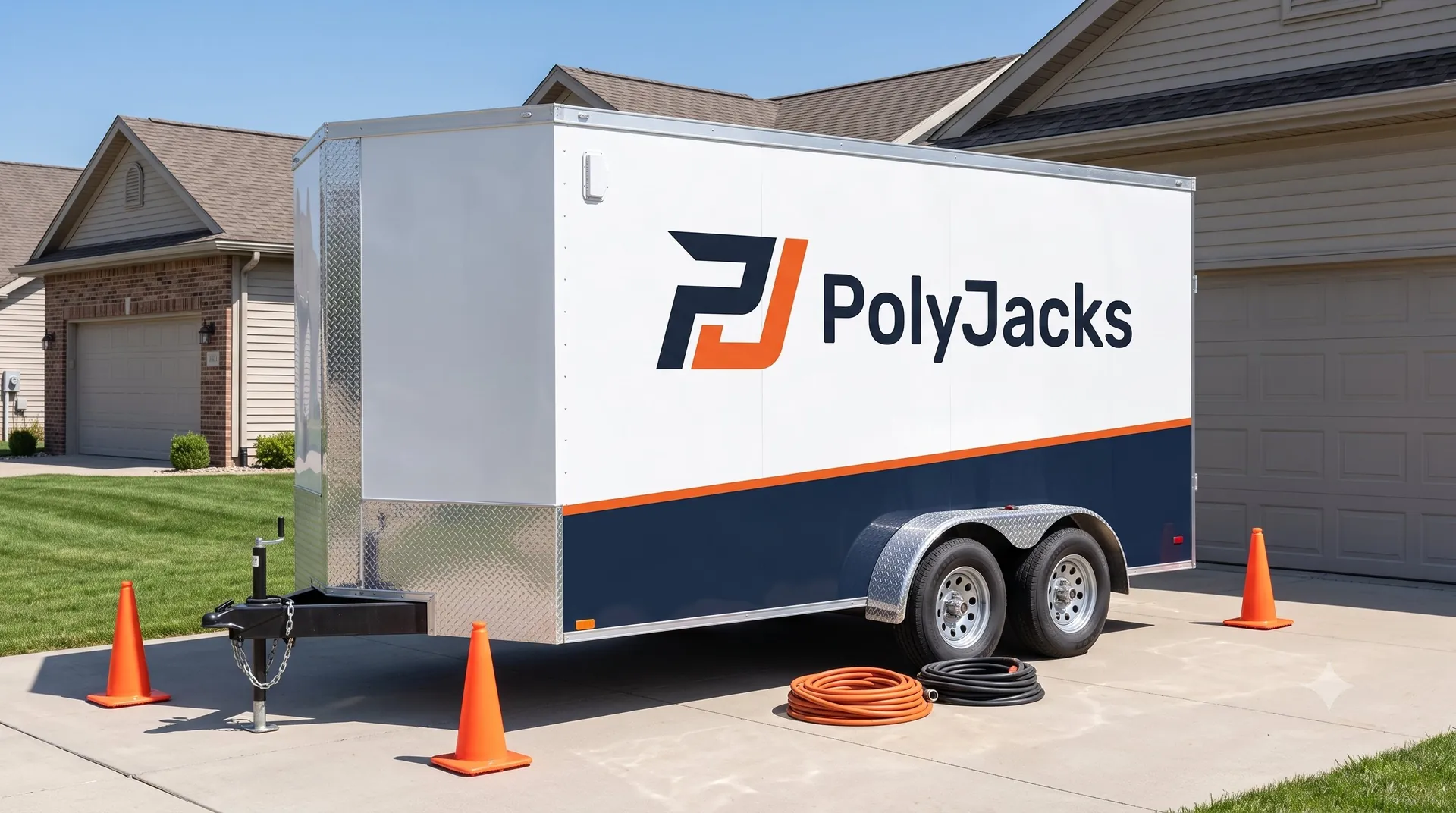
 Illustrative
Concrete Leveling in Pleasant Valley, MO
PolyJacks levels sunken driveways, patios, and walkways in Pleasant Valley, MO with polyurethane foam: free on-site estimate, no full slab replacement required.
Pleasant Valley started out as a small Clay County farming community, formally organized as a village in 1955 and incorporated as a fourth-class city on January 14, 1963: at the time with no street department, no fire department, no sewers, and a water system dating back to a 1930s WPA project. Growth arrived fast after that: population nearly doubled between 1980 and 1990 (1,545 to 2,731), then peaked at 3,321 in 2000 before declining every decade since, down to 2,743 by 2020. That means most of Pleasant Valley's driveways and patios were poured during one concentrated building boom four decades ago, on infrastructure that was still being built out underneath them, which is part of why so much of the town's concrete is settling on a similar timeline today.
A Farming Village That Grew Up Fast, Then Slowed Down
Pleasant Valley started as a Clay County farming community, organized as a village in 1955 and incorporated as a fourth-class city on January 14, 1963. At the time of incorporation, the young city had no street department, no fire department, no sewer system, and a water system that dated back to a 1930s WPA project - basic infrastructure was still catching up to the population. That population arrived in a hurry: Pleasant Valley grew from 1,545 residents in 1980 to 2,731 by 1990, a 76.8% jump in a single decade, then kept climbing to a peak of 3,321 residents in 2000. Every decade since has seen a decline instead, down to 2,743 residents by 2020.
Why concrete sinks in Pleasant Valley
Pleasant Valley's Northland location puts it squarely on Clay County's expansive clay soil, ground that swells with spring moisture and shrinks back hard once the dry summer months set in. Repeated year after year, along with freeze-thaw winters, that movement opens up voids beneath driveways, walkways, and patios. A lot of the area's residential concrete was poured as the community grew outward from farmland toward Liberty and North Kansas City, often without the soil compaction standards used today. Add downspouts and yard grading that push water toward the foundation instead of away from it, and it's clear why Pleasant Valley homeowners start looking for concrete leveling every spring, once the winter's freeze-thaw damage finally shows itself along a driveway edge. For a deeper look at the soil and drainage factors behind KC metro settlement, see why concrete sinks in Kansas City.
What we level in Pleasant Valley
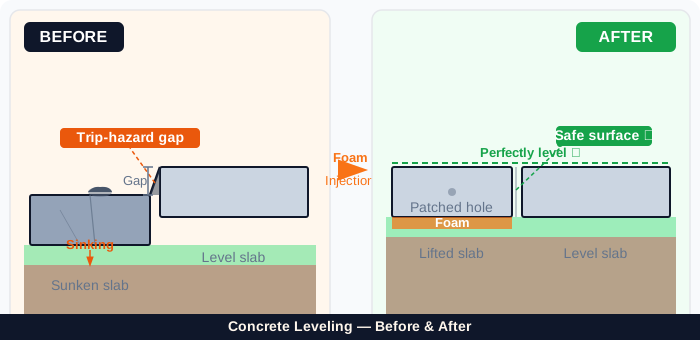
PolyJacks levels the full range of sunken concrete around Pleasant Valley homes - driveways with a dip near the garage floor, cracked or shifted sidewalks and walkways, patios pulling away from the back of the house, pool decks, and porches or steps that have settled unevenly. We also fill voids under slabs before they widen further and become a bigger repair down the road. Every job starts with a free, on-site estimate, where we look honestly at what's causing the settling on your Clay County lot and say plainly whether foam is the right fix for your situation, or whether drainage work needs to happen first before any leveling makes sense for your property.
If your settled concrete is a pool deck or a set of porch steps, our pool deck leveling guide and concrete steps and porch leveling page cover those repairs in more detail.
Polyjacking vs. mudjacking for Pleasant Valley homeowners
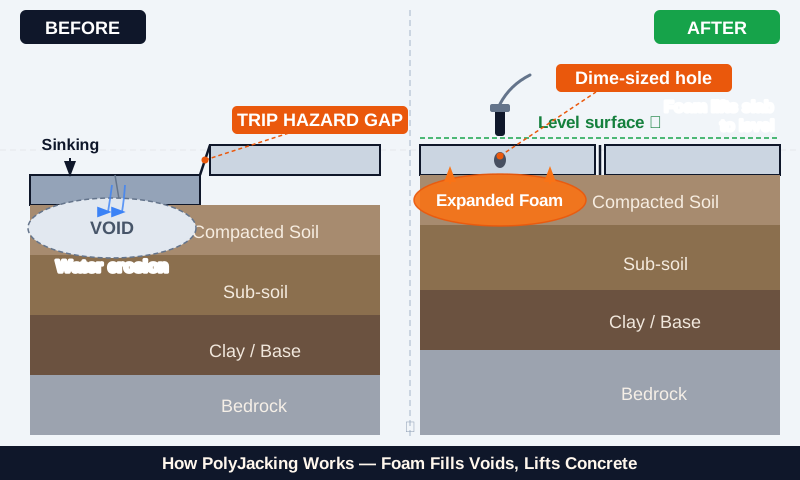
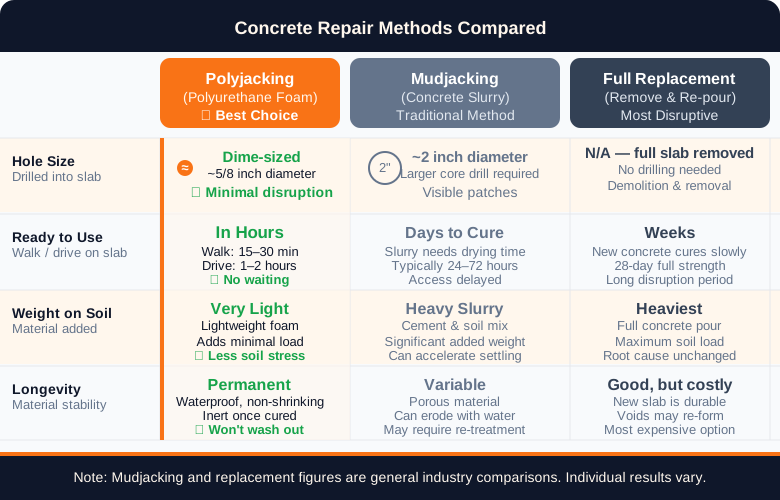
Traditional mudjacking on Pleasant Valley properties means pumping heavy cement slurry through much wider holes, adding significant weight to soil that's already shifting with the seasons. PolyJacks injects polyurethane foam instead, through holes about the size of a dime. The foam expands to fill voids and lift the slab while staying lightweight, so it won't overload the area's clay-heavy ground, and it's waterproof, so it won't break down the way mud slurry can in wet Northland soil. That's why Pleasant Valley homeowners who need driveway leveling choose foam over the traditional mud approach, especially on properties where the ground has already proven it doesn't hold weight evenly.
If you want the full side-by-side before you decide, our polyjacking vs mudjacking comparison walks through how the two methods differ.
Concrete leveling - how the visit goes
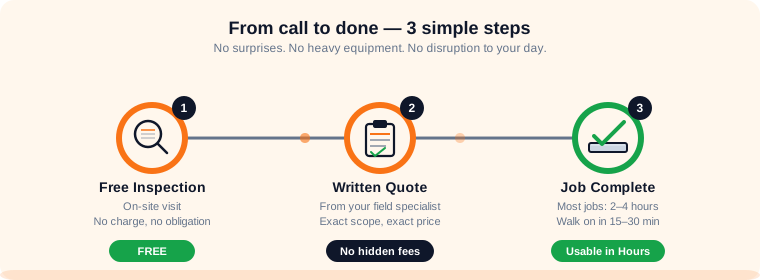
We drill a small number of dime-sized holes into the sunken concrete, inject expanding polyurethane foam underneath, and lift the slab back toward level while you watch. How a polyjacking visit works →
Serving Pleasant Valley and the surrounding Northland
PolyJacks is a locally owned business out of Spring Hill, and we work throughout Pleasant Valley and neighboring communities including Gladstone, Liberty, North Kansas City, Sugar Creek, Riverside, and Independence. We're familiar with how the Northland's clay soil and rolling terrain behave from one small community to the next, so we know what to expect before we even pull up to your driveway or walk your back patio. If concrete has settled anywhere on your property - a driveway, a back patio, or a front walkway - call (913) 713-7794 or book online for a free estimate with no obligation to book anything afterward at all.
Why concrete settles in Pleasant Valley: the local risk data
In Pleasant Valley, about 65.5% of Clay County's soil rates high-shrink-swell (USDA). Pleasant Valley incorporated only in 1963 with a water system dating to a 1930s WPA project, so parts of its slab and utility stock are unusually old for a small city.
Kansas City averages about 80 freeze-thaw days a winter — 79.6 over the last 31 winters at KCI (NOAA station records, 1995–2026).
Sources: USDA SSURGO · NOAA / ACIS (KCI) · local record. See the full KC Concrete Settlement Risk Index.
Our concrete leveling services
Driveway Leveling
Raise a sunken driveway (or a slab that's dropped at the garage) back to level in a few hours, no tear-out.
Level your driveway slabSidewalk Leveling
Kill trip hazards and even out uneven walks and paths: safer footing, less liability.
Level a settled sidewalkPatio Leveling
Re-level a patio that's settled, split at the seams, or pools water after every rain.
Patio levelingGarage Floor Leveling
Lift a settled garage floor slab back to even, without jackhammering it out.
Raise a sunken garage floorPool Deck Lifting
Raise a sunken pool deck back to level without draining the pool. Foam won't wash out.
Level an uneven pool deckPorch & Step Leveling
Bring settled porches, stoops, and concrete steps back to safe, even height.
Lift a settled porchCommercial Leveling
Warehouse floors, ADA trip hazards, parking and loading areas — leveled with minimal downtime.
Commercial levelingConcrete leveling near Pleasant Valley
PolyJacks is your local concrete leveling contractor in Pleasant Valley — we serve Pleasant Valley and the surrounding communities:
Real job documentation
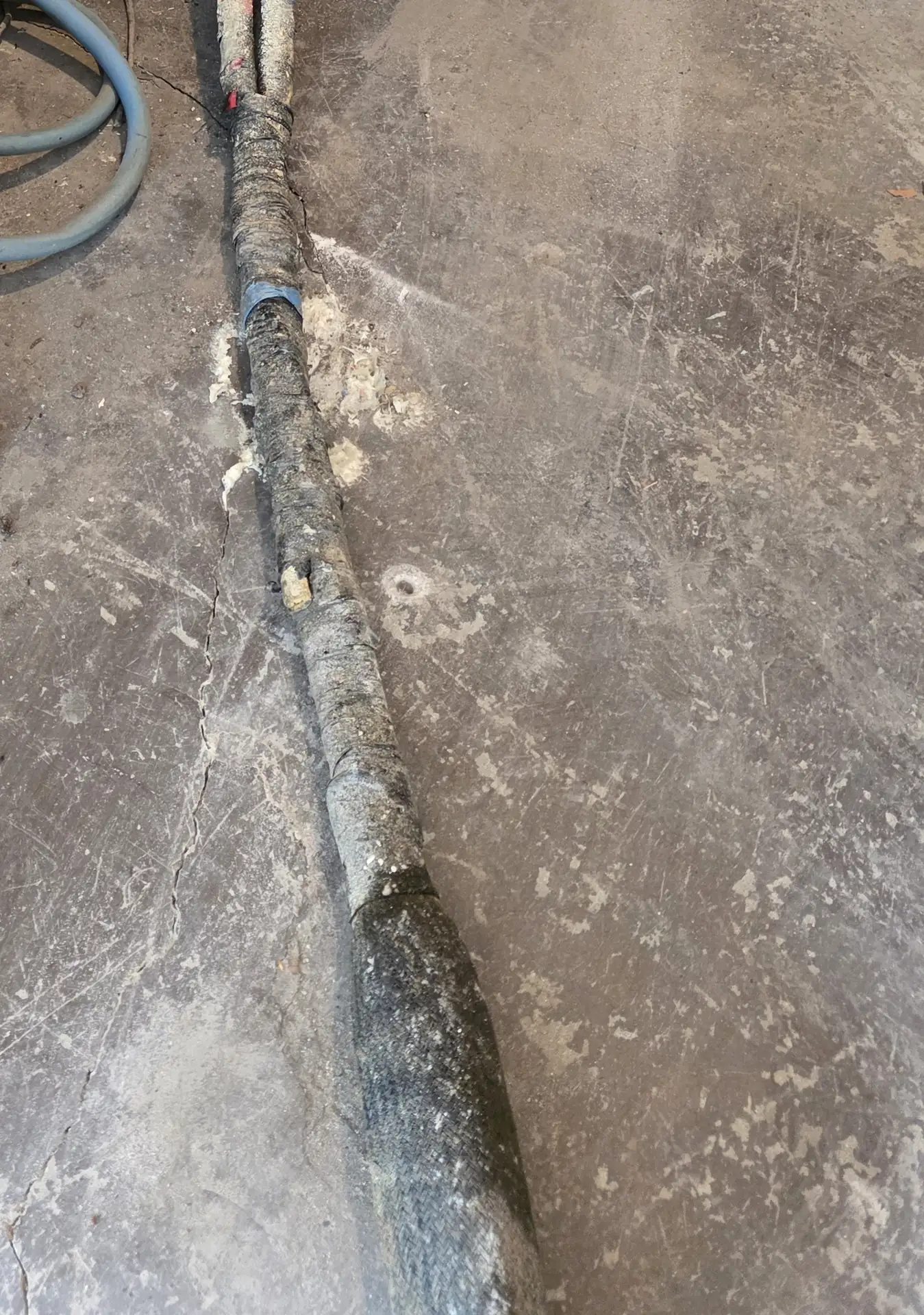
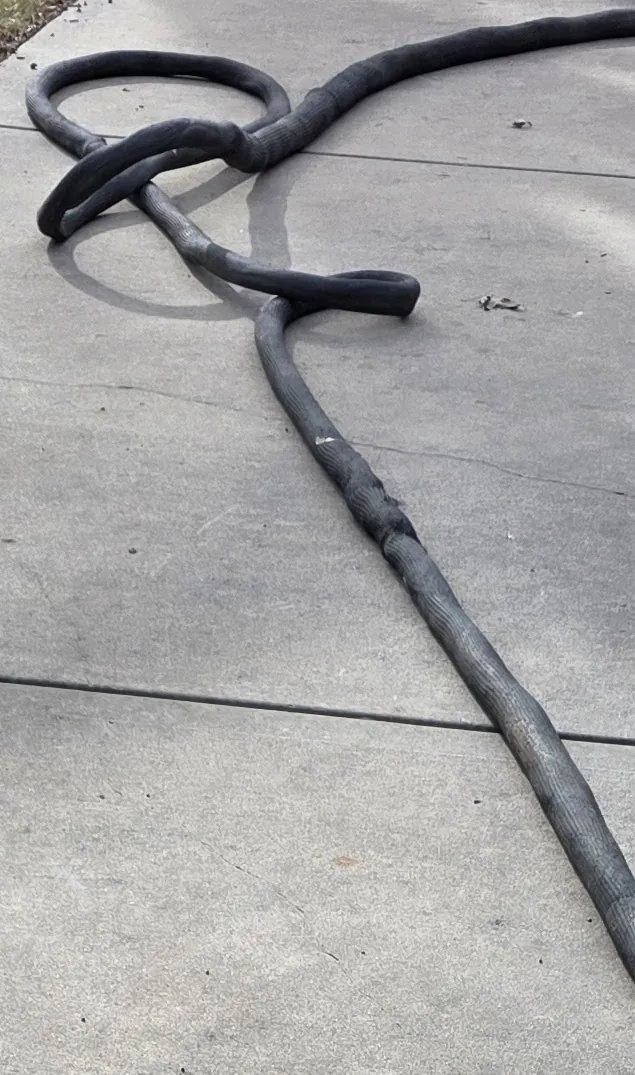
How polyjacking works in 90 seconds
Our team walks you through the three-step process: dime-sized holes, high-density polyurethane foam that fills every void and compresses the soil beneath your slab, and use within hours with no heavy trucks. Call (913) 713-7794 or book a free estimate below.
Frequently asked
What does concrete leveling cost in Pleasant Valley?
It depends on the slab size and how much settling has occurred, so we don't quote sight unseen. Every Pleasant Valley estimate is free and done in person.
How long until the concrete is usable again?
For a Pleasant Valley driveway or patio, expect to walk on it in about 15 to 30 minutes and drive on a driveway within 1 to 2 hours - no multi-day cure time like a new pour.
Is the foam repair permanent?
The polyurethane foam is waterproof and holds up well long-term. We'll walk you through your specific soil conditions honestly during the free estimate.
Will the leveled slab match the rest of my concrete?
Yes - since we're lifting your existing slab rather than pouring new concrete, the color and finish stay the same.
Do you serve towns near Pleasant Valley?
Yes, including Gladstone, Liberty, North Kansas City, Sugar Creek, Riverside, and Independence, along with the rest of the KC metro.
When did Pleasant Valley become a city?
Pleasant Valley was organized as a village in 1955 and incorporated as a fourth-class city on January 14, 1963. At the time it had no sewer system yet and a water system dating back to a 1930s WPA project.
Searching “concrete leveling near me” from Pleasant Valley — who covers it?
Yes — PolyJacks levels concrete in Pleasant Valley, MO. Most jobs take 2–4 hours, you can walk on the slab in 15–30 minutes, and drive on it in 1–2 hours, back in use the same day. Book a free Pleasant Valley estimate.
Free concrete leveling estimate in Pleasant Valley
No obligation. Honest advice, usable within hours. If foam isn't the right fix, we'll tell you straight.
Pick a time that works for you
Book right here on this page. Prefer to talk? Call (913) 713-7794.