
 Illustrative
Concrete Leveling in Lee's Summit, MO
Lee's Summit earned its name from sitting at the highest point on the old Missouri Pacific rail line between Kansas City and St. Louis: platted as "Strother" in 1865, renamed Lee's Summit in 1868, and still 1,027 feet above sea level today.
That ridge elevation shapes how water moves off local lots. But the bigger story for a homeowner with a sinking driveway is timing: Lee's Summit grew from 2,554 people in 1950 to 8,267 in 1960 to more than 107,000 today, roughly a 40-times boom that happened almost entirely after 1960. Most concrete in Lee's Summit isn't ancient; it was poured during a compressed 60-year suburban build-out over what used to be rural farmland. PolyJacks levels sunken concrete throughout Lee's Summit with a free, no-obligation estimate.
Why Lee's Summit's Ridge Origin Still Shapes Concrete Settlement
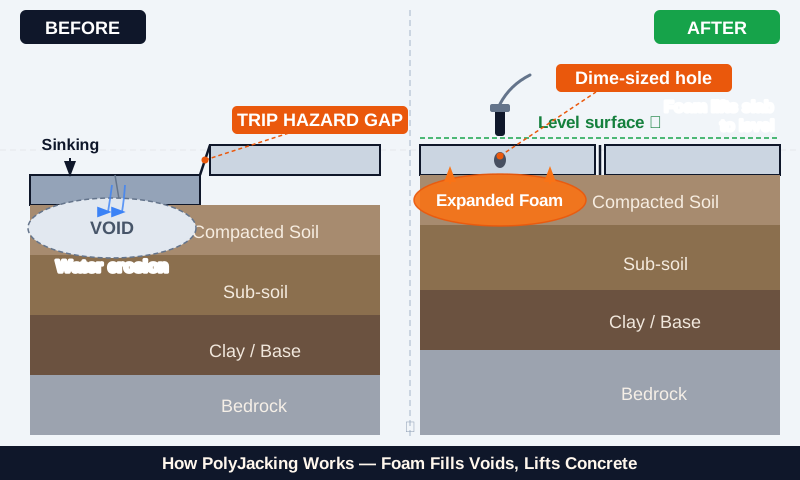
Lee's Summit sits at what was once the highest point on the Missouri Pacific rail line between Kansas City and St. Louis — 1,027 feet of elevation that gave the town its name after it was renamed from "Strother" in 1868. That same ridge geography is still doing work under your driveway today. Water doesn't sit and soak into flat ground here the way it might elsewhere in the metro. It runs downhill, fast, off sloped lots and toward lower-lying neighbors. Over years, that moving water can carry fine soil particles out from under a slab edge, opening a void the concrete eventually settles into. It's a different failure pattern than pure clay shrink-swell: less about the ground pulling away in a dry summer, more about the ground being physically washed out from underneath, one rain at a time. Homes on Lee's Summit's steeper streets and cul-de-sacs see this most, especially where a downspout or grading directs water straight at a driveway or patio edge.
A Boomtown Built Since 1960: Why Most Lee's Summit Concrete Isn't Ancient
Lee's Summit's population tells a specific story: 2,554 residents in 1950, 8,267 by 1960, and more than 107,000 today, roughly 40 times larger, with almost all of that growth landing after 1960. That matters for concrete because it means the overwhelming majority of Lee's Summit's driveways, sidewalks, and patios were poured during a single compressed 60-year suburban build-out on what used to be open farmland, not across centuries of gradual infill the way some older river towns developed. It's a different age profile than a city like Prairie Village, where nearly the whole town was built in a five-year window in the late 1940s and early 1950s. In Lee's Summit, you'll find 1960s-70s slabs from the earliest suburban wave right next to 1990s and 2000s pours from the newest subdivisions, often on the same street. Either age group can settle. The older slabs from decades of clay cycling, the newer ones from original fill dirt that hadn't finished compacting before the concrete went down.
New Longview: Concrete Poured on a Century-Old Dairy Farm
One of Lee's Summit's most distinctive neighborhoods has a settlement story written into its ground before a single house was built there. Lumber baron Robert A. Long developed the 1,780-acre Longview Farm dairy estate starting in 1912-1914: more than 50 structures and roughly 2,000 workers at its peak, one of the most ambitious private farm developments in the region's history. In 2004, part of that former dairy farm was redeveloped into New Longview, a roughly 260-acre New Urbanist neighborhood of traditional-style homes. The concrete under New Longview's driveways and sidewalks sits on reclaimed pasture and farm ground that was graded and filled about two decades ago: recent enough that some of that fill is still settling under load. If you own a home in New Longview and you're seeing a driveway or patio dip even though the house itself isn't old, the fill underneath (not the age of the concrete) is usually the reason.
Polyjacking vs. Mudjacking for Lee's Summit Homeowners
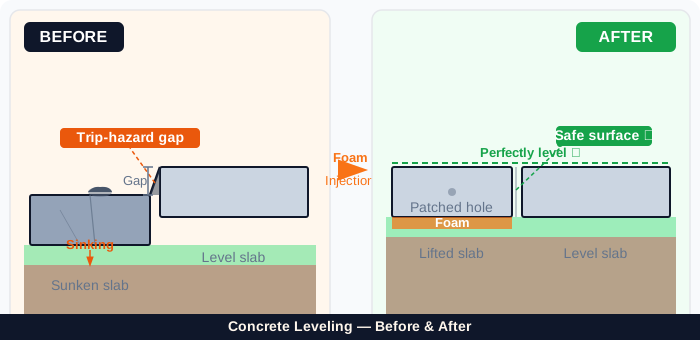
"Mudjacking" is still the term a lot of Lee's Summit homeowners search for, even when what they actually want compared is old slurry-based lifting against modern polyurethane foam. Mudjacking pumps a heavy, cement-based mix through holes several inches wide, and that extra weight is a real liability on the same eroded, sloped, or freshly-filled ground that likely caused the settling here in the first place: more weight on softened or loosely compacted soil can make a void worse instead of fixing it. Polyjacking uses foam injected through holes about the size of a dime; the foam expands to fill the void, cures in minutes, and weighs a fraction of an equivalent volume of mud slurry. Because it's also waterproof, it holds up to the runoff Lee's Summit's ridge-and-slope lots see with every heavy rain, instead of slowly washing out the way porous mudjacking fill can over time.
Serving Lee's Summit and Eastern Jackson County
PolyJacks drives out to handle concrete leveling throughout Lee's Summit and the towns around it — Greenwood and Raytown close by, Grandview and Raymore to the west and south, and Blue Springs and Pleasant Hill nearby as well. Every visit starts with a free, on-site estimate where we explain exactly what's driving your settlement: ridge erosion, original clay cycling, or fresh fill under a newer subdivision like New Longview, and if foam isn't the right fix for your situation, we'll say so instead of pushing a job you don't need. Call or text (913) 713-7794, or book online to get a visit on the calendar.
Why concrete settles in Lee's Summit: the local risk data
In Lee's Summit, about 43.0% of Jackson County's soil rates high-shrink-swell, and about 75.0% across the Cass County line (USDA). Lee's Summit has grown about forty-fold since 1950, including New Longview on former farm ground. It marks the highest point on the old rail line between Kansas City and St. Louis, reaching into Cass County.
KC winters bring about 75.2 freeze-thaw days (NOAA).
Sources: USDA SSURGO · NOAA / ACIS (KCI) · local record. See the full KC Concrete Settlement Risk Index.
Our concrete leveling services
Commercial Leveling
Commercial levelingConcrete leveling near Lee's Summit
PolyJacks is your local concrete leveling contractor in Lee's Summit — we serve Lee's Summit and the surrounding communities:
Neighborhoods across Lee's Summit:
Real job documentation
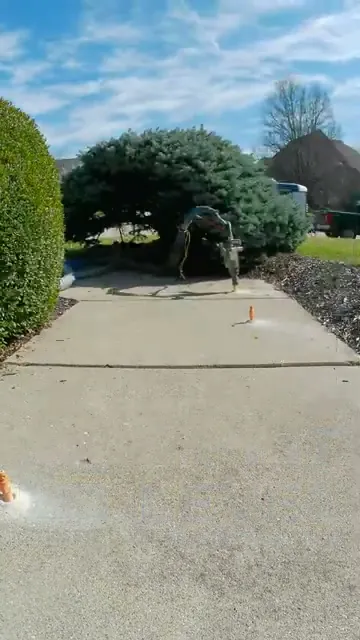
How polyjacking works in 90 seconds
Our team walks you through the three-step process: dime-sized holes, high-density polyurethane foam that fills every void and compresses the soil beneath your slab, and use within hours with no heavy trucks. Call (913) 713-7794 or book a free estimate below.
Frequently asked
Why is Lee's Summit called Lee's Summit, and does that history affect my concrete?
The town sat at the highest point on the old Missouri Pacific rail line between Kansas City and St. Louis, hence the name: renamed from "Strother" in 1868. That same ridge elevation means water runs off local lots fast, and over years fast-moving runoff can wash soil out from under a driveway or patio edge, which is a common settlement pattern we see on Lee's Summit's sloped streets.
Is my concrete unusually old just because it's in Lee's Summit?
Not necessarily. Lee's Summit grew about 40 times over since 1950, almost entirely after 1960, so the city has a mix of 1960s-70s first-wave suburban concrete and much newer 1990s-2000s pours: sometimes on the same block. Age alone doesn't tell you much; what matters is whether the ground underneath has finished settling.
I live in New Longview? Why is my concrete settling if the neighborhood is new?
New Longview was built starting in 2004 on part of the former Longview Farm dairy estate, graded and filled over what used to be pasture and farmland. Fill dirt continues compacting under load for years after it's placed, so even a driveway poured within the last two decades can develop a void as that reclaimed ground finishes settling. It's not a sign of a construction defect. It's the fill catching up.
What does concrete leveling cost in Lee's Summit?
Cost depends on slab size and how much foam is needed to fill the void, so we don't quote a price sight-unseen. For scale, we've leveled comparable slabs elsewhere in the metro for a fraction of the replacement bids homeowners had on the same jobs. Every estimate in Lee's Summit is free, so you'll know your specific number before deciding anything.
How fast can I use my driveway or patio again?
Usually you can walk on it in 15-30 minutes and drive on it in about 1-2 hours, since the foam cures quickly.
Do you serve areas near Lee's Summit like Raymore, Blue Springs, or Grandview?
Yes, we regularly work throughout eastern Jackson County, including Greenwood, Raytown, Grandview, Raymore, Blue Springs and Pleasant Hill.
Is there a concrete leveling company near me in Lee's Summit, MO?
That's what PolyJacks does in Lee's Summit — most leveling jobs finish in 2–4 hours and the slab is back in service within hours (walk on it in 15–30 minutes, drive in 1–2 hours). Book a free estimate.
Free concrete leveling estimate in Lee's Summit
No obligation. Honest advice, usable within hours. If foam isn't the right fix, we'll tell you straight.
Book your free estimate
Pick a time that works for you. Free on-site inspection, no obligation. Prefer to talk? Call (913) 713-7794.