
 Illustrative
Concrete Leveling in Blue Springs, MO
Blue Springs has an odd founding story: the town started around a spring in 1825, but in 1878 it picked up and moved about a mile east so it could sit next to a new Chicago & Alton Railroad station.
The historic downtown you see today is the 1878 railroad site, not the original spring site. The bigger story for a homeowner with a sinking driveway, though, is the 1970s: Blue Springs grew from 6,779 people in 1970 to 25,936 by 1980, a 282% jump in a single decade. That means an unusually large share of the city's driveways, sidewalks, and patios were all poured within the same few years and are now aging out together. PolyJacks levels sunken concrete throughout Blue Springs with a free, no-obligation estimate.
The Town That Moved for the Railroad
Blue Springs didn't start where its downtown sits today. Pioneers first settled around 1825 next to a spring feeding a tributary of the Little Blue River: cool, reliable water that made the spot a popular stop for Santa Fe Trail travelers, and the reason for the name. Franklin Smith opened the town's first post office there in 1845. Then in 1878, the Chicago & Alton Railroad announced it would build a station about a mile east of that original settlement, and the town picked up and moved its center to be next to it, chasing the commerce a rail stop would bring. Blue Springs incorporated on September 7, 1880; the settlement itself dates to 1825, making it Jackson County's 4th settlement — older than Kansas City. The practical result: the historic downtown you'd drive through today sits on ground that's been a town center for about 145 years, not the roughly 200 years since the original 1825 spring settlement.
A City Built in a Single Decade: the 1970s Boom
Census figures tell a striking story for Blue Springs: 2,555 residents in 1960, 6,779 in 1970, then 25,936 by 1980. A 282% jump in that one decade alone, before growth settled into a steadier pace (40,153 in 1990, 48,080 in 2000, 52,575 in 2010, 58,603 in 2020). No other decade comes close. What that means for a homeowner today is that an unusually large share of Blue Springs' driveways, sidewalks, garage floors, and patios were all poured within roughly the same few years in the 1970s, on lots that were rural farmland the decade before. Concrete poured in that same tight window tends to hit the same settlement problems at the same time — 50-plus years of clay soil swelling and shrinking with the seasons, all landing on a whole neighborhood's slabs at once instead of trickling in gradually across a century of infill.
Fleming Park and Blue Springs' Newer Ground
Growth since the 1970s boom has pushed south and east toward Fleming Park, a 7,809-acre park that holds two separate lakes — Blue Springs Lake and Lake Jacomo. Subdivisions built out toward that side of town sit on ground graded and filled well after the older downtown-area streets were already established, and fresh fill dirt around a foundation can keep compacting unevenly for years after a slab is poured over it. That gives Blue Springs two distinct settlement patterns depending on which side of town you're on: older 1970s-era slabs settling from long-run clay cycling near downtown, and newer slabs near Fleming Park settling because the fill underneath hasn't fully finished compacting yet. Either one shows up the same way. A dip, a crack at a control joint, or a hollow sound when you knock on the concrete, and both get fixed the same way, without replacing the slab.
Polyjacking vs. Mudjacking in Blue Springs
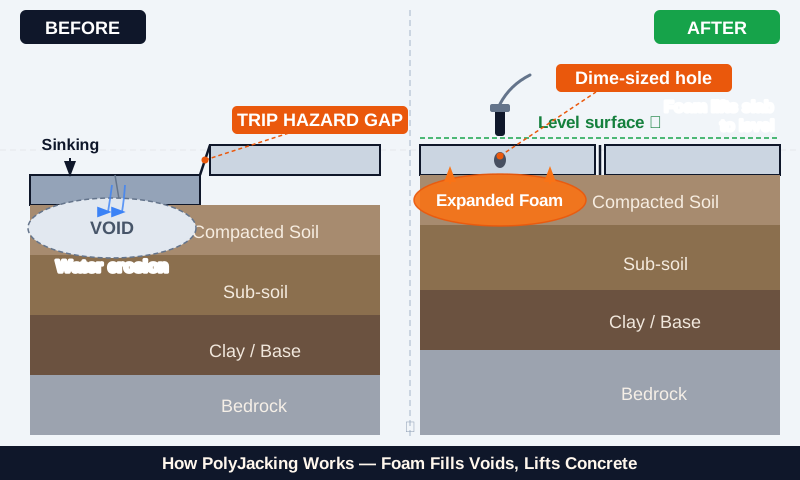
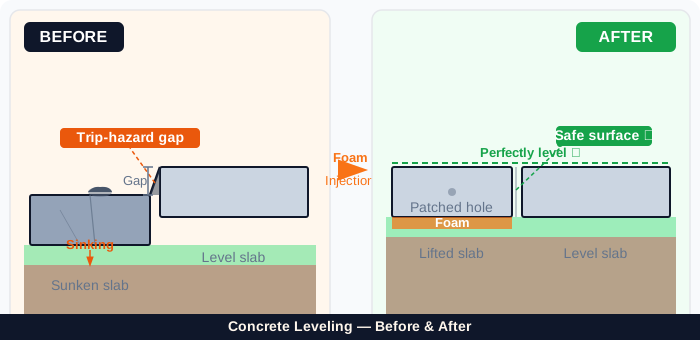
Mudjacking pumps a heavy soil-and-mortar slurry through holes an inch or two wide to push a slab back up, and it's been around for decades. The tradeoff is weight. That much added mass can settle again on ground that's still compacting, which describes a fair amount of the newer construction toward Fleming Park. Polyjacking uses polyurethane foam instead, injected through holes about the size of a dime. It's far lighter than mudjacking slurry, so it doesn't add new stress to soil that hasn't finished settling, and it's waterproof, so it won't wash out if water gets under the slab again. For Blue Springs homeowners comparing mudjacking Blue Springs and polyjacking Blue Springs, foam tends to hold up better whether the ground underneath is 50-year-old clay or fresh fill, though we'll look at your specific slab before recommending either one.
Serving Blue Springs, Grain Valley, Oak Grove, and Lee's Summit
PolyJacks is based in Spring Hill, Kansas, and Blue Springs falls well within our Kansas City metro service area — Grain Valley and Oak Grove to the east, Independence, Lee's Summit, Raytown, and Buckner closer to the city. That's true whether your slab sits on 1970s-era ground near the historic downtown or newer fill out toward Fleming Park. Every visit starts with a free, on-site estimate and a straight answer about what's driving the settlement. If foam isn't the right fix for your situation, we'll say so instead of pushing a job you don't need. Call or text (913) 713-7794, or book online to get a visit on the calendar.
Why concrete settles in Blue Springs: the local risk data
In Blue Springs, about 43.0% of Jackson County's soil rates high-shrink-swell (USDA). Blue Springs shifted its center a mile east to the railroad in 1878. Its population then exploded 283 percent through the 1970s along Interstate 70.
KC winters bring about 75.2 freeze-thaw days (NOAA).
Sources: USDA SSURGO · NOAA / ACIS (KCI) · local record. See the full KC Concrete Settlement Risk Index.
Our concrete leveling services
Commercial Leveling
Raise a warehouse or dock floorConcrete leveling near Blue Springs
PolyJacks is your local concrete leveling contractor in Blue Springs — we serve Blue Springs and the surrounding communities:
Neighborhoods across Blue Springs:
Real job documentation
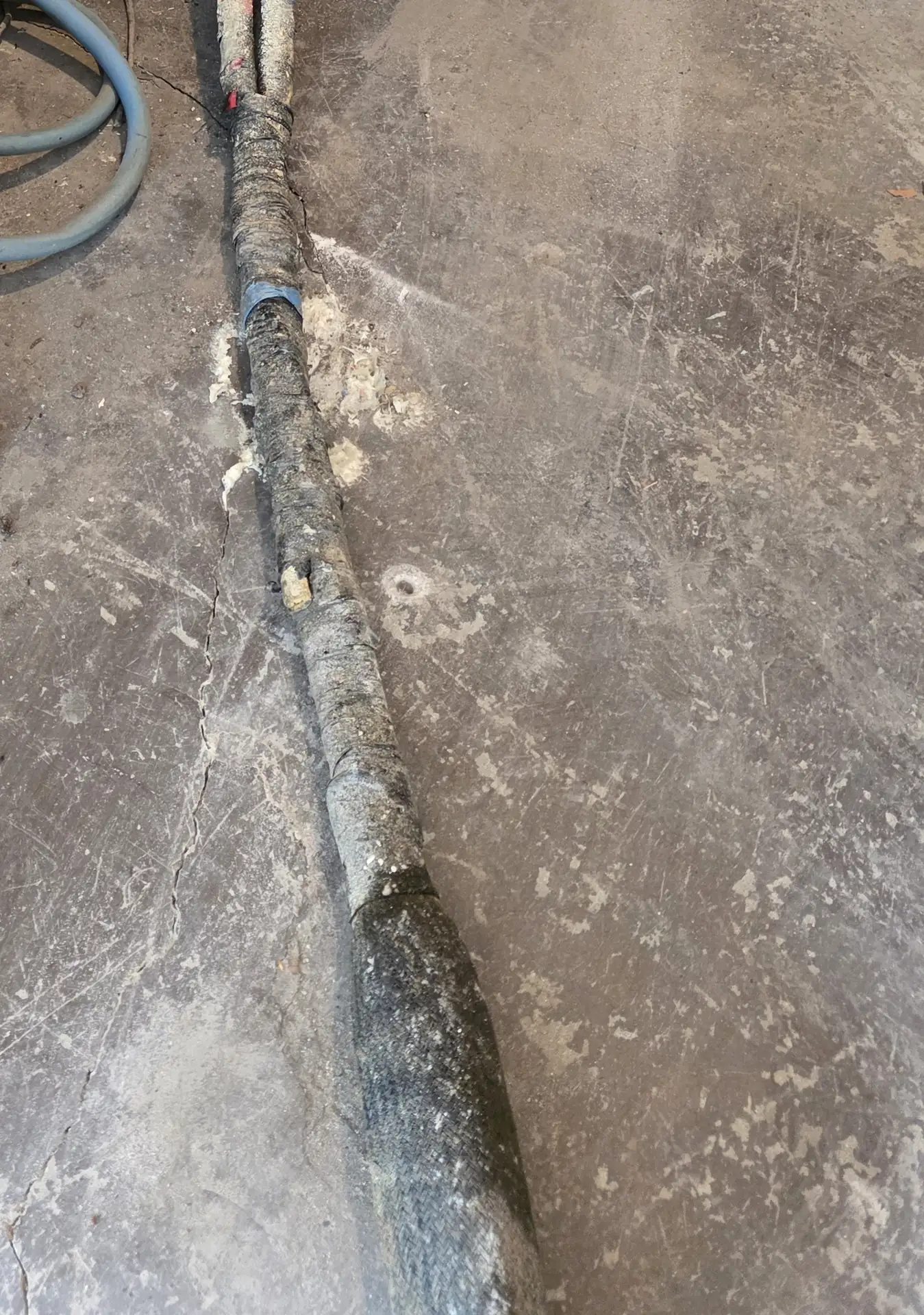
How polyjacking works in 90 seconds
Our team walks you through the three-step process: dime-sized holes, high-density polyurethane foam that fills every void and compresses the soil beneath your slab, and use within hours with no heavy trucks. Call (913) 713-7794 or book a free estimate below.
Frequently asked
Why did Blue Springs move locations, and does that affect my concrete?
The town started at a spring around 1825, then relocated about a mile east in 1878 to sit next to a new Chicago & Alton Railroad station. It's a fun piece of local history, but it doesn't change how your concrete settles today. That history entry is here mostly because people are curious why 'downtown' Blue Springs isn't at the original spring site.
Why does so much of Blue Springs' concrete seem to be the same age?
Blue Springs grew 282% in the 1970s alone: from 6,779 people in 1970 to 25,936 by 1980, so a large share of the city's original driveways, sidewalks, and patios were poured within a few years of each other. That means whole streets can start showing clay-cycling settlement around the same time, decades later.
My house near Fleming Park is newer? Why is my concrete already sinking?
Newer construction toward Fleming Park sits on ground that was graded and filled more recently than the older streets near downtown. Fill dirt keeps compacting unevenly under load for years after a slab is poured, so a driveway or patio can develop a void even when the house itself isn't old.
How much does concrete leveling cost in Blue Springs?
Cost depends on slab size and how much foam is needed, so we don't quote a price sight-unseen. For scale, we've leveled a comparable driveway elsewhere in the metro for a fraction of its replacement bid, and a garage floor for a fraction of its bid as well. Every Blue Springs estimate is free, so you'll have your own number before deciding anything.
How long until I can use my driveway or patio again?
The foam cures in minutes. Most people can walk on it within 15 to 30 minutes and drive on it in about 1 to 2 hours, so most Blue Springs jobs are back in use within hours.
Do you serve Grain Valley and Lee's Summit too?
Yes. Blue Springs sits inside our regular Kansas City metro service area, which also covers Grain Valley, Oak Grove, Independence, Lee's Summit, Raytown, and Buckner.
Looking for concrete leveling near me in Blue Springs?
That's what PolyJacks does in Blue Springs — most leveling jobs finish in 2–4 hours and the slab is back in service within hours (walk on it in 15–30 minutes, drive in 1–2 hours). Book a free estimate.
Free concrete leveling estimate in Blue Springs
No obligation. Honest advice, usable within hours. If foam isn't the right fix, we'll tell you straight.
Book your free estimate
Pick a time that works for you. Free on-site inspection, no obligation. Prefer to talk? Call (913) 713-7794.