
Concrete Leveling in Lenexa, KS
K-10 highway cuts through Lenexa and informally divides the city by concrete age and failure mode.
North of K-10, the dominant housing stock dates from the 1970s and 1980s: slabs now 40 to 50 years old and entering the window when first-time settlement is most common on Wymore-Ladoga clay. South of K-10, the 1990s and 2000s subdivisions sit on fill dirt that compresses gradually under slab loads. And Old Town Lenexa, near Santa Fe Trail Drive, goes back to the 1950s and 1960s. Concrete that has cycled through 60 to 70 years of Kansas freeze-thaw and summer-dry contraction. PolyJacks lifts sunken slabs with polyurethane foam injection across all three eras.
The K-10 Divide: Lenexa's Three Concrete Eras
K-10 functions as the informal construction-era boundary in Lenexa, and it tells you a lot about what kind of slab problem you are dealing with. North of K-10, the dominant housing stock was built in the 1970s and 1980s: slabs that are now 40 to 50 years old and entering the window when cumulative Wymore-Ladoga clay cycling produces its first visible settlement. Old Town Lenexa, near Santa Fe Trail Drive and the historic downtown, goes back even further: 1950s and 1960s pours now in their sixth and seventh decade of exposure to Johnson County's freeze-thaw and summer-drought cycle. South of K-10, the era shifts to 1990s and 2000s subdivisions built during Lenexa's rapid expansion. These slabs were often poured over fill dirt brought in to grade lots quickly, and the settlement pattern here is different. Not decades of accumulated clay cycling, but gradual compression of that fill layer under the slab's own weight. All three patterns produce the same symptom. A void under the concrete, a slab that drops, but knowing which era you are in tells us what we are likely to find before we drill the first hole.
Turkey Creek and the Water-Erosion Mechanism
Most concrete settlement in Johnson County traces back to clay shrink-swell or frost heave, but in Lenexa the Turkey Creek corridor adds a third mechanism: active water erosion. The creek drains a substantial upland watershed, and after heavy rain events — Kansas City's roughly 42 annual inches arrive unevenly, with spring peaks well above the January baseline. Water migrates through open control joints and slab edges in nearby concrete. That water doesn't just push hydrostatically; it carries fine clay particles out from underneath the slab with it. The result is a void that grows with every major rain event rather than just tracking the seasonal clay cycle. If you are within a few blocks of the Turkey Creek corridor and you see a patio corner drop after wet springs or a driveway slab tilt toward the street, water erosion is likely compounding the clay story. Foam injection fills the void directly regardless of which mechanism produced it, but flagging the water path is part of what we do at the estimate, because leaving a drainage problem untreated is how any repair, foam or replacement, eventually fails.
Why Foam Outperforms Mudjacking on Lenexa's Soil
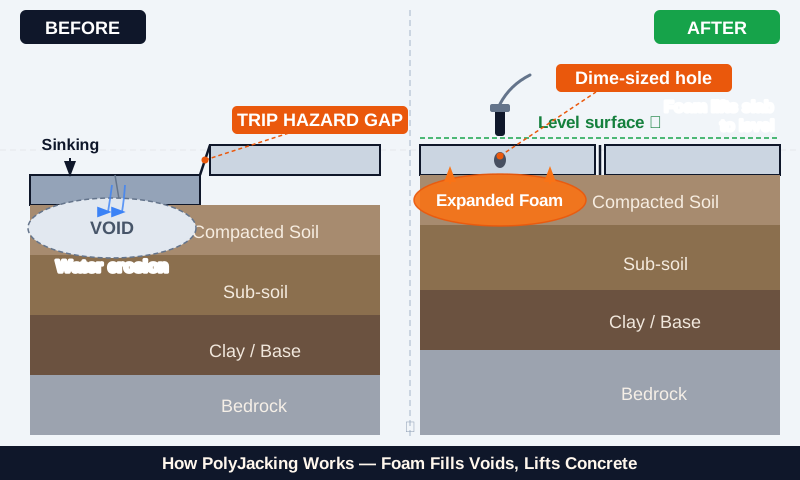
Mudjacking injects a cement-and-soil slurry under a slab to push it back up. The technique can work, but it has a specific liability on soil that has already been compromised: the slurry is heavy, and adding a dense material base to soil that was already too soft or too eroded to hold the original slab level accelerates the next round of settlement. On 40-to-50-year Wymore-Ladoga clay north of K-10. Soil that has been cycling through shrink-swell for decades and may have lost fine particles near the Turkey Creek corridor. That extra weight is exactly what you do not want. Polyurethane foam weighs 4 to 5 pounds per cubic foot and does not add meaningful load to weakened soil. It is also closed-cell and waterproof, so it will not wash out if water finds its way back under the slab after the repair. The injection holes are dime-sized rather than the larger openings mudjacking requires, which matters on a 1970s-era driveway or an Old Town walkway that you actually look at every day.
What We Level in Lenexa
We work on every surface type that concrete leveling applies to: driveways, front walkways and sidewalks, patios, garage floors, pool decks, and porch or step slabs. The calls from north-of-K-10 neighborhoods are frequently driveways or garage floors on 1970s and 1980s homes where a slab has finally developed a lip at the garage door threshold or an apron has tilted toward the street. Calls from south-of-K-10 subdivisions lean toward patios and rear walkways on newer homes where fill settlement was faster than expected. And Old Town calls tend to be driveway aprons and front walks that have been slowly creeping out of alignment for years. Free estimate, no obligation. We look at the slab, explain what is causing it, and tell you straight whether foam leveling is the right call or whether replacement is the better answer for your situation.
Serving All of Lenexa and the Surrounding Corridor
From Old Town and the Turkey Creek neighborhoods to the K-10 commercial corridor and the newer subdivisions south of it, we cover all of Lenexa. We also regularly work in Overland Park, Shawnee, Merriam, Prairie Village, and Lake Quivira. If you are searching for concrete leveling anywhere in this stretch of Johnson County, call (913) 713-7794 or book online for a free on-site estimate. No invoice until you have said yes and the work is done.
Why concrete settles in Lenexa: the local risk data
In Lenexa, about 77.7% of Johnson County's soil rates high-shrink-swell (USDA). K-10 divides a 1970s northern Lenexa from a 1990s south. Turkey Creek crosses the center, washing fine clay from beneath nearby properties in heavy rain.
KC winters bring about 75.2 freeze-thaw days (NOAA).
Sources: USDA SSURGO · NOAA / ACIS (KCI) · local record. See the full KC Concrete Settlement Risk Index.
Our concrete leveling services
Commercial Leveling
Raise a warehouse or dock floorConcrete leveling near Lenexa
PolyJacks is your local concrete leveling contractor in Lenexa — we serve Lenexa and the surrounding communities:
Neighborhoods across Lenexa:
Real job documentation
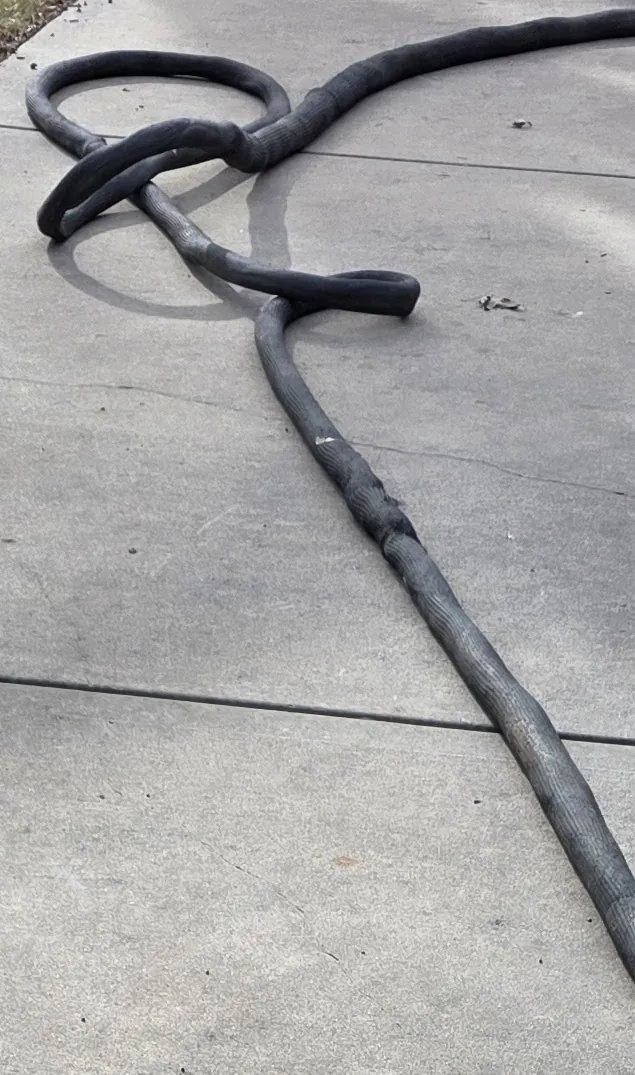
How polyjacking works in 90 seconds
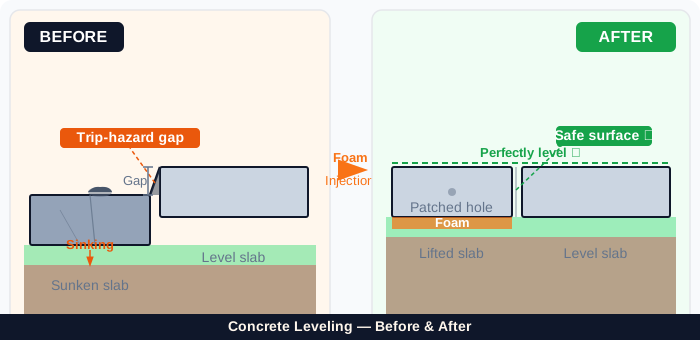
Our team walks you through the three-step process: dime-sized holes, high-density polyurethane foam that fills every void and compresses the soil beneath your slab, and use within hours with no heavy trucks. Call (913) 713-7794 or book a free estimate below.
Frequently asked
My house is north of K-10 in Lenexa: why is my driveway just now sinking after 40 years?
Wymore-Ladoga clay is a slow accumulator. Each freeze-thaw cycle and dry summer removes a small amount of soil from under the slab: too small to see until decades of cycles have opened a void large enough to show up at grade. Forty to fifty years is exactly when most north-of-K-10 concrete in Lenexa hits that threshold. It does not mean the slab failed early; it means it reached normal service life on this specific soil.
My patio is only 20 years old and already settling. It is in a newer south-of-K-10 subdivision. Why?
South-of-K-10 development in Lenexa relied heavily on cut-and-fill earthwork to grade lots during rapid 1990s and 2000s expansion. Fill soil compacts more quickly under load than undisturbed native soil, and 20 years is a common timeframe for a patio or driveway poured over improperly compacted fill to develop a visible void. The fix is the same. Foam fills the void and lifts the slab, but the root cause is fill compression rather than accumulated clay cycling.
My property is near Turkey Creek and my concrete keeps settling after every wet spring. Will foam hold?
Foam is the better repair choice near the Turkey Creek corridor because it is closed-cell and waterproof: unlike mudjacking slurry, it will not wash out or erode if water migrates under the slab again. That said, if a drainage problem is actively feeding water under your concrete. A downspout discharging near the slab edge, poor grading, or an open control joint. We will flag it during the estimate. Addressing the water source is what makes the foam repair last.
What is the frost depth in Lenexa, and how does it affect surface concrete?
Johnson County, which includes Lenexa, requires foundation footings at a minimum of 36 inches below final grade. A local amendment to IRC §R403.1.4.1. Surface slabs like driveways, patios, and sidewalks are poured far shallower than that, so they are fully exposed to frost heave: water in the soil freezes, expands roughly 9 percent, lifts the slab, then contracts as it thaws, leaving a small gap underneath. Across Lenexa's 50 to 70 freeze-thaw cycles per winter, those gaps accumulate into the voids that cause visible settlement.
Do I need a permit to level my concrete in Lenexa?
Lifting an existing slab with foam injection typically does not require a permit in Lenexa. You are not adding new concrete, just restoring what is already there. If your slab is in the public right-of-way (such as a city-maintained sidewalk panel between the street and your property line), the situation can differ. We will let you know at the estimate if anything applies to your specific location.
How long does a concrete leveling job take in Lenexa?
Most residential jobs run 2 to 4 hours from setup to cleanup. You can walk on the repaired surface in 15 to 30 minutes and drive on it within 1 to 2 hours of the foam curing. We do not leave a job unfinished. If we start a driveway or patio in Lenexa, we complete it in a single visit.
Is there a concrete leveling company near me in Lenexa, KS?
That's what PolyJacks does in Lenexa — most leveling jobs finish in 2–4 hours and the slab is back in service within hours (walk on it in 15–30 minutes, drive in 1–2 hours). Book a free estimate.
Free concrete leveling estimate in Lenexa
No obligation. Honest advice, usable within hours. If foam isn't the right fix, we'll tell you straight.
Book your free estimate
Pick a time that works for you. Free on-site inspection, no obligation. Prefer to talk? Call (913) 713-7794.